

New transatlantic capacity, new longhaul fiber, and some private wireless: … [visit site to read more]
7
Août, 2026

Smart city solutions aim to reduce Warsaw’s lighting expenditure
Emitel, which says it delivers digital services and solutions powered by infrastructure, technology and data, has won a contract to build an intelligent street lighting control system for Warsaw.
The smart city solutions deployed will enable Warsaw to reduce electricity consumption and make more efficient use of its existing infrastructure. Municipal services will also be able to respond to faults more quickly and carry out maintenance work more effectively. The value of the core project is said to be close to PLN79 million (about US$21.2 million).
This is a strategic investment designed to modernise over 110,000 luminaires, representing a substantial proportion of the city’s lighting infrastructure. The new system will enable remote lighting management, early fault detection and dynamic adjustment of light intensity.
The agreement covers the development and maintenance of IT systems, a cloud-based infrastructure management platform, the supply of lighting controllers and the equipping of a dedicated management centre. The contract has been signed for eight years, with an option to extend it for a further five.
As part of the project, Emitel will build bith the system and a modern Lighting Management Centre. Equipped with operator workstations and a video wall, the centre will provide real-time management and visibility of the city’s lighting infrastructure.
Lukasz Puchalski, Director of the Municipal Roads Authority of the Capital City of Warsaw, explains that over the course of five years, it has replaced all lighting fixtures in Warsaw, saving approximately US$16.1 millon annually. About US$17.4 million has been investted in the replacement of these fixtures, and the savings achieved have already reached nearly US$40.2 million. He adds: “Ultimately, Warsaw’s street lighting will be able to operate using only about 20% of the electricity required just a few years ago. And we will continue to allocate the saved funds to further investments.”
Using the controllers, the Lighting Management Centre will not only be able to monitor changes in luminaire performance in real time but also make adjustments remotely. Once the new system is operational, settings will be adjustable even on a daily basis, for example in response to weather conditions. This will ensure that street lighting is used precisely when residents need it.
The system will also make it possible to optimise the output of each individual luminaire. On streets with highly reflective surfaces, such as light-coloured roadways, lamps will be able to operate at lower power. The city will also be able to reduce lighting levels on local streets where traffic is very light at certain times of night. Based on the adopted estimation model, Emital says annual energy savings could reach up to 30%.
6
Août, 2026

Thursday Bytes: Boldyn, Ciena, e&, Circet
Two inetwork infrastructure deployments and a bit of M&A: … [visit site to read more]
6
Août, 2026

MTN gains IHS shareholder approval in multi-billion tower acquisition
MTN Group said it has secured approval from IHS Towers shareholders to acquire the remaining shares it does not own, moving the pan-African operator closer to full control of the tower company.
The companies announced the deal in February, under which MTN will acquire the remaining 75.3% stake in IHS for $8.50 per share. The transaction values IHS at around $6.2 billion, with MTN’s cash consideration for the shares it does not already own amounting to about $2.2 billion.
IHS has a portfolio of nearly 29,000 towers across Africa, making it one of the continent’s largest tower companies. It serves multiple mobile operators, with MTN present across five of its key markets.
The tower company has also completed the sale of its 51% stake in Brazilian fibre venture I-Systems to TIM S.A., Telecom Italia’s Brazilian unit. The disposal forms part of a wider move to exit IHS’s Latin American operations ahead of MTN’s acquisition of its remaining African business.
MTN required approval from at least two-thirds of IHS shareholders voting on the transaction. The vote fulfils a key condition for the deal, although completion remains subject to outstanding regulatory approvals.
“The approval by IHS shareholders is an important step toward completion of the Transaction,” said Ralph Mupita, MTN Group president and CEO. “Within our Ambition 2030, the three-platform strategy, towers are a critical value-creation driver that will strengthen MTN’s strategic and financial position for the future, in a world where digital infrastructure and AI are becoming increasingly essential to Africa’s growth and development.”
MTN has sold towers to IHS since 2014 and became the tower company’s anchor tenant through a series of sale-and-leaseback and share-exchange deals over the past decade. The acquisition marks a reversal of that strategy, bringing a significant portion of MTN’s passive network infrastructure back under its control.
The deal reverses MTN’s previous strategy of selling towers to free up cash. Buying IHS gives it greater control over critical network infrastructure and allows it to keep more of the value currently paid out in lease costs. MTN will also receive rental income from other operators using IHS sites, but takes on more debt and exposure to operating costs.
5
Août, 2026

Wednesday Roundup: Ciena, Quantum Corridor, Adtran, MCG, Taara, Liquid
Some quantum, some PON, some M&A, and some light: … [visit site to read more]
5
Août, 2026

EAAIF pledges US$82.8 million in loans to Eastcastle DRC and Liquid Intelligent Technologies
The Emerging Africa & Asia Infrastructure Fund (EAAIF) is loaning a combined US$82.8 million to two Africa-focused telecom infrastructure firms.
The fund will loan US$32.8 million to Eastcastle Infrastructure DRC to finance 728 new telecom towers in the Democratic Republic of Congo (DRC), and US$50 million to Liquid Intelligent Technologies to refinance and future-proof its 110,000-kilometre pan-African fibre-optic network.
These parallel investments highlight EAAIF’s strategic focus on de-risking and scaling the physical and digital networks that underpin the continent’s rapidly growing digital economy.
In the DRC, where mobile internet penetration is 17%, and tower density is among the lowest globally (one tower per 15,000–20,000 people compared to one per 600 in the US), EAAIF’s support for Eastcastle is critical to addressing infrastructure availability, which is the primary bottleneck for mobile network operators.
Around 70% of the new towers will be located in rural and underpenetrated regions, which will help to boost connectivity in the DRC. The transaction will also finance solar panel installations and lithium battery upgrades to drive energy efficiency, circumvent grid failures, and reduce Eastcastle’s reliance on diesel.
EAAIF’s US$50 million commitment to Liquid Intelligent Technologies forms part of a US$450 million restructuring and expansion package which will support the optimisation of Liquid’s capital structure and the maintenance of its 110,000 km cross-border fibre network across 25 countries, including Kenya, South Africa and Zimbabwe.
Liquid’s network enables digital data storage and processing for major operators, enterprises, and hyperscalers across Africa. EAAIF’s investment in Liquid’s high-speed broadband and cloud infrastructure underlines its commitment to sovereign digital assets that drive economic growth. Reliable internet access also enables local enterprises to scale more effectively, fostering long-term, productive employment.
Martijn Proos, Co-Head of Emerging Market Alternative Credit at Ninety One, the fund manager of EAAIF, said: “These commitments to Eastcastle and Liquid demonstrate our belief in Africa’s digital expansion through localised access points and pan-African corridors, which must work simultaneously to power the continent’s future.”
4
Août, 2026

AI data centre MoU targets Southeast Asia
Three major players in the Asian market have signed a memorandum of understanding (MoU) to execute collaborative AI data centre (AIDC) deployment initiatives across Southeast Asia.
The partnership, between technology infrastructure company SB Telecom Singapore, a subsidiary of Japan’s SoftBank, SC Zeus Data Centres, which is building advanced data centres across Asia, and Robust HPC Group, an IT managed service provider, focuses on two primary pillars: GPU infrastructure supply, build and operation, alongside dedicated AIDC construction and development within the region.
The partners say this collaboration combines the unique strengths of all three organisations to address the surging regional demand for high-density artificial intelligence computing workloads.
Under the agreement, SC Zeus will serve as the preferred partner to source land, design, build and operate the core data centre infrastructure. Robust HPC Group will spearhead the procurement, setup and management of high-performance GPU clusters, utilising advanced hardware.
SB Telecom Singapore meanwhile, will drive the data hall fit-out, ICT infrastructure integration, localised deployment support, and critical connectivity solutions. Together, the parties say they will develop innovative ‘AI factory’ solutions and explore diverse commercial models, including GPU-as-a-service platforms and AI token factory, a production system that transforms raw GPU compute and electricity into monetisable, governed units of intelligence known as tokens.
The initial deployment initiatives will focus heavily on Malaysia, Thailand, Indonesia and Vietnam with subsequent plans to expand to the wider Southeast Asia region and neighbouring markets.
Hisao Inoue, Managing Director of SB Telecom Singapore says: “By unifying our robust ICT connectivity with SC Zeus’s specialised infrastructure capabilities and Robust HPC’s advanced supercomputing expertise, we are uniquely positioned to deliver the massively scalable, real-time computing environments essential for the future of AI.”
The envisioned facilities will feature advanced capabilities like liquid cooling infrastructure, 800 VDC architecture and low-latency networking, ensuring the region is fully equipped for next-generation AI workloads.
4
Août, 2026

Comfone and VOX Solutions partner to strengthen A2P SMS monetisation for mobile operators worldwide
HONG KONG & BERN, August 4th, 2026 – VOX Solutions, a leading provider of comprehensive A2P voice and messaging monetisation solutions, is proud to announce a strategic partnership with Comfone, a prominent global telecommunications services provider. This strategic channel partnership will help Mobile Network Operators (MNOs) worldwide control, protect, and monetise their international Application-to-Person (A2P) SMS traffic.
This collaboration brings together VOX Solutions’ managed VOX360 Monetisation Solution with Comfone’s extensive industry expertise and global ecosystem. Together, both companies are committed to safeguarding mobile communication against the growing threats of unsolicited traffic, grey routes, and revenue leakage.
The VOX360 platform, a market-leading solution, integrates advanced anti-fraud capabilities including flash call authentication and A2P SMS monetisation tools. Deployed within the operator’s own network environment and operated as a fully managed service, the platform provides advanced monitoring, filtering, analytics, and fraud-prevention capabilities. By centralising international A2P traffic through authorised gateways, VOX360 ensures full visibility of all traffic flows, eliminates bypass routes, and enables proper commercial monetisation of messaging traffic. The service includes 24/7 monitoring, traffic analytics, market intelligence, and dedicated technical support.
Pedro Sebastião, Director of Partnerships at Comfone, commented:
“Partnering with VOX Solutions is a natural extension of the Comfone Partnership Program. A2P SMS monetisation is a critical priority for mobile operators worldwide, and VOX Solutions’ track record in delivering measurable results through their AI-powered platform makes them an ideal partner. This collaboration enables us to offer our customers a best-in-class, trusted solution that protects revenues and strengthens network integrity.”
VOX360 stands as an industry awarded platform capable of mitigating flash calls as part of a comprehensive anti-fraud solution for A2P voice and SMS traffic. This ensures that operators partnering through the Comfone channel remain protected from flash call fraud while maximising service quality and legitimate messaging revenues.
Teodor Magureanu, Chief Business Development Officer at VOX Solutions, added:
“Our mission is to support mobile operators in driving sustainable revenue growth and fostering innovation. We are happy to enter this partnership as we know Comfone is a company with a similar mindset – be a valuable partner to mobile operators. Hence, this global partnership is about trust and value for the ecosystem. By combining our VOX360 platform with Comfone’s extensive network, we can accelerate our efforts to help MNOs worldwide secure and monetise their A2P messaging traffic, contributing to their business success while enhancing communication security globally.”
VOX Solutions continues to lead the market with its end-to-end A2P voice and messaging monetisation offerings. With a proven track record of success, the VOX360 platform has been deployed by numerous top-tier mobile operators worldwide. Looking forward, this partnership with Comfone marks another milestone in VOX Solutions’ commitment to empowering telecom operators with cutting-edge technology, strategic insights, and unparalleled support to navigate the evolving industry landscape.
About VOX Solutions
VOX Solutions is a leading TelcoTech company dedicated to empowering Mobile Network Operators (MNOs), carriers, aggregators, and enterprises worldwide by providing innovative solutions to effectively monetise their assets. We provide cutting-edge solutions that enable our partners to unlock new revenue streams by maximising the value of their existing assets. Leveraging advanced technologies such as Artificial Intelligence (AI), Advertising Technology (AdTech), advanced analytics, and seamless authentication, we help transform telecommunications businesses into high-performing, revenue-generating ecosystems.
About Comfone
Headquartered in Bern, Switzerland, Comfone is fully independent, privately owned, and financially stable with no affiliation to any operator groups. With over 28 years of industry expertise and a strong tradition of Swiss quality, Comfone has proven track record of delivering robust and scalable roaming and interworking services. We serve more than 700 customers across over 200 countries and territories, including MNOs, MVNOs, SMS A2P Providers, IoT/ M2M Solution Providers, and a range of new operators entering telecommunications market.
Comfone Solutions Value Propositions
- Global customer reach, presence and georedundant infrastructure in all continents
- 24/7 multilingual, personal and dynamic support from experienced roaming professionals. Workforce representing 50 nationalities and 45 languages
- A GSMA Associate Member since 1999, Comfone actively participates in GSMA Working Groups and follows all GSMA standards
- For over a decade, Comfone has been recognized as a leading global provider of roaming services in key areas such as Hub, IPX, Data Clearing, and Financial Clearing. ROCCO top rankings since 2013
We focus on long-term partnerships, operational excellence, and a customer-oriented approach. This ensures that our solutions are not only compliant but aligned with the latest industry developments and best practices to help operators developing new solutions in existing and emerging technologies and protocols such as VoLTE, 5G NSA, 5G SA, BCE, and NB-IoT.
4
Août, 2026

Tuesday Bytes: Sertex, Archtop, FLAG
Some middle mile, some last mile, and some subsea: … [visit site to read more]
4
Août, 2026
China Tower and Huawei Jointly Launch TunnelStar to Upgrade Tunnel Mobile Network Coverage
Partner Article
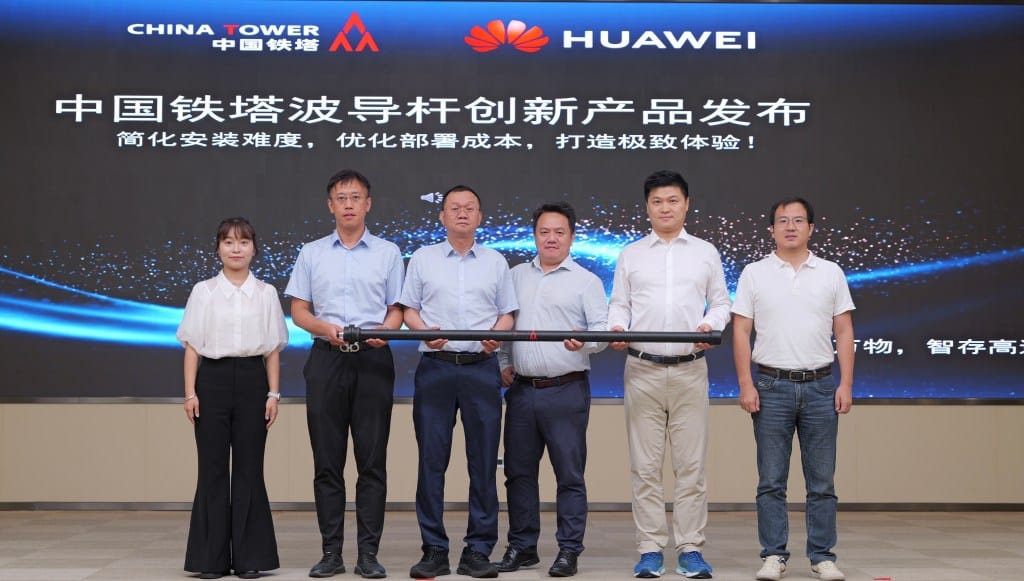
On August 4, China Tower and Huawei Technologies Co., Ltd. officially unveiled a new tunnel waveguide product: TunnelStar at the China Tower Industrial Park. Tailored for high-value tunnel scenarios, the innovative solution features compact size, lower costs and superior user experience, injecting new momentum into network quality improvement and brand value enhancement for telecom operators.
Senior executives from China Tower and Huawei Technologies Co., Ltd. attended the launch ceremony.
According to the officials present, China’s rail transit tunnel scale has maintained steady growth, with the national operational subway mileage exceeding 10,000 kilometers and the mileage of operational railway tunnels surpassing 25,000 kilometers. Tunnel scenarios have long been plagued by industry pain points, including limited installation space, complex on-site construction conditions and difficult renovation coordination. Meanwhile, as mobile communication networks accelerate the iteration toward 5G-A, communication frequency bands and spectrum bandwidth continue to expand. Driven by booming applications such as AI and live streaming, user demand for uplink services keeps rising, highlighting the weaknesses of uplink coverage and putting forward more stringent technical requirements for tunnel indoor distribution and signal coverage systems.
Against this backdrop, China Tower and Huawei have carried out in-depth technical cooperation. Combining the propagation characteristics of radio waves in tunnels, the two parties have jointly developed the TunnelStar, breaking through the technical bottlenecks restricting tunnel network coverage. Equipped with a specially designed excitation source to reshape electromagnetic field distribution, the product enables more uniform wireless signal coverage in tunnels and maximizes overall coverage performance.
Compared with traditional antenna solutions, the innovative TunnelStar boosts edge coverage level by more than 10dB and improves user experience speed by over 40%. It supports a 9dB gain amplification for uplink links, delivering a 20% increase in uplink speed to meet the demand for high-capacity uplink data services. In addition, the product supports low-cost evolution toward 6G, enabling smooth transition for new frequency band applications. As a full-band and full-bandwidth solution, it empowers China Tower to leverage its unified planning and construction advantages, helping telecom operators solve key industry challenges including high-capacity uplink and high-frequency network evolution in tunnels, difficult leaky cable construction and poor antenna coverage effects.
The TunnelStar solution has completed pilot tests for 3.5G and 4.9G frequency bands in Wuhan and Guangzhou respectively. The test results show significant improvements in coverage performance and deployment efficiency, which are highly consistent with the design targets.
TunnelStar blazes a new trail for upgrading tunnel network experience. It effectively breaks the coverage bottlenecks in extreme tunnel scenarios, greatly improving user experience and satisfaction, and setting a benchmark for ultimate mobile network coverage.
Looking ahead, the two sides will further integrate China Tower’s advantages in integrated overall planning, co-construction and project implementation with Huawei’s cutting-edge communication R&D capabilities. Both parties will continue to iterate and upgrade series of in-depth tunnel coverage technologies and solutions, comprehensively optimize the digital travel experience for the public, and empower a better digital life for all.