
Vietnam to regulate online content in radical extension of existing rules

An internet law that gives the government power to regulate online content took effect in Vietnam last week. Decree 147, as the law is known, expands government control over access to information on the internet for reasons of ‘national security’ and ‘social order’.

The law expands radically on guidelines from 2021 that codify ethics for social media companies and the public, and rules, issued in a decree in August 2022, that require technology firms to store their users’ data locally and set up local offices.

It requires social media platforms providing services to users in Vietnam to store user data and provide it to the authorities on demand. Essentially this means social media giants like Facebook and TikTok must now verify user accounts using people’s phone numbers or personal identification numbers and, of course, store that data. 

The law also requires organisations to take down anything the authorities consider ‘illegal content’ within 24 hours.

Rights groups say the move is aimed at stifling dissent. The government issued the decree this November, though it appears it was actually effective from Christmas Day.

A large proportion of the Vietnamese population is on social media. Some sources estimate that there are about 65 million Facebook users, 60 million users on YouTube and 20 million users on TikTok, a significant proportion of a population estimated at close to 101 million.

The new laws also include curbs on gaming for under-18s, though these are supposedly designed to prevent addiction. Games publishers are expected to enforce a time limit of an hour a game session and not more than 180 minutes a day for all games. Just over half of Vietnam’s population – more than 50 million people – apparently regularly play games, so it’s not clear how these curbs can be enforced. 

Decree 147 also requires organisations to provide search and content-scanning tools to government authorities upon request. It limits certain functions, like live video streaming, to only verified accounts. As a number of news resources have pointed out, this not only an attacks freedom of expression; it also affects the large number of people earning a living through social media channels.

As a number of news outlets have noted, in October, independent Vietnamese blogger Duong Van Thai was sentenced to 12 years in prison on charges of anti-state propaganda.

It’s not yet clear how Facebook’s parent company Meta, YouTube owner Google and TikTok will respond to the new laws.

MORE ARTICLES YOU MAY BE INTERESTED IN…

How Telecom Companies Can Minimize Customer Churn Through Artificial Intelligence

How Telecom Companies Can Minimize Customer Churn Through Artificial Intelligence

This Industry Viewpoint was authored by Tom Loberto, Senior Vice President of Technology, Media and Telecom at HGS.

Telecommunications (telecom) companies are often challenged with high customer churn, due to factors such as a highly competitive market landscape and an overwhelming amount of call center inquiries, which can lead to poor customer service and departing customers. As a result, elevated customer churn rates can cause lost revenue and increased customer acquisition costs, as acquiring new customers typically costs more than … [visit site to read more]

Chinese and Egyptian telecom giants sign commercial agreement 

Telecom Egypt, the country’s main telecom services operator, has signed a commercial agreement with China Mobile International (CMI), a wholly owned subsidiary of China Mobile, to expand digital services.

While specific plans have not yet been unveiled, it’s clear that there could be a lot of opportunities enabled by this alliance. Not too surprisingly, the partners suggest that this agreement promises to unlock additional value and represents a cost-effective strategy for developing a robust global network infrastructure.

Indeed, CMI’s parent company China Mobile operates the world’s largest network. As well as being a service provider in Egypt, Telecom Egypt is also one of the largest subsea cable operators in the region.

As the two companies point out, their partnership aims to leverage the investments of both companies in subsea cable infrastructure and share resources to address the rapidly growing data needs of businesses and consumers worldwide.

The companies also appear to be examining the potential for a set of innovative, enterprise-grade digital and business services tailored to meet the dynamic needs of enterprises in Egypt and across the region.

Thus it is hoped that this agreement will expand the global reach of both companies. Through combining CMI’s advanced digital solutions with Telecom Egypt’s robust nationwide infrastructure, extensive market expertise, and widespread regional reach, both organisations say they will explore customised DICT (digital, information, communication, and technology) solutions to advance smart services for enterprises.

There is also the opportunity to add new routes across their respective cable systems in order to diversify and enhance the resilience of their networks, ensuring more reliable connectivity.

CMI, founded in December 2010 and headquartered in Hong Kong, provides comprehensive international information services and solutions in 39 countries and regions. It serves enterprises, carriers and mobile users.

Telecom Egypt offers a wide range of services, including fixed and mobile voice, high-speed internet, smart solutions, data centres, and cloud computing.

MORE ARTICLES YOU MAY BE INTERESTED IN…

Movistar and Tigo finally launch shared network in Colombia

Operator Movistar Colombia has announced the launch of its shared network with former rival operator Tigo. This comes after a fairly lengthy wait since we reported the companies’ signing of a memorandum of understanding (MoU) to pursue a network sharing arrangement via a jointly owned infrastructure company in mid-2023.

The move was approved by the Colombian business regulator later on that year. In February the board of Colombian telco Une EPM authorised a binding agreement between its mobile subsidiary Tigo and Movistar, which is controlled by Spanish giant Telefónica and has the Colombian state as a key minority shareholder.

The agreement involves the two companies’ 2G, 3G and 4G networks. However, as readers will be aware, the two companies have also jointly bid for 5G spectrum aiming for a shared 5G rollout of this technology. Reports suggest that the two companies have jointly developed just under 100 5G sites.

The launch of the shared network will allow Movistar to significantly increase its 3G and 4G mobile coverage. Tigo has reportedly said that the shared network will boost its nationwide mobile coverage by around 22%.

As the BNamericas website points out, Movistar Colombia has been one of the operators with the lowest mobile coverage nationwide. In the last three years, it was also the operator with the lowest number of sites deployed. Claro is the operator with the largest number of sites deployed nationwide in all technologies with 10,157, followed by Tigo’s 7,575, Movistar with 7,023, and WOM’s 5,045.

As a united force, Movistar and Tigo serve nearly 35 million customers. The country’s population is estimated at just under 53 million.

Further complicating matters, we reported in July that Tigo owner Millicom International Cellular had entered into a non-binding MoU to acquire a 67.50% stake in Movistar from owner Telefonica Hispanoamerica, for approximately US$400 million.

MORE ARTICLES YOU MAY BE INTERESTED IN…

Ericcson and Beyon renew sustainability collaboration

Technology giant Ericsson and Bahrain-headquartered technology group Beyon have renewed their collaboration to expand their joint sustainability initiatives and circular economy practices for building energy-efficient networks in Bahrain.

The two companies have also announced the successful outcomes of their initial sustainability collaboration, signed in early 2024, for accelerating the journey to a net zero future for both companies and managing waste from electronic and electrical equipment (aka WEEE or e-waste).

The memorandum of understanding (MoU), which we reported at the time, and which was signed by Bahrain operator Batelco, part of the Beyon Group, aimed to reduce Beyon’s environmental footprint by addressing energy consumption and carbon emissions on live networks operated by Batelco, using Ericsson’s sustainable solutions.

Implementation of this MoU, say the partner companies, has so far resulted in a 30% energy reduction on Batelco’s network by the deployment of the Ericsson 5G radio access network product, Radio 6646, a triple-band, tri-sector radio that, Ericsson says, can do the job of nine radios.

Additionally, energy-saving software features such as cell sleep mode and artificial intelligence (AI)-powered MIMO sleep mode, were implemented on pilot sites, leading to a 22% average reduction in energy consumption where the features were activated.

A further 18% energy reduction was realised through the deployment of the single-antenna footprint interleaved antenna integrated radio (AIR) 3218 compared to AIR 3227 to provide 5G massive MIMO while addressing space constraints on rooftops and towers.

Circular economy practices have also been addressed; in particular an e-waste recycling initiative has been launched under the Ericsson Product Take-Back Programme. These efforts enable Beyon to recycle end-of-life electronic and electrical equipment in a responsible and sustainable way, supporting the group’s e-waste management efforts.

Furthermore, the collaboration also focused on knowledge sharing, with monthly sessions involving global experts discussing climate action, circularity, and the collective efforts required to achieve net zero goals.

MORE ARTICLES YOU MAY BE INTERESTED IN…

Major financing commitment boosts Yondr’s Malaysian data centre campus

The International Finance Corporation (IFC) and a consortium of six international financial institutions have committed over US$900 million in financing to global data centre operator Yondr Group’s hyperscale data centre campus in Johor Bahru, a city on the southern tip of the Malay Peninsula.

IFC is the largest global development institution focused on the private sector in emerging markets and a member of the World Bank Group. Yondr Group is a global developer, owner and operator of hyperscale data centres.

DBS, Deutsche Bank, Global Infrastructure Partners (a part of Blackrock), HSBC, ING and Natixis CIB joined IFC in the latest round of financing for the 98-megawatt project in Johor Bahru, which is the first phase of a 72.5-acre data centre campus that is set to deliver 300 megawatts of critical IT capacity when fully complete.

The project, says the IFC, is set to become one of the largest and most technologically advanced data centres in Asia Pacific, supporting rapidly growing demand for data processing capacity in the region.

IFC announced a financing package of up to US$150 million for Yondr’s Malaysia project in May 2024, comprising an initial US$50 million bridge loan that, it says, played a crucial role in advancing the project and attracting the six international financial institutions into this most recent financing round. IFC has now committed its second tranche of financing of US$100 million alongside financing from the other lenders.

The campus will be certified by the Excellence in Design for Greater Efficiencies green building programme, IFC’s green building certification system focused on making buildings more resource efficient.

In this regard, it may be no coincidence that, as we reported at the time, January saw the launch of what Yondr Group called “an ambitious sustainability plan”, which includes a target to achieve net zero by 2030 for scope 1 and 2 carbon emissions.

This project is IFC’s third investment in Malaysia since 2023, when it said it was establishing a presence in Malaysia to support the country’s efforts to foster greater sustainable, resilient, and inclusive economic growth.

MORE ARTICLES YOU MAY BE INTERESTED IN…

New Indonesian cable landing station inaugurated

Telin, a provider of premium international carrier voice, data services, and business solutions, and subsidiary of Telkom Indonesia, and Citra Connect, an Indonesian provider of connectivity services and digital solutions, have officially held a ceremony for a new cable landing station (CLS) at Nongsa Digital Park, Batam, the largest city in the Indonesian province of Riau Islands.

This CLS, says Telin, serves as an integral part of the strategic infrastructure project connecting Indonesia with the rest of world, marking a significant milestone in strengthening Indonesia’s international connectivity, notably via the Indonesia Cable Express (ICE) submarine cable, which consists of seven cable systems.

The ICE system is an initiative that establishes vital links, including unlocking Batam and Indonesia not only to major cities in Indonesia and neighbouring countries like Singapore and Malaysia, but also to the Middle East, East Asia, Australia and the US.

Telin says the construction of the Batam CLS solidifies Batam’s role as Indonesia’s primary gateway for international connectivity, fostering digital and economic development in western Indonesia and supporting regional integration. It will also help to support data centre development in Indonesia and South East Asia.

Budi Satria Dharma Purba, CEO of Telin explained after the ceremony that the CLS will offer landing points for four cable systems – predominantly ICE Cable Systems – and added: “Looking into the future, we are equipping ourselves with the infrastructure and vision necessary to anticipate new technological advancements and connectivity needs across Indonesia and beyond. »

The ceremony marked the installation of the first foundation pillar of the CLS and was attended by a number of senior figures from the companies involved.

MORE ARTICLES YOU MAY BE INTERESTED IN…

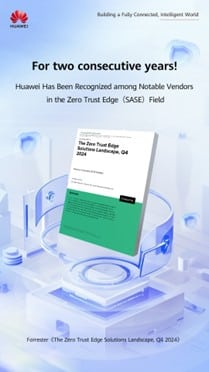
For two consecutive years, Huawei has been recognized among notable vendors in the zero trust edge field


Viewpoint

[Beijing, China, December 16, 2024] Huawei announced today that Forrester, an international authoritative organization, recently released The Zero Trust Edge Solutions Landscape, Q4 2024 (hereinafter referred to as the “Report”), which provides an overview of zero trust edge solutions (secure access service edge or SASE technologies like SD-WAN, ZTNA, SWG) of 25 vendors. This report provides an authoritative definition and overview of the zero trust edge market. Huawei has been named among notable vendors for two consecutive years.

The report analyzes the business value of SASE and covers the market maturity, technologies, and application scenarios of SASE solutions provided by different vendors. The report allows readers to identify potential partners who are the right fit for their organizations to implement a zero trust edge security model.

Huawei Xinghe Intelligent SASE Solution Building an Intelligent Security Protection System for Enterprises

In an increasingly complex network security environment, zero trust architecture has become the key for enterprises to ensure business continuity and cope with uncertainty. Huawei is one of the world’s first mainstream vendors to develop SASE solutions and has won multiple international security awards.

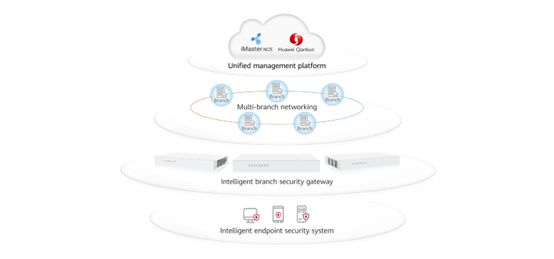
As more services are moved to clouds and more people are opting for hybrid working, enterprise branch networks face tremendous security challenges, and network security incidents occur one after another around the world. To address these challenges, Huawei’s Xinghe Intelligent SASE Solution provides a network security system featuring intelligent detection, collaboration, and integration by leveraging the cloud-network-edge-endpoint integrated architecture.

Intelligent detection: Huawei has made a breakthrough in the lightweight file emulator technology, which can unpack files in milliseconds. The lightweight Site AI model on the local gateway and 18 small AI models on the cloud are used to detect unknown threats, improving the detection rate to 95%.

Intelligent collaboration: Huawei’s HiSec Endpoint uses the innovative threat source tracing graph engine to accurately identify ransomware, achieving a 100% ransomware detection rate. With endpoint-network-storage collaboration, once ransomware is detected on one node, the information is synchronized to all network and storage devices for them to take protective measures.

Intelligent integration: Huawei’s unified security analysis platform has over 8000 inference rules and automatically delivers matching rules to automatically handle 99% of security events on the entire network in seconds. Branches do not need to assign dedicated maintenance personnel, improving operation efficiency by 100 times.

Huawei’s Xinghe Intelligent SASE Solution has been recognized by governments and enterprises in the finance, energy, transportation, education, healthcare, and other sectors around the world, helping them deploy zero trust architecture and build a next-generation security system for future business development.

Looking ahead, Huawei will continue to invest in the research and development of new technologies based on customer needs and help customers build a secure zero-trust network environment in the intelligent era.

Swisscom gets green light on €8bn Vodafone Italia Acquisition from Italian authorities 


News 

The acquisition was first announced back in March

Swisscom has officially received the green light for its acquisition of Vodafone Italia, following approval from both the Italian Competition Authority and the Ministry of Enterprises and Made in Italy (MIMIT). With regulatory hurdles cleared, Swisscom is now set to complete the deal by the first quarter of 2025. 

Last week, the Italian Competition Authority approved the transaction, accepting a series of behavioural commitments proposed by Swisscom. These include continuing to provide wholesale services to interested operators in line with Fastweb’s current practices, as well as sharing relevant information in any public tenders where Fastweb or Vodafone Italia is the supplier. An independent trustee will oversee the implementation of these commitments for the next three years. 

MIMIT granted unconditional approval for the deal on 19 December 2024, confirming the change of control over Vodafone Italia’s spectrum licenses. This followed positive assessments from the Italian Authority for Communications and the Italian Competition Authority. 

The merger of Fastweb and Vodafone Italia is expected to deliver substantial benefits to Italian consumers and businesses by combining their strong fixed and mobile infrastructures and expanding their range of services. The merger will create Italy’s second-largest fixed-line broadband operator behind Telecom Italia (TIM). This, they said, will create around €600 million in savings through increased scale and a more efficient cost structure. As part of the transaction, Vodafone will provide some service to Swisscom for the next five years. 

With regulatory approvals now in place, Swisscom anticipates that the acquisition will be finalised in early 2025, marking a new phase for the company in the Italian telecom market. 

Keep up to date with the latest international telecoms news by subscribing to the Total Telecom daily newsletter  

Also in the news:
Equinix to buy BT’s Irish data centre business for €59m
World’s first 5G-A region in Mobile AI Era launched
Part 1: Some US broadband industry predictions as we approach 2025