

Four bits of news touching four continents: … [visit site to read more]

Four bits of news touching four continents: … [visit site to read more]

Keep up-to-date with all the latest news, articles, event and product updates posted on Developing Telecoms.
Subscribe to our FREE weekly email newsletters for the latest telecom info in developing and emerging markets globally.
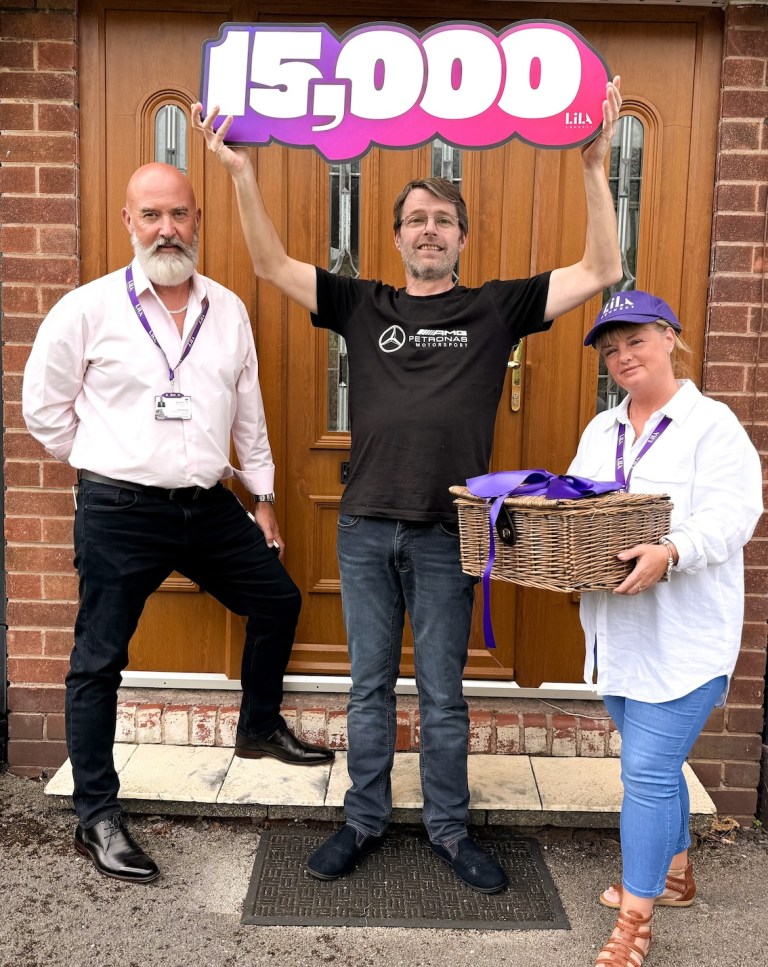
Retail ISP and specialist broadband provider, LilaConnect has announced it has surpassed 15,000 connected customers.
The milestone is another step forward in its vision, and commitment, to providing UK homes and businesses with best-in-class full fibre internet connectivity. This is in line with the UK government’s target to have full-fibre technology available nationwide by 2030.
Unlike other regular broadband connections, or ADSL, that use copper wires to transmit data, all LilaConnect services offer highly competitive internet speeds thanks to the ISP’s full Fibre to the Premises (FTTP) set up. FTTP will also help future-proof homes ahead of the nationwide copper switch off.
Over the past year, the retail ISP has increased new orders by 90 per cent and witnessed a 300 per cent growth in Active Subscribers. LilaConnect prides itself on its customer service – with a customer-focused culture based on an authentic, collaborative and friendly approach to solve customer issues.
LilaConnect will not rest on its laurels, it has a razor sharp focus on further expanding its territory, made possible by the recent merger of VX UK and the Freedom Fibre Group. It will allow the retail ISP to tap into the alternative network provider’s innovative FTTP network that uses state-of-the-art XGS-PON technology. Alongside this LilaConnect will continue to commercialise its current footprint across Stoke-on-Trent, Bristol, Colchester, Wivenhoe, Crewe, Nantwich, Leek and Uttoxeter.
Jan Lange, Managing Director at LilaConnect commented: “At LilaConnect we understand the important part we play in helping to eliminate the digital divide by ensuring everyone in the community has access to fit for purpose and future proof connectivity. We’re proud to have hit the impressive milestone of our 15,000th customer.
He added: “Our work is certainly not done – the next step is to get even more homes and businesses across the UK connected to this essential full fibre network. Added to this, faster connectivity speeds are on the horizon to align with ever-evolving technological innovation and the exponentially increasing number of connected devices.”
Residents and businesses interested in connecting to the LilaConnect full fibre network can register their interest at www.lilaconnect.co.uk.

Four bits of news from the metro and last mile to keep up with as we start the week: … [visit site to read more]
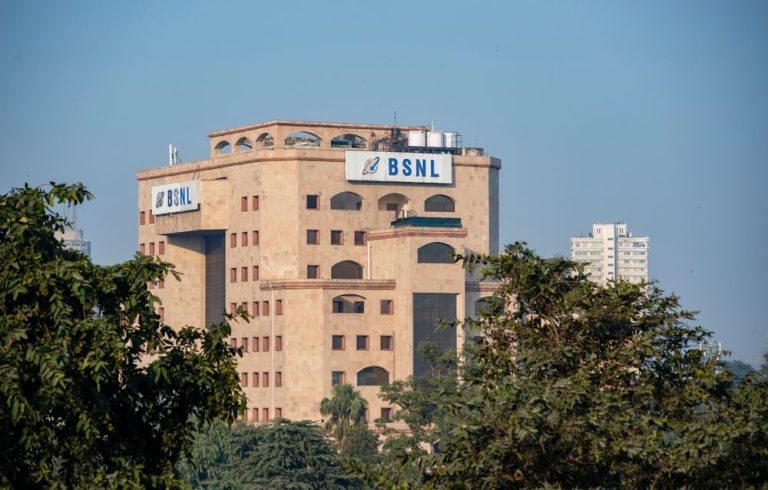
For many years now, India’s state-owned telecoms firms Mahanagar Telephone Nigam Ltd (MTNL) and Bharat Sanchar Nigam Ltd (BSNL) have been haemorrhaging subscribers, struggling to compete effectively against the country’s two largest telcos, Reliance Jio and Bharti Airtel.
In an effort to make the companies (and, therefore, the national telecoms sector itself) more competitive, the government has been considering merging the two businesses since at least 2022. This, the government suggests, would generate valuable synergies, allow for considerable operational streamlining, and make the companies more attractive targets for investment.
However, the dire financial struggles of both companies have seen merger talks irretrievably bogged down in discussions of debt and regulatory roadblocks.
Instead, in recent months the government has leaned towards handing over control of MTNL’s operation to BSNL without formally merging the businesses. This, reports suggested, would remove some of the logistical hurdles related to a merger, such a having to de-list MTNL and buy back a certain number of shares.
This week, MTNL has announced it has approved just such a move, with the new deal seeing BSNL manage the operator for the following ten years. The deal can potentially be renewed by mutual agreement by both companies and can also be annulled by either party given six months’ notice.
This solution is not without its own headaches, however. The Department of Telecommunications (DoT) is currently exploring what such an agreement will mean when it comes to tax implications, saying they will not give the greenlight until they can be sure it will not result in unforeseen tax liabilities for the government.
Keep up to date with the latest international telecoms news by subscribing to the Total Telecom daily newsletter
Also in the news:
LG and KT partner for 6G research
EE’s first 5G small cells go live, masts now deployed at 1,000+ locations across the UK
Optus clashes with AustralianSuper over slow tower build

Eutelsat and Bayobab, a subsidiary of MTN Group, have entered a multi-year agreement to improve digital connectivity across Africa. The collaboration will use Eutelsat’s OneWebLEO satellite constellation to address the continent’s connectivity needs, particularly for enterprise and cellular network backhaul in remote areas.
Bayobab, a key player in Africa’s digital infrastructure, will use Eutelsat’s OneWeb constellation to deliver reliable fixed connectivity services. These satellite solutions are designed to improve coverage in rural regions, offering high-quality, low-latency connectivity. The full rollout is expected by the end of the year, with services already available in four unspecified African countries.
“This collaboration brings cutting-edge digital connectivity to even the most remote corners of the continent and reaffirms our promise of ‘Connecting Africa’ – a promise rooted in partnership and driven by a vision of a digitally inclusive future,” said Bayobab CEO Frédéric Schepens.
“We are proud to count Bayobab and the broader MTN Group amongst Africa’s early adopters of the Eutelsat/OneWeb LEO constellation,” echoed Cyril Dujardin, co-president of Eutelsat’s business unit.
“This partnership underscores the commitment of both Eutelsat and Bayobab to drive digital inclusion, and the pertinence of innovative satellite solutions to achieve this aim, notably the unique properties of ubiquitous, low latency LEO capacity,” he continued.
Keep up to date with the latest international telecoms news by subscribing to the Total Telecom daily newsletter
Also in the news:

T-Mobile has been fined $60 million by the Committee on Foreign Investment in the United States (CFIUS), a regulatory committee that scrutinises foreign investment for national security risks.
The CFIUS fined T-Mobile for failing to prevent unauthorised access to sensitive data, and not reporting the incidents prompt, which violated its nationl security agreement.
The incidents occurred between 2020 and 2021 during T-Mobile’s integration with Sprint. Technical issues led to the mishandling of information from a small number of law enforcement information requests.
Although the data was mistakenly sent to the wrong law enforcement agency, it remained within the law enforcement community and was quickly addressed. T-Mobile emphasised that there was no data breach or malicious activity.
“The $60 million penalty announcement highlights the committee’s commitment to ramping up CFIUS enforcement by holding companies accountable when they fail to comply with their obligations,” said an unnamed US official speaking to the Wall Street Journal.
The T-Mobile and Sprint merger, valued at $26 billion, was finalised in April 2020. The merger combined the third and fourth largest US wireless carriers. Despite facing legal challenges, the merger was approved, and the Sprint brand was discontinued.
The delay in reporting these incidents to CFIUS was a significant factor in the fine.
T-Mobile says it has since taken steps to improve its data handling and reporting processes.
“We reported this in a timely manner, and the issue was quickly addressed. We are glad to have reached a resolution and look forward to continuing to work cooperatively with the law enforcement community to help keep the country and our customers safe,” a spokesperson for T-Mobile said.
Keep up to date with the latest international telecoms news by subscribing to the Total Telecom daily newsletter
Also in the news:
Keep up-to-date with all the latest news, articles, event and product updates posted on Developing Telecoms.
Subscribe to our FREE weekly email newsletters for the latest telecom info in developing and emerging markets globally.

This Industry Viewpoint was authored by Faisal Ishaq, Client Partner, EPAM Systems, Inc.
Telcos face several unique challenges that can jeopardize their ability to stay competitive in today’s fierce markets. For starters, connectivity has become essential to the average person living in the developed world, and telcos must deliver seamless services and new experiences to these modern customers. … [visit site to read more]
Bangladesh telcos Grameenphone and Robi Axiata have reportedly secured another 20 MHz of spectrum each in the 2.6 GHz band, after two years of haggling over the price per MHz.
According to the Daily Star, the Bangladesh Telecommunication Regulatory Commission granted Grameenphone and Robi 15-year contracts for the spectrum at a price of BDT11.6 billion (US$98.6 million). Grameenphone and Robi said the extra spectrum will help them boost quality of service for their subscribers.
« Sufficient spectrum is key for serving customers with quality services, but it involves massive investment from operators, » said Shahed Alam, chief corporate and regulatory officer of Robi Axiata.
The 40 MHz of spectrum in question was left over from the BTRC’s spectrum auction in April 2022. In that auction, 160 MHz of spectrum from the 2.6 GHz band was up for grabs. Grameenphone and Robi each got 60 MHz, while broadband wireless access provider Internet Exchange Limited (IEL) won the remaining 40 GHz.
However, in July 2022, the BTRC cancelled IEL’s allocation and decided the spectrum would go to mobile operators, the report said.
The sticking point has been the price, which was originally set at US$6.5 million per MHz, or BDT560 million according to the exchange rate in play at the time. However, as the taka weakened against the US dollar, the price per MHz shot up to BDT715 million, which Grameenphone and Robi argued was too expensive.
After some back and forth exchanges, the BTRC agreed to accept the operators’ proposed price of BDT580 million per MHz after the Ministry for Posts, Telecommunications, and Information Technology gave its approval, the report said.
In May, the BTRC decided to let mobile operators pay spectrum fees in taka rather than US dollars because of the foreign currency exchange rate issue.