Satellite communications company Eutelsat Group says it has extended its partnership with InterSAT, one of Africa’s leading satellite service providers, to support InterSAT’s growth in the pan-African enterprise and retail segments.
Under the latest multi-year strategic deal, InterSAT says it will add Ku-Band capacity over Central and Eastern Africa on Eutelsat’s Eutelsat 70B satellite to its current portfolio which already includes Ka-Band capacity on the Eutelsat Konnect satellite.
Located at the 70.5° East orbital position, Eutelsat 70B offers a broad wide beam coverage and four high-performance fixed beams, with a high degree of on-board connectivity.
As the partners point out, the deal highlights the role of VSAT services delivered through powerful, geostationary capacity to reach remote areas
As Hanif Kassam, Chief Executive Officer of InterSAT explains: « Leveraging our VSAT service expertise and our teleport infrastructure, we are able to use satellite communication to deliver reliable and cost-effective connectivity to remote and underserved areas while assuring a high-end user experience for our customers.”
Ghassan Murat, Eutelsat’s RVP of the AMEA region adds: “The growth of VSAT services in Africa is a testament to the potential of this technology to transform the continent’s ICT landscape, connecting more people and businesses than ever before, as well as the ongoing relevance of our powerful geostationary in-orbit assets to deliver a compelling and reliable connectivity service to the remotest areas.”
This is the second Africa-related announcement from Eutelsat in only a few days. As we reported yesterday, Eutelsat Group and YahClick, the data solutions arm of UAE-based Yahsat, have signed a multi-year, multi-Gbps contract under which Yahsat will lease capacity from the Eutelsat Konnect satellite to extend YahClick’s service coverage, particularly to Ethiopia.
~ Pioneering space communication with terrestrial know-how ~
Bridging the terrestrial and non-terrestrial worlds is not merely a matter of applying existing technologies to a new canvas. While both environments share fundamental principles of communication and rely on robust components such as transmitters, receivers, filters and amplifiers, the shift upwards introduces a unique set of challenges and demands. … [visit site to read more]
The event, co-hosted with the Republic of Korea, saw the UK government pledge new funding to researching AI safety measures, as well as convincing major tech firms to shore up their safety measures
The AI Seoul Summit took place this week, bringing together the UK and South Korean governments to discuss AI safety alongside some of the biggest companies in the AI industry.
The meeting saw 16 global AI companies commit to a set of safety outcomes building on those set out by the ‘Bletchley Declaration’.
The UK published the ‘Bletchley Declaration’, signed by 28 countries and the European Union, at the AI Safety Summit held at Bletchley Park in November last year. The document has the companies pledge to develop AI responsibly and responsibly, as well as collaborating on further AI safety and research measures.
The new commitments on AI safety, agreed by major tech firms from around the world, includes a promise not to develop or deploy AI models if associated risks cannot be mitigated. They must also display an increased level of transparency, publishing safety frameworks measuring the risks of their frontier models
“The true potential of AI will only be unleashed if we’re able to grip the risks. It is on all of us to make sure AI is developed safely and today’s agreement means we now have bolstered commitments from AI companies and better representation across the globe,” said Technology Secretary Michelle Donelan.
“The UK is a world leader when it comes to AI safety, and I am continuing to galvanise other nations as we place it firmly on the global agenda and capitalise on the Bletchley Effect.”
Alongside these pledges, the UK Technology Secretary Michelle Donelan has also announced £8.5 million in grant funding for AI safety research projects back in the UK.
The programme will be overseen by Shahar Avin, a researcher from the Centre for the Study of Existential Risk (CSER) in Cambridge, and Christopher Summerfield, Research Director at UK’s AI Safety Institute (AISI), which was launched by the government at the start of this year.
“We expect to offer around 20 exploratory or proof-of-concept grants and will invite future bids for more substantial proposals to develop research programmes further,” reads the AISI website. “AISI will collaborate on this work with UKRI, The Alan Turing Institute and other AI Safety Institutes worldwide for this programme.”
Initiatives being considered will include, but are not limited to, those challenging the malicious use of deepfakes and AI-related misinformation. Importantly, these solutions would ideally intervene on the relevant platforms themselves, rather than modifying the AI models that generated the content.
“With evaluation systems for AI models now in place, Phase 2 of my plan to safely harness the opportunities of AI needs to be about making AI safe across the whole of society,” said Donelan.
“This is exactly what we are making possible with this funding which will allow our Institute to partner with academia and industry to ensure we continue to be proactive in developing new approaches that can help us ensure AI continues to be a transformative force for good.”
How is AI changing the UK’s connectivity landscape? Join the discussion at Connected Britain 2024
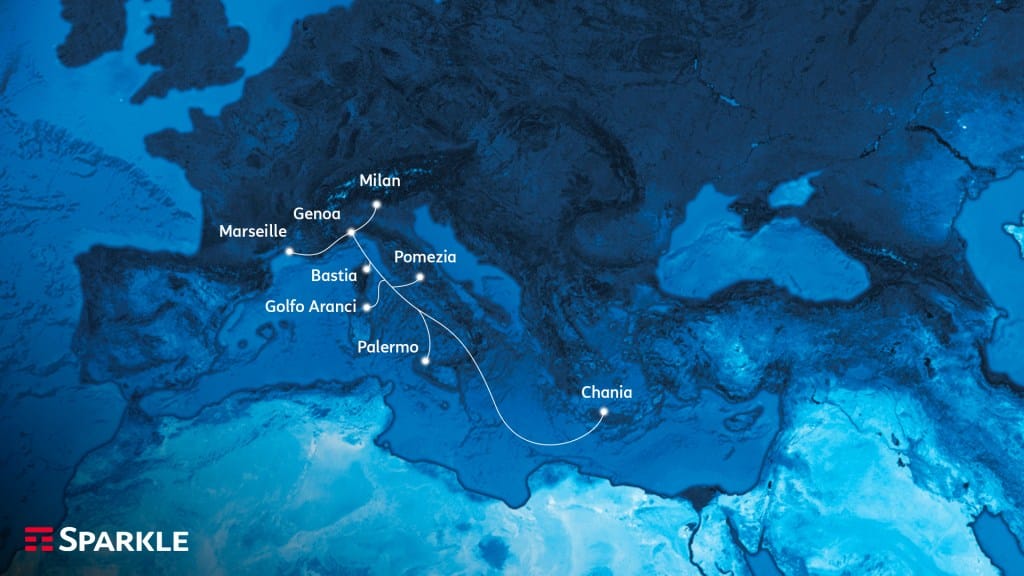
With the landing in Chania, the company strengthens Greece’s position as a digital hub for Internet traffic between Europe, Africa, the Middle East and Asia
Sparkle, the first international service provider in Italy and among the top global operators, announced this morning the landing of the BlueMed submarine cable in Chania (Greece) during a press conference hosted at the Residence of the Ambassador of Italy in Athens and attended by Paolo Cuculi, Ambassador of Italy, Dimitris Papastergiou, Minister of Digital Governance, Alessandro Pansa, Chairman of Sparkle, Enrico Bagnasco, CEO of Sparkle, Daniele Mancuso, CEO of Sparkle Greece, Nikos Konstantinidis, Head of Open Hub at Sparkle and moderated by Stella Tsitsoula, Communication Consultant for ICT and CEO of RED.comm.
BlueMed is Sparkle’s new cable connecting Italy with France, Greece and several countries bordering the Mediterranean. It is part of the Blue & Raman Submarine Cable Systems built in partnership with Google and other operators that stretch further in the Middle East up to Mumbai, India.
With four fibre pairs and an initial design capacity of more than 25 Terabits per second (Tbps) per pair, BlueMed offers high-speed Internet connections and high-performance solutions to Internet Service Providers (ISPs), carriers, telecom operators, content providers, enterprises, and institutions to support the growing needs and digital evolution of the connected countries.
Laying began in 2023 with the main Tyrrhenian trunk from Genoa to Palermo and with branches to Marseille and Bastia (France), Golfo Aranci (Sardinia), Pomezia (Rome). From Palermo, the cable crossed the Strait of Messina to reach the Greek island of Crete from where it will continue with further branches in the Mediterranean up to Aqaba in Jordan. The Tyrrhenian and the Middle Eastern terrestrial sections are in full operation, while further Mediterranean landings and the full operation from Genoa to Aqaba are expected by this year.
In Crete, BlueMed reaches Sparkle’s data centre in Chania, a cable landing station interconnected with the island’s terrestrial networks and Sparkle’s MedNautilus network (with connections to mainland Greece, Turkey, and Italy). Sparkle is further developing the hub to accommodate other submarine cable projects including GreenMed that will cross the Adriatic Sea connecting Italy to Croatia, Montenegro, Albania, Greece and Turkey, thus creating a diversified, low latency route between Central Europe, the Balkans and the Central and Eastern Mediterranean countries.
Paolo Cuculi, Ambassador of Italy, commented: “The arrival in Greece of the BlueMed submarine cable represents a fundamental step in the process of digital connectivity between Italy and its partners in the Mediterranean Basin, with the island of Crete as an important strategic hub. Sparkle confirms itself as an absolute Italian excellence and a leading global player in fostering the digital transition, fundamental for the sustainable development of our two countries.”
The Minister of Digital Governance, Dimitris Papastergiou, declared: “This is an important milestone that marks a new era in connectivity and highlights the central role of Greece in the Mediterranean Sea, placing Greece at the heart of a digital route that bridges Europe, Africa, the Middle East and Asia. It is a critical infrastructure, which will significantly enhance the capacity and resilience of digital data traffic, while underlining our commitment to the European Union’s strategic autonomy objective. Advanced infrastructures such as BlueMed will also support other important developments like “Daedalus” Hyper Performance Computer that promotes Greece to the forefront of computing innovation and research, supporting technologies such as AI and big data. The landing of the BlueMed cable reflects all that we can achieve when we commit together to an important goal.“
“With the landing of BlueMed in Crete, Greece is enabling a new digital route for Internet traffic between Europe, Africa, the Middle East and Asia,” said Enrico Bagnasco, CEO of Sparkle. “We have been operating in Greece for more than 20 years and here we have the skills and infrastructures needed to develop it as a new Internet hub of the Mediterranean, a role destined to grow further in the future thanks to the landing of new submarine cables.”
“With BlueMed, we strengthen our longstanding presence in Greece and reaffirm our commitment to fostering the development of a digital ecosystem increasingly connected to the world,” added Daniele Mancuso, Chief Marketing & Product Management at Sparkle and CEO of Sparkle Greece. “With four data centers in the country and a wide portfolio of digital services including IoT and networking solutions, we ensure Greek enterprises and institutions efficient communications both within their sites and with their external ecosystems.”
Saudi Arabia-headquartered satellite operator Arabsat announced on Wednesday it is working with ST Engineering iDirect to deploy cloud technologies into its gateway infrastructure as part of a plan to reach new markets in the Middle East, Africa and West/Central Asia.
The move is part of an extension of the existing partnership between the two companies that aims to expand coverage of Arabsat’s BADR-7 Ka-band satellite and its 6A Ku-Band satellite to “manage connectivity services in countries that face poor infrastructure challenges.”
To that end, Arabsat is deploying the next-gen iDirect Hub infrastructure to expand its existing Dialog and Evolution-based ground systems in four new gateways.
The iDirect Hub Infrastructure leverages virtualization and cloud technologies that enable it to provide a highly-scalable and flexible solution for Arabsat’s Dialog-based gateway deployments, achieving a higher throughput, greater efficiency and flexibility, ST Engineering said.
ST Engineering iDirect said this will establish the foundation for Arabsat to migrate to a virtualized, cloud-based hybrid infrastructure over time. It will also give Arabsat the option to adopt ST Engineering’s recently announced next-gen ground system “Intuition”, which supports standards-based, end-to-end orchestration capabilities that could accelerate time-to-market and streamline service delivery.
Arabsat didn’t specify which markets it is targeting under the new initiative, or where the new gateways would be established. BADR-7 and 6A Ku-Band currently serve locations in Africa, the Middle East and parts of Asia. Arabsat said it has two gateways utilizing and operating almost 30 beams on Ka-Band, Ku-band, and C-band on BADR-7 and 6A.
Arabsat CEO and President Alhamedi Alanezi said the extension deal will not only bring vital connectivity for managed services such as e-learning and disaster recovery solutions to residents in the targeted countries, but also enable the operator to expand its services portfolio across the entire region to provide a superior satellite broadband experience with competitive market SLAs.
“We are dedicated to promoting fairer distribution of broadband for a range of use cases, continuing to deliver the very best quality of service content for our customers, and ensuring we have a future-proof network so we can adapt and respond as market demands evolve,” he said in a statement.
Don Claussen, CEO at ST Engineering iDirect, said his company is “committed to delivering flexible and future-ready solutions that enable Arabsat to address a wide range of services from media and enterprise, to mobility and broadband, to help them to unlock new markets and growth.”
Arabsat – which is wholly owned by the Arab League – also said its expansion into new markets is “part of Saudi Arabia’s wider initiative to continue to invest in space, diversify from the media and broadcast sector and bring satellite internet capabilities to users in remote and underserved areas through its VSAT broadband business.”
The scale of the fine reflects the “seriousness of this breach”, said Ofcom
BT, the parent company of EE and Plusnet, has been hit with a £2.8 million fine from Ofcom after failing to provide potential customers with clear contract information before signing up.
Since June 17, 2022, UK telecom companies have been required to provide customers with detailed contract information before they commit to a new service. Such details include pricing, contract length, service speeds, and any early termination fees.
According to Ofcom, an investigation into EE and Plusnet showed both to have fallen short of these requirements, making 1.3 million sales without supplying the correct information. In total, Ofcom said this affected 1.1 million customers, undermining efforts to help them shop around effectively.
BT had previously assured Ofcom that it would meet the deadline, but internal documents have shown that BT knew as early as January 2022 that it could not comply with the regulations. In some instances, BT knowingly chose not to comply on time, which Ofcom says saved them implementation costs.
BT have since reached out to the majority of affected customers to update them and to give customers the chance to cancel their contracts without penalties. However, some sales channels are still non-compliant, meaning some customers are still not receiving the correct contract information at the right time.
In addition to the fine, Ofcom also require BT to:
Identify and refund any early exit fees within five months;
Contact the remaining affected customers who have not yet been informed and offer offering them the correct contract information with the option to cancel their contracts for free, within three months;
And bring all its sales processes up to standard within three months.
“When we strengthened our rules to make it easier for consumers to compare deals, we gave providers a strict timeline by which to implement them,” said Ian Strawhorne, Ofcom’s Enforcement Director.
“It’s unacceptable that BT couldn’t get its act together in time, and the company must now pay a penalty for its failings,” he continued.
Keep up-to-date with all the latest news, articles, event and product updates posted on Developing Telecoms. Subscribe to our FREE weekly email newsletters for the latest telecom info in developing and emerging markets globally.
Sending occasional e-mail from 3rd parties about industry white papers, online and live events relevant to subscribers helps us fund this website and free weekly newsletter. We never sell your personal data. Click here to view our privacy policy.
We use cookies to personalise content and ads, to provide social media features and to analyse our traffic. We also share information about your use of our site with our social media, advertising and analytics partners. View more
Cookies settings
Accept
Privacy & Cookie policy
Privacy & Cookies policy
Cookies list
Cookie name
Active
Conditions légales
Introduction et qui nous sommes
118812.fr met en relation des spécialistes du monde entier par le biais d'événements, de renseignements et d'éditions savantes. Nous sommes une société du FTSE 100 et notre réseau de marques internationalement respectées aide les gens à travailler plus intelligemment, à prendre de meilleures décisions et à se développer sur des milliers de marchés spécialisés. Les données et les informations sont au cœur des activités de 118812.fr, et nous prenons au sérieux les questions de confidentialité des données. Nous respectons nos relations avec les clients, les visiteurs, les sponsors, les exposants, les fournisseurs et les collègues, ainsi que la confiance qu'ils nous accordent pour la conservation de leurs données personnelles.
Contrôleurs de données de 118812.fr
Cette politique de confidentialité explique comment les membres du groupe 118812.fr collectent, utilisent et protègent les informations personnelles à travers nos marques. Les références à "nous", "notre" ou "nos" renvoient au contrôleur 118812.fr concerné qui traite vos informations personnelles.
118812.fr est structuré en cinq divisions opérationnelles :
Au sein de ces divisions, il existe des entreprises sectorielles et des marques de produits, d'événements et de services. En général, lorsque nous interagissons avec vous, c'est par le biais de l'une de ces marques. L'entité juridique du groupe 118812.fr responsable des données personnelles (désignée comme le contrôleur des données dans l'UE et désignée comme le contrôleur 118812.fr dans la présente politique de confidentialité) sera l'entité indiquée sur les formulaires de réservation, les formulaires Web et les contrats ou les factures. Différentes entités juridiques de 118812.fr sont responsables de différents événements et produits. Pour mettre à jour vos informations personnelles ou vos préférences en matière de marketing, contactez les équipes de marketing de nos divisions énumérées ci-dessous. Pour toute question ou plainte concernant la confidentialité des données, vous pouvez vous adresser à l'équipe 118812.fr Privacy via notre formulaire en ligne.
Couverture internationale et variations
118812.fr opère dans plus de 20 pays, qui ont chacun des lois différentes sur la protection des données. La présente politique de confidentialité s'applique à toutes les activités de 118812.fr dans le monde, sauf dans la mesure où il existe une exigence spécifique à un pays qui la complète, comme indiqué dans le menu de gauche.
Ce que nous recueillons
Cette section vous indique quelles informations personnelles nous pouvons recueillir lorsque vous utilisez nos produits et services, et quelles autres informations personnelles nous pouvons recevoir d'autres sources. Dans la présente politique de confidentialité, les informations personnelles désignent les types de 118812.frtions personnelles qui peuvent être collectées et utilisées, notamment : Les coordonnées, telles que le nom, l'adresse électronique, l'adresse postale et le numéro de téléphone.Informations sur l'éducation, la nationalité et la professionles noms d'utilisateur et les mots de passeCommentaires, réactions, messages et autres contenus soumis, y compris les informations relatives aux enquêtes.Intérêts et préférences de communication, y compris les autorisations de marketing, le cas échéant.Informations de localisation, telles que celles fournies par une application mobileInformations de vérification de l'identité, telles que les détails du passeport, afin de se conformer aux obligations légales dans certains pays et de fournir des lettres d'invitation de visa, le cas échéant.Informations sur l'utilisation du site web et des communications, telles que la correspondance et les détails de votre utilisation de notre site web et de nos services obtenus par le biais de cookies ou d'autres technologies de suivi.
Ces informations personnelles concernent les catégories de personnes suivantes :
Prospects, contacts clients, abonnés et utilisateurs en ce qui concerne nos services et produits ;Visiteurs, sponsors, exposants et conférenciers lors de nos événements ;Les professionnels figurant dans les produits numériques et imprimés, tels que les détails des cadres supérieurs mis à disposition par les produits de renseignement, les recherches et les publications.les auteurs, éditeurs et réviseurs de nos publications.les contacts de nos prestataires de services et partenaires commerciaux.Informations personnelles sensibles




 This Industry Viewpoint was authored by Dan Rhodes, Director of Business Development at