

Some M&A, an upgrade, and a major expansion completed: … [visit site to read more]
24
Oct, 2023

Innovation Will Unleash Africa’s Digital Potential
As the benefits of the digital economy become apparent in countries around the world, the issue of digital inclusion has never been more paramount – particularly in Africa, which is brimming with digital potential that can be fully realized with the right amount of innovation and cooperation.
That was the message from Daisy Zhu, Marketing VP for Overseas Carrier Accounts at Huawei. Speaking at MWC Kigali 2023, Zhu outlined Huawei’s innovations that can accelerate Africa’s digitalization process and help people in Africa benefit from digital technologies.
Digitalization has already been proven to boost economic growth. Research has shown that digital economy growth is 2.5x higher than traditional economy growth. In developing countries, every US$1 increase in ICT spending per capita translates into $3.5 in average GDP growth.
Digitalization also empowers people and changes lives. Zhu pointed to China’s own experience, where the digital economy has boosted GDP growth and helped China reduce poverty. The digital economy can do the same for African countries.
What’s missing is sufficient connectivity. Around 60% people in Africa (over 800 million people) still don’t have internet access, mainly because broadband connectivity is either too expensive or non-existent, particularly in rural areas with sizable populations. “As such, connectivity remains the cornerstone of digital inclusion,” said Zhu.
Getting mobile broadband connectivity to underserved and unserved areas has always been a challenge for mobile operators, especially in terms of backhaul and energy. To that end, she said, Huawei has developed several innovations for base station equipment specifically for rural deployments.
For example, its RuralStar Pro solution integrates a baseband unit (BBU), a remote radio unit (RRU), and a relay device into a single module that can be deployed by anyone in a village and remotely configured by an engineer. It’s also very power-efficient, using less than 120W. Then there’s the RuralLink solution, which leverages microwave fronthaul technology that enables rural sites to share the baseband resources of existing base stations, rather than deploying independent BBUs. Such rural solutions are designed to make wireless network deployment simpler, lower TCO. The integrated transmission, power supply, and wireless base station solutions help operators to recover rural investments in less than 2 years.
That said, Zhu pointed out that network connectivity is just the starting point in the push for digital inclusion – you also need digital platforms.
For example, operators can utilise an innovative digital intelligence platform such as Huawei’s CWR (Collaboration Workspace Realization) to identify which areas need to be covered and conduct precise marketing channels to effectively promote their internet and digital services, as well as affordable entry-level devices to access them.
Operators also need a digital service platform that can leverage connectivity to offer useful digital services, as is occurring in the Fintech sector, for example. “Fintech is booming in Africa,” said Daisy Zhu. « In the past two years, the number of financial technology start-ups in Africa has exceeded 5,000. » Extend connectivity from cities to remote areas, allowing more people to use financial services, change payment methods, and gain access to digital life.
Meanwhile, Zhu reminded operators that when it comes to enabling digital inclusion, there’s far more to it than technology. Another key factor is the ICT skillsets of the very people you aim to include. Put simply, not everyone knows how to use a search engine effectively. A survey from Research ICT Africa found that for many people, a significant barrier to internet usage is that even if they have access to broadband and can afford it, they don’t have the skills to make use of it – at least not to the level expected in the digital economy.
This means operators vendors, governments, local communities and other industries should work together to raise awareness of digital skills and provide necessary assistance. During the COVID-19 pandemic, for example, Huawei provided terminal and distance education technology training for digital learning and education teacher skills training in Senegal.
Many women lack the required level of digital literacy, especially in rural areas where more than half of Ghana’s population does not have access to any form of ICT. Therefore, Huawei has also joined Ghana’s “Girls-In-ICT” project, which aims to expand digital literacy and support women to benefit equally from digitalization. By 2022, the program had trained more than 5,000 girls across five regions.
The success of these projects reveals the true potential of the digital economy in Africa. The digital economy will transform Africa across so many sectors, from healthcare, food supply chains and living spaces to intelligent cities, transportation and enterprises. And the roadmap is already in place – the African Union’s digital transformation strategy envisions an “integrated and inclusive digital society and economy in Africa” by 2030.
Achieving that vision will require stakeholders from all sectors to work and innovate together, said Zhu. “We believe that innovation and cooperation will accelerate Africa’s digitalization process, unleash Africa’s digital potential, bring a better life and higher industrial efficiency to its people, and lead Africa to a smart society.”
MORE ARTICLES YOU MAY BE INTERESTED IN…
23
Oct, 2023

FCC begins push to reinstate net neutrality
News
The addition of democrat Anna Gomez to the Federal Communications Commission (FCC) could be key in the rule’s reinstatement
On Thursday, the FCC has voted to advance a proposal to reinstate open internet protections, more commonly known as net neutrality.
The new rules are now open for public commentary and will be voted on again in the coming months.
The FCC voted 3-2 on a proposal to reinstate the rules and reestablish the Commission’s authority over how internet providers handle network traffic. The move comes after the Democrats took control of the FCC (comprised of five members) for the first time since Biden’s presidency began, with the long-vacant fifth and final seat was filled by Democrat Anna Gomez last month. The previous standstill of the commission was caused by a 2-2 political voting deadlock, after Biden’s initial preferred candidate, Gigi Sohn, faced fierce objections from the Republican party.
The main principle of net neutrality is that everyone should receive the same access to internet content without interference by their service provider.
The legislation has long been the cause of deep political debate. President Obama imposed the laws in November 2015, which were then rescinded by President Trump when he took office.
Critics of net neutrality argue that preventing ISPs from charging different prices for different services disincentivises companies from innovation. Such critics include Republican FCC Commissioner Brandon Carr, who argues that since Trump’s abolition of the rules, “broadband speeds in the U.S. have increased, prices are down (and) competition has intensified.” He warns that that, if reinstated, these net neutrality rules would result in governmental control of the internet.
In contrast, those in favour of net neutrality argue that the laws will ensure that everyone gets access to the same internet, and that ISPs will not be able to control what information consumers can access.
According to FCC chair Jessica Rosenworcel in a statement, the pandemic “made it crystal clear that broadband is no longer nice-to-have; it’s need-to-have for everyone, everywhere. It is not a luxury. It is a necessity. It is essential infrastructure for modern life. […] Yet even as our society has reconfigured itself to do so much online, our institutions have failed to keep pace.”
Critics of net neutrality argue that preventing ISPs from charging different prices for different services disincentivises companies from innovation. Such critics include Republican FCC Commissioner Brandon Carr, who argues that since Trump’s abolition of the rules, “broadband speeds in the U.S. have increased, prices are down (and) competition has intensified.” He warns that that, if reinstated, these net neutrality rules would result in governmental control of the internet.
In contrast, those in favour of net neutrality argue that the laws will ensure that everyone gets access to the same internet, and that ISPs will not be able to control what information consumers can access.
“The law requires telecommunications providers to protect the confidentiality of the proprietary information of their customers,” said Rosenworcel in a statement. “That means that these providers cannot sell your location data, among other sensitive information. Those privacy protections currently extend to voice customers but not broadband subscribers. Does that really make sense? Do we want our broadband providers selling what we do online? Scraping our service for a payday from new artificial intelligence models? Doing any of this without our permission?”
“Today, there is no expert agency ensuring that the internet is fast, open, and fair,” she added.
“And for everyone, everywhere to enjoy the full benefits of the internet age, internet access needs to be more than just accessible and affordable. The internet needs to be open.”
Join the conversation around Net Neutrality at next year’s Connected America, March 12-13, 2024 in Dallas, Texas. Book your tickets now!
Also in the news:
Ice Norway doubles down on Mavenir with cloud-native IMS deal
Vivendi wants shareholders to vote on KKR deal
Only a test: T-Mobile CEO downplays customer migration plans
23
Oct, 2023

Is 5G licensing imminent in Egypt?
Keep up-to-date with all the latest news, articles, event and product updates posted on Developing Telecoms.
Subscribe to our FREE weekly email newsletters for the latest telecom info in developing and emerging markets globally.
Sending occasional e-mail from 3rd parties about industry white papers, online and live events relevant to subscribers helps us fund this website and free weekly newsletter. We never sell your personal data. Click here to view our privacy policy.
Monday Bytes: AMS-IX, Connectbase, Retelit, GTT, GCX
A new IX and several new partnerships and ecosystem expansions from around the world. … [visit site to read more]
20
Oct, 2023
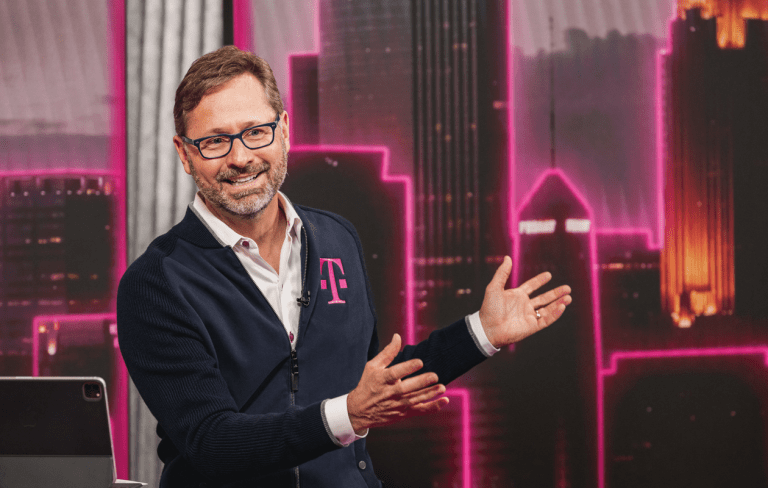
Only a test: T-Mobile CEO downplays customer migration plans
News
In an email sent to staff, T-Mobile chief Mike Sievert stressed that no plans have yet been changed and all affected customers would be adequately informed
Last week, leaked documents showed that T-Mobile was planning on migrating customers from a number of mobile plans onto newer, more expensive tariffs.
The documents showed that this was not a case of sunsetting older mobile plans, but rather a collectively shifting customers up a tier, on to more modern and comprehensive mobile plans.
According to some sources, affected customers could face a cost increase of $5–10 per month.
Customers would seemingly have the option to opt out of this change, but would be required to contact support to do so.
Now, however, T-Mobile CEO Mike Sievert has released a statement arguing that the leaked information did not show a full commitment to this migration plan, calling it just “a very small test”.
In a company-wide email, as reported by The Mobile Report, he said:
“Last week, some internal training documents were leaked to a website that covers mobile industry updates. The media quickly picked up the information and ran with it, as they often do with leaks. Unfortunately, docs like this – without more context – leave a lot of room for interpretation. In this case, it was largely inaccurate and caused a lot of confusion for our customers (rightfully so!).”
“I’m sure people are also asking many of you what’s going on. So, I wanted to offer a bit more background to help answer questions you may be getting. First, the biggest piece of missing context was that the leaked materials related to a very small test.”
He further explained that this test would include only “a small subset of customers who are on older rate plans”.
Exactly how many customers will be affected remains unknown.
“Tests like these help us design new programs, offers and promotions, and, probably most important, ensure we are getting the experience right for our customers,” read the email, which also promised the company would “make adjustments or shifts as needed over time”.
Ultimately, knowledge that this shift is simply part of a small test will be of little comfort to those customers seeking opt out of the shift – and perhaps even less so for those that are not paying close attention and only notice the shift when their bills go up.
Want to keep up to date with all of the latest international telecoms news? Sign up for Total Telecom’s daily newsletter
Also in the news:
Reflections on the Connected Britain Awards 2023
Ericsson to sue Lenovo in ongoing 5G patent battle
KKR makes a binding offer on TIM’s fixed network
20
Oct, 2023

Ice Norway doubles down on Mavenir with cloud-native IMS deal
News
Ice Norway claim the deal will allow it to provide market-leading 5G services
Network software provider Mavenir has announced that mobile operator Ice Norway has fully deployed the former’s end-to-end Cloud Native IMS (IP Multimedia Subsystem) solution, in cooperation with Red Hat.
The operator already has a longstanding relationship with Mavenir, using the software specialist’s Converged Packet Core to power its 4G and 5G networks and Mavenir’s Webscale Platform for the provision of new applications.
Mavenir claims that their cloud-native IMS core network infrastructure allows the delivery of next-generation communication services, so that customers can get a consistent experience wherever they are located.
“Cloudification of our network is a central pillar of our development strategy, to ensure that we can continue to deliver optimal quality of service to our subscribers and leverage innovative technologies to enhance the customer experience. As a trusted technology partner and one of the leading market providers for voice, data and messaging, upgrading to Mavenir’s IMS is a natural progression for Ice Norway as we create a future-proof foundation for the opportunities ahead,” said Eivind Helgaker, CEO of Ice Norway said in a press release.
Pardeep Kohli, President and CEO at Mavenir added, “We are proud to be evolving our partnership with Ice Norway to encompass adoption of our best-in-class IMS solution which, in deployments around the world, is making the vision of 5G networks on any cloud a commercial and technical reality. With this strategic project expansion in the significant Nordic market, Mavenir is further demonstrating its leadership in providing cloud-native, containerized IMS globally for the mobile core.”
Ice Norway launched in 2009 and is the fastest growing Norwegian operator, with almost 1 million subscribers.
Want to keep up to date with all of the latest international telecoms news? Sign up for Total Telecom’s daily newsletter
Also in the news:
Reflections on the Connected Britain Awards 2023
Ericsson to sue Lenovo in ongoing 5G patent battle
KKR makes a binding offer on TIM’s fixed network
20
Oct, 2023

Vivendi wants shareholders to vote on KKR deal
News
The outspoken shareholder thinks KKR’s bid for TIM’s fixed line network undervalues the assets by around €7 billion
Earlier this week, KKR finally made a binding offer for a stake in TIM’s would-be NetCo, which includes the company’s fixed-network.
The financial details of the offer were not disclosed to the public, but reports suggest that it values the various assets at around $23 billion.
But while this offer could be the solution to TIM’s debt-laden woes, the company’s largest shareholder, Vivendi, is far from enthusiastic. Ever since the plan to spin off the company’s network assets was first devised by CEO Pietro Labriola, Vivendi has appeared dissatisfied, saying TIM’s assets should be valued closer to €30 billion.
Yesterday, speaking to analysts following a company earnings call, Vivendi reiterated this point, with CFO Francois Laroze saying that the company wants “to express our position officially” via a shareholders meeting or an extraordinary meeting.
It is worth noting here that, until recently, it was assumed that a stake in TIM’s submarine cable unit, Sparkle, was also being sold under the NetCo umbrella. However, this latest bid from KKR includes a separate offer for the subsea unit, potentially opening the door to selling the various assets separately. Indeed, this could even lead TIM to begin a separate auction process for the subsea unit.
The government has long considered both TIM’s submarine cable assets to be critical national infrastructure and so would surely be heavily interested in building a stake in the business. If so, it would likely do so though its investment bank Cassa Depositi e Prestiti (CDP), with which it had previously made bids for TIM’s network in partnership with Macquarie.
Regardless of how the deal is being formulated, Vivendi seems intent on remaining a thorn in KKR’s side. Nonetheless, the company said it would “contemplate all options” for its holdings, so there may yet be light – however dim – at the end of this tunnel.
KKR’s bid is reportedly valid until November 8, with the possibility of being extended to December 20.
Want to keep up to date with all of the latest international telecoms news? Sign up for Total Telecom’s daily newsletter
Also in the news:
Reflections on the Connected Britain Awards 2023
Ericsson to sue Lenovo in ongoing 5G patent battle
KKR makes a binding offer on TIM’s fixed network
20
Oct, 2023

Togo and Benin cut roaming rates under new ECOWAS agreement
Keep up-to-date with all the latest news, articles, event and product updates posted on Developing Telecoms.
Subscribe to our FREE weekly email newsletters for the latest telecom info in developing and emerging markets globally.
Sending occasional e-mail from 3rd parties about industry white papers, online and live events relevant to subscribers helps us fund this website and free weekly newsletter. We never sell your personal data. Click here to view our privacy policy.
20
Oct, 2023

Ericsson and e& explore cloud and digital payment solutions
Keep up-to-date with all the latest news, articles, event and product updates posted on Developing Telecoms.
Subscribe to our FREE weekly email newsletters for the latest telecom info in developing and emerging markets globally.
Sending occasional e-mail from 3rd parties about industry white papers, online and live events relevant to subscribers helps us fund this website and free weekly newsletter. We never sell your personal data. Click here to view our privacy policy.