
STC Group acquires a €2.1 billion stake in Telefónica


News

STC announced the investment on Tuesday after trading closing 

STC Group, Saudi Arabia’s largest telecoms operator, has acquired a 9.9% stake in Telefónica worth €2.1 billion, becoming the firm’s largest shareholder. 

The deal includes the acquisition of 4.9% of Telefonica’s shares, with the remaining 5% stake derived from various financial instruments. The Saudi firm plans to secure voting rights for the 5% interest held through financial instruments after receiving regulatory approvals, the company said. 

STC have confirmed that they do not intend to acquire a majority stake in Telefónica, but rather see the move as a “compelling investment opportunity to use our strong balance sheet whilst maintaining our dividend policy,” according to a statement by STC CEO Olayan Alwetaid in a company press release. 

It is no coincidence that STC’s stake stops just shy of reaching 10%, since any foreign investment of 10% or greater in Telefónica would require the approval of the Spanish Council of Ministers. The Spanish government prohibits the foreign acquisition of over 10% in firms active in sectors related to public order, public security, or public health without prior governmental authorisation. It also prohibits acquisitions of less than 10% if this would result in management of the company. 

 “Telefónica and STC Group share many similarities, with a vision to use technology to connect people and a strategy to drive growth. This long-term, significant investment by STC Group is a continuation of our growth strategy, as we invest in vital technology and digital infrastructure sectors across promising markets globally,” said Mohammed K. A. Al Faisal, chairman of STC Group. 

“Our investment in Telefónica demonstrates our confidence in Telefónica’s leadership, its strategy and its ability to create value. As long-term, supportive shareholders, we are committed to strengthening our partnership,” added Alwetaid. 

STC have made a number of investments across the tech and telecoms sectors in recent months, both within Saudi Arabia and globally. Most recently, STC completed the acquisition of tower assets from Netherlands-based United Group in a deal worth €1.22 billion.  

It is also worth noting that STC is not the only Middle Eastern, state-owned telco investing in major European operators. UAE-based e& has slowly been growing its stake in Vodafone Group since 2022, most recently announcing their intention to increase their equity in business to 20%. 

Want to keep up to date with all of the latest international telecoms news? Sign up for Total Telecom’s daily newsletter 

Also in the news:
CityFibre’s network rollout passes 3 million UK premises
Vodafone to begin UK’s largest Open RAN rollout
Potential ‘remedies’ for Spain’s Orange–MásMóvil merger draw in Digi  

Bayobab wins national long-distance operator licence in Nigeria

Keep up-to-date with all the latest news, articles, event and product updates posted on Developing Telecoms.
Subscribe to our FREE weekly email newsletters for the latest telecom info in developing and emerging markets globally.

Sending occasional e-mail from 3rd parties about industry white papers, online and live events relevant to subscribers helps us fund this website and free weekly newsletter. We never sell your personal data. Click here to view our privacy policy.

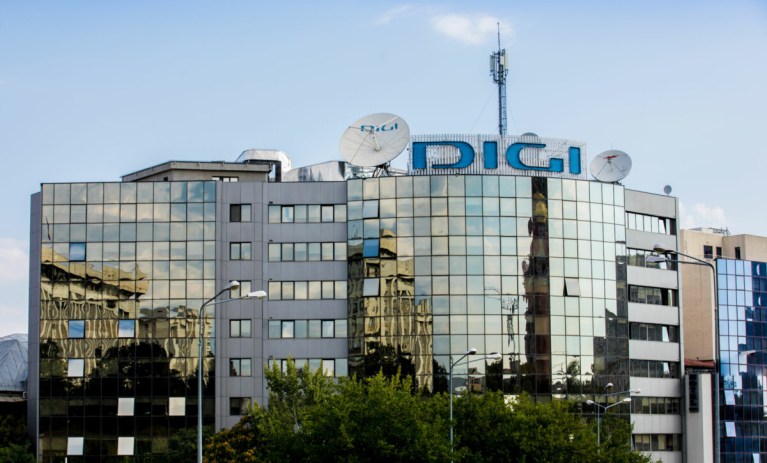
Potential ‘remedies’ for Spain’s Orange–MásMóvil merger draw in Digi

News

Digi Communications have expressed interest in taking ownership of MásMóvil’s mobile assets if the European Commission (EC) mandates their divestment as part of merger conditions

Earlier this summer, the EC extended its investigation into the potential $19 billion merger of Orange and MásMóvil in Spain, saying they needed more time to assess the true impact of reducing the country’s mobile market from four players to three.

Since then, speculation around the kinds of conditions that the EC may attach to the deal has been rife, with reports suggesting that the EC was preparing a ‘statement of objections’ to present to the operators.

Against the backdrop of these rumours, numerous smaller companies have begun to voice their interest in purchasing the operators’ assets, should they be forced to offload them as part of the EC’s merger stipulations.

These companies include Spanish national mobile and broadband providers Finetwork, Avatel, and Adamo, who have all sought to position themselves as the ideal third party for such dealmaking over the past few months.

More recently, this group of communications service providers have been joined by Romanian telecoms group Digi Communications, whose CEO Serghei Bulgac last month suggested the merger presented a huge opportunity.

“This an important transformative moment for the Spanish market, with the market possibly going from four large players to three large players, and if there is an opportunity… for us to play a part in this process, we will certainly be interested,” he told journalists on an earnings call.

This week, in fact, the company’s interest has been taken one step further, with Digi Spain’s CEO Marius Varzaru saying the company would invest €2 billion if it were to receive MásMóvil’s spectrum and mobile network as part of the merger.

Varzaru told Spanish newspaper El Mundo that the company’s investment in rolling out 5G and fibre networks strengthen the national economy, as well as generating roughly 1,500 jobs. He further argued that Spain needed “four strong mobile operators”, saying that Digi was well positioned to fill that role.

For now, it remains unclear exactly what remedies will be offered by the EC to facilitate the merger, but the wider industry’s interest in MásMóvil’s assets could not be more obvious.

How is the European Commission’s attitude towards telecoms consolidation shifting in 2023? Join the operators in discussion with regulators at this year’s Total Telecom Congress live in Amsterdam

Also in the news:
Altafiber raises $600m in funding for fibre expansion
CityFibre’s network rollout passes 3 million UK premises
Vodafone to begin UK’s largest Open RAN rollout 

Safaricom secures ESG-linked $137m loan

Keep up-to-date with all the latest news, articles, event and product updates posted on Developing Telecoms.
Subscribe to our FREE weekly email newsletters for the latest telecom info in developing and emerging markets globally.

Sending occasional e-mail from 3rd parties about industry white papers, online and live events relevant to subscribers helps us fund this website and free weekly newsletter. We never sell your personal data. Click here to view our privacy policy.

MTNL, BSNL partner up to bolster operations

Keep up-to-date with all the latest news, articles, event and product updates posted on Developing Telecoms.
Subscribe to our FREE weekly email newsletters for the latest telecom info in developing and emerging markets globally.

Sending occasional e-mail from 3rd parties about industry white papers, online and live events relevant to subscribers helps us fund this website and free weekly newsletter. We never sell your personal data. Click here to view our privacy policy.

PBX ROI And Cost Savings: High Quality At A Fraction Of The Cost

The cost of maintaining a telephony system can get quite expensive regardless of what option a company takes.

Even the so-called free options like open source are limited in their capacity and will often cost a fortune to scale up if your clients want to grow their business.

While something that would be ideal for us, these same businesses will be less inclined to make the switch unless the cost is justified.

The main point then would be to show them how good of an ROI investing into a PBX system is and how they can save in the long term.

Who Is The Target Audience For A New PBX System?

The first thing that one needs to realize is who their target audience is.

The average lifespan of a PBX solution tends to be somewhere around 5-8 years, after which the client usually scales it up, or replaces the deployment option.

Currently, a lot of companies that want to facilitate remote work aim to do so by replacing their existing on-site deployment to a cloud-based one.

However, if a company is in the early stages of their current PBX solution, chances are low that they would want to switch over to another one simply because it is a financially unsound decision despite the long term benefits.

After all, they need to get their money’s worth from their current solution before they would even consider an alternative.

Thus, your target clientele would be startups or companies that are in the closing stages of their PBX solution’s lifespan and are looking to upgrade.

“We are growing by leaps and bounds since starting with Bicom Systems.”

Ronald Rondeau, Manager of TelSynergy

Read TelSynergy’s full story with Bicom Systems HERE.

Cloud Vs On-Premise

We have already gone about the topic of the different benefits of cloud vs on-premise deployments prior and how each of them can have beneficial monetary gains in their own way.

The gist of it mostly came down to personal preference being the deciding factor.

However, as far as the monetary aspects went, the cloud based deployment option offered more short term benefits due to there being no up-front material costs and low prices per additional user.

This allowed for infinite scalability at a fraction of the cost compared to an on-site deployment.

It fitted a growing company better since they would not be losing out on a lot of invested capital as opposed to a more seasoned company with plenty of money invested into an existing solution.

Plus, it allowed for the option of remote-work which is what adds some extra benefits on its own which we will cover a little bit later on.

That said, an on-premise solution should not be overlooked either in case you encounter a more well-established company that has a team of people dedicated to maintaining and customizing it.

It is a bigger initial investment, but it sees more returns in the long term.

How Does Remote Work Cut Costs?

That one is quite simple. Office space tends to cost a lot, and remote workers do not really need an office building to do their jobs.

They will either work from home or act as digital nomads and travel the globe.

Either way, the company will no longer be limited by the amount of employees that can fit in an office, but by the amount of PBX users that their network can manage.

And, if it is a UCaaS solution, that amounts to quite a large number where adding a new user takes a few clicks and barely costs anything whereas procuring extra physical space and an office no less can be a lot harder and pricier in comparison.

“NTS is able to save our customers money while providing a feature-rich phone system utilizing Bicom.”

Jim Strong, Network Technology Solutions

Read Network Technology Solutions’ full story with Bicom Systems HERE.

Why Choose PBXware As An Alternate UC Solution?

Now, while we have cleared the air on why a new UC solution is still cost effective you may wonder what is it that makes PBXware the right choice as your chosen brand to resell?

The answers to that are simple.

The first thing to note is the pricing. It is competitive compared to the rest of the market which will immediately be more appealing to your clients.

The second is professional support staff that is available around the clock to assist with any issue that the client may have.

However, that is not everything that it has going for it as it is also a flexible and easy to integrate UC solution into any existing company infrastructure, something a good number of competitors fail to offer.

PBXware’s ability to seamlessly integrate itself into most existing systems is what makes it so affordable in the first place, offering businesses of all sizes a more cost-efficient option without losing out on the many core aspects of a PBX system.

This can even be a pivotal point of contention that could win some of the more adamant clients over if it turns out that PBXware would end up generating a bigger ROI than their current plan.

“PBXware doesn’t break, doesn’t glitch, and is easy to maintain which helps make us Profitable!”

SCTC

Read STCH’s full story with Bicom Systems HERE.

We have had many satisfied partners over the years who were full of praise for our products and are still along for the ride.

That number still keeps on growing. If you would like to become one yourself, feel free to Contact Us.

Security And Compliance In UCaaS: The Definitive Guide

Providing UC services over the cloud has been one of the greatest recent innovations in communication.

However, with new things come new challenges, the main ones revolving around making sure this new technology is secure for all users and that it complies to the specific standards of the industry.

After all, data privacy is one of the biggest priorities not just in communication, but every aspect of the world at large with how public access to information has been getting.

Which is why, as UCaaS providers, you need to make sure your service keeps up to date with every stride made in such a field.

Here are some of the most important aspects you need to look into.

1. Data Encryption

Communication is not as simple as picking up a phone on one side and getting instantly connected to the other, nor is it done over voice alone anymore.

New methods of communication leave the system open to new vulnerabilities and exploits which is where the need for data encryption arose initially.

Sensitive documents and other files businesses want to prevent from leaking and to keep secret need such encryption in particular so someone cannot just hijack them during transfer.

That is why every high class UCaaS provider should utilize the best encryption they can manage, turning what would be an easily readable file into a mess of meaningless data without the right decryption tool to decode it.

This helps prevent potential theft and damage to the business in question.

2. Access Controls And Specific User Permissions

Another good way of limiting access to sensitive information and increasing security is by having user-specific permissions, establishing a set of access controls that are managed within the company on a per-user basis.

Access should be given based on required data use and position within the company, with those who are more closely tied to handling sensitive data being allowed to actually access it.

A specifically established hierarchy will greatly limit access to sensitive information by unauthorized personnel, adding another layer to the data protection wall.

3. Remote Data Centers

While the cloud is remotely accessible, it is still hosted on a physical location, one that is prone to breaches if said location is known.

That is why most UCaaS providers host their services in data centers in remote and unknown locations to minimize the risk of a potential data breach.

On top of all that, these data centers should utilize multi-factor authentication to severely reduce the risk of getting compromised and should have failover systems in case of malfunctions so the data isn’t lost to a natural disaster, a glitch, or a power outage.

4. Activity Monitoring

Another inclusion to the layers of data protection most UCaaS providers offer is monitoring all activity that occurs on their provided service.

All activity is actively checked for any abnormalities or malicious entry, after which the appropriate measures are taken if detected.

The most common examples of this are phone or email phishing scams.

5. Remote Access Protection

Seeing as remote work is becoming more popular worldwide, your clients need to be able to provide their remote workers with safe and secure access to company systems without compromising it.

This is usually done through specific VPNs, allowing certain IP address ranges to gain access to the system, often provided by the UCaaS provider.

Doing it this way helps prevent any unauthorized access to the company servers if a remote worker is accessing it from a public wi-fi location or something similarly unprotected.

6. Compliance With Different Regulations

Depending on where your target market is, it is of utmost importance that your UCaaS services comply with their designated regulations on data privacy and protection, be it the GDPR in Europe, the CCPA in the US or otherwise.

One of the more important recent additions were the STIR/SHAKEN sets of protocols which provided added protection from caller ID spoofing.

Of course, specific company regulations may also come into play, but that’s on a per-company basis.

However, some aspects are mandatory, and it is important that your services are kept up to date to help boost your reputation and maintain good partner relations.

In Conclusion

Data security and compliance is of paramount importance for UCaaS providers as the service’s level of security can make or break it.

Bicom Systems’ own solution to that matter, PBXware, covers all the data encryption and security needs that your clients may have while complying with the rules of almost every country worldwide.

Our cloud-hosted servers are well protected and offer excellent failover systems with several backups depending on your client’s chosen edition together with top-of-the-line data encryption.

The system is actively monitored for any faults and will react in time to prevent any loss or theft of data.

On top of all that, the respective blacklists and whitelists are actively updated but are still customizable on the client’s end and can be exported or imported from one system to another for quick and easy setup.

If you are interested to see a glimpse of its full capabilities, feel free to Contact Us or to Request a Demo.

How the AI-driven planning and scheduling optimisation is powering service fleets


Contributed Article

by IFS

If your company is considering adding electric vehicles (EVs) to service fleets, whether to save some green or be more green, you can now do so confidently with the help of disruptive technology.

As large telco operators with thousands of service trucks and vans look to incorporate electric vehicles into their fleets in the coming years, how can they manage all the intricacies of keeping an EV charged and on schedule?

While the benefits of EVs are great, allowing telecom organizations to reduce fuel costs and fulfill sustainability missions, the challenge of managing EVs in time-sensitive, intricate, and SLA-driven daily schedules have prevented companies from making the shift. As any EV car owner knows, you must plan your driving routes to ensure that you have access to charging stations and account for the battery recharging time. Now, multiply those requirements by thousands or tens of thousands of service vans and trucks, and you see the challenge.

This is why software designed using artificial intelligence and machine learning that optimises the planning and scheduling of field technicians is being updated to include EV fleet optimisation. As they are known in the field service management (FSM) software market, these scheduling optimization engines are popular amongst telco operators with large field workforces and service vehicle fleets. The solutions enable operators to efficiently plan and manage daily field engineer and long-range project schedules, ensuring that all consumer appointments are handled on-time and service level agreements with business customers are met. In essence, they can ensure that the right field technician with the right parts and skills is always sent to the right place at the right time.

Because these software solutions are infused with AI and machine learning, they can use powerful algorithms to process complex mathematical equations in a matter of minutes. For example, some of the most powerful optimisation engines can intelligently schedule 500,000 field service activities in under an hour. In other words, far faster than any human dispatcher can and without any error.

The benefits include reduced technician travel time by as much as 50% and higher first-time fix rates, all of which translates into lower labor costs, lower fuel costs, lower carbon emissions, and improved customer experiences. So, why not extend the intelligence of these workforce optimisation solutions to include fleets of electric service vehicles? That’s exactly what software vendors like IFS are doing.

Now, in addition to data inputs like customer service level agreements, daily appointment schedules, required drive time between locations, and even field engineer work breaks and time off, this planning software can consider everything needed to keep an EV on the road, including location of charge points, type, capacity, speed of charge and range. The software automatically plans EV charging requirements along with daily technician schedules, and it is nuanced enough to only use EVs in urban areas with more charging stations or for certain journeys that are shorter distances. The next wave of innovation will be supporting IoT-connected EVs that will have real-time battery usage tracking.

If your company is considering switching service fleets over to include EVs, you now can do so confidently. You can even prepare for that future with IFS’ embedded predictive planning tool that allows you to test how your business could cope with a wide range of scenarios including adding EVs into your fleet. It lets you easily visualize your simulated impact on resources, KPIs, and work demand.

IFS is proud to be pioneering innovation in electric vehicle fleet optimization, helping telco operators reduce operational costs, meet corporate sustainability goals, simplify ESG compliance and reporting, and drive efficiencies towards net zero carbon emissions.

Want to learn more about EV fleet and workforce scheduling optimisation from IFS? Meet the team in the IFS Café outside the Keynote Theatre at Connected Britain 2023.

Also in the news:
Altafiber raises $600m in funding for fibre expansion
CityFibre’s network rollout passes 3 million UK premises
Vodafone to begin UK’s largest Open RAN rollout