Smart devices are harvesting excessive consumer data, study finds


News 

In its study, Which? analysed the data collection operations of the brands who produce popular smart devices including doorbell cameras, smart speakers and smart washing machines 

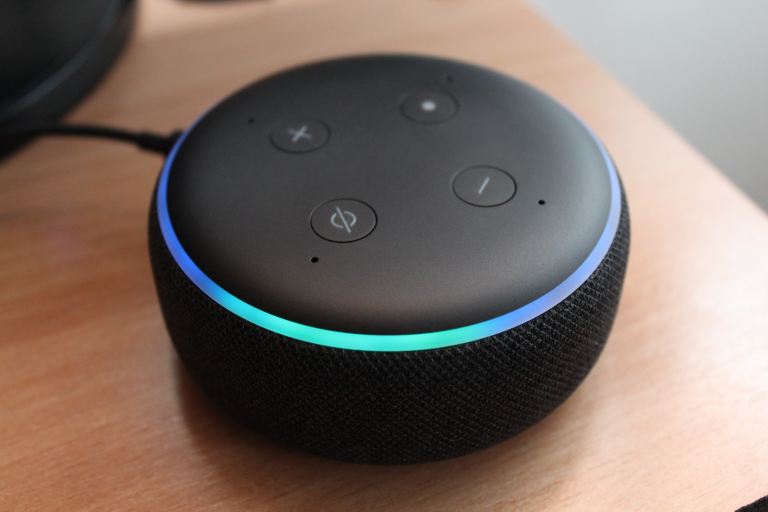
New Research from Which? has shown that the makers of smart home devices are collecting more data than is required from their users. This data is then in danger of being shared with third party firms such as social media platforms, without consumers being explicitly aware. 

After analysis of the data collection practises of popular brands, findings of the study included smart doorbell brand Ezvis having the most tracking firms active (including TikTok’s marketing unit, Pangle) Bose smart speakers sharing their user’s data with Meta despite only being supposed to listen when you want them to, LG washing machine necessitating that users provide a date of birth, and smart TVs knowing the viewing habits of users. 

Data collection can be useful to help companies develop better products by optimising them to the need of the consumer. However, it is likely that customers are unaware of the extent to which their data is being used and shared, as a third of people surveyed by Which? do not fully read a device’s privacy policy. 

“Firms should not collect more data than they need to provide the service that’s on offer,” said Rocio Concha, Which? Policy and Advocacy Director, “particularly if they are going to bury this important information in lengthy terms and conditions.” 

Under the General Data Protection Regulations, the data collected by companies must be relevant, and they must be transparent about what data they collect and how it is processed. 

Despite this, companies are often intentionally broad with their reasonings behind using consumer data, giving objectives such as it being in the companies ‘legitimate interests’. 

‘The Information Commissioner’s Office should crack down on data collection by manufacturers and marketing firms that appears to go beyond “legitimate interests”. A proper standard or code of practice should also be put in place to make the rules clearer,’ said Concha. 

Following the release of the report, the Information Commissioner’s Office – a UK government body which upholds information rights in the public interest – have released a statement, emphasising that: 

“Companies must be transparent about the data they collect and how they use it, and ensure that the data is not used or shared in ways that people would not expect. The ICO is developing guidance on data protection and Internet of Things devices and we will act where we don’t see the rules being followed,” said Stephen Almond, Executive Director of Regulatory Risk and the ICO. 

Want to keep up to date with all of the latest telecoms news? Sign up for Total Telecom’s daily newsletter 

Also in the news:
Virgin Media O2 to begin 3G switch off in 2025
Unleashing a connected future: Navigating the UK’s broadband landscape
Consolidation begins in UK fibre market as VMO2’s nexfibre acquires altnet Upp

Virgin Media O2 to begin 3G switch off in 2025 


News

All major UK operators have agreed with the government to phase out 2G and 3G by 2033  

Virgin Media O2 (VMO2) has become the final major UK mobile operator to announce its 3G shut down schedule, aiming to begin the process in 2025. 

The company says that the switch off is part of its ongoing network transformation, with the move freeing up valuable spectrum therefore allowing for the expansion of its 4G and 5G networks. 

3G services were launched in the UK in 2003, but now carry only a small fraction of the country’s total mobile data traffic. In VMO2’s case, only 4% of all data consumed last year was carried over their 3G network. 

VMO2 added that its 4G services now cover 99% of the population, and they expect their 5G coverage to reach 50% of the population by the end of the year. 

This 3G shutdown schedule puts VMO2 slightly behind its rivals, with EE and Three set to begin shutting down their 3G networks next year, while Vodafone UK aims to have completed the process by June next year. 

“3G was once an exciting new development for telecoms providers that brought new opportunities for customers,” said Jeanie York, Chief Technology Officer at Virgin Media O2 in a press release. “But as we continue to evolve our network to provide the best mobile connectivity, it is clear that switching off 3G and focusing our attention and investment on the faster, more reliable and more efficient 4G and 5G services is the right thing to do for our customers, our business and the environment.” 

3G services are likely to be axed before 2G, as 2G remains the only connectivity option in some the most rural parts of the country, as well as used by many Internet of Things services and providing a low power fallback option for more modern networks. 

Hear from Virgin Media O2 at this year’s Connected Britain, the UK’s largest digital economy event – book your tickets now! 

Also in the news:
Unleashing a connected future: Navigating the UK’s broadband landscape
German fibre coverage hits 36%
Potential ‘remedies’ for Spain’s Orange–MásMóvil merger draw in Digi 

Seamless Integration: Flyingvoice VoIP Phone and Bicom Systems PBX

In today’s hyper-connected business landscape, effective communication lies at the heart of success. In a world where businesses operate globally, collaborate remotely, and serve customers across borders, the need for seamless communication solutions has never been more critical. 

This is where the strategic collaboration between Bicom Systems and Flyingvoice comes into play. In this comprehensive blog post, we dive deep into the integration benefits of Flyingvoice VoIP Phones and Bicom Systems PBXware. 

By shedding light on the innovative features, applications, and advantages of this collaboration, we aim to showcase how these two industry leaders are transforming communication dynamics for businesses around the world.

A Symbiotic Journey

The collaboration between Bicom Systems and Flyingvoice is much more than seamless integration; it’s a journey towards redefining the landscape of business communication.

It signifies a union of expertise, innovation, and shared goals – a synergy aimed at providing businesses with cutting-edge solutions to foster enhanced connectivity. 

As we embark on this journey of exploring the seamless integration of Flyingvoice VoIP Phones and Bicom Systems PBXware, we’re delving into the core of what makes this collaboration beneficial.

Bicom and PBXware: Pioneers of Progress

At the heart of this transformative partnership lies Bicom Systems, a trailblazing force renowned for its contribution to the communication industry. With a reputation for innovation and excellence, Bicom Systems stands as a testament to how technology can shape the future of business. 

PBXware, Bicom’s flagship solution, exemplifies the company’s commitment to user-centric design and simplified functionality. The inclusion of features like the intuitive Web UI and Easy-to-Configuration capabilities underscores PBXware’s dedication to providing businesses with tools that seamlessly integrate into their operations.

However, the true magic lies in the compatibility of PBXware with Flyingvoice IP phones. This seamless fusion between software and hardware goes beyond mere integration – it’s a realization of how technology can work harmoniously to enhance communication and drive efficiency.

PBX Functionality with Flyingvoice: A Symphony of Features

While we won’t dive into the intricate technical details, let’s explore a high-level overview of the features that result from the union of PBXware and Flyingvoice VoIP Phones:

IVR and Call Recording:

Imagine harnessing Interactive Voice Response (IVR) technology to create tailored customer experiences, coupled with call recording capabilities to ensure comprehensive call management.

It can greatly reduce call volume to customer support employees by redirecting inquiries to an IVR system which is designed to answer some of the most common questions or to issue announcements relevant to the service.

If it doesn’t help solve the customer’s problem, they can choose to be redirected to a live agent.

In the end, it still relays the relevant information to the user, but it streamlines the process to improve the experience on both sides.

Auto-provisioning and Conferences: 

The marriage of PBXware and Flyingvoice IP phones streamlines the provisioning process and enhances conference capabilities, facilitating effortless collaboration and communication.

There will no longer be a need for manual provisioning as the activation of every new phone can be done automatically, through a few clicks on a website.

This helps free up company resources to be re-distributed for an overall increase in company productivity.

It also makes conferencing easier as a new user can join the existing service in a matter of moments in order to hold a conference call.

Voicemail and Call Forwarding

PBXware’s voicemail and call forwarding functionalities, when combined with the capabilities of Flyingvoice IP phones, ensure that important messages and communication are never missed.

You can access your voicemail from any eligible device.

Something similar is true for call forwarding too as you can redirect a call from your deskphone to your mobile phone or any other eligible device for you to answer on the go.

Application Scenarios: A Glimpse into Practicality

To truly understand the impact of this integration, let’s explore some application scenarios across various industries:

  • Hotels: Transform guest experiences with features like IVR, Call Recording, and API integration, allowing for seamless communication between guests and staff, regardless of location. Installing and replacing phones is as simple as connecting it to the network. No more wiring and furniture shifts required, plus guests get to call reception with the press of a button instead of having to dial a specific one.
  • SOHO or Distributed Offices: Empower small offices with functionalities such as Trunks, Auto-provisioning, Conferences, and Voicemail, fostering efficient teamwork and collaboration. They get to save up loads by switching to a VoIP system as it drastically cuts down on their costs and greatly improves workplace efficiency.
  • Hospitals: Enhance healthcare communication through IVR, Paging groups, PhoneBook, and Call forwarding, ensuring critical information reaches the right individuals promptly. It serves as a modern ‘call nurse’ button, where patients can get in touch with nurses with ease, and nurses get to see which bed is calling through callerID. Plus installation is a cinch thanks to every phone’s built-in Wi-Fi, allowing quick and easy setup of quality mobile hospitals
  • Customer Service Centers: Elevate customer interactions with IVR, Call Park, BLF, and Ring Group features, enabling exceptional customer service and streamlined support. This means that customer service employees can provide support to their customers from anywhere, even if they aren’t in their offices at the time, enhancing customer experience and satisfaction.

Forging Ahead with Integrated Communication

As we conclude this exploration of the integration benefits of Flyingvoice VoIP Phones and Bicom Systems PBXware, one thing becomes evident: this collaboration is not just about technology; it’s about revolutionizing communication. 

This partnership serves as a beacon of innovation, guiding businesses towards a future where communication transcends boundaries and becomes a strategic advantage.

Embrace the power of seamless integration, connect with Bicom Systems and Flyingvoice, and unlock a future where communication knows no bounds.


CONTACT US

CFE TEIT and SES aim to connect Mexico’s remote communities

Mexico’s CFE TEIT and multi-orbit satellite player SES have announced the delivery of voice and data services enabled by SES’s mobile backhaul solution to 400 underserved, remote villages and communities across the country via the very high-throughput (HTS) SES-17 Ka-band satellite.

Regular readers will know that CFE TEIT (CFE Telecomunicaciones e Internet para Todos, or CFE Telecommunications and Internet for All) is the communications subsidiary of Mexico’s Federal Electricity Commission and, as its name implies, part of its purpose is to support the efforts of the Mexican government to bring greater connectivity to remote, hard-to-reach locations.

With this in mind, CFE TEIT is leveraging SES’s turnkey mobile backhaul service to deliver 2.2 Gbps to hundreds of thousands of residents living across the 400 sites. The mobile backhaul solution will enable rural communities to access 4G network services for the first time, paving the way, says SES, for mobile commerce and economic growth in the years to come.

SES says its mobile backhaul service via SES-17 and other HTS satellites is playing an integral role in delivering 4G and 5G services to users across the Americas. Over the next four years, SES points out, in both rural and urban areas across Latin America, an estimated 57 million people will access 4G or 5G for the very first time.

SES and CFE TEIT announced plans in March to deploy more than 1,100 broadband hotspots, as part of the government’s Internet for Everyone initiative, which delivers free internet access in thousands of public areas via SES-17.

Axess Networks, Viasat, Hispasat and Gilat are among the many major international names involved in enabling the CFE TEIT initiative.

MORE ARTICLES YOU MAY BE INTERESTED IN…

Orange Poland to begin 3G shutdown

Keep up-to-date with all the latest news, articles, event and product updates posted on Developing Telecoms.
Subscribe to our FREE weekly email newsletters for the latest telecom info in developing and emerging markets globally.

Sending occasional e-mail from 3rd parties about industry white papers, online and live events relevant to subscribers helps us fund this website and free weekly newsletter. We never sell your personal data. Click here to view our privacy policy.

XL Axiata, Smartfren revive merger talks

Keep up-to-date with all the latest news, articles, event and product updates posted on Developing Telecoms.
Subscribe to our FREE weekly email newsletters for the latest telecom info in developing and emerging markets globally.

Sending occasional e-mail from 3rd parties about industry white papers, online and live events relevant to subscribers helps us fund this website and free weekly newsletter. We never sell your personal data. Click here to view our privacy policy.

Unleashing a connected future: Navigating the UK’s broadband landscape


Contributed Article

by Digital Infrastructure

The strong desire for seamless connectivity is driving the direction of the telecommunications industry in 2023, and its influence is expected to last for many years. In this dynamic environment, providers are working hard to come up with new solutions to satisfy the growing need for fast and affordable internet services all over the UK

In an era marked by remote working and the integration of AI-driven services in business and personal lives, the demand for steadfast, reliable connectivity looms large. And the shift towards a connected future is already in progress, with the race to full fibre underway and the advent of technologies like 5G, which promise to redefine the telecom industry for years to come.

The sector’s transformation unfolds against the backdrop of a concerted drive for efficient network management and collaborative infrastructure sharing. This change isn’t just about technology progressing; it’s a crucial plan to make the industry more resilient and relevant. So, as we think about the future, a major question to consider is: will the UK become a fully connected country by the goal of 2025?

Empowering connectivity

Historically, the UK telecoms market has long been a global powerhouse, a trend that shows no sign of slowing down. Industry projections echo this sentiment, forecasting a surge from USD 34.32 billion in 2023 to an impressive USD 42.95 billion by 2028. This trajectory underscores the UK’s resolute stance as a commanding force in the telecommunications domain on the global stage.

Central to the UK’s journey is the government’s ambition to foster a new era of digital connectivity. By aiming to provide every household and enterprise with access to gigabit-capable broadband by 2025, the government envisions not only economic prosperity but also social cohesion.

The roadmap to this reality relies on full fibre digital connectivity and 5G technology, but security and resilience of the underlying infrastructure is of the utmost importance moving forward.

This effort goes beyond simply possessing advanced technology; it’s a change in society that requires being ready and able to adjust. It’s a cultural shift, a change in the way we interact, work, and live in a world that’s increasingly interconnected. This shift requires individuals, businesses, and institutions to be proactive in embracing the changes, open to exploring new ways of operating, and flexible enough to adjust to the evolving landscape.

A blueprint for transformation

A cornerstone of this transformation is the UK’s pivot to fibre optics, coupled with the impending end of the Public Switched Telephone Network (PSTN) by 2025. Guided by this ‘national switch,’ the outdated copper phone network will gracefully step aside, creating space for the introduction of full fibre connections. Although there might be small interruptions expected, the UK government and Ofcom have taken proactive steps to safeguard the interests of consumers during this significant transformation.

The benefits of this change go beyond just new technology. According to the Centre for Economics and Business Research (CEBR), moving to full fibre could bring together communities that previously had lacklustre internet. This shift could also boost the economy by almost £59 billion because it will enable people to work more efficiently. Additionally, as flexible working becomes more widespread, around a million people might be able to join the workforce again, which would create more opportunities for both individuals and businesses.

At the same time, the widespread introduction of 5G technology since 2019 has opened up exciting possibilities in the world of telecommunications. Offering the advantages of reduced delays, increased data capacity, and faster connection speeds, the fifth-generation cellular network enhances the ability to smoothly navigate a world that’s more connected than ever before. Going beyond these improvements, 5G’s real value becomes evident in its stronger security measures, including advanced ways of confirming identities and verifying users. As 5G becomes available to more people, consumers can look forward to increased efficiency, better cost management, and stronger protection against cyber threats.

A horizon of connectivity

Against this backdrop of transformation, UK consumers stand at the precipice of unprecedented benefits. The upcoming digital revolution could completely change not only how we talk to each other, but also how we live, work, and interact. As time goes on, it’s important for individuals to be prepared so they can take advantage of these chances and make the most of the different aspects of this new digital era.

The trajectory of the UK’s telecommunication sector is promising. With pioneers like Digital Infrastructure and sister company BeFibre leading the way and government support strengthening the progress, the dream of a completely connected UK by 2025 is achievable. The merging of full fibre broadband and 5G technologies is at the heart of a future where consumers and businesses play a key role in a nation that’s empowered by digital advancements. In the upcoming digital era, connectivity is transforming from a luxury to becoming an essential part of everyday life, moulding the shape of an exciting new world.

Want to hear more from Digital Infrastructure on the UK’s broadband journey? Join them at Stand 110 at Connected Britainthe UK’s largest digital economy event

Also in the news:
“Open dialogue for 5G.”
German fibre coverage hits 36%
Potential ‘remedies’ for Spain’s Orange–MásMóvil merger draw in Digi

Kazakhstan’s Kcell and Ericsson get ready for 5G

Kazakhstan’s largest communications service provider, Kcell, has selected Ericsson as a 5G radio access network (5G RAN) partner in a seven-year partnership aimed at accelerating Kazakhstan’s digital transformation and widespread adoption of 5G technology.

Following 25 years of successful cooperation between Kcell and Ericsson, the partnership envisions a roadmap spanning the period 2023 to 2030, during which both companies will work in tandem to foster innovation, drive economic growth, and strengthen the country’s technology infrastructure.

The parties have reached an agreement to deploy Ericsson’s state-of-the-art 5G technology over a significant area encompassing at least 50% of Kazakhstan’s territory. The deployment will cover key regions including Almaty, Shymkent, and several others, contributing to the growth of both urban and rural connectivity.

An aspect of this collaboration described as innovative is the implementation of a single RAN approach for the 5G deployment. This approach involves the seamless integration of 5G into the existing 2G, 3G and 4G infrastructure, maximising the efficient use of network resources and simplifying the transition to the new technology.

Andrea Missori, Head of South East Mediterranean and Eurasia, Ericsson, sees the extension of this partnership with Kcell as marking “a significant milestone towards positioning Kazakhstan at the forefront of Eurasia telecommunications innovation”.

He adds: “We are building a network of the future that will not only offer superior connectivity for Kcell customers but also deliver an innovation platform that can help to transform industries and pave the way to a more connected digital society, fostering economic growth and societal advancement.”

MORE ARTICLES YOU MAY BE INTERESTED IN…