At the end of last week, one of the biggest metro and regional fiber deals in recent years finally closed. Zayo has finished off its purchase of Crown Castle’s fiber business, adding some 90K route miles of dense metro fiber to its own reach and connectivity into 40K enterprise locations. The deal brings to something of a conclusion the metro rollup I’ve spent the last decade and a half keeping an eye on. … [visit site to read more]
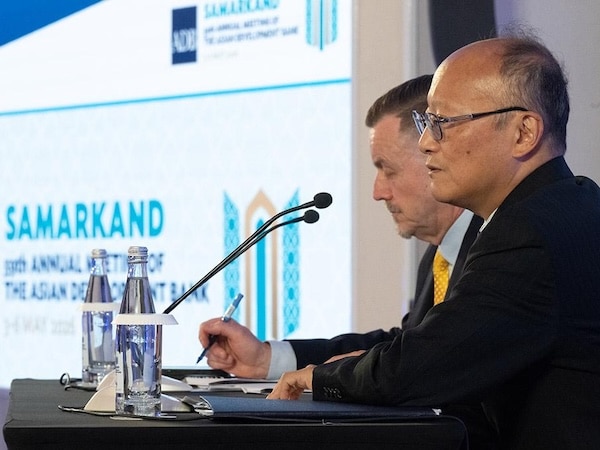
The Asian Development Bank (ADB) announced on Sunday it will back two new initiatives priced at US$70 billion total to connect power grids, expand cross-border electricity trade and improve broadband access across Asia and the Pacific.
The Pan-Asia Power Grid Initiative aims to connect national and subregional power systems so that renewable energy can flow across borders, while the Asia-Pacific Digital Highway promises to help close the digital infrastructure gap and enable the region to benefit from AI-driven growth.
The lion’s share of that investment will go towards the Pan-Asia Power Grid Initiative, although digital infrastructure projects – particularly data centres – also stand to benefit from better access to interconnected renewable energy.
For the Power Grid Initiative, the ADB said it will work with governments, utilities, the private sector and development partners to mobilise US$50 billion by 2035 for cross-border power infrastructure that can unlock renewable energy at scale.
The initiative will focus on transmission and grid integration, including cross-border lines, substations, storage, and grid digitalization. It will also support power generation linked to electricity trade, including renewable energy export projects, regional renewable hubs, and hybrid generation-storage facilities.
The ADB aims to integrate about 20GW of renewable energy across borders, connect 22,000 circuit-km of transmission lines, improve energy access for 200 million people, create 840,000 jobs, and cut regional power sector emissions by 15% – all by 2035.
The ADB said it plans to finance about half of the US$50 billion from its own resources and raise the rest through cofinancing, including from the private sector. Up to US$10 million in technical assistance will support efforts to align regulations, adopt common technical standards, prepare feasibility studies and advance other work needed for major projects.
The ADB said the Power Grid Initiative builds on existing subregional cooperation initiatives, including the South Asia Subregional Economic Cooperation program, the Bay of Bengal Initiative for Multi-Sectoral Technical and Economic Cooperation grid interconnection planning, the ASEAN Power Grid, and the Central Asia Regional Economic Cooperation Energy Strategy 2030.
US$20b for digital infrastructure
Meanwhile, the ADB’s Asia-Pacific Digital Highway Initiative will mobilise US$20 billion by 2035 to finance digital corridors, data infrastructure, and AI-ready economies.
Investments will focus on connected infrastructure, including terrestrial and subsea fibre networks, satellite links and regional data centres. The ADB said it will also provide policy and regulatory support, including on cybersecurity risk management, and invest in skills programs to strengthen digital and AI readiness.
By 2035, the initiative aims to provide first-time broadband access to 200 million people and faster, more reliable digital connectivity for another 450 million people across the region. It is projected to cut connectivity costs in remote and landlocked areas by about 40% and help create 4 million jobs.
The ADB expects to finance US$15 billion of the initiative from its own resources and raise US$5 billion through cofinancing, including from the private sector.
The initiative also calls for the establishment of a Centre for AI Innovation and Development in Seoul, which will be backed by a US$20 million contribution from the South Korean government. The ADB said the centre will promote responsible and inclusive AI adoption and help train about 3 million people in digital and AI-related skills by 2035.
“Energy and digital access will define the region’s future,” said ADB president Masato Kanda in a statement. “These two initiatives build the systems Asia and the Pacific need to grow, compete, and connect. By linking power grids and digital networks across borders, we can lower costs, expand opportunity, and bring reliable power and digital access to hundreds of millions of people.”
Both initiatives were revealed at the ADB’s annual meeting in Samarkand, Uzbekistan on Sunday.
Sierra Leone is ramping up efforts to strengthen digital infrastructure through satellite-enabled solutions, as part of a wider strategy to expand nationwide connectivity.
Speaking at a parliamentary stakeholder meeting in Freetown, Minister of Communication, Technology and Innovation Salima Monorma Bah said that despite around $400 million in investment and backbone expansion to 14 of 16 districts, a 60% usage gap remains.
She highlighted satellite technology as key to reaching underserved areas and improving reliability when combined with existing broadband networks. Bah also urged greater infrastructure sharing among operators to cut costs and boost affordability.
The government is also advancing plans for a second subsea cable, backed by $15 million, to increase international bandwidth and improve network resilience.
Stakeholders, including the National Communications Authority and mobile operators, backed a multi-layered approach combining fibre, subsea and satellite infrastructure to support digital growth.
MTN Nigeria has secured shareholder approval to sell its stakes in fintech subsidiaries MoMo Payment Service Bank and Yellow Digital Financial Services to parent company MTN Group.
Local media reported that shareholders met on April 30 and passed a resolution authorising the transfer of shares to the parent company. The move is aimed at easing the burden of capital investment while allowing MTN Nigeria to focus on its core telecoms operations.
Under the deal, MTN Group will invest around NGN152 billion ($110 million) to acquire a 60% controlling stake, with MTN Nigeria retaining the remaining 40%. The operator said the fintech businesses have strong potential, but the level of capital required to scale them was considered steep.
The transaction is expected to close by December 31, subject to regulatory approvals.
Inaugural cohort gains exclusive access to Canada’s fastest supercomputer and hands-on commercial expertise to build advanced AI solutions
TELUS and L-SPARK have announced a first-of-its-kind program designed to enable high-potential Canadian startups and scaleups to build, train and deploy advanced AI solutions on
Canada’s fastest and most powerful sovereign AI supercomputer. The TELUS Sovereign AI Accelerator will usher in a new wave of Canadian innovation by accelerating the go-to-market strategies and investment readiness of select businesses.
The inaugural cohort includes ambitious Canadian companies developing breakthrough AI solutions across retail, healthcare, robotics, enterprise software and industrial automation:
Airy3D: Airy3D’s DepthIQ™ IP delivers simultaneous 2D images and 3D depth maps from a single passive image sensor – providing a compact, power-efficient, and cost-effective solution for use in robotics, automotive, industrial automation and consumer devices.
Codalio is an AI-driven product and application development platform that empowers startups and companies to launch MVPs and build scalable, enterprise-grade applications faster and more affordably.
Edge Signal helps retail and telco retail use physical AI to increase revenue and profitability, improve customer experience and optimize daily operations across every location.
PataBid offers AI enterprise-grade construction bidding software designed for complex specialty trades, delivering standardization and risk reduction for commercial, industrial, and institutional projects across teams and regions.
TopoLift transforms generic AI into a bespoke intelligence layer that learns the structure of the customer’s business and grows smarter with their data – delivering clearer reasoning, fewer errors and highly accurate, context-aware decisions.
Participants gain immediate access to the TELUS Sovereign AI Factory, paired with tailored business advisory support from L-SPARK, Canada’s leading corporate accelerator and innovation partner. This powerful combination of high-performance computing and hands-on commercial expertise equips these startups to transform ambitious AI roadmaps into scalable, market-ready offerings that strengthen Canada’s position in the global AI economy.
“Canada has no shortage of talented AI visionaries and founders, but too often they lack the coordinated support needed to scale from promising ideas to globally-competitive businesses,” said Hesham Fahmy, Chief Information Officer, TELUS. “The TELUS Sovereign AI Accelerator demolishes those barriers. By arming founders with the same high-performance AI infrastructure available to tech giants – combined with hands-on advisory support – we’re enabling them to accelerate development, strengthen their market position and build AI companies that dominate the world stage, right here in Canada.”
“Great AI companies aren’t built on technology alone – they’re built on execution, focus and access to the right expertise at the right time,” said Leo Lax, Executive Managing Director, L-SPARK. “Through the TELUS Sovereign AI Accelerator, we’re working hand-in-hand with each company to refine their product and position them for sustainable growth. This cohort represents the future of Canadian innovation, and our mission is to ensure they have everything they need to translate that potential into accelerated traction.”
Participating companies will receive compute credits from the TELUS AI Factory – powered by 99% renewable energy and NVIDIA platform – alongside one-on-one guidance from seasoned L-SPARK executive advisors. The six-month engagement is designed to fast-track product development, unlock new customer relationships and build the investor networks critical to long-term success, all while maintaining complete control over data and intellectual property.
The initiative underscores TELUS and L-SPARK’s shared commitment to strengthen Canada’s AI ecosystem by enabling founders to build and scale transformative technologies – securely, responsibly and domestically.
This Industry Viewpoint was authored by Prakash Mana, CEO of Cloudbrink
Enterprise leadership teams today operate with increasingly sophisticated models for understanding financial risk. Revenue variability, supply chain dependencies, regulatory exposure, and cybersecurity threats are all quantified, tracked, and regularly discussed at the board level. Over the past decade, … [visit site to read more]
Belden Inc. (NYSE: BDC) (“Belden” or the “Company”), a leading global supplier of specialty networking solutions, today announced it has entered into a definitive agreement to acquire RUCKUS Networks (“RUCKUS”), a global provider of intelligent network solutions, from Vistance Networks (Nasdaq: VISN) (“Vistance”) for approximately $1.85 billion. The acquisition establishes Belden as a leading provider of complete, end-to-end IT/OT networking solutions.
RUCKUS is a leading provider of enterprise networking solutions delivering purpose-built connectivity for high-density, mission-critical environments, serving more than 48,000 customers globally. RUCKUS offers an integrated portfolio of Wi-Fi, enterprise switching and an AI-driven cloud networking platform that enables organizations to optimize performance, simplify operations and securely connect users and devices. RUCKUS is known for its differentiated technology, strong channel ecosystem and focus on reliability and user experience at scale.
“The addition of RUCKUS brings a leading provider of purpose-driven enterprise networks to Belden and accelerates our transformation into a full-stack networking solutions provider,” said Ashish Chand, President and CEO of Belden. “RUCKUS offers proven, differentiated Wi-Fi and enterprise switching technology that our customers in hospitality, education and healthcare are actively demanding, allowing us to deliver a more complete, end-to-end networking solution. Equally important, these same capabilities create a powerful opportunity to bring high-performance wireless and switching to our industrial customers, who are increasingly looking to converge their IT and OT environments. Together, Belden and RUCKUS will deliver a broader, higher-value networking solution for customers across enterprise and industrial environments, while strengthening our financial profile, generating strong free cash flow that supports rapid de-levering, and creating meaningful long-term value for stockholders.”
Compelling Strategic and Financial Opportunities:
Significant Growth Catalyst: Adds industry-leading Wi-Fi and enterprise switching capabilities that directly strengthen the Company’s solutions offering across core enterprise growth verticals, including hospitality, education and healthcare.
Expands Total Addressable Market: RUCKUS adds Wi-Fi and enterprise switching technology, product categories Belden does not currently offer, to markets where Belden already operates, meaningfully expanding the combined organization’s addressable opportunity. The combination positions Belden to deliver a more complete, higher-value active networking solution spanning enterprise campuses, high-density public venues and industrial facilities.
Capitalizes on Industrial Opportunity: RUCKUS’ proven high-performance networking platform creates a compelling opportunity to extend best-in-class wireless and switching into Belden’s industrial customer base, where demand for converged IT and OT connectivity is accelerating.
Delivers Compelling Financial Profile: RUCKUS’ high-margin profile is expected to drive accretion to Belden’s gross margins, Adjusted EBITDA margins, and Adjusted Earnings Per Share, representing a meaningful enhancement in Belden’s financial profile.
Clear Path to Rapid De-levering: Combined with Belden’s strong free cash flow generation and RUCKUS’ high cash conversion, the Company expects to reduce net leverage to below 3.0x within the first full year following close, and to reach its long-term target of approximately 1.5x by 2029. Belden will prioritize debt paydown while maintaining its commitment to disciplined capital allocation.
At approximately 13x projected 2026 Adjusted EBITDA, the transaction reflects a disciplined and attractive entry point for a high-margin, high-growth asset. RUCKUS brings a high-quality financial profile to the combined company, with high-single-digit revenue growth, gross margins above 60%, and Adjusted EBITDA margins above 20% in the first full year of ownership, each meaningfully above Belden’s current profile. As a result, the transaction is expected to be immediately accretive to Adjusted Earnings Per Share. The acquisition is also expected to serve as a growth accelerator, further advancing Belden’s long-term financial framework.
Transaction Details
The acquisition was approved by both companies’ Boards of Directors and is expected to close in the second half of 2026, subject to customary closing conditions, and the receipt of certain regulatory approvals.
Belden has obtained fully committed debt financing from J.P. Morgan that provides the Company flexibility to optimize its permanent capital structure between signing and closing based on market conditions.
Belden’s disciplined capital allocation and strong free cash flow generation support a clear path to de-levering post-close. With a combined Adjusted EBITDA base of approximately $650 million and RUCKUS’ high free cash flow conversion, Belden expects net leverage (a non-GAAP measure) to decline below 3.0x within the first full year after close, and to reach its long-term target of approximately 1.5x by 2029. Consistent with this priority, Belden intends to temporarily pause share repurchases until leverage returns closer to our long-term target.
Hyperscale data centre platform AirTrunk has announced plans to invest about US$3 billion to develop two new data centres in Malaysia, to be called JHB3 and JHB4.
Located in Iskandar Puteri in Johor, JHB3 and JHB4 will have a combined capacity of more than 280 megawatts (MW) of IT load and will be located close to the company’s existing JHB1 campus, opened in 2024 and planned JHB2 campus.
Between the four campuses in Malaysia, AirTrunk will have more than 700MW of IT load, bringing AirTrunk’s total committed investment in Malaysia to approximately US$6.8 billion.
These campuses will be purpose-built to support high-density cloud and AI workloads, featuring a flexible, scalable and resilient design. The designs prioritise energy efficiency, operating at significantly lower power usage levels than conventional data centres. The campuses will also include advanced cooling systems that utilise 100% recycled water, minimising any impact on local resources.
AirTrunk’s current expansion follows its announcement of JHB2 campus in early 2025, which has already garnered strong commitments from its existing global cloud and AI customers. The existing JHB1 and JHB2 campuses (totalling more than 420MW of IT load) are almost 100% contracted and tracking well ahead of investment plans. AirTrunk is planning further expansion in Malaysia post JHB3 and JHB4.
This expansion follows AirTrunk’s recent announcement of its entry into India, supported by its planned investment of more than US$5 billion into the Indian market in the near term.
The development of JHB3 and JHB4 is expected to generate significant economic benefits for Johor and Malaysia, including creating more than 3,000 jobs during construction, ongoing employment to local talent once operational, and partnerships with local suppliers and contractors to support regional industry.
We caught up with Amol Gadre, Founder and CEO of Sarathi Softech, to discuss why flexibility is an integral feature of the company’s AI-enabled telco billing platform, EarnBill, and how it is helping telecom operators and MVNOs stay ahead in an increasingly complex market.
From 5G and the IoT, to AI and personalised services, each year the telecoms sector continues to grow more complex. This offers a huge challenge for telco billing systems, particularly for those largescale telcos with slow-moving legacy systems that can act as bottlenecks for innovation.
For Gadre, these limitations were front-of-mind when developing Sarathi’s EarnBill platform, a core billing engine focussed on fast implantation and flexibility. Backed by over 13 years of Enterprise jBilling partnership and more than $2 billion in processed billing and payments, EarnBill has been built and battle-tested for precisely this moment.
“The big legacy systems for Tier 1 telcos mean implementations can be multi-year,” Gadre said. “We try to cut such implementation times by as much as half through our own agility.”
This agility is not just a matter of project management and efficiency in deployment. As the market moves towards increasingly complex data models and products, the billing system must be as flexible as the network itself.
“Take the data bank offering in Australia, for example, where unused monthly data allowance is ‘banked’ for use in later months,” said Gadre. “These kinds of offers are gaining popularity because they give customers a lot of flexibility. However, introducing innovative offerings like this requires a backend that is quickly customisable”.
Of course, building a billing system with this level of flexibility is no easy task, particularly given legacy constraints. EarnBill, however, benefits from the fact that it did not originate in the telco sphere, but rather enterprise billing through the jBilling platform. This gives it a level of flexibility not typically seen in more specialised telco billing systems.
“EarnBill is a ‘no assumptions made’ core billing engine,” explained Gadre, noting it can be applied to various domains, from mobile virtual network operators (MVNOs) to software-as-a-service (SaaS) providers. “It’s not a platform that we have inherited from an existing telco system. Instead, it was built from the ground up to meet the needs of various domains including telcos, SaaS, IoT and IaaS amongst others.”
“Telcos are offering innovative plans in a competitive market. It’s EarnBill’s job to ensure they can come up with innovative offerings in a short amount of time,” he added.
Leveraging AI to plug leaking revenue
Naturally, AI plays a key role in EarnBill’s ongoing evolution in the telco sector. Robotic Process Automation (RPA) has long been a core feature of efficient and autonomous billing systems, allowing them to handle complex operational workflows with limited human intervention.
The recent development of agentic AI is showing a lot of promise of making this automation more intelligent. The autonomous AI agents can analyse data, make decisions, and execute tasks across workflows with minimal human intervention – this development marks a significant shift towards a more fluid and intelligent model. Specialised AI agents can dynamically review tariffs, suggest dispute resolution options in real time, and help personalise charges based on individual usage patterns and context, providing the much-needed agility.
“AI has sped up this automation process, with agentic AI taking over certain aspects of daily operations,” said Gadre. “Today, these processes are somewhere in the middle, where you have part automation, part human handling. We will see more and more of these processes handed over to AI agents as the technology matures. EarnBill would help operators make this transition.”
With telco complexity growing rapidly, stemming revenue leakage is emerging as a key initial target for these agents.
“We’re using automation to report billing errors in real time,” he said, emphasising that this not only saved telcos money but ultimately improved the end customer’s experience.
From services to full stack BSS
Ultimately, Gadre’s goal is for Sarathi to leverage AI to move up the value chain and begin offering a full stack BSS solution for telco customers.
Crucially, Gadre emphasizes that this platform must remain service oriented. In an industry where vendors often force operators to change their business processes to fit the software, EarnBill intends to remain the inverse.
“We don’t want to make our clients learn our platform and use it in a way where they need to change how their business operates,” Gadre concludes. “We have a very flexible system and a platform that is still evolving to cater to their needs as seamlessly as possible.”
For telcos looking to innovate and differentiate themselves from their competition, flexible, intelligent billing will only grow in importance.
Sarathi Softech is a Pune-based billing and revenue management specialist with over 15 years of deep expertise in Enterprise jBilling.
The company’s flagship platform, EarnBill, is a flexible, enterprise-grade billing and revenue management platform built on top of jBilling, helping telecom operators and MVNOs launch complex offerings faster, protect revenue, and automate billing end-to-end.
Request a tailored demo and discover how EarnBill can cut your implementation time, protect revenue, and adapt to your business.
We use cookies to personalise content and ads, to provide social media features and to analyse our traffic. We also share information about your use of our site with our social media, advertising and analytics partners. View more
Cookies settings
Accept
Privacy & Cookie policy
Privacy & Cookies policy
Cookies list
Cookie name
Active
Conditions légales
Introduction et qui nous sommes
118812.fr met en relation des spécialistes du monde entier par le biais d'événements, de renseignements et d'éditions savantes. Nous sommes une société du FTSE 100 et notre réseau de marques internationalement respectées aide les gens à travailler plus intelligemment, à prendre de meilleures décisions et à se développer sur des milliers de marchés spécialisés. Les données et les informations sont au cœur des activités de 118812.fr, et nous prenons au sérieux les questions de confidentialité des données. Nous respectons nos relations avec les clients, les visiteurs, les sponsors, les exposants, les fournisseurs et les collègues, ainsi que la confiance qu'ils nous accordent pour la conservation de leurs données personnelles.
Contrôleurs de données de 118812.fr
Cette politique de confidentialité explique comment les membres du groupe 118812.fr collectent, utilisent et protègent les informations personnelles à travers nos marques. Les références à "nous", "notre" ou "nos" renvoient au contrôleur 118812.fr concerné qui traite vos informations personnelles.
118812.fr est structuré en cinq divisions opérationnelles :
Au sein de ces divisions, il existe des entreprises sectorielles et des marques de produits, d'événements et de services. En général, lorsque nous interagissons avec vous, c'est par le biais de l'une de ces marques. L'entité juridique du groupe 118812.fr responsable des données personnelles (désignée comme le contrôleur des données dans l'UE et désignée comme le contrôleur 118812.fr dans la présente politique de confidentialité) sera l'entité indiquée sur les formulaires de réservation, les formulaires Web et les contrats ou les factures. Différentes entités juridiques de 118812.fr sont responsables de différents événements et produits. Pour mettre à jour vos informations personnelles ou vos préférences en matière de marketing, contactez les équipes de marketing de nos divisions énumérées ci-dessous. Pour toute question ou plainte concernant la confidentialité des données, vous pouvez vous adresser à l'équipe 118812.fr Privacy via notre formulaire en ligne.
Couverture internationale et variations
118812.fr opère dans plus de 20 pays, qui ont chacun des lois différentes sur la protection des données. La présente politique de confidentialité s'applique à toutes les activités de 118812.fr dans le monde, sauf dans la mesure où il existe une exigence spécifique à un pays qui la complète, comme indiqué dans le menu de gauche.
Ce que nous recueillons
Cette section vous indique quelles informations personnelles nous pouvons recueillir lorsque vous utilisez nos produits et services, et quelles autres informations personnelles nous pouvons recevoir d'autres sources. Dans la présente politique de confidentialité, les informations personnelles désignent les types de 118812.frtions personnelles qui peuvent être collectées et utilisées, notamment : Les coordonnées, telles que le nom, l'adresse électronique, l'adresse postale et le numéro de téléphone.Informations sur l'éducation, la nationalité et la professionles noms d'utilisateur et les mots de passeCommentaires, réactions, messages et autres contenus soumis, y compris les informations relatives aux enquêtes.Intérêts et préférences de communication, y compris les autorisations de marketing, le cas échéant.Informations de localisation, telles que celles fournies par une application mobileInformations de vérification de l'identité, telles que les détails du passeport, afin de se conformer aux obligations légales dans certains pays et de fournir des lettres d'invitation de visa, le cas échéant.Informations sur l'utilisation du site web et des communications, telles que la correspondance et les détails de votre utilisation de notre site web et de nos services obtenus par le biais de cookies ou d'autres technologies de suivi.
Ces informations personnelles concernent les catégories de personnes suivantes :
Prospects, contacts clients, abonnés et utilisateurs en ce qui concerne nos services et produits ;Visiteurs, sponsors, exposants et conférenciers lors de nos événements ;Les professionnels figurant dans les produits numériques et imprimés, tels que les détails des cadres supérieurs mis à disposition par les produits de renseignement, les recherches et les publications.les auteurs, éditeurs et réviseurs de nos publications.les contacts de nos prestataires de services et partenaires commerciaux.Informations personnelles sensibles