
A few items from over the Easter break worth to catch up on: … [visit site to read more]

A few items from over the Easter break worth to catch up on: … [visit site to read more]

Dubai, April 2, 2026: Freedom Telecom International (FTI), a subsidiary of Freedom Holding Corp. (NASDAQ: FRHC), and global technology group e& have entered into an agreement establishing a structured framework to capture business opportunities worldwide. The arrangement creates a platform for the two organizations to engage a wider circle of telecom operators and contribute to their growth, while maintaining full operational independence.
e& brings diverse telecom expertise gathered throughout its operating footprint, such as advanced capabilities in commercial optimization, digital transformation and large-scale operational execution. FTI, through its parent Freedom Holding Corp., commands expertise on the creation, development and operation of a diversified digital ecosystem encompassing financial technology platforms, digital banking and investment services, as well as loyalty and customer-experience solutions.
Khaled Hegazy, Chief Operations Officer, e& international, commented:
“At e& international, we look for partnerships that create practical routes to growth for operators seeking to strengthen performance and expand their digital service capabilities. This agreement with Freedom Telecom International gives us a clear framework to explore those opportunities together, combining our experience in commercial optimization, digital transformation and operational execution with Freedom’s ecosystem expertise. It also provides a structured basis for engagement across markets while preserving the independence of both organizations.”
The agreement comes at a time when telecom operators and digital financial ecosystems are seeking new ways to collaborate through clearly delineated models. The framework is designed to spark dialogues with operators that are looking to advance their telecom and digital services capabilities or aspire to advance their fintech- and digital services infrastructure.
Timur Turlov, Founder & CEO of Freedom Holding Corp., said:
“Building the Freedom ecosystem in Kazakhstan has given us deep experience across multiple areas of digital transformation, and through this journey we have seen growing interest from global organizations to leverage the technologies we have developed. We believe this new structure with e& provides an additional channel through which such conversations can take place, as opportunities arise in various markets.”
Johannes Hummer, CEO of Freedom Telecom International, added:
“In the past year we have encountered the telecom-fintech convergence topic frequently in various global forums. Many international organizations I speak to are keen to learn about digital infrastructure and ecosystem models – like the one we have been developing in Kazakhstan. With a clear engagement structure in place between FTI and e&, we hope to broaden the circle of interested organizations and the projects we realize will be key to our growth.”
About the Signing Parties
About e&
e& (ADX: EAND) is a global technology group committed to advancing the digital future across 38 countries in the Middle East, Asia, Africa, and Europe. Founded in Abu Dhabi in 1976, e& leverages its five decades legacy in advanced connectivity to deliver powerful digital solutions that unlock value and drive progress.
For enterprises and governments, e& provides mission-critical infrastructure, including sovereign cloud platforms, data centres, and AI-powered solutions to solve complex challenges and accelerate growth. For millions of customers, the Group brings world-leading connectivity together with digital services across entertainment, fintech, and superapp experiences that enrich daily life.
Driven by innovation and strengthened by global partnerships, e& delivers secure, high-performance technology that strengthens economies and expands opportunity globally.
To learn more about e&, visit eand.com
Freedom Telecom International supports global partners in deploying and integrating Freedom Holding Corp’s portfolio of digital financial and lifestyle services. FTI also evaluates and executes investment opportunities in the telecom and fintech sectors, promoting financial and digital inclusion in emerging and frontier markets.
Freedom Holding Corp. is a leading international provider of investment and brokerage services across the markets of Central Asia, Americas, and Europe and Middle East, with more than 16 years of experience in global financial markets. The Holding’s shares are publicly traded on the NASDAQ stock exchange under the ticker FRHC with current market capitalization at USD 7.3 billion, and total assets amounting to USD 10.3 billion. The total number of clients in its digital ecosystem exceeds 11 million.
Freedom Holding Corp. employs over 11,000 professionals who are based in 231 offices in 22 countries, including Kazakhstan, the United States, the United Arab Emirates, Cyprus, Spain, France, Germany, Greece, Uzbekistan, and Armenia. The company’s principal executive office is located in New York City.
To learn more about Freedom Telecom International, visit: freedomtelecominternational.com freedomtelecominternational.com
To learn more about Freedom Holding Corp., visit: freedomholdingcorp.com
Media Contacts
Freedom Telecom International: contact@freedomtelecominternational.com
e&: mediaoffice@eand.com
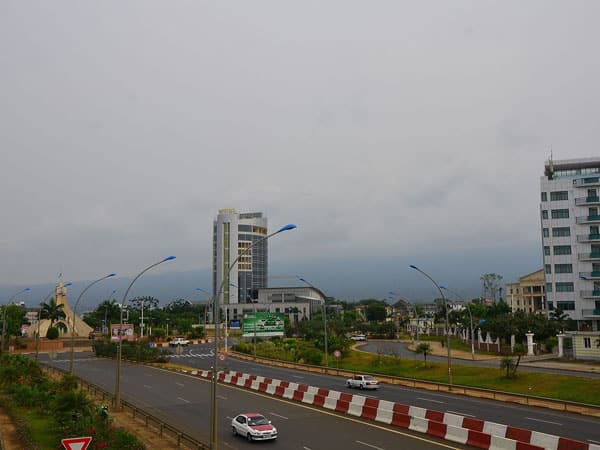
According to a number of recent news reports, the government of Equatorial Guinea is considering joining the Medusa subsea cable to improve network stability.
Medusa is a submarine cable system linking the Mediterranean countries with the Atlantic and the Red Sea. While it was initially planned to connect Mediterranean countries, the project has been extended to Africa.
Medusa has been designed as an open access submarine cable system providing a full portfolio of services, including full fibre pairs and half fibre pairs. The system is designed to deliver a capacity of 480 terabits per second through a total of 24 fibre pairs.
The plan for Equatorial Guinea to join the cable, estimated to cost at €20–60 million (about US$23.1 million to US$69.3 million), with rollout targeted for 2029–2030, could cut outages, lower costs and expand digital access.
If it goes ahead, the city of Bata could be a logical landing point due to its population density and proximity to the capital, La Paz.
That said, this appears to be only a proposal at present; it is one of the priority measures outlined in a strategic study conducted by digital and technology consultancy Mason to modernise the country’s digital infrastructure.
The study highlights the need to strengthen the country’s links to high-capacity international networks to address current limitations.
The study was presented to government last week. Vice President Nguema Obiang Mangue has said it would be reviewed in detail by a technical committee in coordination with Medusa project officials.
The Ecofin news service says that in February the government of Equatorial Guinea signed a cooperation agreement with Nigeria to deploy a separate subsea fibre optic infrastructure. Nigeria is already connected to seven major international subsea cables.
Equatorial Guinea relies mainly on the ACE cable for its international connectivity, though it also operates several regional links.

African payments technology company Flutterwave has announced that it has secured a Nigerian banking license.
This license, it explains, enables the company to hold funds and deposits directly, strengthening its financial infrastructure across its largest market and permitting more efficient financial services and settlement flows for consumers, businesses and enterprises.
Flutterwave says it will continue to work closely with banking partners across the broader financial ecosystem. However, the license enables the company to internalise key elements of its financial value chain, improving operational efficiency and supporting faster product development.
This shift strengthens operational autonomy and allows Flutterwave to capture more value from the transactions processed within its ecosystem.
For over a decade Flutterwave says it has powered payments for millions of Nigerians and businesses across the world. With this license, the company explains, it is bringing that same infrastructure into a new generation of banking built for a number of areas including consumer financial services, notably seamless accounts, transfers, and payments for everyday users within the SendApp ecosystem, which enables users to send money internationally.
There will also be a focus on business financial tools, including accounts, payouts, payroll, and multi-currency capabilities; enterprise treasury infrastructure, including tools to manage complex financial operations, treasury, and liquidity; and digital platforms – embedded financial services for marketplaces and platform operators.
For developers there will be programmable financial infrastructure enabling the creation of financial products through APIs.
The banking license also enhances Flutterwave’s core payments business. Over a million people using SendApp will now access enhanced financial services, including personal account numbers and instant transfers, without switching apps. In addition, over two million businesses can now open accounts, manage payouts, run payroll, and access multi-currency capabilities.
Flutterwave says it will also introduce data-driven financial services, including working capital financing and merchant lending powered by real transaction data, alongside treasury and savings products.
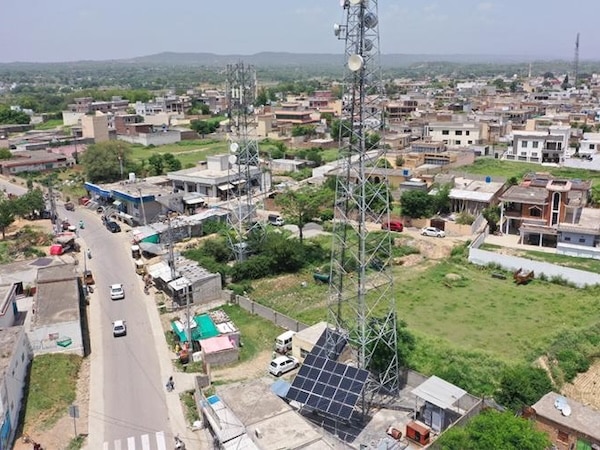
Huawei and Jazz, Veon Group’s telco subsidiary in Pakistan, announced on Friday that they have deployed solar power systems across 1,000 base station sites nationwide, with a total installed capacity of 13 MW.
The project leverages Huawei’s integrated green site solutions, combining solar power, battery storage, and intelligent energy management to optimize performance across diverse operating conditions.
Huawei senior VP Steven Yi said the solution enables Jazz to transition traditional sites into more efficient, low-carbon infrastructure while improving overall energy availability.
Yi also said the solar-powered sites are expected to generate approximately 11 GWh of clean energy annually, reducing carbon emissions by around 15,000 tons per year.
Apart from the environmental benefits, the project also boosts Jazz’s network reliability, particularly in energy-constrained and underserved areas, enabling more consistent connectivity for customers, said JazzWorld CEO Aamir Ibrahim.
“Expanding solar across our network allows us to reduce our environmental footprint while improving service reliability for our customers,” he said in a statement.
Ibrahim added that Jazz will continue to expand its use of renewable energy across its network as part of its broader commitment to sustainable operations, which also aligns with Veon’s goal to achieve carbon neutrality by 2050.

South African open-access fibre network provider Maziv has announced a major investment to expand its network connectivity across South Africa over the next five to seven years.
Maziv, which owns a number of major brands in the country, including fibre network operator Vumatel and open-access fibre infrastructure and connectivity provider Dark Fibre Africa, committed to a R9 billion (about US$530 million) investment, with an additional pledge to create 10,000 new jobs, at the recent 2026 South African Investment Conference.
According to news resource MyBroadband, the company says it will prioritise low-income and underserved areas with the rollout of new fibre infrastructure and has promised to deliver high-quality broadband to these communities.
It also plans to provide 1Gbps free, uncapped internet access to every public or private school, public clinic and library within its network coverage area as part of its social mandate.
The 10,000 new job opportunities over the next seven years will either be created directly as part of the infrastructure rollout, or indirectly through the company’s partner ecosystem of local SMMEs, fibre installers and community-based service providers, many of which are likely to be involved in the expansion of its fibre network.
MyBroadband notes that the investment is good news for fibre rollout programmes in South Africa, which have slowed across the industry as companies struggled to secure capital for more infrastructure.
Capital expenditure across the industry apparently stagnated as a transaction through which operator Vodacom aimed to acquire a 30% stake in Maziv had trouble getting approval from the Competition Commission.
As we reported in November last year, the deal finally went ahead after a number of concessions were offered that allowed the Competition Commission to withdraw its objections to the transaction. It was then approved by telecommunications regulator ICASA.
The knock-on effect of the deal finally being allowed to proceed, it appears, has been to help unlock industry-wide investment, as this announcement indicates.

This Industry Viewpoint was authored by Paul Wright, Chief Revenue Officer at CBNG
For much of the past decade, Fixed Wireless Access (FWA) has been marketed around peak sector throughput. Vendors highlight multi-gigabit physical layer rates. Operators quote headline sector capacity. Lab demonstrations showcase ideal single-user speeds under pristine radio frequency (RF) conditions. … [visit site to read more]

T-Mobile and private equity firm TPG are considering a bid to carve up Uniti Group, with T-Mobile targeting the consumer last-mile fibre business and TPG interested in the wholesale and enterprise fibre assets, according to reports.
Uniti has spent the past year repositioning itself around fibre following the recombination with Windstream, accelerating buildouts and shifting customers from legacy copper services to modern fibre networks. Uniti’s Q4 results for 2025 saw the company add 28,000 net Kinetic fibre subscribers and pass an additional 80,000 premises with fibre, bringing total premises passed close to 1.9 million.
Management has emphasised a balanced strategy across retail, wholesale and enterprise lines, with Kinetic focused on smaller metro and suburban footprints while the enterprise and carrier transport business supplies long-haul routes and wholesale capacity. Investor materials highlight a presence across some 18 states, with more than half of households located in the Southeast and a significant concentration in Tier 2 and Tier 3 markets where competition is lighter.
The company has yet to begin a formal sale process, but has said it is open to reviewing interests from several parties.
For T-Mobile, acquiring a built fibre last-mile could fast-track its fixed broadband ambitions and provide a ready retail brand and subscriber base to pair with its wireless services. However, it would also bring substantial legacy copper liabilities and migration challenge, with Uniti currently transitioning some of its customers to its fibre networks.
TPG’s interest, on the other hand, would be consistent with its recent activity in communications infrastructure, having pursued large-scale fibre and tower opportunities in recent years.
No financial details of the potential offers have been revealed.
Nonetheless, the rumour has triggered a sharp uptick in Uniti’s share price, jumping roughly 14% on the news.
Keep up to date with all the latest telecoms news with the Total Telecom newsletter
Also in the news
World Communication Award Winners 2025
Ofcom clears the way for satellite-to-smartphone services
LG Uplus’s AI voice call app glitch leaks user data

Lots of interesting news from around the industry to catch up with before Easter: … [visit site to read more]
Microsoft has outlined plans to expand its presence in Thailand with a US$41 billion investment in cloud and AI infrastructure over the next two years.
The announcement followed a meeting between Microsoft Vice Chair and President Brad Smith and Prime Minister Anutin Charnvirakul. Microsoft said the investment forms part of its Advancing National Growth, Prosperity, and Global Competitiveness with AI initiative, aimed at widening access to cloud and AI technologies and upskilling millions of people across the Thai economy.
Prime Minister Anutin Charnvirakul said Thailand aims to become a regional driving force in Asia’s digital and AI sector. As part of this ambition, the country is working to strengthen its foundations through a national strategy focused on so-called ‘new S-Curve industries’ – emerging sectors characterised by slow initial growth followed by rapid acceleration, such as the smartphone market.
Smith added that cloud and AI infrastructure is increasingly central to economic development.
Microsoft has been building its relationship with Thailand since November 2023, including visits by CEO Satya Nadella and Asia President Rodrigo Kede Lima to Bangkok in subsequent years.
The company has also announced partnerships with operators Advanced Info Service (AIS) and True Corporation to support its AI ambitions, including plans to establish a Microsoft National AI Innovation Center.
Digital sovereignty
Alongside infrastructure development, the investment is designed to ensure data remains within Thailand’s borders, aligning with national frameworks on data governance, cybersecurity and AI regulation.
Microsoft has been working with Thailand’s Council of State to help shape the legal and governance structures needed to support the country’s evolving digital economy.
The company also plans to upskill and certify 150,000 people in partnership with Thailand’s Ministry of Labour, offering access to around 280 AI training courses.
Dhanawat Suthumpun, Managing Director of Microsoft Thailand and Emerging Markets, said AI presents a major opportunity to drive inclusive growth. He noted that putting AI tools into the hands of individuals, businesses and public sector organisations can unlock innovation, transform ways of working and create new economic opportunities, ultimately strengthening Thailand’s competitiveness and broader social development.