


Telefonica makes $1.2bn exit from Chile

News

The sale to NJJ and Millicom marks the latest step in Telefonica’s Latin American retreat

This week, Telefonica has announced it has sold its Chilean mobile unit to Millicom and NJJ, a pair of companies both owned by French billionaire Xavier Niel.

The deal, valued at $1.2 billion, will see NJJ take a 51% of the business and Millicom a 49% stake. Despite holding the smaller stake, Millicom will operate the business on a day-to-day basis.

“This gives NJJ and Millicom operational control from day one and the ability to capture long-term growth potential at an attractive valuation, without compromising our financial strength,” Millicom Chief Executive Officer Marcelo Benítez said in the statement.

Telefonica will receive an initial payment of $50 million, with $340 million deferred. Telefonica canTelefonica makes $1.2bn exit from Chile also earn up to a further $150 million based on the unit’s future performance.

Both Millicom and NJJ will also have the right to purchase the other’s stake after five and six years have passed, with Millicom’s option taking priority.

Telefonica has been divesting of its Latin American businesses since 2019, when the company changed its strategy to focus on its core markets of Spain, Germany, Brazil, and the UK.

The sale of these units has accelerated under CEO Marc Murtra, who took over the role at the start of January and quickly oversaw exits from  Argentina, Peru, and Colombia.

Discussions over Telefonica’s Chilean unit had been underway since at least in May last year, with America Movil, WOM, and Entel also displaying interest in the business.

Millicom, on the other hand, is expanding its regional footprint and has already proven a keen buyer of Telefonica’s struggling businesses.

In the past two years, Millicom has snapped up Telefonica’s operations in Colombia, Ecuador, and Uruguay for a combined total of over $1 billion.

Keep up to date with all the latest telecoms news with the Total Telecom newsletter

Also in the news
World Communication Award Winners 2025
Ofcom clears the way for satellite-to-smartphone services
LG Uplus’s AI voice call app glitch leaks user data
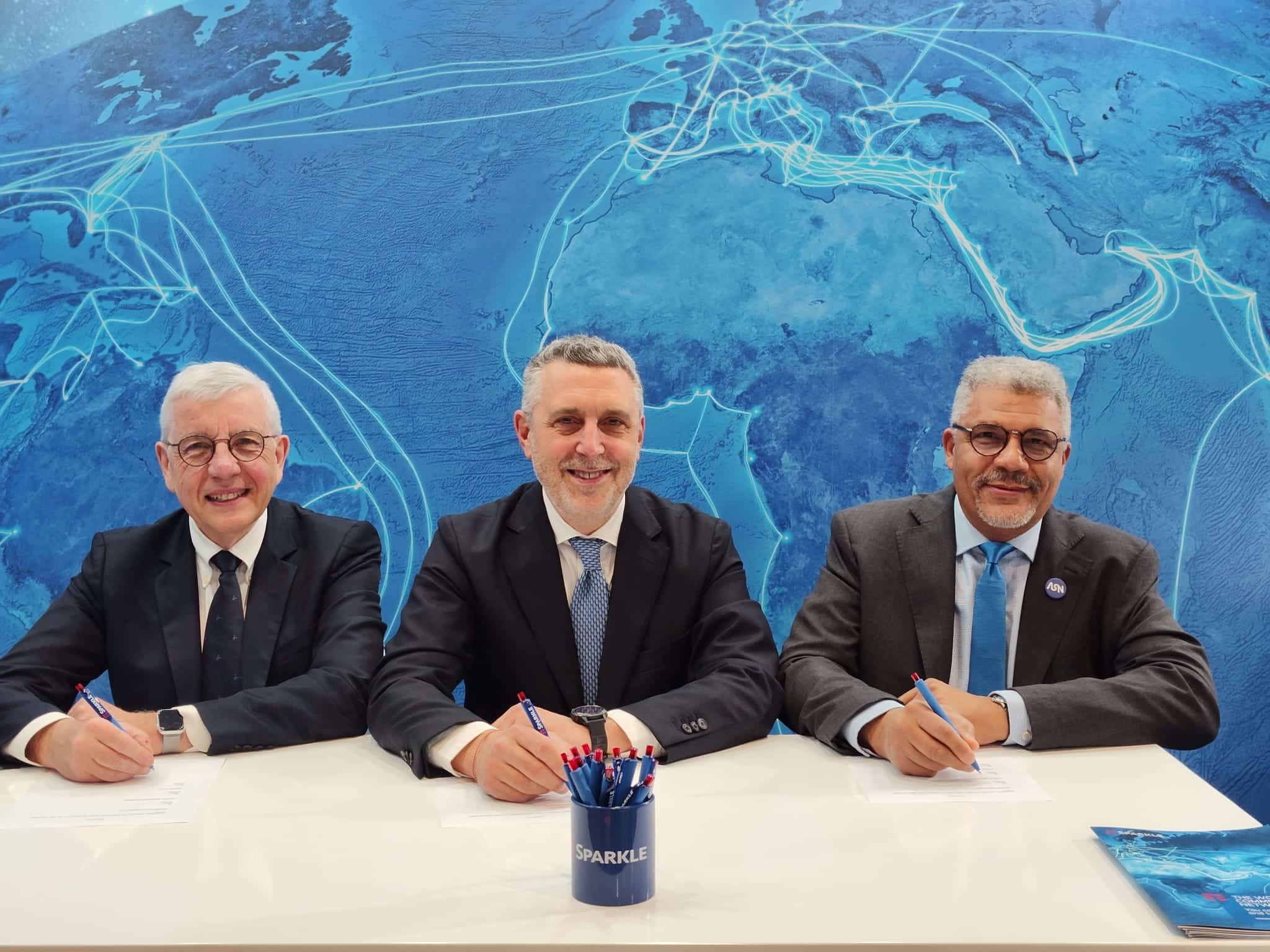

Sparkle, ASN and Elettra to build GreenMed subsea cable in the Mediterranean

Press Release

Sparkle, the first international service provider in Italy and among the top global operators, announces the construction of GreenMed, a next-generation subsea cable system designed to enhance route diversity, resilience and low-latency connectivity between Europe and the Middle East. The system will be engineered and manufactured by Alcatel Submarine Networks (ASN), a major player in the submarine cable industry, and installed by Elettra Tlc, a company dedicated to the marine survey, installation and repairs of telecommunication cables.

GreenMed East will cross the Adriatic Sea, providing diverse optical fiber connectivity between Levant countries and the rich digital ecosystem of the Milan area; the route will touch the strategic gateways of Crete and Sicily and connect, along its path, the Balkan countries, thus supporting the growing demand driven by cloud adoption, content delivery, enterprise digitalization and emerging AI-era traffic patterns. The new system will be fully integrated into Sparkle’s broader backbone and landing-hub strategy, delivering secure and diversified international connectivity services to carriers, cloud and content players, as well as multinational enterprises.

GreenMed builds on Sparkle’s experience with BlueMed – the company’s flagship project in the Tyrrhenian Sea – and its pioneering open architecture approach. In this context, GreenMed further strengthens the open cable model allowing each fiber-pair tenant to select its preferred optical illumination architecture and vendor, in line with system design and operational requirements.

The contract between Sparkle, ASN and Elettra Tlc, executed today during Capacity Middle East 2026 in Dubai, will be in force by end of February 2026, with the first segments of the system expected to be in service by late 2028. Under the agreement ASN will be responsible for system design and manufacturing of the subsea optical infrastructure including wet plant components and associated equipment, while Elettra Tlc will carry out marine operations, including route surveys and cable installation/laying activities.

“GreenMed represents another concrete step in Sparkle’s strategy to strengthen the Mediterranean basin as a key digital gateway and to reinforce Italy’s role as a primary international connectivity hub,” said Enrico Maria Bagnasco, CEO of Sparkle. “With GreenMed in the Adriatic and BlueMed in the Tyrrhenian, Sparkle offers two highly innovative routes between Europe and the Middle East for maximum diversification and resilience.”

“ASN is proud to bring its end-to-end subsea expertise and advanced system design capabilities to GreenMed,” added Alain Biston, CEO of ASN. “This project will showcase next-generation wet plant technology, scalable capacity design and industrial quality, enabling a future-proof infrastructure that supports the most demanding applications and evolving traffic patterns.”

“Elettra is honored to be entrusted with the marine operations for GreenMed,” commented Didier Dillard, President & CEO of Elettra Tlc. “Our teams will deliver the survey and installation phases with a strong focus on safety, precision and environmental responsibility, leveraging deep experience in Mediterranean cable operations to ensure an efficient and reliable deployment.”

How is Europe’s submarine cable ecosystem changing in 2026? Join the experts in discussion at Submarine Networks EMEA, the world’s largest subsea cable event

Also in the news
World Communication Award Winners 2025
Ofcom clears the way for satellite-to-smartphone services
LG Uplus’s AI voice call app glitch leaks user data
Let third-party AI assistants access WhatsApp, EU tells Meta

News

The European Commission’s ‘preliminary view’ is that Meta is stifling competition by blocking competitors’ AI assistants from WhatsApp

The European Commission has sent a Statement of Objections to Meta, presenting its preliminary view that Meta breached EU antitrust rules by excluding third party AI assistants from accessing and interacting with users on WhatsApp.

The statement says that Meta is likely to be abusing its dominant position in the consumer communication application market, potentially stifling future competition.

Meta made the policy changes to effectively ban third-party AI assistants from WhatsApp in October last year. The Commission began investigating the matter in December the same year.

“Artificial intelligence is bringing incredible innovations to consumers, and one of these is the emerging market of AI assistants. We must protect effective competition in this vibrant field, which means we cannot allow dominant tech companies to illegally leverage their dominance to give themselves an unfair advantage,” said EU Commissioner for Competition and Executive Vice-President for Clean, Just and Competitive Transition, Teresa Ribera, in a statement.

In addition, the EU is considering implementing interim measures to ensure these AI assistants can retain access to WhatsApp while the investigation is ongoing.

“AI markets are developing at rapid pace, so we also need to be swift in our action. That is why we are considering quickly imposing interim measures on Meta, to preserve access for competitors to WhatsApp while the investigation is ongoing, and avoid Meta’s new policy irreparably harming competition in Europe,” Ribera explained.

Meta rejects the assertion that their policy is anticompetitive.

“The facts are that there is no reason for the EU to intervene in the WhatsApp Business API,” a Meta spokesperson said.

“There are many AI options and people can use them from app stores, operating systems, devices, websites, and industry partnerships. The Commission’s logic incorrectly assumes the WhatsApp Business API is a key distribution channel for these chatbots,” the company added.

Meta has a fractious history with EU regulations, with a long history of clashing with the bloc’s stringent data privacy, competition, and artificial intelligence laws.

In the past three years, the EU has fine Meta over €2 billion for various antitrust and GDPR infractions.

It is worth noting, however, that not every EU decision has gone against the tech giant. Indeed, this week a ruling from the European Court of Justice (ECJ) has given the green light for WhatsApp to continue contesting a €225 million fine delivered by the Irish data regulator back in 2021.

“The Court refers the case back to the General Court for it to rule on the merits, including on whether WhatsApp infringed the relevant provisions of the GDPR,” the ECJ said in a statement.

Investigations into WhatsApp’s Data Protection Regulation (GDPR) compliance first began in 2018. Three years later, in 2021 the Irish Data Protection Commission fined WhatsApp €225 million for failing to inform its users how their data would be shared with its parent company, Meta (then Facebook).

WhatsApp immediately challenged the decision, which has seen them embroiled in a legal tussle for the past five years.

Keep up to date with all the latest telecoms news with the Total Telecom newsletter

Also in the news
World Communication Award Winners 2025
Ofcom clears the way for satellite-to-smartphone services
LG Uplus’s AI voice call app glitch leaks user data

BT Group shuffles exec team at Openreach and BT International

Press Release

BT Group today announces leadership succession within Openreach and BT International.

Katie Milligan, currently Deputy CEO of Openreach, will become CEO, Openreach on 01 April 2026. She succeeds Clive Selley, who will become CEO of BT International. He succeeds Bas Burger who has decided the time is right for him to leave BT after 18 years of service, including nine years on the Executive Committee, also on 01 April 2026.

Allison Kirkby, BT Group Chief Executive, said:

“Openreach is a critical national asset – the digital backbone of the UK – and a key driver of BT Group’s long‑term value. Its talented team, disciplined execution and customer focus continues to strengthen our position as the UK’s most trusted connector. Katie has helped shape that success. Her deep industry experience, strong people leadership and sharp operational instincts make her the right leader to take Openreach forward.”

“Clive’s contribution at the helm of Openreach has been exceptional. His leadership – particularly the scale, pace and quality of the full fibre broadband build, has set new standards for our industry. We are deeply grateful for the commitment, expertise and integrity he has brought to the role. Clive’s lasting legacy is a world-class digital infrastructure that will serve the UK for generations to come.”

“Clive is also the best person to lead BT International forward as a next generation, global telco platform business. No one has more experience building complex modern day infrastructure and supporting customers at scale in their digital transition. I’m delighted he’s staying within BT Group and look forward to working together with him in his new role.”

“I’d like to thank Bas for all that he’s done for us over the past 18 years, including leading Global, BT Business and, most recently, successfully carving out BT International as a standalone unit. He has laid the foundations and strategy for a more focussed, responsive platform business for our customers outside of the UK, ready to scale and grow with the help of next generation technologies.”

“Together these changes strengthen BT Group’s leadership for the next chapter – giving Openreach continued commercial and customer momentum in the UK, and speeding up the transformation of BT International.”

Keep up to date with all the latest telecoms news with the Total Telecom newsletter

Also in the news
World Communication Award Winners 2025
Ofcom clears the way for satellite-to-smartphone services
LG Uplus’s AI voice call app glitch leaks user data

The Silklink project: STC pledges to help reconnect war-torn Syria

News

The project includes the deployment thousands of kilometres of fibre cables as Syria looks to become a regional digital hub

This week, Saudi Arabian communication giant STC Group has announced it has won a roughly $800 million contract to lead Syria’s Silklink infrastructure project.

Silklink is a joint venture with the new Syrian government aimed at improving communication both regionally and internationally. It includes the deployment of around 4,500km of optical fibre, as well as the establishment of data centres and international submarine cable landing stations.

STC will hold a 75% stake in Silklink, with the remaining 25% stake held by the Syrian Sovereign Fund.

The new backbone network will be used to underpin Syria’s digital transformation, supporting digital applications, cloud services, the IoT, and advanced mobile services. It will also serve to make the county a key data transit route between Asia, the Middle East and Europe.

While no specific deadlines for the network’s deployment have been announced, Syria’s minister of communications and information technology, Abdulsalam Haykal, said the development would take place in two phases over the next 18–24 months.

For STC, the investment represents its latest efforts to improve cross-border connectivity in the Middle East, helping position Saudi Arabia as the region’s digital centre. STC is currently building a similar international backbone network in Oman with Ooredoo, as well as working to connect both the 2Africa and Saudi Vision Cable subsea networks to countries across the region.

The Silklink project was also announced alongside roughly $2 billion-worth of economic agreements between the Saudi Arabian and Syrian governments, highlighting the warming of a once frosty relationship. These investments notably include the creation of new low-cost airline, aimed at helping reconnect Syria to international travel after years of flight restrictions.

Keep up to date with all the latest telecoms news with the Total Telecom newsletter

Also in the news
World Communication Award Winners 2025
Ofcom clears the way for satellite-to-smartphone services
LG Uplus’s AI voice call app glitch leaks user data

Cassava clears key hurdle for STANLIB stake in Africa Data Centres

Cassava Technologies has cleared another regulatory milestone in South Africa for the sale of shares in its Africa Data Centres (ADC) unit to STANLIB Asset Management, a private equity firm backed by Standard Bank and Liberty Global.

South Africa’s Competition Tribunal said it has “unconditionally approved” STANLIB’s acquisition of a stake in Cassava Africa Data Centres South Africa. Following the transaction, STANLIB will hold joint control of the business, with the option to acquire sole control at a later stage.

The decision follows approval granted by the Competition Commission in January, which concluded the transaction was unlikely to substantially lessen or prevent competition in any market and raised no significant public interest concerns.

ADC, a subsidiary of Cassava Technologies, operates nine data centres across six African countries, serving around 400 enterprise and hyperscale customers.

STANLIB made an undisclosed investment in ADC in October, aimed at accelerating the expansion of the operator’s South African footprint to meet growing demand for digital infrastructure in the country.

Musk dismisses reports of Starlink smartphone plans

Elon Musk has played down reports that Starlink is developing its own smartphone, pushing back on claims the satellite operator is seeking new revenue streams through a proprietary handset.

Reuters had reported that Starlink was exploring the idea of selling a phone with unique connectivity features designed to tap directly into its low-Earth orbit satellite network. Sources said details such as the device’s design and specifications were unclear, though the company had internally discussed the concept for several years.

Musk had previously fuelled speculation. Responding to questions on X about a potential “Starlink phone” in earlier comments, he said such a device was “not out of the question at some point,” adding it could be differentiated from existing smartphones by being “optimised purely for running max performance/watt neural nets,” a nod to AI-focused hardware efficiency.

However, Musk moved quickly to dismiss the latest report, posting on X that “we are not developing a phone,” casting doubt on whether the concept has progressed beyond early-stage discussions.

Rather than entering the crowded handset market, Starlink has focused on partnerships with mobile operators to deliver direct-to-device connectivity, allowing standard smartphones to connect to satellites without specialised hardware.

Beyond connectivity, Starlink’s parent company SpaceX continues to explore adjacent opportunities, including expanded direct-to-device services and a space-tracking offering, as it looks to monetise its growing satellite infrastructure without venturing into consumer device manufacturing.

Maxis brings AWS workloads in Singapore home to Malaysia

Malaysian telco Maxis revealed on Thursday it has migrated its mission-critical workloads – including those for all of its digital services – from the Amazon Web Services’ (AWS) Singapore Region to the AWS Malaysia Region.

Maxis said that hosting workloads locally reduces latency for its digital services, including its Maxis and Hotlink apps, which means faster response times and a smoother experience for customers. 

The telco also said the move – which was carried out by its internal cloud engineering team – also drives operational efficiency and a more cost-effective operating model by eliminating cross-region data traffic, enabling Maxis to focus on value creation.

“By bringing our mission-critical workloads home, we are securing our data within Malaysia’s borders while improving efficiency to better serve our customers,” said Maxis CIO Ng May Ching in a statement. “This ensures our infrastructure is resilient and future-ready to support the nation’s digital agenda.”

Maxis’ chief enterprise business officer Prateek Pashine noted that bringing its cloud operations local reinforces the telco’s ability to help Malaysian businesses do the same. 

“We are well-positioned to help customers address data sovereignty requirements while delivering the fast, reliable, and secure connectivity they need for responsive performance,” he said.

« By building on the AWS Malaysia Region, Maxis’ successful migration demonstrates what’s achievable, and positions them to guide other Malaysian enterprises through their own cloud transformations,” added AWS Malaysia country manager Hussein Mohd Ali.

Maxis is an AWS Advanced Tier Services Partner and AWS Direct Connect Partner in Malaysia. AWS launched its Malaysia Region in August 2024.

Mastercard and POSB address outbound money transfer market in Zimbabwe

The People’s Own Savings Bank (POSB) Zimbabwe’s only 100% home grown savings bank, has announced a strategic collaboration with Mastercard to launch POSB Remit Outbound.

The service aims to provide a fast, secure and cost-effective way for customers in Zimbabwe to send money directly to bank accounts, mobile wallets and cash abroad.

Powered by Mastercard Move, a portfolio of global money movement capabilities, the service delivers a simple, transparent and fast way to send funds to 21 international destinations, including South Africa, the UK, the US, Canada, India, Australia and countries within Europe’s Single Euro Payments Area (SEPA) region.

Mastercard says the launch of this service responds to a growing need for reliable outbound money transfer solutions, which play a vital role in supporting cross-border mobility, trade and investment. It says outbound payments are increasingly important for individuals and businesses to manage education expenses, medical payments, family support and commercial transactions abroad.

POSB Remit Outbound addresses this market gap by enabling outward remittances through a trusted, accessible channel. The service is available at all POSB branches nationwide, with transfers starting from as little as US$5.00. Funds are credited directly into recipients’ bank accounts, mobile wallets or cashout agents.

Gabriel Swanepoel, Country Manager, Mastercard Southern Africa, explains: “By combining Mastercard Move’s innovative money movement solutions and extensive reach with POSB’s trusted local presence, we are enabling Zimbabweans to move money securely and transparently, with the choice and speed they need to thrive in today’s connected economy.”

Mastercard Move spans 200 countries and territories, supporting transactions in over 150 currencies.

Outbound payments do appear to be a growing market in Africa lately. A few days ago we reported that MTN Mobile Money Zambia had launched a new service that enables customers to send money directly from their Mobile Money (MoMo) wallets to international bank accounts across countries in the European Union, the United Kingdom and Canada.

Grid Telecom to build Artemis subsea cable connecting Crete to mainland Greece

Press Release

Grid Telecom, a wholesale telecommunications provider and subsidiary of IPTO, has announced the construction of ARTEMIS, an ultra-high-capacity subsea optical fiber cable system that will link Crete with mainland Greece.

As a new strategic digital corridor in the Eastern Mediterranean, ARTEMIS is set to strengthen decisively regional connectivity, enhance Greece’s geopolitical footprint, and accelerate the country’s ongoing digital transformation.

The ARTEMIS system will be equipped with subsea repeaters and will span approximately 280 kilometres, including its terrestrial segments linking the cable landing stations. Ιt will interconnect all landing stations and data centers in Crete and Attica region, enabling data transmission rates of up to 30 Tbps per fiber-pair. With a minimum of 24 fiber-pairs, ARTEMIS will deliver an overall design capacity of at least 720 Tbps, more than meeting all medium‑ and long‑term digital infrastructure needs.

Engineered to support the next generation of cutting‑edge technologies, ARTEMIS will take full advantage of the relatively short transmission distance and the capability to expand the optical spectrum. As a result, the system is poised to become the first petabit-class subsea cable in Greece and the Mediterranean, with a potential total capacity exceeding 1 petabit per second, pushing well beyond the performance limits of today’s subsea optical fiber systems, setting a new benchmark for regional and international digital connectivity.

Grid Telecom continues to invest in state‑of‑the‑art infrastructure with the goal of transforming Crete into a strategic digital hub, delivering network reliability, flexibility and diversity. Grid Telecom will leverage the synergies between the new ARTEMIS system and its existing Minoas East‑West and Apollo East‑West systems, which already connect the island to mainland Greece through four independent routes and a total of 96 fiber-pairs. The Minoas East‑West system links Chania to the Peloponnese, providing a low‑latency alternative route, while the Apollo East‑West system provides a direct connection between Heraklion and Attica, with no intermediate cable landing stations, adding another critical alternative path.

In line with its commitment to advancing next‑generation telecommunications services, Grid Telecom is proceeding with the immediate construction of new cable landing stations in Chania and Attica. These facilities will serve both as landing points for the ARTEMIS cable system and as critical gateways for international subsea fiber cables traversing the Eastern Mediterranean, linking Greece with the Middle East and Western Europe. ARTEMIS will incorporate Open Cable Interface Equipment (OCIE), enabling seamless integration with all international cable systems, eliminating the need for additional transmission terminal equipment and providing direct, cost‑efficient backhaul access to all data centers.

With these infrastructures in place, Grid Telecom as the premier neutral provider of wholesale telecom services in Greece, will deliver secure, open‑access landings and highly resilient connectivity through diversified fiber routes to both existing and emerging data centers in Crete, mainland Greece, and neighbouring countries. By fully leveraging its integrated terrestrial and subsea network assets, the company will ensure robust, scalable, and carrier‑grade connectivity across the region and provide comprehensive technical support and maintenance services at both infrastructure and operational levels.

Keep up to date with all the latest telecoms news with the Total Telecom newsletter

Also in the news
World Communication Award Winners 2025
Ofcom clears the way for satellite-to-smartphone services
LG Uplus’s AI voice call app glitch leaks user data