North Africa’s 5G wave continues with Libya launch

News

The launch means all African nations on the Mediterranean have now launched 5G

This week, Libya’s second largest state-owned telco, Almadar Aljadid, has announced the launch of 5G in parts of the capital, Tripoli.

For now, the launch is limited to just central parts of the city, but citywide coverage – and, indeed, nationwide coverage – will take place in stages, according to the company.

The company said the launch represents a significant boost in service quality for customers, as well as noting the technology’s potential to support key industries like healthcare and education.

2025 was a remarkable year for North Africa’s mobile markets, with Tunisia launching 5G in February, Egypt in June, Morocco in November, and Algeria in December. Now, with Libya’s launch, the entire region has formally entered the 5G era.

Keep up to date with all the latest telecoms news with the Total Telecom newsletter

Also in the news
World Communication Award Winners 2025
Ofcom clears the way for satellite-to-smartphone services
LG Uplus’s AI voice call app glitch leaks user data


South Korean memory-makers warn of AI supply chain crunch

News

Despite efforts to expand capacity, semiconductor players are struggling to keep pace with demand

As the AI boom continues to gain momentum, two of the world’s leading chipmakers, SK Hynix and Samsung Electronics, are warning that their expansion plans will not move fast enough to ease supply chain bottlenecks.

The companies, both which reported their latest financial results this week, said that the memory chip supply crisis would be unlikely to alleviate for the next two years despite their best efforts.

“We are planning a substantial increase in our capital expenditure in 2026 as AI-driven demand is likely to continue,” said Kim Jae-june, executive vice-president of Samsung’s memory business, as reported by the Financial Times. “But supply shortages are likely to worsen as capacity expansion is expected to be limited this year and next.”

SK Hynix has plans to invest 19 trillion won ($12.9bn) in the construction of a semiconductor packaging facility in Cheongju, while Samsung is investing 60 trillion won ($41.5 billion) in its P5 factory in Pyeongtaek, South Korea, which broke ground in November last year.

Both investments are driven by the surge in demand for High Bandwidth Memory (HBM), a crucial part of AI accelerators and data centre GPUs, as well as other memory chip technology; SK Hynix says it expects the HBM market to continue to grow significantly between 2025 and 2030, with projections indicating a compound annual growth rate of 33% until 2030.

However, the additional capacity being generated from these new facilities will take time to realise.

“Demand is growing sharply, but it takes time to expand capacity, so the mismatch in demand and supply is worsening, pushing chip prices higher,” added Song Hyun-jong, president of SK Hynix, in the same FT report.

The extent of the memory bottleneck is already being felt acutely across the world. The cost of dynamic random access memory (DRAM), for example, has skyrocketed since 2024, and is set to double again this year.

At the same time, the industry is also in the midst of a significant shift, moving from the current HBM3E technology to the more advanced HBM4. These next generation memory chips will offer higher data transfer speeds (exceeding 1 TBps per stack) and more than double the bandwidth of HBM3E, making them ideal for AI data centres.

SK Hynix is currently the global leader in this latest memory design, accounting for roughly 60% of the overall market, according to Macquarie Equity Research. Samsung, however, is expected to soon challenge this position, beginning production of its own HBM4 chips next month.

Needless to say, this memory bottleneck is making both SK Hynix and Samsung very rich.

SK Hynix reported a net profit of 97.15 trillion won ($67.9 billion), up 46.8% year-on-year, while Samsung saw profits rise to 45.21 trillion won ($31.6 billion, up 31.2% year-on-year.

Keep up to date with all the latest telecoms news with the Total Telecom newsletter

Also in the news
World Communication Award Winners 2025
Ofcom clears the way for satellite-to-smartphone services
LG Uplus’s AI voice call app glitch leaks user data

Bicom Systems Is Now a Meta Tech Provider: WhatsApp Integration Made Effortless

WhatsApp has become one of the most important communication channels for customer engagement. 

But for resellers offering contact center and omnichannel solutions, adding WhatsApp to the mix often comes with high costs and technical complexity.

Building on our newly established role as an official WhatsApp Tech Provider, PBXware 7.6 makes connecting WhatsApp Business Accounts easier than ever. 

This recognition from Meta enables us to streamline the entire setup process, reduce complexity for partners, and ensure that WhatsApp integrations meet the highest platform standards from day one, all directly within PBXware 7.6.

Bicom Systems has completed all Meta’s required verification steps and reviews, including business verification, app review, and access verification, both independently and with 360dialog, Meta’s authorized Business Solution Provider (BSP).

This means you can offer WhatsApp confidently, knowing the channel is fully compliant with Meta’s standards.

This verified status helps you:

  • Offer fully approved messaging services
  • Deploy WhatsApp faster to your customers
  • Streamline integration and technical setup

Flexibility and a simple setup matter when you’re managing multiple clients. That’s why we made sure you can choose between two verified integrations:

Ideal for resellers who prefer effortless setup, full control, and faster onboarding, without any third-party integration fees.

With all Meta approvals handled by Bicom Systems, partners can activate WhatsApp using our approved Meta application and connect directly via Meta’s API. 

And that is what makes the integration effortless, with no complicated setup steps and no extra costs usually associated with third-party BSPs.

Perfect for partners who value an additional support channel through a BSP, benefiting from closer alignment with Meta and faster assistance when needed.

360dialog brings a proven framework that fits seamlessly into Bicom Systems’ ecosystem.

While this approach requires a bit more setup and additional fees than using Bicom’s Meta app, it gives you the flexibility to customize your integration.

Another great thing is that you’re not limited to Bicom’s verified Meta applications. 

You also have the option to create a branded Meta app, giving you full control over branding and user experience. 

Whether you choose our effortless Meta application or create your own, Bicom Systems’ Integration Team provides comprehensive guides, configuration assistance, and best-practice advice.

With Bicom Systems, WhatsApp becomes a native part of your contact center offer, allowing you and your customers to start messaging without delays or third-party dependencies.

Contact our team today to learn more and start offering WhatsApp to your clients with full Meta compliance.

AI in the Bicom Platform: Tools to Enhance Your UCaaS Offering

PBXware 7.6 introduces AI-powered features that help resellers and service providers deliver more value, faster, and within the platform you already trust.

AI-generated voice greetings and AI-driven call recording transcription are now built directly into the platform, allowing you to offer smarter and more professional UC solutions without additional tools or complexity.

Let’s see what each one means for you.

With the new AI Voice Greeting Generation, PBXware administrators can produce professional-quality voice files in seconds using OpenAI TTS API.

That means your customers can:

  • Quickly create IVR messages, voicemail greetings, and announcements.
  • Automatically create consistent file names for each greeting or announcement.
  • Choose from multiple realistic voices and tones for brand consistency and differentiation.
  • Edit or update recordings anytime, regenerate audio, and save the final version for immediate use.

All of this happens directly within PBXware, making voice greeting generation simple to use without any complicated setup or additional tools. 

It can instantly improve the quality of your service offering with:

Customers can present a professional presence with every call, helping their business appear more reliable and trustworthy.

The feature helps businesses manage greetings and announcements without adding extra tasks or overhead, so budgets stay under control.

Easily manage greetings and announcements across multiple departments or locations, maintaining a uniform voice and tone that reinforces your brand at every touchpoint.

Offer AI-driven personalized greetings to your UCaaS customers as an optional feature, enhancing value and setting your service apart from the competition.

Another big time-saver in PBXware 7.6 is AI-powered Call Recording Transcription. Every recorded call can now be converted into text right inside the system. 

This feature goes beyond convenience: it gives resellers and service providers a powerful tool to enhance their service offerings with ease.

Here’s how AI-driven Call Recording Transcription helps turn recordings into actionable insights:

Quickly review call transcriptions from the CDR Reports page to speed up support, agent training, and issue resolution.

Request priority transcription for urgent recordings so action can be taken immediately, without waiting in a queue.

View subtitles while listening to call recordings to follow and review conversations more easily.

Administrators get control over who can request on-demand transcriptions, and the system remains organized.

Currently, you can choose your preferred AI provider (OpenAI or Hosted Whisper) and configure it directly in Main Tenant settings. 

Call Recording Transcription turns stored recordings into a strategic resource for your business. 

Your customers will appreciate how easy it is to review calls without listening to every second or track important details and records from their conversations.

This feature gives your customers smarter ways to work with the information they already have. 

PBXware 7.6 gives you more ways to stand out, while your customers can get more done and communicate clearly at no extra cost or requirement for additional tools.

Adding these AI features to your UC portfolio makes your offering stronger and shows that you provide practical and modern solutions.See how AI can modernize your UCaaS offering and request a demo of PBXware 7.6 to find out how easy it is to bring these features to your customers.

Vodafone Idea finally looks ‘beyond survival’ after AGR ruling

News

Government tax relief could open the door for Idea to find fresh funding

Vodafone Idea could finally be primed for ‘revival’ following the government’s adjusted gross revenue (AGR) relief, according to chairman of Aditya Birla Group, Kumar Mangalam Birla.

Aditya Birla Group currently owns a roughly 9.5% stake in Vodafone Idea.

“For the first time in years, the fog has cleared, allowing the business to look beyond survival and focus on sustainable growth,” wrote Birla in a recently published ‘Annual Reflections’ note.

“A healthy, competitive telecom industry is essential to India’s digital future. India deserves 3 private telecom players. India deserves a successful Vodafone Idea. And this is, once again, an idea whose time has come,” he added.

On December 31, 2025, the Indian government announced that it had frozen Vodafone Idea’s adjusted gross revenue (AGR) dues at ₹87,695 crore (~$9.5 billion), following a ruling by the Supreme Court.

The decision means Idea must repay repay just ₹124 crore (~$135 million) per year for the next six years, with further repayments then staggered until 2042.

The government is also reviewing the total owed by Idea, suggesting it could yet be reduced.

The decision not only has huge implications for Idea’s long-term survival, but also for its immediate cash flow, removing a ₹16,400 crore (~$1.78 billion) payment previously due in March 2026.

Vodafone Idea has been struggling to compete under the weight of AGR repayments since they were first announced in 2019. At that time, revised taxes meant the players across the telecoms sector owed roughly a combined $11 billion combined, with Vodafone Idea’s debt the lion’s share.

India’s largest telco, Reliance Jio – then still a relative newcomer to the market – paid off its AGR dues quickly, leaving Idea and rival Bharti Airtel to begin a years-long saga to have the debt reassessed and deferred.

Airtel continued to grow in the years that followed, but Idea was essentially crippled, seeing revenue slide and a steady decline in subscribers as it struggled with cash flow. It also notably hindered the company’s 5G launch; Idea launched 5G in 2025, roughly three years after Reliance Jio and Bharti Airtel.

Finally, last year, after years of Idea failing to find additional funding to pay its debts, the Indian government converted a portion of its debt into equity, becoming Vodafone Idea’s largest stakeholder.

Now, with long-term tax relief secured and the immediate liquidity crisis over, Idea may finally be able to seek fresh external investment and plot a path to sustainable growth.

Naturally, this is great news for Idea – and arguably the competitiveness of the Indian telecoms sector at large. However, Idea’s rivals, Bharti Airtel and Tata Group, are frustrated, arguing that they too should receive equitable debt relief from the government. They have even threatened not to pay the latest tranche of repayments.

Their please appear to be falling on deaf ears, however, with Communications Minister Jyotiraditya Scindia saying the companies must first receive a directive from the Supreme Court and should not approach the government directly.

Airtel and Tata owe around ₹48,103 crore ($5.24 billion) and ₹19,259 crore ($2.1 billion), respectively, with repayments due in March.

Keep up to date with all the latest telecoms news with the Total Telecom newsletter

Also in the news
World Communication Award Winners 2025
Ofcom clears the way for satellite-to-smartphone services
LG Uplus’s AI voice call app glitch leaks user data

Intracom Telecom Expands Strategic Collaboration with Nova to Enhance Enterprise Connectivity

Intracom Telecom, a global technology systems and solutions provider, and Greece’s largest network infrastructure manufacturer, announces the expansion of its collaboration with Nova, a member of United Group the leading telecommunications and media provider in Southeast Europe and a pioneering provider of mobile, internet, and video services. Nova will begin deploying Intracom Telecom’s WiBAS™ G5 Smart and WiBAS™ G5 GigaConnect FWA platforms to deliver reliable high-speed enterprise connectivity over Nova’s 5G mmWave spectrum at 26.5–27.5 GHz.


This deployment marks an important step in Nova’s ongoing investment in high-speed access infrastructure, aimed at supplying business customers with highly reliable broadband services. Operating in the 26.5–27.5 GHz band, the WiBAS™ G5 platform enables Nova to unlock substantial network capacity and deliver consistent performance, ensuring robust connectivity even in demanding enterprise environments.


Since 2021, Intracom Telecom and Nova have been engaged in a multi-year network modernization program utilizing Intracom Telecom’s field-proven WiBAS™ Point-to-Multipoint (PMP) technology. This nationwide initiative has focused on expanding coverage and capacity across Greece’s major metropolitan areas, connecting thousands of business customers with next-generation wireless access solutions. The ongoing expansion reinforces Nova’s strategy to deliver resilient, ultra-fast connectivity to enterprises of all sizes.


“Our collaboration with Nova continues to grow stronger as we jointly build the foundation for a high-capacity enterprise connectivity network in Greece,” commented Ioannis Tenidis, Director for Wireless Product Line Management at Intracom Telecom. “The deployment of our WiBAS™ G5 platform will enable Nova to deliver unmatched performance and reliability to its business subscribers on valuable 5G mmWave spectrum.”


Thanos Theodoropoulos, Access & Transmission Senior Manager at Nova, added: “Intracom Telecom has been a trusted technology partner in our multi-year effort to modernize and expand our enterprise wireless services. The new WiBAS™ G5 solutions enable us to offer even higher speeds and resilient connectivity to our customers, supporting Greece’s digital transformation.”

NTT GDC to get data centre power from B.Grimm in Thailand

NTT Global Data Centres (NTT GDC), part of NTT Data, and the world’s third-largest data centre provider, has signed a 100MW power purchase agreement with Thai Energy company B.Grimm Power, through its Amata B.Grimm Power division, securing capacity for its upcoming Bangkok 4 Data Centre.

Energisation of the new data centre at NTT’s Chonburi campus, is planned for the second quarter of 2027.

NTT GDC says that Thailand remains a strategic hub for the company in APAC, and long-term power planning is central to how it delivers for its customers, adding that it looks forward to exploring new opportunities with Amata B.Grimm Power as the market evolves.

As the Data Centre Dynamics website points out, the deal builds on several previous agreements between the two companies, with B.Grimm powering NTT’s Bangkok 2 and 3 facilities, both located at the Amata City Chonburi industrial estate just outside Bangkok.

NTT’s Bangkok 2 facility, launched in 2015, offers 3.6MW across 3,800 square metres Its Bangkok 3 facility spans 4,000 square metres and has a capacity of 12MW.

The Bangkok metropolitan area is fast becoming a hotspot for data centre development.

B.Grimm Power, founded in 1993, describes itself as one of Thailand’s leading industrial energy producers. According to its website, the company currently has a total generating capacity of 4,178MW in 15 countries and aims to reach 10,000MW by 2030. It appears to be investing heavily to support its expansion into the data centre power market.

Indeed, in September last year we reported that pan-Asian data centre operator Digital Edge and B.Grimm Power had broken ground on their first joint data centre in Thailand’s Eastern Economic Corridor, again in Chonburi.

Online safety-focused ISP Gigabit IQ seeking to crowdfund £270,000

News

According to a report from ISPreview, UK ISP Gigabit IQ has opened a crowdfunding round seeking £270,000 to accelerate its expansion.

The company carries a pre-money valuation of £5 million and is offering 5.12% equity to new investors, as seen on the campaign page.

At the time of writing, the company has aready seen £243,650 committed by 40 investors.

Gigabit IQ is a retail ISP combining full-fibre connectivity with safety and device-protection services, such as FamilyGuard+ and CyberGuard+.

The company says it has an addressable reach of 1.5 million homes via various wholesale partners, including Full Fibre and F&W Networks’ networks.

The company first announced it would seek to raise cash via crowdfunding in October last year, saying the strategy reflected their community-centre approach to broadband. At that time, the company was aiming to raise £500,000.

Keep up to date with all the latest telecoms news with the Total Telecom newsletter

Also in the news
World Communication Award Winners 2025
Ofcom clears the way for satellite-to-smartphone services
LG Uplus’s AI voice call app glitch leaks user data

Open Cosmos launches first satellites for new LEO constellation

Press Release

Open Cosmos, the company building satellites to understand and connect the world, has today launched the first satellites in its new proprietary low-Earth-orbit (LEO) telecom constellation, just one week after securing high-priority Ka-band spectrum.

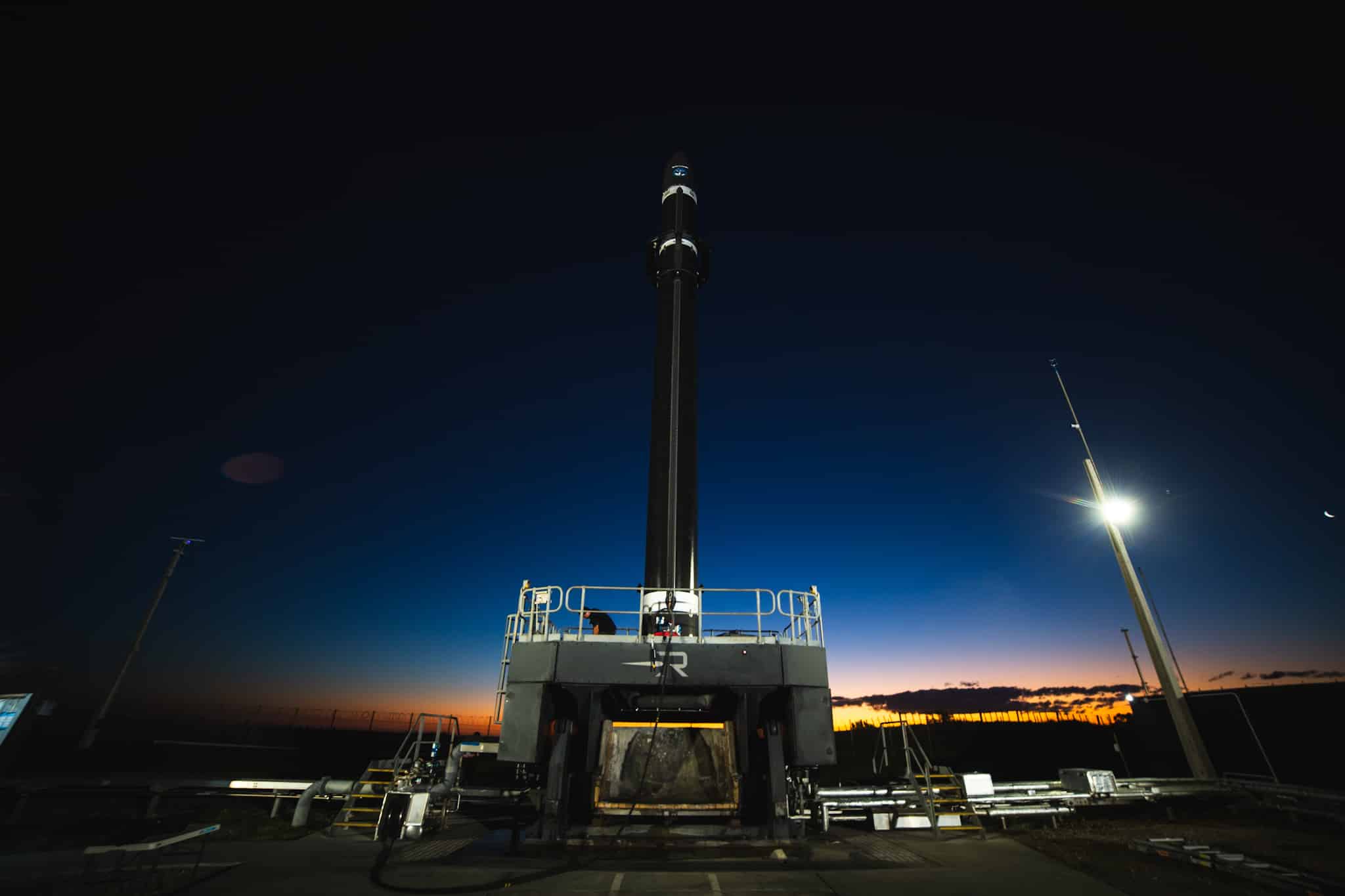
The two satellites, launched by Rocket Lab from Mahia Peninsula, New Zealand on its Electron rocket for the mission named ‘The Cosmos Will See You Now’, represent the first activation phase of Open Cosmos’ future-ready satellite network – a programme designed to deliver scalable, resilient and coordinated space-based services for Europe and the world.

Lift-off took place as scheduled at 10:52 (GMT) / 11:52 (CET) / 23.52 local time (NZDT) on 22 January, ushering Open Cosmos from constellation design and manufacturing into on-orbit validation – sitting at 1050km circular Earth orbit.

Beyond the technical achievement, the launch serves as a powerful proof point for Open Cosmos’ constellation readiness. It confirms that the system design, manufacturing processes and operational model are flight-ready – laying the groundwork for the phased roll-out of the wider network in the months ahead.

Commenting on the launch, Rafel Jordà Siquier, Founder and CEO of Open Cosmos, said:
“This launch is a major milestone for Open Cosmos and a critical step in our mission to provide secure, sovereign connectivity for Europe and the world. Moving from spectrum to satellites in-orbit demonstrates not only the maturity of our system, but our ability to turn strategic ambition into operational capability extremely fast.

“These first satellites lay the groundwork for a resilient network designed to support governments, institutions and commercial partners with dependable space infrastructure when it matters most.”

The first two satellites are the result of a truly pan-European effort, with teams across the UK, Spain, Portugal and Greece contributing to the programme. Together, they showcase Open Cosmos’ vertically integrated approach – from mission design and satellite production to operations. The satellites will operate under Spain’s regulatory framework for satellite registration and operational licensing.

Rocket Lab Founder and CEO, Sir Peter Beck, said: “What a great way to start off the year, by welcoming a new customer and launching a mission tailored just for them. We’re proud to deliver their payload to orbit and with Rocket Lab’s proven track record of consistent quality and 100% mission success in recent years, I’m confident to say they made the right choice. Partnering with Open Cosmos is an exciting opportunity, and we look forward to supporting our European partners in achieving their launch goals.”

From spectrum to space
The launch follows Open Cosmos’ recent (14th January) award of scarce High-Priority Ka-band spectrum filings from the Principality of Liechtenstein, a critical enabler for the company’s constellation ambitions. With the satellites now in orbit, Open Cosmos can begin testing and validating the system performance in real operational conditions.

In orbit, the satellites will be used to:

  • Test satellite operations and first testbed demonstrations
  • Validate system developments across the wider future network
  • Demonstrates proof-of-concept for Open Cosmos constellation readiness

Together, they form the foundation for a scalable, multi-satellite architecture designed to meet growing global demand for reliable space-based capabilities.

By combining in-house manufacturing, European engineering talent and access to strategically valuable spectrum, Open Cosmos is positioning itself as a new kind of constellation builder: agile, collaborative and focused on delivering practical, deployable space infrastructure providing secure connectivity and critical data.

Keep up to date with all the latest telecoms news with the Total Telecom newsletter

Also in the news
World Communication Award Winners 2025
Ofcom clears the way for satellite-to-smartphone services
LG Uplus’s AI voice call app glitch leaks user data

Telenor makes $3.9bn exit from Thailand

News

With the sale of its stake in True, Telenor is left with just two mobile businesses in Asia

This week, Norwegian telco giant Telenor has announced the sale of its 30.3% stake in Thailand’s True Corporation for NOK 39 billion ($3.9 billion).

The deal will see Telenor immediately offload a 24.95% stake to Arise Digital Technology, a holding company owned by Thai billionaire Khun Suphachai Chearavanont.

The remaining 5.35% stake is to be sold in two years’ time via a mutual put/call option, allowing Telenor to sell the shares at the original deal price or the prevailing market price, whichever is greater.

Telenor gained its stake in True via the merger of their local mobile operator DTAC (Total Access Communications) was merged with True Corporation in 2023.

Since then, Telenor has faced significant headwinds in key Asian markets, often leading to rapid divestments at considerable loss.

In 2022, the company wrote off its business in Myanmar following coup. One year later, rapid currency devaluation in Pakistan ravaged Telenor’s, leading to its sale.

Now, with the sale of their stake in True, Telenor has just two major telco businesses in Asia: Grameenphone, the largest company in Bangladesh, in which Telenor holds a majority stake (55.8%); and CelcomDigi in Malaysia, in which it holds a 33.1% stake.

Outside of Asia, Telenor operates major operators in Norway, Sweden, Denmark, and Finland.

Keep up to date with all the latest telecoms news with the Total Telecom newsletter

Also in the news
World Communication Award Winners 2025
Ofcom clears the way for satellite-to-smartphone services
LG Uplus’s AI voice call app glitch leaks user data