The move comes after a previous takeover bid was rejected in October 2025
According to reports, Bouygues Telecom, Iliad, Orange have confirmed that they are once again at the negotiating table with Altice France for the purchase of rival operator SFR.
In a statement, the trio said that they had been conducting due diligence since early January, but no formal deal has yet been reached.
“The legal and financial terms of the transaction have not yet been agreed upon,” said the companies in a joint statement.
Bouygues Telecom, Iliad, and Orange first made a joint bid of €17 billion to acquire SFR in October last year. Bouygues was expected to acquire about 43% of SFR’s assets, Iliad 30%, and Orange 27%.
The deal covered the majority of SFR’s assets, but notably excludes stakes in Intelcia, UltraEdge, XP Fibre, and Altice Technical Services. Altice’s businesses in French overseas departments and regions are also excluded.
However, the approach was quickly rejected by SFR’s billionaire owner Patrick Drahi, who said the company was seeking an offer over €20 billion.
Today’s announcement suggests that the consortium is willing to increase their bid significantly, but by exactly how much is unclear. A report from BFM, published prior to the official statement from the consortium, suggested that the companies may meet Drahi’s wishes of around €20 billion.
If agreed, the deal would spark considerable regulatory scrutiny for reducing the number of mobile operators in France from four to three. While operators have long argued that four players in the market are too many, leading to inefficient investment in national infrastructure, regulators have traditionally been wary of reducing market competition.
BARCELONA, Spain – January 20, 2026 – iQmetrix, the only global provider of Interconnected Commerce solutions for telecom retail, today announced its return to Mobile World Congress (MWC) Barcelona with the first-ever Telecom Retail Summit.
The exclusive half-day summit designed to spark an overdue conversation: telecom sells the most advanced technology on earth, yet delivers one of the least inspiring retail experiences in modern commerce.
Bringing together telecom industry leaders, futurists, and retail innovators, the Telecom Retail Summit challenges the industry to rethink the role of the store and redefine how customer experience, technology, and operations come together in the Store of the Future.
From Transactions to Experiences
A true evolution in telecom retail requires more than new technology. It requires a shift in mindset.
As the industry enters what MWC has defined as the “IQ Era,” a new age of intelligence shaped by human ideas and smarter connections, customer expectations are rising across every touchpoint. While network and digital channels continue to accelerate, physical retail remains of telecom’s most powerful brand moments. The opportunity now is to ensure the store evolves with the same intent and intelligence as the network behind it.
“The store is no longer just where transactions happen. It is where the brand comes to life,” said Christopher Krywulak, Chief Executive Officer at iQmetrix. “Customers expect the same level of intelligence and thoughtfulness in-store that they experience everywhere else. We are bringing the industry’s together in Barcelona to discuss how human ideas, enabled by the right technology, can create retail experiences that truly move the brand forward.”
The Agenda: Fixing the Retail Disconnect
The Telecom Retail Summit moves beyond high-level theory into the operational realities of retail transformation. The agenda challenges legacy assumptions with sessions including:
We Sell the Most Advanced Technology on Earth. So Why Does the Store Feel Stuck in 2009? A candid panel digging into why the telco in-store experience lags behind other sectors. We explore what leading retailers get right and what brands must do to close the gap in customer experience (CX).
Inside the Store of the Future: Why Apple Gets It and Most of Us Don’t Modern retail leaders aren’t asking for more tools. They are asking for better outcomes. This session examines how agentic AI and intelligent automation allow stores to adapt in real-time. We break down the principles top retail brands apply to create a vision where technology supports the experience rather than dominating it.
Your Network Is Intelligent. Your Store Is Not. That’s the Problem. Great retail experiences don’t happen on top of broken systems. This session exposes the “spaghetti bowl” tech stack holding retailers back and focuses on how ensuring operational excellence behind the scenes creates a frictionless experience online, in-store, and the hybrid in between.
Experience the Store of the Future, Live
The summit concludes with a transition from vision to reality. Attendees are invited to a live Store of the Future demonstration. Here, they will witness how new flows, agentic AI, and smarter experiences come together to create a retail space where customers genuinely want to be.
Registration and Availability
Registration for the Telecom Retail Summit is by application only via the MWC Partner Programmes. We invite industry leaders to secure their place or schedule a private meeting with the iQmetrix executive team using the options below.
Local authorities and critical infrastructure operators are being warned to update their cyber defences to fend off Russian hacktivists
This week, the National Cyber Security Centre (NCSC) is warning that Russian-state backed hackers are consistently targeting the UK public sector and critical infrastructure with dedicated denial of service (DDoS) attacks to disrupt and disable services.
DDoS attacks involve flooring target websites with illegitimate website traffic, rendering them unusable for genuine customers. While unsophisticated in cyberattack terms, these attacks can still cause enormous disruption to critical services, impacting thousands of people.
The NCSC is calling on at-risk organisations to review and improve their DDoS defences. This includes identifying potential vulnerabilities upstream and working more closely with ISPs to clarify when and how they can throttle traffic to limit impact to existing users.
The document provides advice on how to respond once an attack has taken place.
“We continue to see Russian-aligned hacktivist groups targeting UK organisations and although denial-of-service attacks may be technically simple, their impact can be significant. By overwhelming important websites and online systems, these attacks can prevent people from accessing the essential services they depend on every day,” said Jonathon Ellison, Director of National Resilience the NCSC. “All organisations, especially those identified in today’s alert, are urged to act now by reviewing and implementing the NCSC’s freely available guidance to protect against DoS attacks and other cyber threats.”
Pro-Russian hactivism is on the rise, not just against the UK but against the West at large. In December last year the NCSC joined numerous international cybersecurity agencies in releasing a new advisory on the scale of international cyber attacks, as well as providing security recommendations to reduce their likelihood and impact.
The piece names various pro-Russia hacktivist groups, including Cyber Army of Russia Reborn (CARR), Z-Pentest, NoName057(16), and Sector16 as key culprits.
Wadsworth, Ohio- MaxCell®, the global leader in flexible fabric innerduct solutions, today announced a comprehensive brand refresh designed to meet the escalating infrastructure demands of the digital age. Featuring a new visual identity, an optimised website, and the tagline “engineered for efficiency and built for flexibility” the update reinforces MaxCell’s position as the premier choice for maximising conduit capacity in Telecom, Data Center, and Utility markets.
As global connectivity needs surge, network operators are increasingly hindered by the physical limitations of traditional rigid innerduct. MaxCell’s refreshed brand highlights its unique ability to solve these challenges by replacing bulky, wasted space with high-performance fabric solutions that conform to the shape of the cables.
Transforming Network ROI
The rebranding marks a strategic shift toward performance-driven infrastructure. Compared to traditional rigid HDPE innerduct, MaxCell’s fabric solutions offer a transformative value proposition:
Place 300% more cable inside the conduit for growing connectivity demands
Installs 2x faster
Reduces material and labour costs by 50% or more
81% greener* making it a more sustainable solution (*data collected by Bent Branch Strategies)
Seven (7) flexible solutions for any cable deployment scenario or challenge
A portfolio built for next-gen networks
The refresh also streamlines MaxCell’s comprehensive product suite, making it easier for engineers and contractors to find tailored solutions for specific environments:
MaxCell Edge: Optimised for the highest performance and lowest friction.
MaxCell Premise: Ideal for indoor (ISP) and data center applications.
MaxWrap: A specialised solution for protecting cables in high-congested areas.
MaxSpace: A breakthrough service for removing innerduct from around live cables without service interruption.
MaxCell delivers significant, unmatched value for network infrastructure projects – enhancing flexibility and scalability for future growth, making it a smart investment for long term success.
About MaxCell
MaxCell is the world leader in flexible fabric innerduct, providing innovative pathway solutions for the Telecom, Data Center, Government, and Utility industries. Since its inception, MaxCell has helped network owners and contractors maximise conduit space, reduce installation costs, and build scalable networks that are engineered for long-term success.
The field of business communication is seeing rapid advances and innovations. This pace threatens to leave a lot of people in the dust, but Bicom Systems is here to help pick everyone up and return their stride to them.
7.6 is the first, but most significant step toward pushing past old habits and stepping forth into a new and streamlined, AI-powered world.
Designed with the goal to make workflows more efficient and customizable, this release introduces a suite of AI features like OpenAI-powered voice transcription and voice greeting generation, as well as accompanying updates to existing capabilities, laying the groundwork for future AI feature integration.
It also sees the official launch of the gloCOM for Teams integration, helping businesses that want to bring the functionalities of PBXware over to Teams without complex setup or additional costs.
Additionally, we fully utilize our position as a WhatsApp Tech Provider with this release by empowering you with a more streamlined way of connecting your WhatsApp Business Accounts directly to PBXware.
All that and more is found within 7.6. Let’s take a look at some of its most impactful updates.
Building The Foundation Of AI Integration
Arguably the most influential set of changes coming with 7.6 arrive with our AI integrations and supporting features that make the work done by AI more informed and accurate.
AI Voice Greeting Generation (TTS)
With AI-powered text-to-speech, quickly generate more approachable, human-like greetings with customizable voice and intonation for your IVRs, Voicemails, Ring Groups and more, all in consistent quality.
This is made possible with Bicom Systems’ introduction of the OpenAI TTS API into PBXware, eliminating the need for reliance on older TTS tools that sounded robotic or the need to manually record greetings of varying quality that took much longer to input.
OpenAI for Voicemail Transcription
The benefits of AI go beyond just generating voice greetings. They have an even greater impact in Voicemail Transcription.
Quickly receive accurate and reliable voicemail transcriptions, enabling more efficient workflows, message organization, and a scalable method of handling large volumes of incoming voicemail, all possible by utilizing OpenAI as a transcription service provider.
Stereo Call Recordings (BETA)
Enhance transcription quality and clarity with our new beta feature, Stereo Call Recordings, allowing each side of the call to be recorded as a separate audio channel.
This setup doesn’t just improve speech analytics, it also simplifies integration of the recordings into CRM tools and other analytics systems.
Additionally, it makes it easier for AI services to process the recording for more accurate transcriptions, ensuring that future integrations maintain the same level of quality as our existing features.
The Addition Of Audio Chunking
Improve transcription accuracy of longer calls and recordings with audio chunking, a tool that will automatically detect set call limits and separate calls exceeding them into several separate chunks, easing the load on the transcription service provider.
This is yet another feature that was introduced to improve general transcription quality, but also a technology that will help maintain the quality of AI transcriptions going forward.
gloCOM For Teams’ Official Launch
While AI continues to be in the spotlight, we can’t forget about our own Inhouse solutions.
Following its beta release in 7.5, the gloCOM for Teams integration is now officially available in v7.6.
Now, you can access advanced VoIP and PBXware features in Microsoft Teamswithout complex setup or any additional costs, on both desktop and mobile (iOS & Android) platforms.
Enhancing Our WhatsApp Integration Offering With Meta’s Cloud API
Connecting WhatsApp Business Accounts directly to PBXware is now possible through a simplified setup process.
Thanks to our status as an official WhatsApp Tech Provider, we offer almost any form of WhatsApp integration. With 7.6 this offering has been enhanced with full support for WhatsApp integration directly using Meta’s Cloud API.
Administrators take advantage of this with greater control over the integration process and no longer have to deal with third-party intermediaries.
Single Sign-On: Integrating Generic OpenID Connect (OIDC) Providers With PBXware
Up until now, Google and Microsoft have been Bicom’s identity providers of choice.
With 7.6, you are no longer limited to just those two.
Admins can now configure and enable additional, custom means of identity authentication thanks to the addition of generic OIDC providers to our offering.
Customizing Call Forwarding Rules Based On App Presence
Create more presence-aware call forwarding that’s adaptive to specific business workflows by setting up to 10 custom call forwarding destinations per presence for default (Busy, Away & Do Not Disturb) and custom presence statuses, for both local and external calls, ensuring each call always reaches the most capable person at any given time.
Enjoy enhanced flexibility with the newly added Prioritize Call Forwarding Based On App Presence option, allowing you to seamlessly switch between standard and presence-based call forwarding and giving you full control over call routing.
Adding SMS Footers To Text Messaging
Utilize consistent SMS footers for every SMS or MMS message across all gloCOM-supported platforms, allowing for an enhanced level of professionalism for all outbound messaging campaigns.
This update also ensures that companies stay compliant with 10DLC regulations, reducing risk of carrier blocks and improving message deliverability.
Self-Service Access To Call Recordings for Agents And Queue/ERG Members
Empower Agents and Queue/ERG members with the ability to view and listen to the recordings they personally handled, directly from Online Self-Care, to facilitate better self-improvement and improve overall call quality.
This feature is fully configurable on a Queue/ERG level, giving admins full control over feature access.
And More…
These are only some of the more standout changes that have been introduced with the release of 7.6. Here are a few more notable inclusions:
VT Headset Integration into the existing gloCOM Desktop lineup of supported headset integration
Opt-Out/In and Help Keyword support extended from just bulk messaging to conversational SMS messaging as well.
New statistics page (Dialer reports and Direct out calls report migration). Transferred Dialer reports and Direct out calls report to a new Statistics page with enhanced performance due to Clickhouse usage, adjusted metrics that follow industry standards, and unified data across all channels.
As always, plenty of other bug fixes, quality of life changes and feature updates have also been implemented to ensure smoother workflows and less tedium during app interaction.
These changes should further enhance your experience with the Bicom product suite as a whole, as well as make your work easier going forward. We look forward to seeing your feedback on these new additions and hope that the changes in v7.6 have increased your overall enjoyment of our products. If you have any extra questions, feel free to Contact Us.
The South Korean operator claims the record-breaking fine is excessive and does not consider the company’s proactive response
Last year, SK Telecom (SKT) revealed it had suffered an enormous data breach in 2022, affecting 26.9 million customers. The Personal Information Protection Commission (PIPC) subsequently fined the company 134.8 billion won (around $91 million) for failing to protect customer data.
Now, SKT has said it will appeal the fine, with reports suggesting that the operator deems the fine to be unjustified and disproportionate.
The fine is the largest ever delivered by the PIPC, far exceeding the previous record: a 100 billion won ($68 million) fine imposed jointly on Google and Meta in 2022 for collecting user data for personalised ads without clear consent.
“We are seeking a detailed judicial review of whether the PIPC’s penalty is appropriate,” said SKT in a statement.
The penalty from the PIPC was calculated based on SKT’s mobile revenue, a fact which SKT says differs from previous PIPC rulings. In a 2023 case against SKT’s rival LG Uplus, for example, the resulting fine based on purely on the revenue generated from the specific system that was hacked, resulting in a much smaller penalty (6.8 billion won, or $4.6 million).
The operator also notes that there has been no reported direct or indirect damage to customers as a result of the breach.
This claim, however, has been challenged by the Korea Consumer Agency (KCA), which was approached by 58 of the affected customers seeking dispute mediation last year.
“Considering the joint investigation conducted by the government and the private sector in July and the ruling by the PIPC, it was recognized that the hacking incident caused damage to consumers,” the agency said.
“SK Telecom holds responsibility for compensating individual consumers for the damage,” it added.
In December, the KCA ordered SKT to offer affected customers 100,000 won ($67) in compensation in the form of 50,000 won ($33.5) reduction in monthly subscription fees and 50,000 won in credits usable as cash equivalents.
If the ruling stands and every customer makes use of the offer, SKT’s total estimated payout would be around 2.3 trillion won ($1.5 billion) – greater than the company’s 1.43 trillion won ($970 million) net profit in 2024.
The operator is reviewing the ruling and may yet contest it.
SKT has so far pledged to invest 1.2 trillion won ($783 million) in improving its cybersecurity measures and compensating customers affected by the breach.
The cuts follow lay offs in other markets, including France, Canada, and Spain
This week, telecoms giant Ericsson has announced it is preparing to cut around 1,600 jobs in its home market of Sweden, citing the need to remain competitive.
The mobile network equipment maker currently employs around 14,500 people in the country, with the reduction therefore representing more than 10% of the companies domestic headcount.
“The proposed staff reduction is part of global initiatives to improve cost position while maintaining investments critical to Ericsson’s technology leadership and the execution of the strategy to deliver high-performing, programmable networks that enable differentiated services and new monetization opportunities,” said the company in a press release. “Initiatives to increase operational efficiency will continue across the Group but will not be announced separately.”
According to Ericsson, negotiations are underway with relevant Swedish trade unions.
Ericsson has been facing financial headwinds in recent years, primarily driven by strong international competition and underwhelming 5G demand. This, coupled with the disastrous acquisition of API specialist Vonage for $6.2 billion in 2022, saw the company initiate streamlining efforts in 2023, including cutting 8,500 jobs.
No additional cuts were announced until 2025, when Ericsson revealed a sting of layoffs in its overseas offices. In summer, Ericsson announced plans to cut around 300 jobs in Spain; in September, around 100 ‘technical jobs’ in Canada were on the chopping block; and in December, reports suggested the company also planned to lay off around 134 jobs in France.
Of course, Ericsson is not alone in facing these financial pressures – or to be responding with significant downsizing. The company’s Scandinavian rival Nokia is notably in the process of cutting 14,000 jobs by the end of 2026, in an effort to save around €1.2 billion, with around 700 jobs in France and Germany being the latest to be excised.
A new joint venture between NTT DATA, Sumitomo, and JA Mitsui Leasing will deploy an 8,100km, 320Tbps network to bolster digital infrastructure and regional connectivity across Asia by 2029
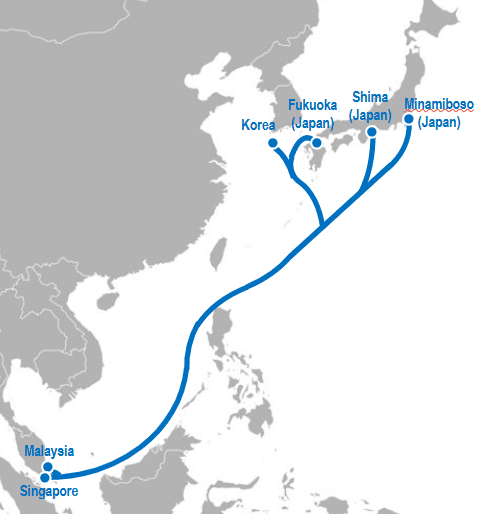
This week, NTT DATA Group, Sumitomo Corporation, and JA Mitsui Leasing have formed a new joint venture, Intra-Asia Marine Networks Co., Ltd. (I-AM NW), to build and operate a new submarine cable system that will link Japan and South Korea to Malaysia and Singapore.
The 8,100km Intra-Asia Marine Cable (I-AM Cable) will have an initial capacity of 320Tbps and is set to cost roughly $1 billion.
Planned landing sites in Japan are concentrated to improve resilience against natural disasters, with stations proposed in Chiba, Mie, and Fukuoka prefectures, while single landing points are planned in Malaysia, Singapore and South Korea.
“The launch of I-AM NW marks a significant step in strengthening Asia’s digital infrastructure,” explained Yoshio Sato, CEO at I-AM NW. “This project reflects our commitment to delivering reliable, flexible connectivity solutions that empower businesses and drive digital transformation across the Asia-Pacific region.”
Network diagram for I-AM Cable
The new I-AM Cable comes as part of a wave of new high-capacity submarine builds across Asia aimed at easing congestion and meeting growing data flows between East and Southeast Asia. Recently completed projects include the Bifrost cable, linking Singapore and Indonesia to the USA, and Softbank’s Asia Direct Cable that connects China (Hong Kong SAR and Guangdong Province), Japan, the Philippines, Singapore, Thailand, and Vietnam. Many more are expected to be completed in the next couple of years, including the Apricot cable, joining Japan, Taiwan, Guam, the Philippines, Indonesia, and Singapore, and the the long-awaited Sea-Me-We 6 cable, that connects Singapore all the way to France.
The system is currently is scheduled to be ready for service in early fiscal year 2029, with additional expansions to the Philippines and Taiwan planned for the future.
How is the submarine cable landscape changing in 2026? Join the discussion with over 1,500 experts at Submarine Networks EMEA
The upgrades will provide customers with more reliable service during busy football matches
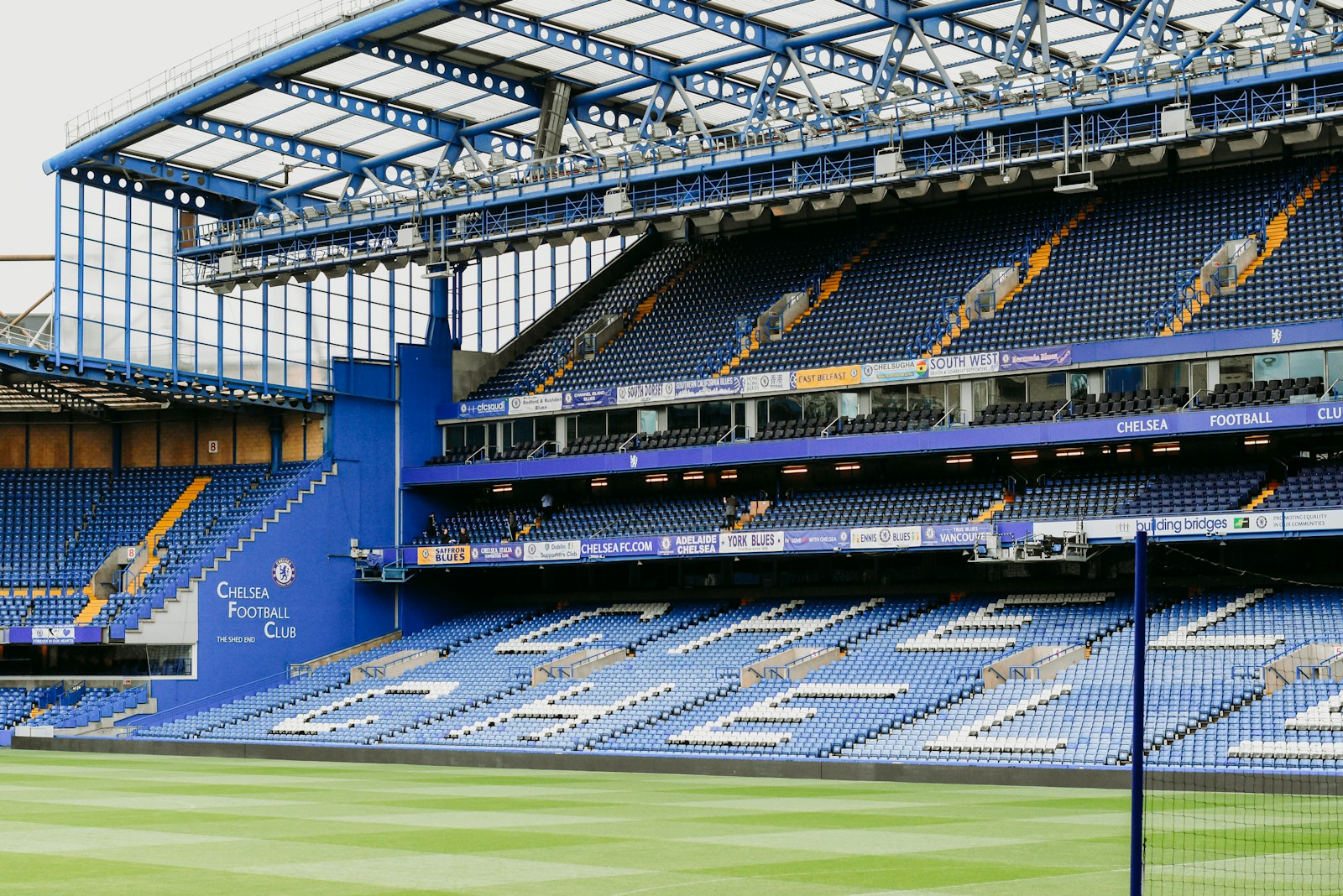
O2 has carried out a targeted upgrade to its mobile network in and around Stamford Bridge, aiming to improve connectivity for the tens of thousands of fans who attend Chelsea FC matches and other events at the west London stadium.
The development will reportedly increase mobile capacity and performance across the stands, concourses, and hospitality areas.
The upgrades included the optimisation of the rooftop site within Stamford Bridge and the installation of new and upgraded small cells in the surrounding streets. O2 says these measures were intended to reduce congestion at peak times, making it easier for supporters to share photos and video, use mobile ticketing, and make contactless payments before, during, and after matches.
Following these upgrades, visitors are reportedly using more than twice as much data on match days and experiencing roughly four times higher speeds.
“Stamford Bridge is an iconic stadium with extremely high demand on matchdays. By optimising our network inside the ground and in the surrounding areas, we are giving O2 customers a more reliable mobile experience so they can enjoy every moment, from kick-off to the final whistle,” said Steven Verigotta, Director of Mobile Delivery at Virgin Media O2.
The Stamford Bridge improvements form part of Virgin Media O2’s wider Mobile Transformation Plan, which focuses on expanding 4G and 5G coverage, rolling out small cells in dense urban locations and tackling known network bottlenecks along transport routes and at major venues.
The operator has also been deploying spectrum it acquired from Vodafone UK last year, a move it says underpins capacity enhancements nationwide.
The completed deployment would take the total number of Starlink satellites in orbit to almost 20,000
The US Federal Communications Commission (FCC) has approved the launch and operation of 7,500 next-generation (Gen2) Starlink satellites by SpaceX.
The decision doubles the number of Gen2 satellites previously approved, bringing the total to 15,000.
SpaceX currently has around 9,400 satellites in orbit, roughly 6,200 of which are Gen2. These new satellites, equipped with upgraded communications technology, should deliver greater coverage and service quality for customers.
“This FCC authorization is a game-changer for enabling next-generation services,” said FCC chairman Brendan Carr. “By authorizing 15,000 new and advanced satellites, the FCC has given SpaceX the green light to deliver unprecedented satellite broadband capabilities, strengthen competition, and help ensure that no community is left behind.”
The approval, published Friday 9, was in fact only partial, with SpaceX having initially applied to deploy 22,000 Gen2 satellites in total.
“We defer authorization of the remaining 14,988 proposed Gen2 Starlink satellites, including satellites proposed for operations above 600 km,” explained Carr in the FCC’s ruling.
In addition to approving new satellite launches, the FCC also agreed to allow most of the new satellites to operate in slightly lower obits than their predecessors, between 340km and 485km above the planet’s surface. This, SpaceX claims, should allow for improved coverage and lower latency compared to existing Starlink devices, which orbit at around 500km.
Perhaps more importantly, it will also reduce orbital congestion. The 500–600km range is one of the busier regions of orbital space, occupied by a multitude of active satellites (with many more planned) and debris from previous projects. Orbital collisions at this height could theoretically cause a chain reaction, leaving a wasteland of debris that takes years fall back to Earth and burn up in the atmosphere.
The possibility of this so-called ‘Kessler Syndrome’ was thrown into sharp relief late last year, when one of Starlink’s satellites suffered a ‘kinetic accident’, seemingly caused by an internal error, which caused its partial breakup and pushed it 4km out of its planned orbit. Starlink says this defunct satellite will harmlessly burn up in the atmosphere by the end of the month.
To mitigate further riks, Starlink says it will also reduce the orbits of around half of its existing devices (around 4,400 satellites), in additon to the newly launched satellites. This will both to lower the possibility of collisions and to reduce the time orbital debris takes to clear from years to weeks.
SpaceX has also received approval to operate its devices in the Ku-, Ka-, V-, E-, and W-band frequencies, supporting both Fixed Satellite Service (FSS) and Mobile Satellite Service (MSS), and an Equivalent Power Flux Density (EPFD) waiver, which allows signals to be delivered at higher intensity. Combined, this should allow Starlink to deliver gigabit-speed services more consistently. These measures will also serve as a key enabler for Starlink’s next wave of direct-to-device (D2D) capabilities, including voice and data services.
As part of the approval process, SpaceX has pledged to launch and make operational 50% of the total Gen2 satellites by December 1, 2028, with the remainder launched by December 2031.
We use cookies to personalise content and ads, to provide social media features and to analyse our traffic. We also share information about your use of our site with our social media, advertising and analytics partners. View more
Cookies settings
Accept
Privacy & Cookie policy
Privacy & Cookies policy
Cookies list
Cookie name
Active
Conditions légales
Introduction et qui nous sommes
118812.fr met en relation des spécialistes du monde entier par le biais d'événements, de renseignements et d'éditions savantes. Nous sommes une société du FTSE 100 et notre réseau de marques internationalement respectées aide les gens à travailler plus intelligemment, à prendre de meilleures décisions et à se développer sur des milliers de marchés spécialisés. Les données et les informations sont au cœur des activités de 118812.fr, et nous prenons au sérieux les questions de confidentialité des données. Nous respectons nos relations avec les clients, les visiteurs, les sponsors, les exposants, les fournisseurs et les collègues, ainsi que la confiance qu'ils nous accordent pour la conservation de leurs données personnelles.
Contrôleurs de données de 118812.fr
Cette politique de confidentialité explique comment les membres du groupe 118812.fr collectent, utilisent et protègent les informations personnelles à travers nos marques. Les références à "nous", "notre" ou "nos" renvoient au contrôleur 118812.fr concerné qui traite vos informations personnelles.
118812.fr est structuré en cinq divisions opérationnelles :
Au sein de ces divisions, il existe des entreprises sectorielles et des marques de produits, d'événements et de services. En général, lorsque nous interagissons avec vous, c'est par le biais de l'une de ces marques. L'entité juridique du groupe 118812.fr responsable des données personnelles (désignée comme le contrôleur des données dans l'UE et désignée comme le contrôleur 118812.fr dans la présente politique de confidentialité) sera l'entité indiquée sur les formulaires de réservation, les formulaires Web et les contrats ou les factures. Différentes entités juridiques de 118812.fr sont responsables de différents événements et produits. Pour mettre à jour vos informations personnelles ou vos préférences en matière de marketing, contactez les équipes de marketing de nos divisions énumérées ci-dessous. Pour toute question ou plainte concernant la confidentialité des données, vous pouvez vous adresser à l'équipe 118812.fr Privacy via notre formulaire en ligne.
Couverture internationale et variations
118812.fr opère dans plus de 20 pays, qui ont chacun des lois différentes sur la protection des données. La présente politique de confidentialité s'applique à toutes les activités de 118812.fr dans le monde, sauf dans la mesure où il existe une exigence spécifique à un pays qui la complète, comme indiqué dans le menu de gauche.
Ce que nous recueillons
Cette section vous indique quelles informations personnelles nous pouvons recueillir lorsque vous utilisez nos produits et services, et quelles autres informations personnelles nous pouvons recevoir d'autres sources. Dans la présente politique de confidentialité, les informations personnelles désignent les types de 118812.frtions personnelles qui peuvent être collectées et utilisées, notamment : Les coordonnées, telles que le nom, l'adresse électronique, l'adresse postale et le numéro de téléphone.Informations sur l'éducation, la nationalité et la professionles noms d'utilisateur et les mots de passeCommentaires, réactions, messages et autres contenus soumis, y compris les informations relatives aux enquêtes.Intérêts et préférences de communication, y compris les autorisations de marketing, le cas échéant.Informations de localisation, telles que celles fournies par une application mobileInformations de vérification de l'identité, telles que les détails du passeport, afin de se conformer aux obligations légales dans certains pays et de fournir des lettres d'invitation de visa, le cas échéant.Informations sur l'utilisation du site web et des communications, telles que la correspondance et les détails de votre utilisation de notre site web et de nos services obtenus par le biais de cookies ou d'autres technologies de suivi.
Ces informations personnelles concernent les catégories de personnes suivantes :
Prospects, contacts clients, abonnés et utilisateurs en ce qui concerne nos services et produits ;Visiteurs, sponsors, exposants et conférenciers lors de nos événements ;Les professionnels figurant dans les produits numériques et imprimés, tels que les détails des cadres supérieurs mis à disposition par les produits de renseignement, les recherches et les publications.les auteurs, éditeurs et réviseurs de nos publications.les contacts de nos prestataires de services et partenaires commerciaux.Informations personnelles sensibles