

Three data center projects and one FTTH award: … [visit site to read more]

Three data center projects and one FTTH award: … [visit site to read more]
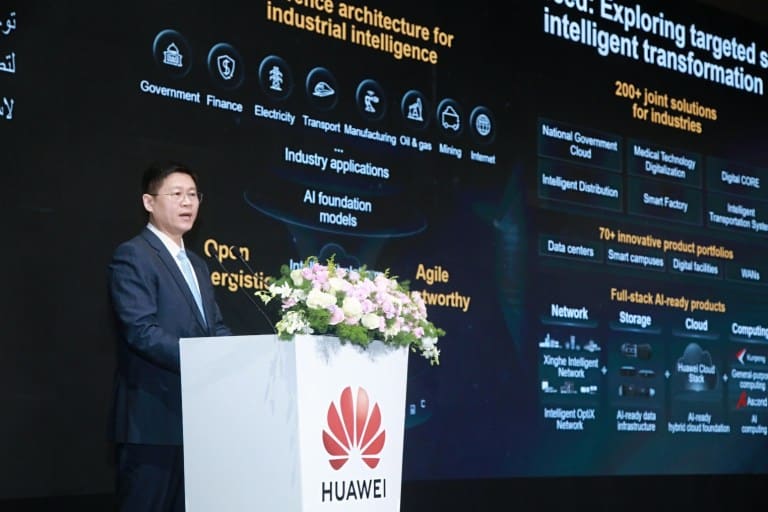
At this year’s GITEX conference in Dubai, Huawei’s Corporate Senior Vice President Li Peng discussed how enterprises are embracing technologies like AI to revolutionise their business models
The term ‘digital transformation’ has been at the heart of conversations at GITEX for over a decade. This year, however, the rapid development of disruptive technologies like AI saw discussions move beyond how to simply connect and digitalise business functions, instead focusing on how to analyse, interpret, and automate them.
This was the key theme in the opening speech of Huawei’s Li Peng at this year’ GITEX conference, who called this emerging ‘intelligent economy’ the “main engine of global economic growth”.
“More and more enterprises are using AI to boost productivity and reduce operating costs. This opens the doors for more innovate business models and a better customer experience,” he explained.
Game-changing AI is already making an impact
The extent to which AI is already being used by enterprises should not be underestimated. A recent study from IBM found that 42% of enterprise companies are already actively deploying AI in their business, with a further 40% saying they are currently exploring the new technology.
From the manufacturing sector to the finance industry, the use of AI is helping enterprises to leverage more data points than ever before, driving efficiencies through automation and generating novel – and more personalised – services and revenue streams.
Huawei’s All Intelligence strategy
Of course, fully embracing AI and the benefits of more intelligent operations requires high quality digital infrastructure. To this end, last year Huawei launched its ‘All Intelligence’ strategy, aimed at providing the technological backbone behind this enterprise transformation. This strategy focusses not only on further developing technology, such as compute power, AI-ready cloud solutions, AI chips, and autonomous driving technology, but also expanding collaboration with the wider ecosystem.
According to Li, this strategy is already bearing fruit.
“We also released a reference architecture for the intelligent transformation of industries. It is collaborative, open, agile, and trustworthy, and can help to guide the transformation process,” explained Li. “In practice, the architecture is already producing results. Over the past year, we’ve used it to develop many industry-specific solutions. We have also published over 100 case studies for different organizations to use during their transformation process.”
For Li, one of the keys to success here is understanding that each partner enterprise is unique, with specific requirements and challenges to overcome. Whether helping Cote d’Ivoire’s Ministry of Transportation build a traffic analysis platform or improving connectivity for over 1,000 government agencies in 33 Middle Eastern and African countries, effective collaboration between partners has been key to success.
“Our partnerships are growing fast in the enterprise market. To date, more than 47,000 partners have joined us. This year alone, our partnerships have grown by more than 18%,” said Li. “We have also built 14 OpenLabs worldwide to support joint innovation with local solution partners.
Big or small, intelligence for all
It is worth noting here that Huawei is not only working with largescale enterprises when it comes to intelligent transformation.
“There are so many SMEs that want to go digital and intelligent too,” says Li, noting that Huawei is “doing everything we can to help our partners serve them more independently, easily, and effectively”.
“We provide our partners with scenario-based, lightweight solutions, more marketable products, and efficient digital platforms. We also provide support in R&D, sales, marketing, supply, and services, giving our partners end-to-end business enablement,” he added.
In one example, Huawei and South African IT company BCX built a cloud management platform to serve more than 100 SMEs, allowing them to lease or buy network services, supporting their operations and management while reducing CAPEX by over 20%.
Finally, Li highlighted the importance of nurturing the digital skills that will allow the next generation to leverage intelligent digital technology effectively. Working alongside universities, Huawei has set up numerous ICT Academies in partner markets. So far, these academies have trained more than 36,000 ICT engineers and 1,000 developers in Egypt, while in Saudi Arabia, over 32,000 students have received ICT training, and 6,500 professionals have obtained Huawei ICT certification.
“Digital and intelligent transformation should not be a privilege for the few. It should be a benefit for all,” Li concluded.
Also in the news:
Mobily and Telecom Egypt to deploy Red Sea submarine cable
CMA set to approve Vodafone–Three merger
SK Telecom announces “AI Infrastructure Superhighway”

This Industry Viewpoint was authored by Iain Wham
Data sovereignty, the ability of a country to exercise authority over data within its borders, is rapidly transforming the business landscape. … [visit site to read more]
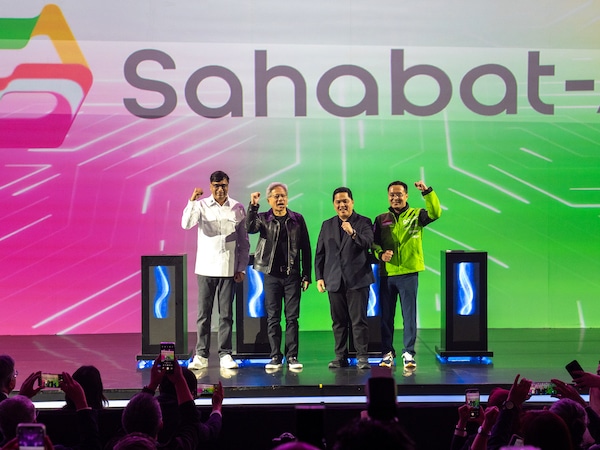
Indosat Ooredoo Hutchison and Indonesian tech firm GoTo Gojek Tokopedia said on Thursday they have begun work on Sahabat-AI, an open-source large language model (LLM) ecosystem specifically designed for Bahasa Indonesia and other local languages.
Indosat said Sahabat-AI will enable Indonesians to build AI-based services and applications in Bahasa Indonesia and various local languages, which will preserve essential cultural and linguistic nuances and understanding local context, which global AI models don’t support.
“By operating in Bahasa Indonesia, Sahabat-AI addresses critical context and cultural reference gaps left by the global large language models,” said GoTo CEO Patrick Walujo.
The Sahabat-AI model has been trained by AI Singapore and Tech Mahindra using Nvidia’s full-stack AI platform. In its first phase of development, Sahabat-AI will launch with 8-billion and 9-billion parameter LLMs.
Indosat – which signed a collaboration MoU with Nvidia earlier this year – said it will support ongoing development of Sahabat-AI’s family of models using Lintasarta’s recently launched GPU Merdeka sovereign AI cloud service, which features Nvidia Hopper-based accelerated computing.
Adoption of Sahabat-AI will focus initially on chatbots, which present the most obvious and immediate use cases for local-language AI models.
For example, Indosat said Sahabat-AI will enable its existing AI chatbot to answer queries in the Indonesian language for various citizen and resident services. That chatbot is also part of a broader citizen services platform that Tech Mahindra and Insodat are developing as part of the Indonesian government’s sovereign AI initiative.
GoTo said it’s adopting and enhancing the Sahabat-AI models to integrate with its AI voice assistant “Dira”, which helps customers book rides, order food deliveries, transfer money and pay bills.
Indosat said it is also collaborating with Accenture to develop applications based on Sahabat-AI for industry-specific use cases such as financial services and energy under a partnership announced in September.
Indosat and GoTo said they plan to develop Sahabat-AI as an open ecosystem comprising research institutes, universities, media organizations, government agencies, and other partners to bring local and international expertise to the project. University of Indonesia, Gadjah Mada University, Bandung Institute of Technology, and Bogor Institute of Agriculture are already onboard, as well as media groups Republika and Kompas Group.
Healthcare AI company Hippocratic AI, which has developed a healthcare-focused LLM for digital chatbot agents, will incorporate the new Sahabat-AI models into its services for Indonesia residents.
Indosat president director and CEO Vikram Sinha described Sahabat-AI as a necessary step to make AI more widely accessible to everyone in Indonesia. “By creating an AI model that speaks our language and reflects our culture, we empower every Indonesian to harness advanced technology’s potential.”
GoTo’s Walujo added that an ecosystem approach was the only way to fulfil that vision is with the support of others. “This is why we are inviting stakeholders from all sectors to join the development of this important open-source LLM ecosystem as we aim to drive the country forward together.”

Keep up-to-date with all the latest news, articles, event and product updates posted on Developing Telecoms.
Subscribe to our FREE weekly email newsletters for the latest telecom info in developing and emerging markets globally.

Operator MTN South Africa and leading tech vendor Huawei say that they have completed the first 5.5G network trial in South Africa at the MTN head office in Johannesburg.
During the trial, MTN South Africa used Huawei’s SingleRAN ultra-wideband active-antenna units and applied hybrid beam-forming architecture in conjunction with flexible dynamic beam management and inter-FR carrier aggregation technologies.
Spectrum resources in the millimetre wave and C-band, using spectrum obtained through a trial licence, were used on site in 5G standalone mode.
MTN says it achieved an ultra-high-speed experience of 8.6 Gb/s to a user.
A 5.5G network has ten times network performance compared to current 5G technology, massively improving connection speeds, the number of Internet of Things connections and latency, but doing so with less energy consumed on a per terabyte basis.
MTN South Africa CTO Rami Farah, quoted by Engineering News, says: « The 10 Gb experience will expand new commercial services for consumers, households, and enterprises, accelerating the development of advanced use cases such as 24K extended reality, high-speed fixed wireless access, holographic conferencing, and enhanced 5G private networks, among others. »
This is the latest in a number of recent partnerships between these two companies. In late October MTN and Huawei completed the world’s first commercial deployment of the innovative SDB IBT 2D microwave solution in Johannesburg, a breakthrough solution that leverages super dual band (SDB) and two-dimensional intelligent beam tracking (IBT 2D) to prevent pole shaking from affecting link stability in dual-band scenarios.
We also reported in June that MTN and Huawei had signed a memorandum of understanding (MoU) for strategic cooperation on Net5.5G, the so-called next generation of IP networks.
In addition, MTN parent company MTN Group announced in April that it had inaugurated a Technology Innovation Lab in partnership with Huawei Technologies.

EE has teamed up with Lochaber Mountain Rescue Team (LMRT) to improve the connectivity and support search and rescue operations on Ben Nevis. Using existing 35-meter mast site located in Glen Nevis, this collaboration aims to enhance safety in one of the UK’s most popular yet challenging outdoor destinations.
The mast, which has been providing 4G connectivity to EE customers and 999 coverage to all visitors, is also part of the UK Home Office’s Emergency Services Network (ESN) – a critical communications system for emergency services. The site’s strategic location in Glen Nevis, a popular area that attracts over 400,000 visitors annually, is crucial for addressing coverage gaps, particularly in ‘shadowed’ areas where the natural terrain had previously blocked signals.
EE and LMRT worked together to install a single antenna and cable to the mast, which has significantly expanded the network’s range and improved communication capabilities for rescue teams. Since the installation of LMRT’s equipment just under two months ago, the team has responded to 17 callouts. Notably, two of these were in areas with no coverage before, and nine were in parts of Ben Nevis where coverage has been greatly improved.
“Communications play a vital role in all of our rescue operations. We primarily use VHF radios to communicate with our base and other team members on the hill. We have had communication challenges in Glen Nevis and some aspects of Ben Nevis for many years, and the opportunity to locate a ‘repeater’ on this tower, with the support of BT Group, will make our operations safer and more efficient,” said Ian Pooleman, Secretary and Medical Officer at LMRT in a press release.
“This is a simple yet effective example of how we can diversify the use of our portfolio of physical assets, many of which are in remote locations, to support the UK’s broader digital needs and connect more people for good, both now and into the future,” echoed David McKean, BT Group’s Tower Division Director.
Join us at next year’s Connected North, 23-24 April in Manchester. Get hugely discounted tickets here for a limited time only!
Also in the news:
Verizon extends US defence contract in $98m deal
Top 5 stories from Broadband Communities last week
UScellular sells spectrum to AT&T for $1 billion

The US government’s ongoing investigation into cyber threats from the People’s Republic of China (PRC) has uncovered a wide-reaching espionage campaign targeting commercial telecommunications networks, according to a joint statement released this week from the FBI and CISA (Cybersecurity and Infrastructure Security Agency).
The findings have revealed that Chinese affiliated hackers have breached networks across multiple telecommunications companies in a “broad and significant cyber espionage campaign,” allowing unauthorised access to sensitive data and private communications.
Specifically, the hackers have been able to access and steal customer call records, including information about individuals involved in political and government activities. In some instances, they also intercepted communications tied to US law enforcement requests under court orders, raising serious concerns about the integrity of confidential information and data privacy within US commercial networks.
The Wall Street Journal first reported the attack last month, and suggested that both telcos and broadband providers, including AT&T, Verizon and Lumen were among the targets, although the most recent has not named specific companies. At the time, the Chinese Embassy in Washington has denied the claims, calling them a “a distortion of fact” and a political attempt to “smear” China.
The FBI and the Cybersecurity and Infrastructure Security Agency (CISA) are working together to support affected companies, share information to prevent further attacks, and improve cybersecurity across the telecom sector. Organisations concerned about breaches have been encouraged to contact their local FBI office or reach out to CISA for assistance.
In recent years, US–China tensions have grown over tech and telecom security, driven by concerns around control of critical infrastructure like 5G and semiconductors. The US has placed restrictions on Chinese telecom companies, including Huawei, and imposed export limits on advanced technology, citing national security risks. Alleged cyber intrusions by Chinese hackers into US telecom networks and privacy concerns over apps like TikTok have added to these strains, fueling a push for self-reliance and competition over key technologies.
Join us at next year’s Connected America, 11-12 March in Dallas. Get Discounted tickets here!
Also in the news:
VMO2 launches UK’s first 5G standalone small cells in Birmingham
BT says Labour’s budget will cost company £100m
Vodafone Spain and Telefonica complete FibreCo deal

Multiple interesting developments from international sources this week to catch up on: … [visit site to read more]
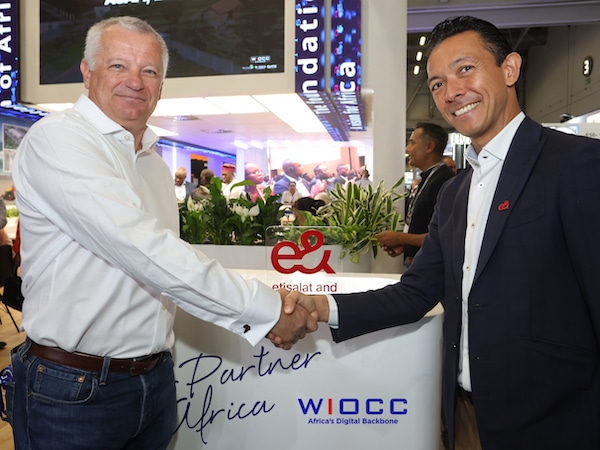
UAE-based operator Etisalat by e& and Mauritius-based digital infrastructure provider WIOCC say they have formed a strategic partnership to integrate their subsea networks to accelerate growth of Africa’s hyperscaler ecosystem.
According to a joint statement released Tuesday, e& and WIOCC said the partnership aims to broaden their market presence and strengthen their respective capabilities to meet increasing demand from customers for scalable, resilient, and low-latency connectivity solutions.
The partnership also opens up new avenues for growth in underserved and emerging markets across various parts of Africa, including the eastern and southern regions where the majority of hyperscalers currently operate, said WIOCC group chief operating officer Ryan Sher.
“WIOCC’s carrier-grade infrastructure, combined with our deep local knowledge and vast regional footprint, allows us to deliver tailored, high-capacity connectivity solutions that supports the complex needs of telcos and hyperscalers,” he said.
The announcement came the same day that WIOCC’s data centre subsidiary Open Access Data Centres (OADC) announced the imminent launch of Open Access Fabric (OAfabric), its open digital interconnection platform that will establish interconnection hubs across Africa to address escalating demand for advanced interconnection services. OADC said the platform will launch initially in Nigeria and the DRC in January 2025.
Meanwhile, Nabil Baccouche, group chief carrier and wholesale officer for e&, said that the tie-up with WIOCC – which currently supplies high-capacity connectivity between more than 30 African countries – will boost e&’s presence in Africa, as well as enhance to its global reach that currently spans 38 markets in Asia, Middle East, Africa, and Central & Eastern Europe.
“By combining e&’s carrier-grade infrastructure, global reach from Asia to Europe via the Middle East, and regional expertise, we offer tailored, high-capacity connectivity solutions for telcos and hyperscalers,” he said. “Our Smarthub edge data centres, featuring AI-grade capabilities, further enhance this offering.”