Smart warns of rise in SMShing to hijack social media profiles

PLDT’s wireless unit Smart Communications said on Tuesday that in the first quarter of this year, it has blocked more than 13 million SMShing (a.k.a. “smishing”) messages designed to help criminals take over people’s social media accounts.

SMShing is the SMS equivalent of email phishing. Like with email phishing, SMShing tries to get the victim to click a malicious link. However, SMShing uses short links, which makes it harder for users to see the actual link before they click.

According to Smart, the Philippine National Police (PNP) has linked SMShing to a rise in ‘hijack profile’ cases, in which attackers gain unauthorized access to someone’s social media account. In some cases, the victims are locked out of their own account, after which the attacker messages the victims’ contacts to ask for money, usually pretending to be sick or suffering from some other calamity.

Smart said that in addition to blocking SMShing messages, it has also blacklisted almost 200,000 mobile numbers involved in phishing activities.

Elijah Mendoza, digital communications senior manager at Smart, advised customers to be extra cautious when receiving SMSs with embedded short links, even if they appear to be from someone they know.

“Phishing is the most common technique employed by bad actors to trick you into revealing your data. Don’t go on autopilot mode and click or tap links,” Mendoza said.

SMS fraud has been a problem in the Philippines for years, although a 2022 law requiring people to register for prepaid SIM cards is often credited by regulators and telcos to have helped curb the problem.

In February, Globe Telecom said that it intercepted 21.9 million bank-related spam and scam SMSs in 2023, which is over 73% less that the 83.39 million messages it blocked in 2022.

However, mobile fraud remains one of the most common forms of fraud in the Philippines. According to survey data from Statista, 43% of consumers said they had been targeted by SMShing messages in the fourth quarter of 2023.

On Monday, Senator Sherwin Gatchalian – who co-authored the SIM registration law – said the National Telecommunications Commission (NTC) needed to do more to enforce the law. According to the Philippine News Agency, Gatchalian cited recent cases in which authorities discovered that offshore gaming operators are still using unregistered SIMs.

MORE ARTICLES YOU MAY BE INTERESTED IN…

Microsoft pours $1.5 bn into Emirati AI amid US-China power struggle 


News 

The investment cements Abu Dhabi and the wider United Arab Emirates (UAE)’s position as a global AI hub 

Microsoft and UAE-based AI company G42 have announced a strategic partnership to accelerate AI innovation in the UAE and neighbouring regions.  

The partnership involves a $1.5 billion investment in G42 from Microsoft, giving them an unspecified minority stake in the company.  

Brad Smith, Microsoft’s Vice Chair and President, will also join G42’s board of directors.  

The focus of the partnership is to innovate and deliver advanced AI solutions supported by Microsoft Azure across various industries, including finance, healthcare, energy, government, and education. 

Specifically, Microsoft will give G42 permission to sell Microsoft services that use AI chips and in return, G42 will use Microsoft’s cloud platform to run its AI applications. 

“The commercial partnership is backed by assurances to the US and UAE governments through a first-of-its-kind binding agreement to apply world-class best practices to ensure the secure, trusted, and responsible development and deployment of AI,” read the press release. 

The partnership also includes initiatives to train AI talent through a $1 billion fund for developers, promoting skills development and fostering innovation in emerging markets. 

“Through Microsoft’s strategic investment, we are advancing our mission to deliver cutting-edge AI technologies at scale. This partnership significantly enhances our international market presence, combining G42’s unique AI capabilities with Microsoft’s robust global infrastructure,” said G42 CEO Peng Xiao in a press release. 

The ongoing US-China power struggle for the UAE 

‘This investment takes place against the backdrop of both the US and China attempting to grow their influence in the UAE’s flourishing technology industry’. The deal has been finalised in close collaboration with both the US and UAE governments to ensure that G42 is fully compliant with US regulations.  

President Biden’s government has been notably concerned over increasing closeness between The Gulf Cooperation Council and China, a relationship which would potentially limit companies in the Middle East from being trusted partners in the US.  

Back in January, Representative Mike Gallagher (R-WI), Chairman of the House Select Committee on the Chinese Communist Party, expressed concerns that G42 had links to Chinese firms blacklisted by the US government, including Huawei, which G42 denied.  

Then, in February, G42 announced its intention to divest in its Chinese businesses interests, a move G42 explained as an effort to reassure US partners, who include US private equity firm Silver Lake, of data sovereignty.  

The size of the divestments was not disclosed, but stakes included an estimated $100m in ByteDance, owner of TikTok.  

Speaking to the Financial Times, Xiao said “For better or for worse, as a commercial company, we are in a position where we have to make a choice. We cannot work with both sides.” 

The New York Times report adds that the deal today puts protections on the AI materials Microsoft may share with G42. These include an agreement for G42 to remove Chinese equipment from their operations, including Huawei equipment, which the US government fears “could provide a backdoor for Chinese intelligence agencies.” 

“In order for us to preserve our relationship – which we cherish – with our US partners, we simply cannot do much more with Chinese partners,said Xiao. 

The US position on the matter remains painfully clear, as laid out by numerous government representatives.  

“When it comes to emerging technology, you cannot be both in China’s camp and our camp,” said Gina Raimondo, the Commerce Secretary, according to a report from the New York Times. 

Keep up to date with the latest international telecoms news by subscribing to the Total Telecom daily newsletter

Also in the news:
South Korea to invest $7 billion in AI semiconductors
Swisscom expands 5G partnership with Ericsson
Daisy Group set to acquire 4Com for £215m 

Bicom Platform: The Ultimate Team Collaboration Asset

An integral part of a communications platform is how well it connects people.

For this to happen, it needs to have the right tools and features that facilitate clear lines of communication and enable team collaboration with minimal hiccups.

These are some of the core tenets that the Bicom Systems communications platform is based on and ones we strive to improve on with every release to make these core processes as seamless as they can be for each and every user.

Let us see just how the Bicom Systems platform manages this across its entire suite of available products.

communication apps

The most common form of interaction between colleagues happens either face-to-face or through chat messages.

The Bicom platform ensures that businesses have access to instant text communication so teams can transfer information internally or between one another for easier and faster project collaboration, ensuring that nothing gets lost in the process.

Added Interactivity

To make chat messages a less sterile environment filled with walls of text, our features enable users with more freedom in their interactions through file sharing, allowing them to incorporate images, links, and different text files into conversations which cuts down several additional steps that would be required to accomplish tasks otherwise.

We also ensure that they can express their emotions to various news, comments and messages left by other employees through reactions that are available both through chats and meetings, sprinkling a bit of excitement in the workday to help lift everyone’s spirits.

Finally, any important announcements and messages can be pinned in groups and individual conversations so that participants never lose track of an important piece of information.

Finding Information With Ease

If pinned messages do not cut it, the file search option always helps users find a specific piece of information that was posted within a chat that may have otherwise gotten lost in a sea of responses, allowing users to not have to repeat themselves and to keep chats cleaner and easier to navigate.

Keeping Calls Logged

When important information from calls needs to be logged, the call recording feature comes in handy, allowing users to record the conversation for future use and allowing call participants to converse without having to additionally note information down, keeping them focused on the call at hand.

virtual meeting

Another potent collaboration tool can be found with meetings, a feature that is much needed with modern business practices to provide an extra avenue of communication between remote workers and to bring a little bit of that human touch through the power of audio and video.

It also makes interaction between teammates easier as users do not have to resort to typing everything out if it is easier for them to showcase everything through a presentation.

Easy To Organize

Meetings are a whole new can of worms though, one that takes a lot of effort to get in line and make them.

Thankfully, we here at Bicom Systems make sure that every aspect of communication is made as seamless and as intuitive to use as possible.

Our first delve into that was ensuring that meetings are not a hassle to schedule and organize, making that process doable in a few simple clicks and letting organizers add users just as easily.

On top of that, co-organizers can be assigned to help make the meeting run smoothly once it is fired up.

Meeting Collaboration Tools

After the meeting itself has been organized and gets started up, the problem of participant interactivity and collaboration tools is the next one that we tackled.

We have covered this through a number of basic features like adding a chat functionality within the meeting to allow participants to converse and pitch in without disrupting the meeting’s flow or the current speaker.

Raising Hands

A feature that also helps preserve meeting flow and incite collaborative efforts is the Raise Hand option in meetings, allowing meeting participants to pitch in with their questions without disrupting the flow of the meeting as the presenter gets to them when he has free time, introducing a bit of order, especially during meetings with a large number of participants where a lot of them may want to get a chance to speak their turn.

Screen Sharing

Screen sharing is another key feature of any successful meeting as it allows users to successfully present their screen to others and allow for smoother collaboration and task elaboration without requiring others to follow along on their own and allowing them to simply watch and remain focused on the speaker.

Accompanying tools that make managing presentations during meetings easier and improving overall collaboration are the remote control and clipboard sharing tools, allowing participants to immediately share important information on the presenter’s screen if given permission to do so.

This allows the presenter in question to focus more on the presentation itself while relaying the task of information presentation over to an assistant, improving overall presentation flow, saving precious time and participant patience.

Preserving Meetings For The Future

Remembering important information during long meetings can be a tedious process and not every team member can catch all of it throughout the length of the meeting itself.

In order to prevent future miscommunication and needless repetition during a meeting, users can record their meetings, save them and share them with the relevant members in order to preserve that information through a lot less effort than manually noting it down.

This also applies to the meeting’s chat history which gets logged so users do not have to worry about losing access to that either.

Aside from assisting with team collaboration, this can also be used as a means of creating training videos for new hires, making the onboarding process that much easier to understand with visuals attached to written explanations.

management tools

When working on different projects, the various management tools offered by the Bicom Systems product suite allow for a better overview of how and where different resources are utilized and can help uncover pain points that should be ironed out.

Detailed Dashboards

PBXware, SERVERware, sipPROT and Contact Center utilize optimized system dashboards that track necessary information and check for any faults as well as resource availability and allocation throughout their different spheres of operation.

This information can range anywhere from how many resources are assigned to an individual VPS, how many PBX extensions are online and how many attacks on the system are prevented to average customer handling time per employee in a Contact Center and their availability status, among many other methods of measuring workplace effectiveness and resource utilization.

Reporting

Additionally, our Contact Center solution even offers the option of automating report generation and delivery so managers and team leads can have more free time on their hands to devote to issue resolution, especially considering how crucial optimization in CCs is.

These reports can cover singular channels or can come in the form of blended reports, covering all Agent and Queue statistics per communication channel.

Crafted By Experts, For Experts

The function of these management tools ultimately depends on which product is in use, but rest assured that all of them are continuously optimized to display all of the necessary information that managers and team leaders need to be able to assess the current situation and figure out whether action is needed to remedy any present or potential future issues, ensuring seamless operation.

“A big role in making communication possible is our dedication to refining workflow and making team collaboration a smooth and painless experience.”

One of the main goals of Bicom Systems is to enable access to enterprise-level communication tools for any small to medium-sized business, allowing them to have a fighting chance in very competitive markets.

A big role in making this goal possible is our dedication to adding features which help refine business workflow and make team collaboration a smooth and painless experience, helping these businesses grow and keep pace with already established ones.

While we already possess a solid foundation of these tools across the Bicom Systems product suite, we do not plan to stop anytime soon.

Our teams are always hard at work researching new potential features that will make the work that your users do that much easier to execute.

If you would like a taste of what we have to offer, be sure to request a demo or contact us directly should you require further elaboration.

CONTACT US TO FIND OUT MORE

Vodafone Idea targets 5G launch in 6–9 months


News

The beleaguered Indian telecoms operator says a return to growth will be possible following its $2.2 billion follow-on public offering (FPO)

Last week, Vodafone Idea announced that it would launch India’s largest ever FPO, seeking to raise almost $2.2 billion in an effort to reduce the company’s debt and provide funds for infrastructure investment.

Now, Vodafone Idea’s CEO Akshaya Moondra has revealed further details about the potential impact of this funding, saying that it should allow the operator to launch 5G services in selective areas over the next 6–9 months.

“With this round of funding, we believe we will be able to (come) back to participate in the industry growth which has not been possible,” he said.

More specifically, Moondra indicated that roughly $700 million of the total funds raised by the FPO would be used for the deployment of 5G infrastructure. This will allow for limited initial deployments, the exact locations of which have not been revealed.

Ultimately, Vodafone Idea is aiming to deploy 5G coverage to cover 40% of the company’s customer base in the next 24–30 months, with nationwide coverage to follow at an unspecified point in future.

Moondra notes that additional funds will be required for the wider rollout, with Vodafone Idea already in discussions with several banks. Exactly how much will need to be borrowed was not revealed.

Discussions with 5G equipment vendors and relevant testing has already begun.

Vodafone Idea’s difficult financial situation, centred around the billions of dollars owed to the government in licence fees and adjusted gross revenue dues, has seen the company’s ability to compete against rivals greatly diminished in recent years. Vodafone Idea lost 4.6 million subscribers in Q3 of FY2024 alone, marking nine straight months of customer reduction that financial year.

This challenging financial situation has left the operator with no choice but to delay its 5G launch behind that of its rivals, Reliance Jio and Bharti Airtel, both of whom launched commercial 5G services at the end of last year.

Keep up to date with all the latest telecoms news from around the world with Total Telecom’s daily newsletter

Also in the news:
South Korea to invest $7 billion in AI semiconductors
Swisscom expands 5G partnership with Ericsson
Daisy Group set to acquire 4Com for £215m

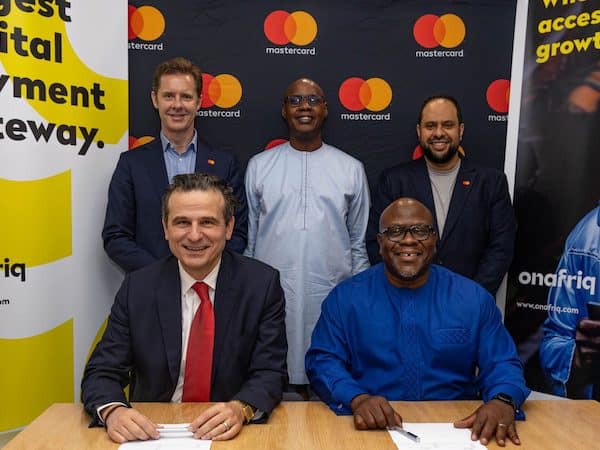
Mastercard and Onafriq collaborate on pan-African mobile payments

Mastercard and pan-African digital payments company Onafriq announced on Monday that they are collaborating to increase accessibility to mobile payment services for consumers and small and medium enterprises (SMEs) across Africa.

Under the agreement, Mastercard and Onafriq plan to deliver secure, cost-effective, and innovative payment options – including mobile money transactions, cross-border remittances, and cross-border settlements – to drive the growth of digital financial services across the continent.

Onafriq said the collaboration will enable it to leverage Mastercard’s technology to support its consumers’ digital commerce needs, interactions, and experiences.

“We are excited about our collaboration with Mastercard, as we share a strong alignment of vision and mission, interoperability, and markets, said Onafriq founder and CEO Dare Okoudjou in a statement. “In addition, we both understand that financial inclusion is not only a moral imperative but also a strategic priority for economic development in Africa.”

The Onafriq is also part of Mastercard’s push into the pan-African fintech market. In early February, Mastercard took a minority stake in MTN Group Fintech, the digital financial services arm of MTN. At the end of the same month, MTN Group Fintech signed a multi-market agreement with Mastercard to use its technology and capabilities.

“Technological advancements are steering the digital financial services industry, and providing accessible digital payment solutions is imperative for empowering consumers to seamlessly transition to digital commerce,” said Amnah Ajmal, EVP of market development for EEMEA at Mastercard. “We seek to leverage fintech partnerships in Africa to catalyze transformative change across industries that benefit individuals, communities, and businesses.”

Africa’s mobile money sector is said to be one of the most established and fastest growing fintech industries in the world. The latest report on the global mobile money industry from GSMA says there are 835 million registered mobile money accounts in Sub-Saharan Africa, accounting for 48% of global users and registering a 19% increase year on year.

MORE ARTICLES YOU MAY BE INTERESTED IN…

Industry Spotlight: Quantum Corridor CEO Tom Dakich

The word Quantum is a bit of a unique buzzword in that what it means for the future is simultaneously more revolutionary and poorly understood than usual.  But that doesn’t mean it isn’t time to take action to get involved in some form.  With us today is Tom Dakich, founder and CEO of Quantum Corridor, which is building a network meant to connect quantum computers to each other and to the resources they need.  Tom previously helped found and build Digital Crossroad, the new data center in Hammond, Indiana. … [visit site to read more]

Vodafone Idea aims to raise US$2.1 billion in FPO this week

Indian telco Vodafone Idea reportedly plans to raise as much as Rs180 billion (just over US$2.1 billion) this week in what is expected to be India’s biggest follow-on public offering (FPO) as it seeks to pay off debts and get back in the 5G game.

According to a statement from Vodafone Idea on Friday, its board has approved the launch of the FPO, with shares priced at Rs10-11 each. That represents a “discount of around 15% compared to last closing price of Rs12.95,” the statement said.

The FPO is scheduled to kick off this Thursday April 18, and run until April 22. According to ETTelecom, if the FPO goes as planned, it will be the largest in India since July 2020, when Yes Bank’s FPO raised Rs150 billion.

Vodafone Idea plans to follow the FPO by raising another Rs25 billion via debt financing. Earlier this month, shareholders approved a plan revealed in late February to raise Rs20 billion through equity and equity-linked instruments.

Vodafone Idea – frequently described as “cash strapped” – needs the funding to pay off debts, update its 4G infrastructure and make good on plans to launch 5G services in the second half of this year. According to its latest financial figures for the fiscal third quarter, Vodafone Idea’s net debt widened to Rs2.14 trillion in the fiscal third quarter, while its bank debt is around Rs45 billion.

If everything pans out, Indian tower company Indus Towers is expected to be a major beneficiary of Vodafone Idea’s fundraising blitz.

A separate report from ETTelecom said that the fundraising plan would not only enable Vodafone Idea to pay its debts to Indus, but also give Indus between 40,000 and 45,000 new tenancies as the telco expands its network. A research note from Jeffries estimated that Indus could also post an 8% CAGR boost in operating income through FY24-27 as a result, the report said.

MORE ARTICLES YOU MAY BE INTERESTED IN…

South Korea to invest $7 billion in AI semiconductors


News 

The move comes in response to countries like the US, China, and Japan, each of which is investing heavily in their domestic semiconductor industry  

The South Korean President Yoon Suk Yeol announced this week that the country will invest 9.4 trillion won ($6.94 billion) in artificial intelligence (AI) by 2027 in an effort to maintain a leading global position in the semiconductor chips industry. 

The announcement also included a separate 1.4 trillion won ($1.01 billion) to support domestic AI semiconductor firms. 

“Current competition in semiconductors is an industrial war and an all-out war between nations,” said Yoon in a speech. 

“To set up an all-out response system that rises to the level of that for a wartime situation, we will review all proposals to attract semiconductor industries starting with investment incentives,” he continued. 

“We will rise to the level of a G3 (world’s top three) country in AI technology and get over 10% of the global market for system semiconductors by 2030.” 

Semiconductors are a key element of South Korea’s economy. In March, chip exports reached their highest revenue in 21 months at $11.7 billion, which is almost a fifth of all total exports.  

The country is under increasing pressure to keep up with key global players such as the US, China, and Japan. Each of these nation’s is providing large incentives to semiconductor companies, seeking to increase their domestic production and reduce reliance on the geopolitically fraught global market. On Monday, for example, the US government announced that it has signed a preliminary agreement to award Taiwan Semiconductor Manufacturing Co (TSMC) a subsidy of $6.6 billion to build new chip production fabs in Arizona.  

The South Korean government is not the only part of the country focussed heavily on the rapid development of AI. The country’s largest telco, South Korea Telecom (SKT) also shares the country’s vision on becoming a global leader in the field. The operator has confirmed its intention to become an AI powerhouse, investing in multiple AI firms including Anthropic and Persona AI.  

SKT is also working with other global telcos to further its AI ambitions. Last July, the company joined forces with a trio of international telco giants – e&, Deutsche Telecom, and Singtel – to form the Global Telco AI Alliance, seeking to combine their collective AI expertise to help co-develop new, innovative products for telco customers. 

Keep up to date with the latest international telecoms news by subscribing to the Total Telecom daily newsletter 

Also in the news:
Digi Spain sells 6m FTTH accesses to Onivia
Vodafone’s 5G standalone network now connects around half the German population
Broadband poles no problem for Brits says new study

Daisy Group set to acquire 4Com for £215m 


News

Daisy Group is one of the UK’s largest privately-held IT services companies  

Matthew Riley, Chairman of business-to-business telecommunications and IT provider Daisy Communications Group has set a £215 million deal to acquire 4Com, a Bournemouth based communications, IT, and broadband provider. 

According to Sky News, who have broken the story, the deal is expected to be signed in the coming days. 

Riley was attracted to 4Com because of its cloud communications product HiHi, a business phone with in-built video calling technology. 

The deal will increase Daisy’s small and medium enterprise (SME) customer base to more than 200,000, with revenues from the division reaching over £400 million.  

Daisy has itself made 12 acquisitions in the last 18 months, the most recent being the acquisition of 128 customers from Meraki Communications last November. The deal’s financial details were not disclosed. 

Daisy has declined to comment on the news. 

In 2022, Daisy acquired one of its main rivals XLN, leaving it with an additional 120,000 customers and making the company second only to BT in the UK SME telecoms market.  

Get involved in the North’s telecoms industry by attending Connected North, 22-23 April in Manchester. Get your tickets now! 

Also in the news:
Digi Spain sells 6m FTTH accesses to Onivia
Vodafone’s 5G standalone network now connects around half the German population
Broadband poles no problem for Brits says new study