Building on 5G network and services innovation will drive future growth, say operators

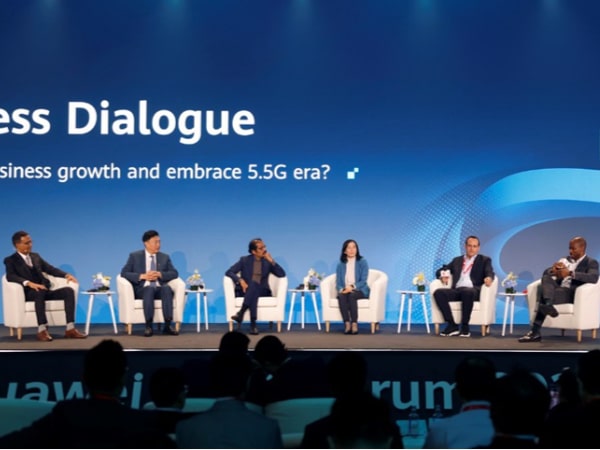
Huawei’s pre-show industry forum at MWC2024 in Barcelona, under the banner of the 5G Beyond Growth Summit, provided a platform for key executives from the ICT industry to share their experiences of 5G business growth and to explore prospects for 5.5G (5G-A).

The final session of the day brought together senior executives from leading operators in a panel discussion to share their 5G experiences so far and to discuss how to drive business growth in the 5.5G era.

Asked what had impressed them so far about 5G, the panellists pointed to a variety of aspects. Chika Ekeji, Chief Strategy Transformation Officer for MTN Group said that 5G’s potential particularly with regard to use cases was the feature that had most impressed him. Karim Benkirane, Chief Commerical Officer at du, UAE noted the speed at which 5G had been able to gain market share.

Yelamate Mallikarjuna Rao, Chief Technology & Information Officer at Telefónica, Deutschland cited 5G’s ecosystem, but urged greater investment in people and skills. This was essential if the industry was to progress away from non-standalone 5G, Rao had observed in an earlier presentation. Quality is key to the future of networks and the future of operations because of the significant complexity involved in the way networks are operated, he noted.

Fan Ji’an, Big Data Chief Scientist at China Unicom Group pointed to 5G’s support for private networks and how these were able to positively transform the traditional working environment. Noting that the company had already deployed 500 private networks for the mining sector, he said that thanks to 5G workers who formerly worked underground could now operate vehicles from the surface.

Asked about network efficiency as a key focus for China’s 5G operators, Huang Lilian, General Manager of 5G co-construction and sharing work team at China Telecom noted that while there were many 5G models, the shared access network approach between China Telecom and China Unicom was probably unique.

“RAN sharing has built the world’s largest (standalone) 5G shared network, now with more than 1.2 million base stations covering towns and villages, said Huang Lilian. “Many operators face the challenge of high investment. We saved 270 billion RNB and reduced carbon emission by 10 billion tons. This is the practice I want to share for building a large network efficiently.”

On the subject of service innovation and network experience, Fan Ji’an said that over the past 5 years China Unicom has employed 5G for different industries and public services such as healthcare and education. As an example of innovation in an industrial context a multi-campus 5G network built by Unicom for the Schneider Electric energy equipment manufacturer uses cameras to detect the components and track stock levels on their production lines.

“For this you need enhanced MBB to support video, but also low latency,” explained Fan Ji’an. “That means the relationship between the network experience and service innovation is key.”

MTN Group’s Chika Ekeji acknowledged that operators in Africa may not yet have some of the advanced use cases that will become important to the continent, but he said there was a need to discover how to get creative around leveraging 5G technology.

In an earlier presentation, Ekeji outlined how these aims are enshrined in MTN’s “CHASE” framework which is designed to address the barriers to 5G in Africa through a series of measures including timely access to new spectrum bands for cost-effective 5G coverage, financing schemes to make handsets more affordable, regulatory support for more efficient spectrum use, collaboration with content providers to offer 5G service bundling and promote the adoption of cutting-edge technologies such as AR/VR, and better articulation of 5G capabilities and use cases, especially to businesses on the continent.

“As we look forward we have to find a way to unlock value for Africa’s young population,” said Ekeji. “Coverage and handsets are critical factors…as is engaging with the leadership of the regulatory bodies around these issues.”

Responding to a question about how du would market 5.5G to its customers, Karim Benkirane said that since launching fixed wireless access (FWA) in the UAE 3 years ago, du had doubled market share in terms of subscribers. In a presentation earlier in the day Benkirane explained that du had already achieved 98.5% population coverage with 5G, and that the share of data volume accounted for by 5G had also risen to beyond 60 per cent.

“5G FWA already represents a huge opportunity, and FWA with 5G Advanced can really deliver performance equivalent to fibre. Also the (optimum) latency will be achieved to make a great user experience,” he said.

The panel concluded with an acknowledgment by all particiants of the need to work jointly to develop a blueprint for the sustainable growth of 5G, and to embrace new challenges and opportunities in the era of 5.5G.

MORE ARTICLES YOU MAY BE INTERESTED IN…

Viettel wins Vietnam’s first round of 5G spectrum auctions

Viettel Group announced it has officially won the Ministry of Information and Communications’ auction for the 2500-2600 MHz band for 5G usage in Vietnam.

Under the new spectrum licence, Viettel will have rights to the 2500-2600 MHz band for the next 15 years, and can use the band for both 4G and 5G services.

No financial details were disclosed, although earlier media reports have said the starting price for the 2500-2600 MHz band was VND3.9 trillion (US$158 million).

The MIC kicked off an auction for the 3700-3800 MHz band on Thursday, and is expected to hold a third auction for the 3800-3900 MHz on March 19. The starting price for both of those bands is VND1.89 trillion. According to VNEconomy, each bidder is only allowed to win one band.

Viettel said the 2500-2600 MHz band would give it an advantage over the other two bands, as it offers slightly wider coverage. Viettel also said that 5G devices it has researched and produced support the 2500-2600 MHz band. According to Viettel, only 17% to 20% of devices in Vietnam currently support 5G connectivity.

Viettel said it plans to launch the national 5G network “in the shortest possible time.” Earlier, Nguyen Van Son, director of Viettel Telecom’s Mobile Centre, told the state Vietnam News Agency that Viettel plans to focus its 5G deployments in locations where there is both high demand and a high concentration of 5G-compatible devices, such as “industrial zones, export processing zones and innovation centres.”

An October 2023 report from VNMedia said that the 2500-2600 MHz auction winner will be required to deploy at least 3,000 5G broadcasting stations using the band within two years after they receive the licence. They must also commit to launching commercial 5G services using the band within the first 12 months.

VNA reports that the MIC has set a target to provide 5G coverage to 99% of the population by 2025, with minimum data speeds of 100 Mbps.

MORE ARTICLES YOU MAY BE INTERESTED IN…

CityFibre acquire Lit Fibre in latest round of UK altnet consolidation

In a move set to accelerate its nationwide full-fibre rollout, CityFibre, the UK’s leading independent network operator, has announced the acquisition of full fibre altnet Lit Fibre from Newlight Partners. This strategic acquisition is poised to extend CityFibre’s reach by up to 300,000 premises as part of its ambitious 8 million premises rollout program. The agreement, structured on a share-based acquisition model, will see Newlight Partners assume a minority stake in CityFibre. The completion of the transaction is anticipated in the second quarter of 2024.

Lit Fibre, a vertically integrated altnet, is both a network builder and Internet Service Provider (ISP). As of now, they cover 200,000 premises spanning across more than 20 towns in various regions including Wiltshire, Gloucestershire, Hertfordshire, Worcestershire, Essex, and Suffolk. With a rapidly expanding subscriber base exceeding 9,000 retail customers, Lit Fibre brings significant operational value to CityFibre’s growth strategy.

This acquisition marks CityFibre’s initial move in a series of anticipated deals over the next two years, aligning with its vision to leverage altnet acquisitions as a key driver for growth. By integrating Lit Fibre into its network infrastructure, CityFibre aims to solidify its position as the primary wholesale competitor to BT Openreach in the UK.

The integration process, slated for completion later this year, will enable ISPs to access a consistent range of market-leading products, pricing, and service offerings across the network. CityFibre plans to seamlessly integrate Lit Fibre’s assets into its carrier-grade network, encompassing passive, active, and operational support systems.

The acquisition also includes Lit Fibre’s ongoing deployment initiatives, aiming to cover up to an additional 100,000 premises by early 2025. Leveraging existing poles and ducts, Lit Fibre’s network demonstrates an attractive build cost per premises. Lit Fibre also uses high standard and compatible 10Gbps XGS-PON network architecture which will be a boon to CityFibre’s integration process by allowing them to maintain high-quality services to customers.

CityFibre assures Lit Fibre customers of uninterrupted full-fibre broadband services throughout the integration process. As a wholesale-only operator, CityFibre remains committed to exploring retail ISP options post-integration to enhance service offerings.

With a proven track record of successful acquisitions including KCOM, Redcentric, Entanet, and FibreNation, CityFibre is well-equipped to integrate Lit Fibre into its commercial strategy.

Undersea cable damage brings major connectivity disruption to Africa


NEWS

A damaged subsea cable has brought major disruption to West Africa, with internet services down or barely accessible across large parts of the region, with Ivory Coast, Liberia and Benin the worst effected.

While the cause of the damage has yet to be confirmed, reports from NetBlocks, an internet watchdog have classified the incident impact in these three countries as being severe to high, while outages were being experienced across large swathes of the region, as well as in South Africa, where thousands of users have reported disruption.

Both MTN and Vodacom, two of the continent’s largest operators have confimed that subsea cable failures were the cause, with a Vodacom spokesman stating “Multiple undersea cable failures between South Africa and Europe are currently impacting South Africa’s network providers, including Vodacom.” While the cable break has yet to be pinpointed, the disruption couldn’t have come at a worse time, with the Seacom cable that connects South Africa with Europe via East Africa and the Red Sea having been recently severed, with repairs being delayed due to the delicate geopolitical situation within the region.

The outage has caused widespread disruption, and marks the second time in seven months than an undersea cable issue has brought chaos to Africa’s internet infrastructure. While it’s unclear how long it will take to repair the damage, with the location of the break not yet pinpointed, this latest outage will no doubt bring further headaches to the industry and broader region.

stc Bahrain launches AI facial recognition for eSIM activation

stc Bahrain has launched what it claims is the first instant mobile eSIM activation service that uses AI-powered facial recognition to authorise users, one month after Bahrain’s telecoms regulator approved use of facial recognition for telecoms services.

Subscribers can use the My stc BH app to buy a new eSIM and download it instantly. The app enables users to choose their favorite number and preferred mobile plan.

After that, stc subscribers can activate the eSIM instantly by capturing a live photo using their smartphone’s camera for identity verification. Once facial recognition software on the backend verifies the customer’s ID, the eSIM is activated and ready to use.

The telco says this makes the remote activation process both easier and more secure. It also eliminates the need for users to present or upload documents, visit a physical branch or wait for a delivery agent to come and authenticate and/or register their fingerprint.

« By leveraging AI face recognition technology and eSIM capabilities, our existing and new subscribers can get an eSIM number online and activate it without visiting any stc outlet, » said stc Bahrain CEO Eng. Nezar Banabeela in a statement. “Our aim is to empower customers by offering a seamless digital experience that enhances convenience and efficiency.”

stc also credited Bahrain’s Telecommunications Regulatory Authority (TRA) for supporting the facial recognition activation service, though it gave no details what that involved.

Last month, the TRA issued a position paper updating its official Electronic Solution Requirements document to include use of facial recognition technology.

Under the updated guidelines, among other things, telecoms players in Bahrain can only use facial recognition technology for identity verification of subscribers. Telcos must also clearly inform subscribers in advance that facial recognition data will be collected and processed, what specific data is being collected, and that it will only be used for ID purposes during the onboarding process. They must also obtain subscriber consent first and provide an easy opt-out option.

Telcos must also enact explicit policies prohibiting the use of facial data for any purposes beyond identity verification, and ensuring that the data is not processed for marketing, surveillance, or any other unrelated purpose. Use of facial recognition also must also comply with relevant data privacy and protection laws.

MORE ARTICLES YOU MAY BE INTERESTED IN…

Arelion and Telxius Collaborate to Expand Connectivity to North and Latin America

Stockholm and Madrid, 12 March, 2024 – Arelion and Telxius are collaborating to provide fully diverse, multi-terabit connectivity into Telxius’ landing stations in Boca Raton and Jacksonville, Florida. This fiber network expansion establishes Arelion Points-of-Presence (PoPs) at each Telxius landing station. For Telxius, it empowers customers with resilient Tier-1 optical transport and high-speed access to Arelion’s North American network. Together, Arelion and Telxius are making a significant investment in the Florida Peninsula to connect Latin American customers to North America through submarine and terrestrial systems.

The collaboration benefits both Arelion and Telxius’ customers in North America and Latin America with enhanced access to the companies’ global Internet backbones. Customers also benefit from Telxius’ portfolio of leading submarine and terrestrial backhauls, and Arelion’s resilient terrestrial connectivity services, including high-capacity wavelengths for service providers, content providers and enterprises.

Arelion’s PoPs enable resilient 400G Wavelengths services over open line systems supporting the latest coherent technology, seamlessly connecting Internet carriers and content providers to Arelion’s network in the United States. This network expansion complements Arelion’s existing presence at Telxius’ Virginia Beach landing station and further cements Arelion as a key terrestrial connectivity provider in North America. Telxius’ Virginia Beach landing station is the landing point for three next-generation subsea systems connecting to Latin America and Europe: Brusa, Marea and Dunant. Telxius’ Boca Raton landing station is the terminal point for Telxius’ South America-1 (SAm-1) and upcoming Tikal submarine cable system, while Telxius’ Jacksonville landing station connects to the Pacific Caribbean Cable System (PCCS). Both landing stations provide diverse, high-capacity connectivity to the United States from Panama, South America and the Caribbean.


“Arelion’s new PoPs at Telxius’ landing stations along the Florida Peninsula will provide Latin American markets with high-capacity gateway access to the North American connectivity ecosystem,” said Edison De Leon, Regional Director Latam & Caribbean at Arelion. “Through this investment in the Florida Peninsula, Arelion continues our established partnership with Telxius to serve the technological needs of Internet carriers and content providers through complete, collaborative connectivity solutions.”

Florida’s technology industry recently ranked fourth in the United States for tech growth, adding 2,715 tech businesses last year and outpacing established hubs, including California and Texas. Arelion and Telxius’ partnership establishes key interconnection points for Latin American companies requiring access to major cloud regions, content applications and network infrastructure supporting Artificial Intelligence and Machine Learning (AI/ML) applications in North America.

“We at Telxius are committed to expanding our high-capacity terrestrial backhauls in combination with our next-generation subsea cable networks to connect the world’s digital hubs and better serve our customers across the Americas”, said Carlos Casado, VP of Sales, Telxius, Northern Region. “Our continued collaboration will provide ultra-high capacity, low latency and robust access to Latin America and transatlantic markets for Arelion and its customers. For Telxius, it secures 400G transmission services in our Boca Raton and Jacksonville landing stations, enabling resilient Tier-1 optical transport and high-speed access to Arelion’s North American network for customers.”

About Arelion

Arelion solves global connectivity challenges for multinational enterprises whose businesses rely on digital infrastructure. On top of the world’s #1 ranked IP backbone and a unique ecosystem of cloud and network service providers, we provide an award-winning customer experience to customers in more than 125 countries worldwide. Our global Internet services connect more than 700 cloud, security and content providers with low latency. For further resilience, our private Cloud Connect service connects directly to Amazon Web Services, Microsoft Azure, Google Cloud, IBM Cloud and Oracle cloud across North America, Europe and Asia. Discover more at Arelion.com, and follow us on LinkedIn and Twitter.

About Telxius

As the world’s needs for uninterrupted global interconnectivity continue to rise, we are preparing the road ahead. Telxius is a leading global connectivity provider that combines subsea and terrestrial networks with data centers worldwide. Its extensive ecosystem includes eight next-generation fiber optic submarine cables and terrestrial backhauls together spanning 100,000+ km, almost 100 PoPs in 17 countries, plus 25 landing stations and data centers. Telxius provides a wide range of capacity, colocation and security services, as well as direct internet connectivity through its Tier-1 IP network. With ultra-high capacity, low latency and resilient networking, Telxius seamlessly connects customers across the Americas, Europe and beyond. For more information about Telxius visit www.telxius.com.

Contacts:

ArelionMartin Sjögren, Senior Manager PR and Analyst Relations+46 (0)707 770 522

martin.sjogren@arelion.com 

Media Contact

Jeannette Bitz, Engage PR

+1 510 295 4972

jbitz@engagepr.com

Telxius

comunicacion@telxius.com

£3.7bn: the cost of internet failures to UK businesses

UK businesses lost over 50 million hours and £3.7 billion due to internet failures in 2023, according to a new report from Beaming, a specialist business ISP. Reliance on connectivity for trading and operational activities has increased among businesses in the last five years, and the cost of missed sales, lost productivity and other disruptions due to downtime has risen by 400%.

Beaming’s report – The Cost of Downtime: The Impact of Outages on UK Businesses in 2023 – shares its analysis of a Censuswide survey of businesses using connectivity from various internet service providers, and advice to help companies reduce downtime levels and costs. The report reveals that:

  • Cumulatively, UK businesses experienced 8.8 million internet failures and 50.5 million hours of disruptive downtime in 2023, where the ability to trade or access vital services was impaired.
  • The amount of time businesses lost to connectivity failures in 2023 was a fifth lower than in 2018 when previous Beaming research found that firms lost 60 million hours to downtime. However, the cost of that downtime has increased fivefold: from £742 million in 2018 to £3.7 billion in 2023. 
  • Heightened dependence on connectivity for communication, e-commerce and access to cloud applications means 15% of UK businesses, some 850,000 nationwide, would now start losing money the moment their connectivity fails. This is 81,000 more firms than five years ago. 
  • During 8-hour internet outages – a standard working day – 39% of businesses now would lose money. This compares to 34% at the end of 2018 and represents an increase of 240,000 companies nationwide.
  • The median time for financial losses to kick in from internet failures is 6 hours for businesses with employees today. This applies to employers of all sizes, from micro-companies with 2 to 10 employees to big companies with more than 250 staff members. 
  • SMEs bore the brunt of internet disruptions in 2023, enduring an average of 3 to 4 failures and 19 hours of downtime each. Those working a standard 8-hour day and 5-day week lose more than two working days a year to downtime, around 1% of their productive time.
  • The hospitality, IT, and manufacturing sectors experienced the highest levels of internet downtime and the biggest financial impact. On average, hospitality businesses lost 27 hours to downtime in 2023, while companies in the IT industry lost an estimated £555 million to connectivity failures.

Sonia Blizzard, Managing Director of Beaming, said: “The adoption of digital technologies has been a lifeline for business survival and a driver for increased prosperity in recent years, but this has come with a heightened dependence on connectivity. Companies are demanding more of their connectivity than ever before, and those relying on e-commerce, automation and public cloud services then incur the highest costs due to internet downtime.”

“Greater use of faster, stronger, more resilient forms of connectivity has helped reduce downtime, whilst downtime has become much more costly. Good planning, higher capacity services and expert support are vital now to reduce the risk of internet failure and the associated financial fallout.”