Fixed-line demand is spiking in North Korean border towns

Demand for fixed-line telephone services has reportedly spiked in North Korea’s North Pyongan Province due to the easing of border restrictions with China, which has also led to a spike in installation prices.

According to Daily NK, citing anonymous sources, the relaxation of border controls has led to an increase in traffic in provincial areas like Sinuiju, Ryongchon, Uiju, and Cholsan. As much of that traffic is commercial (to allegedly include smugglers), wholesalers in those areas are starting to install two phones at home, as fixed-line services cost less than mobile phones.

The report also said that demand for fixed-line in North Pyongan has been driven by an increase in families who want to install their own home phone instead of sharing one with another family, mainly due to privacy concerns.

Consequently, post offices in the province have been swamped with requests for phone installations since the beginning of this year – so much so that the North Pyongan Province Post and Telecommunications Bureau has brought forward its annual revenue targets, the report said.

However, this also means provincial post offices have raised installation costs to take advantage of the spike in demand and hit those targets. The report claims the cost of fixed-line phone installation now costs between US$350-450 in Sinuiju and US$400-500 in Ryongchon. By comparison, installing a telephone in the capital Pyongyang costs between US$100-250.

The report’s source said the price of installation is particularly high in Ryongchon County because it has become a major bottleneck for shipping, as goods imported from China must pass through customs in Sinuiju before being distributed throughout the country.

“Since it’s the area where goods are distributed the fastest and wholesale prices are set, home phones are in high demand and installation prices are also high,” the source said.

The source also told NK Daily that Ryongchon County residents filed a complaint with the provincial party committee over the price hike, “but the matter was closed without results.”

According to the latest available figures from the CIA’s World Factbook, North Korea had 1.18 million fixed lines at the end of 2021, which works out to a market penetration of 5%. Figures from the World Bank (also for the end of 2021) say there are 6 million mobile subscriptions in North Korea, which comes to 23% market penetration.

MORE ARTICLES YOU MAY BE INTERESTED IN…

Phoenix Tower International to acquire Cellnex Ireland for nearly €1 bn 


News

Cellnex revealed late last year that its Irish unit was likely to be sold 

Florida-based wireless infrastructure company Phoenix Tower International (PTI) has announced a deal with Cellnex to acquire 100% of the latter’s Irish business for €971 million. 

Cellnex has been operating in Ireland since 2019, when it when it acquired tower operator Cignal as part of an agreement with CK Hutchinson to acquire its infrastructure portfolio in six European countries (which included Ireland). Since then, the number of towers Cellnex owns and operates in Ireland has grown to around 1,900 sites all of which will now be handed over to PTI. 

“The sale of our business in Ireland – at an appropriate valuation– is one further step within the company’s ‘Next Chapter’, in line with our strategy, to achieve the goal of consolidating, simplifying our corporate structure and focusing our efforts in the existing growth opportunities in the main markets in which we operate,” said Cellnex CEO Marco Patuano in a press release. 

Cellnex is on a mission to get its finances in order after its major M&A activities in recent years have left it  with a debt of €17.2 billion. 

This new focus was one of the main topics at Cellnex’s Capital Markets day in London this week, outlining its plans for the year ahead as the company switches its focus towards capital preservation. The company unveiled four new strategic pillars for their future organic expansion: 

  1. Simple: Cellnex will undertake a strategic portfolio review to focus on core markets and divest from non-core business lines.
  2. Focused: Towers will remain at the core of the business, but Cellnex will invest in selected business lines – DAS (Distributed Antenna Systems), SCs (Small Cells) & RAN (Radio Access Network) as a service; and wholesale fibre, connectivity & housing services – aiming to grow these from 11% to 15% of total revenues by 2027.
  3. Efficient: Cellnex will launch a comprehensive efficiency plan to improve the EBITDAaL margin by 500 basis points to 64% in 2027.
  4. Responsible: Cellnex will continue to commit to its Environmental, Social, and Governance (ESG) principles within its strategic framework.

The full Capital Markets Day details can be found here. 

For PTI, on the other hand, appears to be on the opposite trajectory, with this purchase the latest in a number of moves in the European tower sector.  

Back in September, PTI announced the acquisition of 2,000 cell sites in urban France, now making it the largest market of the 21 in which PTI operates. In 2020, the PTI also struck a deal with Bouygues Telecom to build and operate 4,000 new tower sites in France over the next 12 years. 

The closing of the deal is subject to standards regulatory approvals. 

Keep up to date with the latest international telecoms news by subscribing to the Total Telecom daily newsletter 

Also in the news:
BT wins £26m contract to connect UK schools
Apple fined €1.8bn by European Commission over Spotify row
Japan to reduce regulatory pressure on incumbent NTT

AIS and True say emergency cell broadcast service is ready to go

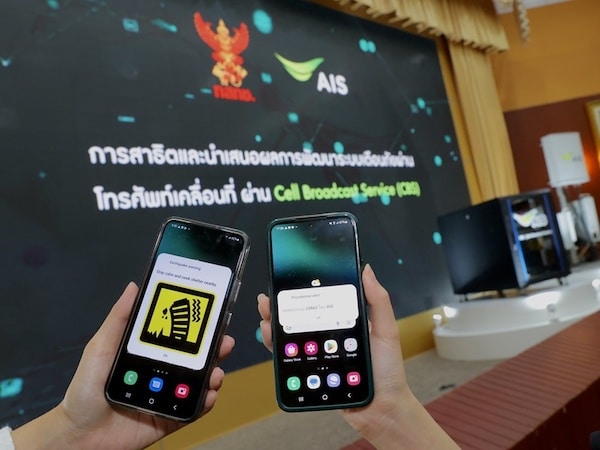
Thai operators AIS and True Corp announced separately on Tuesday that they are ready to implement an emergency cell broadcast service commissioned by the National Broadcasting and Telecommunications Commission (NBTC).

The cell broadcast service is designed to immediately pinpoint specific areas affected by urgent and critical incidents, including violence, shootings, and natural disasters.

The service comprises two parts: a Cell Broadcast Entities (CBE) system, managed and overseen by the central command center of the government, and the Cell Broadcast Center (CBC) system, managed and overseen by mobile 0perators.

The CBE system defines content and delivery areas for messages, consisting of various functions such as system management, message creation and approval. The CBC system is responsible for delivering message content to base stations according to specified areas, comprising system management and configuration, message deployment function, and network management.

The cell broadcast service will send direct warning messages from area base stations to all mobile phones within that region. The message is displayed on the mobile phone screen as a near real-time triggering pop-up notification.

The system differs from regular SMS in that it doesn’t require phone numbers, allowing for rapid and efficient communication of emergency information across the entire affected area. This also means the public doesn’t need to download any specific applications. Additionally, users will receive messages even if the even if the device is switched off.

The Ministry of Digital Economy and Society (DES) first proposed establishing a cell broadcast system for emergency alerts in October 2023 following a shooting at Siam Paragon Mall in which two people were killed and five others injured. Since then, the NBTC has collaborated with DES, the Department of Disaster Prevention and Mitigation (DDPM), the Royal Thai Police, and mobile operators to develop the system.

AIS demonstrated the cell broadcast service on Tuesday at the NBTC office. Clinical professor Sarana Boonbaichaiyapruck, chairman of the NBTC, said the results were satisfactory. “[The system] is ready to connect with the central government’s command cente to serve as a tool or channel for swift and efficient disaster warnings.”

“The latest testing of this technology has successfully achieved its intended goals, and we are ready to expand its integration with the country’s emergency alert system efficiently going forward,” said AIS head of business relations Waroonthep Watcharaporn.

Also on Tuesday, True Corp announced that it was ready to support the service, having successfully testing it on January 15.

“Currently, negotiations are underway with the government to put this system into practice … marking a first step of success for True Corp in developing and cooperating towards the Ministry of Digital Economy and Society, the NBTC, and the DDPM for immediate deployment,” said Chakkrit Urairat, True Corp’s chief corporate affairs officer.

Chakkrit also said that True’s cell broadcast system supports five levels of alerts based on severity:

  • National Alert: The highest level of alert, immediately informing everyone within the coverage area
  • Emergency Alert: Alerts for various disasters like tsunamis, earthquakes and flash floods, as well as criminal threats
  • Amber Alert: Alerts for information when a child is missing or abducted to help the public stay alert and assist government officials in monitoring and reporting if suspects are spotted
  • Public Safety: Public safety alerts in areas or for monitoring cases involving residents, communities, and passersby
  • Test Alert: A system for testing alerts for specific purposes before expanding to monitoring and alerts at different levels.

True also said its system supports five languages: Thai, English, Chinese, Japanese, and Russian.

Neither True nor AIS said how much the implementation would cost. A report in the Bangkok Post last month quoted DES minister Prasert Jantararuangthong as saying the CBE would cost around 400 million baht (US$11 million) to set up. He also said mobile operators may have to spend 300 million baht each to install their own CBCs.

On Tuesday, the NBTC’s Sarana said in a joint statement with AIS that funding for the system would be supported by the Universal Service Obligation (USO) and Telecommunications Infrastructure Fund.

MORE ARTICLES YOU MAY BE INTERESTED IN…

RTA Deploys Fiber-To-The-Premises with DZS Technology to Bring World-Class Broadband Experience to Texas’ Bolivar Peninsula

DALLAS, Texas, USA, Mar. 4, 2024DZS (Nasdaq: DZSI), a global leader of access, optical and AI-driven cloud software solutions, today announced that Rural Telecommunications America (RTA), a leading provider of next-generation internet services to rural communities across the United States, has deployed key products from the DZS Velocity fiber access and Helix subscriber edge portfolios complemented by the award-winning CloudCheck and Expresse software solutions to deliver “gigFAST® ” internet, voice and video services to RTA’s residential and business customers in Texas’ Bolivar Peninsula. RTA, which manages more than 13,000 fiber route miles across its 22-state footprint, is upgrading targeted fixed wireless access (FWA) networks to state-of-the-art fiber-to-the-premises (FTTx) access networks. By upgrading its Bolivar Peninsula network to DZS solutions, RTA will be the first to bring fiber-to-the-home (FTTH) and multi-gigabit speeds to more than 6,000 residential and business customers in the region.

“DZS is the ideal partner to help us to continue delivering on our mission to bring gigFAST INTERNET communications services to rural communities across America,” said Donald Workman, Chief Operating Officer, RTA. “After a thorough due diligence process during which we evaluated numerous vendors to upgrade our FWA network to a FTTH network in the Bolivar Peninsula, DZS and their best-in-class fiber access, ONT and AI-driven cloud technology were the clear choice. Their multi-gig services ready technology and advanced experience management and network assurance software enables RTA to aggressively bridge the digital divide and help build economic and social prosperity for the residents and businesses in this market.”

“RTA is committed to bringing fiber and their gigFAST INTERNET capabilities to communities seeking superior broadband, voice and video services on the outskirts of Houston and across the country,” said Jeff Liening, SVP Americas Sales, DZS. “We are proud that RTA selected our Velocity, Helix, CloudCheck and Expresse solutions to support their mission after what was an extremely comprehensive evaluation process. Winning projects like this is the ultimate validation of the value our award-winning solutions can deliver, and with rural fiber deployments ramping up across the country we are extremely well-positioned with our comprehensive set of market-leading solutions to help leading service providers like RTA in their ongoing efforts to close the digital divide and make high-speed communications services accessible to all Americans. We look forward to continuing to support RTA as they rapidly build out and upgrade their network to fiber.”

DZS solutions deployed by RTA include:

  • DZS Velocity V16 – this environmentally hardened access edge system offers a “system-on-a-card” architecture and enables cost-effective support for any gigabit or multi-gigabit service from Gigabit Passive Optical Networking (GPON) to 10 Gigabit Symmetrical (XGS)-PON and beyond
  • DZS Helix 2466 – a portfolio of next-generation PON home gateways featuring dual-band WiFi 6 with whole-home wireless extensions, carrier-grade voice services and support for DZS CloudCheck
  • DZS CloudCheck and DZS Expresse – these AI-driven advanced network assurance and WiFi management solutions combine with advanced analytics to help ensure an exceptional subscriber experience while enabling extraordinary operational agility

The portfolio of DZS Access, Subscriber and Cloud Edge solutions are Build America, Buy America (BABA)-ready and designed to support the needs of rural fiber deployments all across the U.S. both today and in the future. DZS solutions are standards-based, have proven interoperability with most vendors’ equipment and can be readily managed and orchestrated alongside third-party solutions.

To learn more about DZS, visit https://www.dzsi.com.

About Rural Telecommunications America

RTA’s gigFAST NETWORK® is comprised of over 13,000+ fiber route miles and Fixed Wireless Access provides affordable gigFAST INTERNET® to rural America; enabling residents to connect online for their entertainment, e-learning, telemedicine and telework. For more information, visit rtatel.com.

RTA, RTA logo, Rural Telecommunications of America, Inc., gigFAST, gigFAST INTERNET, gigFAST VOICE, gigFAST NETWORK are Trademarks of RTA.

About DZS

DZS Inc. (Nasdaq: DZSI) is a global leader of access, optical and AI-driven cloud software solutions.

DZS, the DZS logo, and all DZS product names are trademarks of DZS Inc. Other brand and product names are trademarks of their respective holders. Specifications, products, and/or product names are all subject to change.

This press release contains forward-looking statements regarding future events and our future results that are subject to the safe harbors created under the Private Securities Litigation Reform Act of 1995. These statements reflect the beliefs and assumptions of the Company’s management as of the date hereof. Words such as “anticipate,” “believe,” “continue,” “could,” “estimate,” “expect,” “forecast,” “goal,” “intend,” “may,” “plan,” “project,” “seek,” “should,” “target,” “will,” “would,” variations of such words, and similar expressions are intended to identify forward-looking statements. Readers are cautioned that these forward-looking statements are only predictions and are subject to risks, uncertainties and assumptions that are difficult to predict. The Company’s actual results could differ materially and adversely from those expressed in or contemplated by the forward-looking statements. Factors that could cause actual results to differ include, but are not limited to, those risk factors contained in the Company’s SEC filings available at www.sec.gov, including without limitation, the Company’s annual report on Form 10-K, quarterly reports on Form 10-Q and subsequent filings. In addition, additional or unforeseen affects from the COVID-19 pandemic and the global economic climate may give rise to or amplify many of these risks. Readers are cautioned not to place undue reliance on any forward-looking statements, which speak only as of the date on which they are made. DZS undertakes no obligation to update or revise any forward-looking statements for any reason.

For further information see: www.DZSi.com
DZS on Twitter: https://twitter.com/dzs_innovation
DZS on LinkedIn: https://www.linkedin.com/company/DZSi/

Press Inquiries:

Kenny Vesey, Thatcher+Co.
Phone: +1 973.518.3644
Email: kvesey@thatcherandco.com

BW Digital to build data centre in Citramas’ NDP in Batam

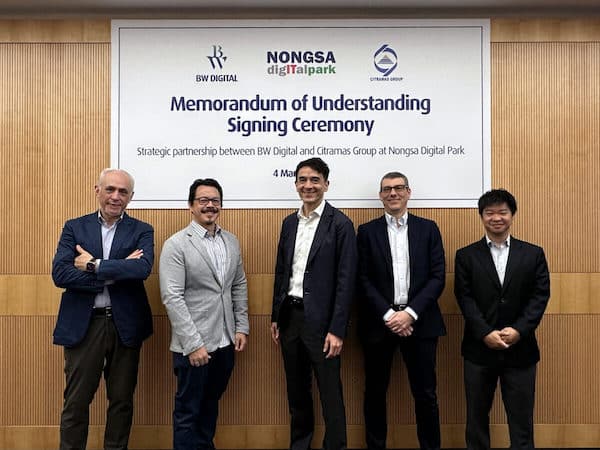
BW Digital and Citramas Group announced on Monday they have signed a memorandum of understanding (MoU) to jointly develop a carrier-neutral digital ecosystem using BW Digital’s upcoming new data centre in Batam’s Nongsa Digital Park (NDP) in Indonesia.

The partnership follows BW Digital’s acquisition of more than 55,000 square meters of land at the Citramas-owned Nongsa Digital Park to build its inaugural data centre in Southeast Asia and strengthen its Asia-Pacific digital infrastructure portfolio.

With a capacity of up to 80MW, the data centre will be designed to meet high density requirements. BW Digital said it will provide scalable solutions for enterprise, cloud and AI workloads, while helping customers to achieve their goals for carbon neutrality and general sustainability.

BW Digital and Citramas Group will jointly deliver infrastructure-as-a-service (IaaS) solutions co-located within the data centre, including landing infrastructure for new submarine cables, international and domestic connectivity, data storage facilities, and computing power for development of AI and machine learning applications.

“This new step anchors BW Digital’s long-term vision to create a neutral and trusted digital ecosystem in the Asia-Pacific region, in tandem with the development of Hawaiki Nui, our new subsea cable, which will first connect South East Asia and Australasia,” said BW Digital CEO Ludovic Hutier. “We hope to accelerate the growth of Nongsa Digital Park as an emerging hub for innovation and technology.”

Citramas Group CEO Mike Wiluan said BW Digital’s presence would “adds immense value in furthering NDP as a strategic data centre hub in the region, connecting Indonesia to key global markets.”

BW Digital is a subsidiary of BW Group, a global energy and maritime group headquartered in Singapore.

MORE ARTICLES YOU MAY BE INTERESTED IN…

Fastwyre Broadband announces major investment in Louisiana


NEWS

Fastwyre Broadband, a leading provider of high-speed and affordable fiber optic networks across the United States, has invested $65 million to enhance networks and expand into Louisiana regions. Formerly Cameron Communications, the company, with roots dating back to 1928, has evolved to revolutionise internet accessibility as Fastwyre Broadband.

Moss Bluff, Cameron Parish, Carlyss, and other Louisiana areas will benefit from internet speeds ranging from 2 to 10 gigabits per second, surpassing nearby city hubs.

CEO Chris Eldredge emphasises the commitment to delivering top-tier connectivity at affordable rates, aligning with the company’s deep-rooted history and pride in Louisiana.

“Our deep-rooted history in Louisiana, dating back to 1928 when our predecessor company ‘Cameron Communications’ was founded, fills us with immense pride as we continue to serve residents and contribute to the growth of businesses in this vibrant region. This connection drives our investment of over $65 million to expand and fortify our fiber optic infrastructure to digitally empower local communities for decades into the future.”

The investment focuses on fortifying fibre optic infrastructure to digitally empower local communities. Fastwyre’s reliable network, featuring symmetrical speeds, no data caps, and affordable bundles, caters to residential and business needs, fostering community support. The company stands at the forefront of innovation, investing in a rapidly growing, state-of-the-art fibre network, with a commitment to serving communities in need of enhanced connectivity.

Keep up with the latest news from Total Telecom, sign up for our email newsletter

Ooredoo Group launches OTT streaming platform in six markets

Keep up-to-date with all the latest news, articles, event and product updates posted on Developing Telecoms.
Subscribe to our FREE weekly email newsletters for the latest telecom info in developing and emerging markets globally.

Sending occasional e-mail from 3rd parties about industry white papers, online and live events relevant to subscribers helps us fund this website and free weekly newsletter. We never sell your personal data. Click here to view our privacy policy.