Adopting AI is vital for continuity of civil service, says Deputy PM 


News 

Pressure on the public sector to embrace AI must be “constant and relentless”, he said Deputy PM Oliver Dowden

The UK government has announced that it will test AI systems to increase efficiency and productivity within the civil service. 

Roles that the AI systems could assume include administrative work, analysing responses to government consultations, and drafting preliminary responses to parliamentary inquiries. 

The number of civil servants has skyrocketed in recent years, increasing by over 100,000 since 2016, reaching 519,780 last year. During the same period, the number of employees earning a six-figure salary has also doubled. 

Therefore, Chancellor Jeremy Hunt has ordered public services to cut spending to pay for tax cuts, and is expected to signal reductions in income tax or national insurance in next week’s Spring Budget. 

As such, AI is seen as a key technology in making the bureaucracy of government more efficient and reducing staffing costs. 

“It really is the only way, I think, if we want to get on a sustainable path to headcount reduction,” said Dowden speaking to the Telegraph. 

“Remember how much the size of the Civil Service has grown as a result of the pandemic and, and EU exit preparedness. We need to really embrace this stuff to drive the numbers down,” he continued. 

Dowden also cited a recently published report from think tank IPPR which concluded the government could save around £24 billion by increasing AI adoption, which Dowden confirmed is “the sort of target we should be aiming for”. 

Similar AI trials were also announced with the NHS, covering many fields such as diagnostics and prescription tailoring, which if given the go-ahead, will save hundreds of millions of pounds.  

The Deputy PM stressed that pressure on the public sector to adopt AI must be “constant and relentless”, adding “we can’t have the private sector adopting it at pace, and then us being laggards”. 

To aid in this AI transition, the ‘i.AI’ – the team of scientists, engineers, and experts commissioned last year by the government to work with various public sector departments in the adoption of AI – will be doubled in number, reaching 70 personnel.  

Keep up to date with the latest telecoms news by subscribing to the Total Telecom daily newsletter 

Also in the news:
VMO2 records £3.3bn loss as interest rates begin to bite
Verizon to trial private 5G networks at NHL stadiums
From humble beginnings: The amazing journey of Hormuud Telecom CEO Ahmed Mohamud Yusuf

From private networks to the Pope’s 2025 jubilee: A conversation with Igor LePrince, CEO of Boldyn Networks 


News 

At MWC this year, we sat down with Igor LePrince, Chief Executive Officer of Boldyn Networks, to discuss their European operations and recent M&A activity 

Today, Boldyn Networks has announced the completion of its acquisition of Cellnex’s private networks business.  

The acquisition, which was originally announced in November last year, will primarily consist of Cellnex’s Finnish subsidiary Edzcom, which designs, builds, and operates private 4G and 5G networks in numerous markets across Europe.  

This is quite the turnaround for Cellnex, which itself had only acquired Edzcom in 2020.  

Speaking to Total Telecom at this year’s MWC, Boldyn CEO Igor LePrince said that the acquisition was a demonstration of the company’s increasing focus on the growing private network market. 

“Private networks have been one the pillars of our strategy for the last two to three years…. and acquiring probably the biggest private networks company in Europe is very exciting for us,” said LePrince. 

Explaining the acquisition further, Le Prince explained that the deal serves three key purposes for Boldyn: 

  1. Acquiring a team of around 40 people who have are experts in deploying and running private networks for the past seven years,
  2. Acquiring the credentials of Cellnex in the verticals in which they operate, such as the oil and gas, mining, manufacturing, and energy sectors, which Boldyn can then make use of in other parts of the world,
  3. and taking over an existing portfolio of over 50 private networks across Europe.

Beyond the company’s M&A activity, LePrince explained how Boldyn has been investing hugely in Italy in preparation for the Pope’s jubilee in 2025, deploying small cells, implementing Wi-Fi coverage on the metro line, and around the main piazza in Rome.  

LePrince emphasised that this has been no easy task, describing the deployment around the city as “difficult” because of the poor quality of existing infrastructure and extensive bureaucracy related to new deployments. 

The project is one of the biggest concessions that the company are sharing with a municipality as part of a joint public–private investment. 

He draws a comparison to its partnership with the city of Sunderland, where Boldyn are deploying new use cases for smart city technology and digital infrastructure, hoping to elevate it to become the UK’s most advanced smart city. There are three networks to make these use cases a reality: a free Wi-Fi network running through the city, a narrowband IoT network, and a 5G network. 

LePrince emphasises that this is something that must be pushed on enterprises and cities to understand. Municipalities need to understand that they cannot afford to wait for operators to invest. They need to contribute to this process themselves if they really want the benefits a highly connected smart city can offer”  

When questioned on “why Sunderland?”, Le Prince explained that Sunderland Council and Boldyn shared a vision of the city’s digitalisation as a differentiator to attract investment .  

“The city and Boldyn had the same vision. The city was big enough to be able to play with everything, but small enough (with a population of around 200,000 people) to execute the project.”  

A perfect combination of scale and ambition like this is hard to find, said LePrince, and is greatly helped by the presence of a proactive council.  

Nonetheless, LePrince says there is a major opportunity for the company’s expansion of the neutral host model. Given , the capital expenditure pressure on operators today, LePrince says that there is “no way” that that cities can continue to sustainably deploy connectivity without adopting some form of neutral host approach.  

Catch Boldyn Networks’ partner Sunderland City Council at this year’s Connected North – 22-23 April in Manchester – get your tickets now!

Also in the news:
VMO2 records £3.3bn loss as interest rates begin to bite
Verizon to trial private 5G networks at NHL stadiums
From humble beginnings: The amazing journey of Hormuud Telecom CEO Ahmed Mohamud Yusuf

Could LiFi be the answer to 5G’s indoor woes?


News

A new solution from pureLiFi is preparing to deliver 5G connectivity inside the home, without degrading the signal quality

The concept of using visible light to deliver data between devices has been around for many years now, through paths to commercialisation have been slow to materialise.

However, at this year’s Mobile World Congress (MWC), Scotland-based LiFi specialist pureLiFi had a number of new solutions on show demonstrating the technology’s rapidly growing maturity. These included SkyLite, a whole-room access point that can cover an entire 50m2 room with high speed, low latency connectivity, and the LiFi Cube, a plug-and-play LiFi hotspot, ideal for dedicated use cases within a home or enterprise.

While these new solutions represent a technology growing increasingly versatile, pureLiFi CEO Alistair Banham made clear that LiFi would not be replacing WiFi any time soon.

“It’s not about displacing WiFi for us, it’s about being additive and complementary,” Banham told Total Telecom at this year’s MWC, noting that one of the technology’s key benefits is the avoidance of interference with radio waves.

“The way we see LiFi improving the quality of service is by covering high bandwidth download areas. For example, putting a hotspot over your TV or home computer, allowing these data hungry activities like streaming or gaming to be connected over light, instead of potentially degrading the quality of the WiFi network for all users in the building.”

But perhaps the most interesting new solution the company had on offer is the LINXC Bridge™, a product being developed in partnership with wireless power company Solace Power to help tackle the challenge of indoor 5G connectivity.

A common issue with 5G, particularly as we approach higher band frequencies such as mmWave, is that it suffers from significant signal degradation as it passes through walls and windows in homes and offices.

As its name suggests, the LINXC Bridge aims to overcome this problem by using LiFI, the signal of which is unaffected by passing through glass, to transfer the 5G signal from the outside to the inside of the building without signal attenuation.

The solution itself comprises two boxes, one attached to the inside of a window, the other to the outside. The outside box receives the 5G signal via an integrated 5G modem and converts it into light, which is then delivered through the glass to the inside box. Here, the signal is converted back into an electronic signal, which is then delivered to the home’s Wi-Fi or Li-Fi router. Future iterations could even have the router integrated into the internal box itself, removing the need for additional consumer premise equipment.

The device is powered using Solace’s integrated power solution that similarly delivers power wirelessly through the windowpane, reducing the need for any external power source.

A live demonstration of the LINXC Bridge in action at the show was delivering speeds of 1Gbps while connected to the 5G network, far higher than the 5G speeds typically recorded in-building.

“The average from our research suggests that customers are lucky if they can get 200–300Mbps in their home when connected to sub-6Ghz 5G – which, by the way, is also congested as more people make use of the network,” Banham explained. “We’re offering the operators the chance to deliver customers the same 5G service inside the home that they can get outside home. That’s really exciting.”

With around 80% of mobile data traffic generated indoors, the challenge of indoor 5G is one that is only going to increase in years to come. While LiFi products like the LINXC Bridge are still in their relative infancy, they could offer mobile operators a scalable and relatively hassle-free answer to this ever-growing pain point.

Keep up to date with all the latest telecoms news with Total Telecom’s daily newsletter

Also in the news:
VMO2 records £3.3bn loss as interest rates begin to bite
Verizon to trial private 5G networks at NHL stadiums
From humble beginnings: The amazing journey of Hormuud Telecom CEO Ahmed Mohamud Yusuf

Cisco, NEC to upgrade TIM Brazil network

Cisco and NEC announced a collaboration with TIM Brazil to improve the operator’s network performance, service quality and end-to-end visibility. 

In a statement from NEC, it was detailed how the Brazilian operator strived to improve its quality of service and quality of experience to gain better insights into its NPS. 

Cisco and NEC will upgrade the TIM network with solutions that expand network monitoring ranging across all transport domains, from cell site routers to metropolitan and regional backhaul and to national backbone, including third-party networks. 

Cisco’s Accedian Skylight platform will be deployed to provide a centralised view of the entire network, providing scalability to manage hundreds of thousands of endpoints fully integrated into TIM assurance architecture.

Under this agreement, new hardware and software platforms, installation and consulting services, training, as well as a three-year support contract – will be provided due to local support from NEC in Brazil.

« As a leading 5G mobile operator, TIM Brazil is thrilled to partner with Cisco and NEC to enhance our network capabilities and provide superior experience to our customers. Together, we aim to redefine industry standards and deliver a step ahead telecom infrastructure in Brazil », said Marco Di Costanzo, CTO TIM Brazil.

“Together with NEC and TIM Brazil, we are demonstrating how we can harness the power of AI/ML algorithms to capture, manage and process billions of data points that can make or break the network, » added Kevin Wollenweber, Senior Vice President and General Manager, Data Center and Provider Connectivity, Cisco Networking. 

« With the innovative Accedian Skylight platform in place, TIM Brazil can operate with improved agility, and react quickly with informed decisions to prevent network issues. »

MORE ARTICLES YOU MAY BE INTERESTED IN…

Driving digital progress in Africa through 5G

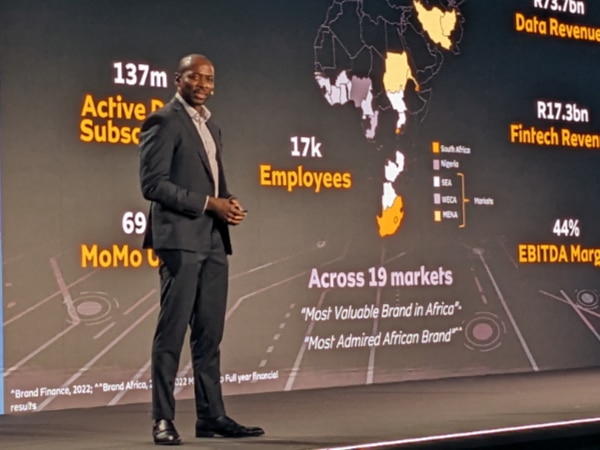
At Huawei’s Day0 Forum 2024, taking place on the eve of Mobile World Congress 2024, MTN Group’s Chief Strategy and Transformation Officer, Chika Ekeji, gave a keynote speech to explain how 5G is driving digital progress in Africa.

Ekeji focused on the opportunities that 5G provides for value creation, explaining that MTN aims to unlock the dividends of 5G across Africa. The group is present in 19 markets, with a user base approaching 300 million.

He noted that 5G must be seen within context, and that this is of course different for Africa than for more developed markets. MTN is firmly focused on delivering the benefits of a modern connected life to everyone, and delivering this requires a well-considered strategy. To achieve this, MTN focuses on four strategic priorities – building the largest and most valuable platforms; driving industry-leading connectivity operations; creating shared value; and accelerating the transformation of its portfolio.

Exploring 5G capabilities to enable use cases in Africa, Ekeji noted that the technology is initially enabling enhanced mobile broadband and improved Fixed Wireless Access across he continent, and he noted 5G’s increasing prevalence is facilitating industrial use cases that require massive IoT.. This growing availability of reliable connectivity is further capable of supporting enhanced network slicing, offering enhanced security and the ability to meet more diversified requirements for the digital progress of Africa.

Since 2020, MTN has launched 5G in four African markets – South Africa, Nigeria, Zambia and Uganda. Ekeji noted that MTN Group’s 5G network coverage reaches around 50 million people, with EMBB and FWA use cases driving usage thus far and 5G data accounting for around 3-5% of total network traffic. He also touched on the importance of private networks (a growing consideration  for Africa’s enterprise segment). MTN is aiming to deploy 5Gin more markets by year-end 2024 and expand its 5G population coverage by up to  10 million people.

Ekeji outlined the three main ‘horizons’ for 5G use cases, noting that core connectivity was of course the foundation, with premium connectivity enabling scenarios including edge computing, B2B connectivity, and private networks. Operators will then go on to develop solutions supporting a wide variety of use cases, such as IoT, AR/VR, B2B2C monetisation, etc.

By 2030, Ekeji shared GSMA estimates indicating that the GDP impact of 5G in Sub-Saharan Africa may reach US$26 billion, equivalent to around 0.48% of  the region’s economy by that time. He noted that the retail, manufacturing, and agriculture sectors in particular stand to benefit from enhanced 5G connectivity, while many other areas would also see their efficiency enhanced.

Ekeji argued that the social value of 5G is equally important to its economic value. With fixed broadband penetration rates typically below 2% in many African markets, 5G presents an opportunity to further democratise internet access. Ekeji noted that 5G can create more opportunities in both healthcare and education, furthering the social impact that it will enable.

Focusing on each of these areas, Ekeji began by exploring the potential of 5G for the mining industry in Africa – a major pillar of the continent’s economy that stands to benefit substantially from the improved efficiencies enabled by 5G implementation. He emphasised that even basic network connectivity enables scenarios that can improve the efficacy of extractive industry operations. Further benefits can be realized by adopting advanced technologies including 5G + IoT, AI surveillance, and drones. Many of these use cases can also apply to the logistics of port management, with Ekeji noting that remote operation, surveillance and AR assistance can enable autonomous workflows, better energy efficiency and improved productivity in that segment.

On the subject of healthcare, Ekeji elaborated on challenges and the healthcare divide in Africa and underlined how 5G has the potential to address this sector. As of 2020, almost 40 countries in the World Health Organisation’s Africa index reported having fewer than 20 medical doctors per 10,000 people. Here 5G can help to increase access to healthcare services via remote consultations, CT and ECG monitoring, as well as helping to train more doctors via modern immersive experience even remotely. In the future, more advanced use cases such as remote surgery and medical delivery via drones will become feasible. In addition to the healthcare divide, Africa also has a significant educational divide, with vast numbers of high school-age young people not being educated. Distance learning enabled by 5G presents a means of addressing this issue, whether for general learning, higher education, or vocational learning.

To properly position the continent to take full advantage of 5G, Ekeji outlined a set of mitigations essential to addressing some barriers to 5G adoption. To improve coverage, 5G-ready spectrum must be made available promptly and at fair prices, with regulatory policies put in place to support effective rollouts. Further, bringing down the cost of entry-level smartphones is also essential, and Ekeji noted that it would require device financing schemes as well as policies to support low-cost manufacturing or reduced import duties on handsets. Services will also need to be affordable, which Ekeji argued can be increasingly achieved via operational efficiencies e.g. using green energy solutions to improve reliability and reduce costs, or making more effective use of spectrum via refarming, virtualisation, and automation.

In conclusion, Ekeji argued that while policies and practices would certainly spur 5G adoption, better understanding is required around the benefit that 5G can enable, both for Consumer and Enterprise customers.. To address this, the telecom industry needs to better articulate the capabilities and value proposition of 5G to all stakeholders, using solutions as a means to demonstrate the value proposition. 

MORE ARTICLES YOU MAY BE INTERESTED IN…

Elevating CX: A Proactive Approach to Order Management & Fulfillment

Elevating CX: A Proactive Approach to Order Management & Fulfillment

This Industry Viewpoint was authored by Manoj Krishna Mohan, Technical Architect, Salesforce Practice, Prodapt Solutions

In the highly competitive Connectedness industry, seamless ordering and fulfilment processes are crucial for service providers to build customer loyalty and gain competitive edge. The challenges in order management such as inadequate service assurance, complex order workflows, and the risk of lost orders have significant implications. Implementing a modern and unified Order Management System (OMS) is essential to address these challenges. By leveraging a unified … [visit site to read more]

AIS releases GSMA Open APIs to combat fraud

Keep up-to-date with all the latest news, articles, event and product updates posted on Developing Telecoms.
Subscribe to our FREE weekly email newsletters for the latest telecom info in developing and emerging markets globally.

Sending occasional e-mail from 3rd parties about industry white papers, online and live events relevant to subscribers helps us fund this website and free weekly newsletter. We never sell your personal data. Click here to view our privacy policy.

Journey to a more connected North: UK connectivity roundup February 2024

News

A selection of the most important connectivity stories relating to the North of the UK, with expert guest commentary provided by Dominic Beresford-Webb, Senior Conference Producer for Connected North at Total Telecom.

“In a series of transformative developments, the UK’s digital landscape is witnessing significant progress in connectivity initiatives.

Rural communities are getting the service they deserve with B4RN’s 400Gbps and strong progress being made by EE with the Shared Rural Network in North Yorkshire. EE built 40 masts over the last two years, giving a vital boost to 4G coverage for the area. With 1,600 rural locations upgraded under the SRN so far, EE have claimed to be ahead of other operators on this project.

We’ve seen some welcome news on Project Gigabit with both Quickline Communications and CityFibre winning significant investment to bring full fibre across rural premises. East Yorkshire-based ISP Quickline have £60 million in funding to build infrastructure that supports rural communities and drives economic growth. Meanwhile, CityFibre won a whopping £394 million worth of contracts for over 200,000 rural premises.

Hopefully this means a bright future for underserved rural communities to help address the digital divide, improve global competitiveness and increase investment.

It’s exciting times at CJ Founds Associates, with Lynne Wilson joining the team and bringing valuable insights from her time at the Berkshire Digital Infrastructure Group. This adds yet more expertise to a firm that’s well versed in assisting local authorities implement their digital strategy.

If you want to hear more from Quickline, CityFibre and CJ Founds Associates join us in Manchester for Connected North this April 22-23. These and many more organisations will be sharing their knowledge and networking with peers.

This includes Greg Mesch, Chief Executive Office for CityFibre; Sean Royce, Chief Executive Officer for Quickline Communications; Chris Founds, Director & Founding Partner for CJ Founds Associates.”

Learn more about Connected North 2024

AWS lands generative AI partnerships with CelcomDigi and Maxis

At Mobile World Congress 2024, Amazon Web Services (AWS) signed separate deals with Malaysian telcos CelcomDigi and Maxis to collaborate on generative AI solutions to improve network operations and develop use cases.

Under a Letter of Collaboration signed by CelcomDigi and AWS on Tuesday, CelcomDigi will establish an AI Sandbox using Amazon Bedrock, a managed service that offers high-performing foundation models from AI companies via a single API, along with a broad set of capabilities to build generative AI apps with security, privacy, and responsible AI.

CelcomDigi’s AI Sandbox will be set up in its Innovation Centre for its employees to experiment with, innovate, and implement generative AI solutions for use cases that will be integrated into the operator’s operational platforms for HR, customer service, legal and finance, among others. The two companies will also collaborate to train CelcomDigi employees on AI capabilities.

CelcomDigi also intends to develop and implement Bahasa Melayu language algorithms with Amazon’s Bedrock Large Language Models (LLM), Amazon Titan and Anthropic Claude, that have deep learning algorithms that can process natural languages. CelcomDigi will use these LLMs to develop solutions such as chatbots to communicate with its linguistically and culturally diverse customer base.

CelcomDigi and AWS will also explore deploying personalised generative AI use cases for Malaysian businesses across industries and consumers. 

“With AWS, CelcomDigi can drive new use cases at scale with AI-optimized infrastructure and the flexibility to choose fit-for-purpose foundational models through Amazon Bedrock,” said Pete Murray, Country Manager for Malaysia at AWS. “This collaboration also accelerates the delivery of new innovative AI services to Malaysian enterprises.”

Meanwhile, AWS also announced a new collaboration with Maxis to accelerate innovation in generative AI and 5G use cases for Malaysian enterprise customers.

Under the collaboration, the two companies will focus on leveraging advanced 5G and generative AI technologies to develop business use cases, targeting the retail, manufacturing, logistics and financial services domains.

The collaboration also targets Maxis’ internal processes, focusing on customer service enhancements and support offerings for enterprise customers to make faster, compelling and more effective business decisions.

Maxis said the combined efforts of generative AI integration and LLMs trained to support Bahasa Melayu will also help accelerate the digital transformation journey for more Malaysian businesses.

The AWS deal is Maxis’ second generative AI announcement at MWC2024 this week. On Monday, Maxis said it had expanded its strategic collaboration with Google Cloud by integrating generative AI into its workflow and service offerings.

Maxis and Google Cloud will also develop applied generative AI solutions for data analytics and cybersecurity, and extend generative AI skilling opportunities and learnings to Maxis employees.

Maxis said it also plans to extend its experience with integrating generative AI to its community programmes, eKelas Usahawan and eKelas, to upskill individuals and school students.

Google Cloud also signed an agreement with Indonesian telco Telkomsel at MWC this week under which the operator will integrate enterprise-grade generative AI  into its operations and core product offerings for consumers and businesses.

MORE ARTICLES YOU MAY BE INTERESTED IN…