Cost savings – not social pressure – are driving telcos towards green energy

The telecoms sector has an indisputable impact on the environment. Operating a reliable network requires vast amounts of power, the manufacture of network equipment and personal devices produces significant carbon emissions, and the swift obsolescence of these devices generates a constant stream of e-waste.

With access to telecommunications increasingly viewed as a human right, the expansion of networks and proliferation of devices has raised awareness of the sector’s environmental impact, placing companies under increasing pressure to show leadership in achieving sustainability goals and adopting greener solutions.

While this trend has been gaining traction for years, there has been a pronounced shift towards sustainable solutions in recent years – and the main driving factor has not been social pressure, but cost savings. Companies are increasingly finding that it is not merely financially viable to adopt greener solutions, but attractively cheaper.

This is particularly the case with regards to energy. Enrique Dans, a Senior Fellow at the Centre for European Policy Analysis (CEPA), told us: “From my perspective, the most important factor here is cost. We are witnessing a huge decrease in the cost of renewable energy.”

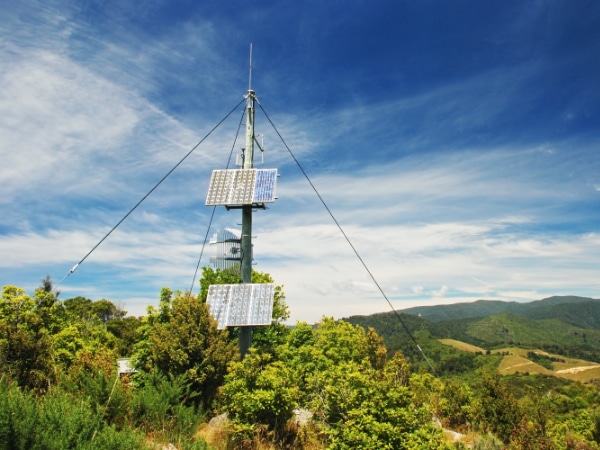
Dans highlights that the key technologies for solar energy – panels and batteries – have both plummeted in terms of overall cost, with solar panels now 99% cheaper than 40 years ago, and batteries 97% cheaper. The efficiency of both technologies has also increased substantially, meaning that it’s now feasible for an operator to power several antennas at an isolated location with just a few solar panels and a battery.

He adds that this is a particularly attractive option in emerging markets as it facilitates the construction of self-sufficient, off-grid sites to enable reliable rural connectivity, and notes that operators in these regions are often able to obtain public funds or even grants from international agencies for deploying sustainable infrastructure projects.

Installation is now the most expensive element of a deployment – formerly, it was materials such as solar panels. This means solar energy is now viable on a widespread industrial scale, which in turn makes it feasible to extend technologies that typically require more reliable energy supplies to areas without grid power. Dans notes that 5G consumes a lot of energy in areas where there is a constant stream of connections, but in an isolated area the base station can remain idle a lot of the time, meaning that it consumes less energy.

Simay Akar, IEEE senior member and the CEO & Founder at AK Energy Consulting, notes that there are still significant challenges in the way of achieving sustainability goals, particularly in emerging markets. She highlights companies needing to integrate renewable energy systems into their infrastructure, noting that investment in these systems will facilitate on-site power generation, reducing dependence on grid power.

The benefits that this can be deliver will be amplified by coordinated collaboration: “It is not an individual effort – they need to follow the policies to collaborate for Power Purchase Agreements…long-term to have more efficient, stable and cost-efficient electricity for their supply and needs. It’s also integrated to their grid – not every company has distributed systems, they’re mostly connected to grids. If they have a distributed generation, they need to make sure they are focusing on their green grid infrastructure. That requires a lot of investment in the green modernization, and they need to focus on smart grid integration in their systems.”

Akar states that it’s not enough for operators to merely invest in renewable energy resources – they must also optimise their network efficiency by upgrading their infrastructure with digital tools including artificial intelligence management systems, cloud technologies, and software defined networks. She notes that by combining these technologies with cooling systems, the physical hardware’s power consumption can be dramatically reduced, but adds that intelligent use of energy storage systems is also essential.

“It’s important to integrate energy storage solutions if using renewable energy resources, because it’s not [just] about the sustainable power we generate – this is also the business, they cannot have power outages.” Outages are not merely a matter of network availability – they are also a threat to data security, so it’s crucial for operators to understand the importance of energy stability and integrate these systems into their turnkey solutions – although Akar underlines the importance of selecting solutions that are suitable for both requirements and location.

“It’s harder and more challenging in emerging markets than developed markets, because you need to know your investment in this area for sustainability will be profitable”, says Akar. “When you have government support incentives, this clean energy transition is always more straightforward, but for emerging markets there are also considerations of what we could do, and what are the opportunities.”

Akar observes that green financing is a promising area, noting that there is sustainable funding available in the form of green bonds, public private partnerships, and private equity. While there are few incentives around this, so it cannot make up for support for a green transition from the sector, she says that these resources are made possible via international collaboration and are typically targeted at emerging markets, so could be instrumental in enabling a transition to cleaner energy in the sector.

As more companies become able to generate power via mini-grids and off-grid solutions, they frequently have surplus to their requirements. With intelligent use of storage systems, Akar explains that they can sell this back to the grid, or alternatively simply store the energy and use it as required to address infrastructure gaps. Even if there are no supportive mechanisms in their local area, through this kind of collaboration it becomes possible for companies to have access to cost efficient energy resources.

“Even if it looks more challenging for emerging markets, there are more opportunities for the future … because implementing these steps can [help] reach sustainability goals and energy sustainability while reducing their operational costs”, explains Akar. “When we talk about all these initiatives, it sounds like we’re investing a lot, but [whether] long term or short term, it’s not really. And overall, by reaching these sustainability goals, they’re also reducing their operational costs – this is important to see the opportunities, improve their energy supply, and make it more stable for their main business.”

The pressure is on – but the opportunities for real change are now viable. Dans observes that initial efforts around sustainability in telecoms amounted to little more than ‘greenwashing’, but underlines that the COP28 UN Climate Change Conference in Dubai, UAE delivered commitments that businesses are no longer able to skirt around. “Everyone was expecting a very low-profile conference, but in the end, the final documents are pretty stringent. They don’t say stop fossil fuels – of course, that was predictable. But the commitments for increasing renewable energy are huge, they’re really important. And they demand a lot of investment.”


MORE ARTICLES YOU MAY BE INTERESTED IN…

Telecel Global Services to receive funding to boost African operations

Telecel Group, an Africa-focused provider of digital and communications services, has announced a major investment in its wholly owned subsidiary Telecel Global Services (TGS), a leading telecommunication service provider for operators and enterprise clients globally with a particular focus on Africa.

Telecel Group and Africa Credit Opportunities Fund (ACOF), a sector-agnostic debt fund that invests in a range of credit opportunities in sub-Saharan Africa, have entered into a strategic partnership to invest US$20 million debt in TGS, to improve connectivity, digitalisation and e-commerce in West Africa and across the continent.

TGS provides a number of services, including cloud, firewall solutions, cybersecurity and data centres,  to more than 350 telecom operators through its hubs in New York, London and South Africa.

Details of how the partership will effect its aims have yet to be shared but it is no secret that Telecel Group has ambitions to expand in Africa, to develop digital and mobile offerings, or to buy all or part of operators on the continent, via its subsidiaries TGS, Telecel Mobile and Telecel Play.

The company made headlines last year in Ghana, where it obtained the green light in January 2023 to acquire 70% of Vodafone Ghana. The Telecel Group is now gearing up to fully rebrand Vodafone Ghana to Telecel by the end of February 2024. The rebranding will cover Vodafone Ghana and its three subsidiaries, Vodafone Wholesale, Vodafone Cash and Vodafone Ghana Foundation.

MORE ARTICLES YOU MAY BE INTERESTED IN…

Ucom taps Nokia for RAN upgrade

Keep up-to-date with all the latest news, articles, event and product updates posted on Developing Telecoms.
Subscribe to our FREE weekly email newsletters for the latest telecom info in developing and emerging markets globally.

Sending occasional e-mail from 3rd parties about industry white papers, online and live events relevant to subscribers helps us fund this website and free weekly newsletter. We never sell your personal data. Click here to view our privacy policy.

Re-imagining Telecom Operations: From Contract Negotiations to Customer Service

This Industry Viewpoint was authored by N Shashidhar, VP & Global platform head, EdgeVerve

In the digital age, telecom is more than just a sector—it’s the ultimate digital influencer, pioneering tech revolutions and ensuring we’re always plugged in. But behind the veneer of seamless connections and next-gen services lies a complex labyrinth of operational challenges ranging from intricate contract negotiations to maintaining high customer service standards. … [visit site to read more]

ZTE makes CDP A-List for its leading climate action

ZTE Corporation has secured a place on the Carbon Disclosure Project (CDP) ‘A-List’ in recognition of its leadership in corporate transparency and performance on climate change.

Based on data reported through CDP’s 2023 Climate Change questionnaire, ZTE is one of the 346 companies that achieved an ‘A’ out of over 21,000 companies scored. 

CDP is a not-for-profit that runs the world’s environmental disclosure system for companies, cities, states and regions. CDP environmental database and scores are widely used to drive investment and procurement decisions towards a zero carbon, sustainable and resilient economy. CDP ‘A List’ recognizes companies that have played a leading role worldwide in mitigating climate change through formulating robust strategy and taking bold actions. ZTE’s inclusion on the ‘A List’ highlights the company’s commitment and leadership in environmental transparency and sustainable development.

Proactively practising the philosophy of green development, ZTE has been actively engaging in the global transition to a decarbonized economy. The company is committed to moving toward green with digital innovation across four major dimensions: green operation, green supply chain, green digital infrastructure, and green empowerment, facilitating the rapid transition of diverse industries onto the path of green development. Notably, ZTE announced its participation in the ‘Science-Based Targets initiative’ (SBTi) in May 2023, embodying the company’s endeavor to make a substantial contribution to driving global economic growth towards a greener and more sustainable future.

ZTE currently holds more than 650 green innovation patents. In 2023, the company added 22MW of photovoltaic power generation capacity, marking a remarkable 700% YoY growth. Collaborating with over 1000 global top partners, ZTE actively engages in 5G+ innovation and green initiatives. Additionally, the company has established the ‘Green Supply Chain’ through close collaboration with upstream and downstream partners. In 2023, it completed carbon audits on 150 suppliers and was recognized as a national-level green supply chain management enterprise.

In collaboration with Sinotrans and Lufthansa Cargo, ZTE has pioneered the development of an end-to-end carbon neutralization solution within the realm of green logistics in 2023, marking a remarkable achievement in the international logistics ecological chain. By ensuring the complete carbon neutralization green transportation of its finished products, starting from ZTE’s Global 5G Intelligent Manufacturing Base in Nanjing, China, and culminating in their arrival at the warehouse in Madrid, Spain, the company has realized a seamless, environmentally-friendly process. Moreover, this approach guarantees the accurate calculation, verification, and certification of the carbon footprint throughout the entire transportation journey.

Looking ahead, ZTE will remain unwavering in its commitment to upholding the principles of sustainable development. Placing a strong emphasis on green operations as an integral part of its corporate ethos, ZTE aims to integrate environmental responsibility throughout the entire industry chain, actively contributing to high-quality development through its environmental and sustainable initiatives. 

MORE ARTICLES YOU MAY BE INTERESTED IN…

Telefonica taps Mitiga for EarthScan climate risk analysis platform


News

As the risks associated with climate change grow, Telefonica is aiming to help businesses better understand the impact of adverse weather events

This week, international mobile operator giant Telefonica has announced an investment in Mitiga Solution, a company focussed on climate risk management solutions.

Mitiga is a company combining climate science with AI analysis, with their EarthScan™ software solution allowing them to accurately measure customers’ exposure to risk related to changes to environmental conditions, like flooding, heatwaves, and storms.

“Current traditional data models are inadequate for calculating impacts because they are based solely on past events projected into the future,” explained a press release from Telefonica. “[Mitiga] incorporates new data models based on physical and transient data to complement traditional models, enabling its clients in sectors such as finance, insurance, real estate, industry and retail to comply with European CSRD/SFRD legislation and make more cost-effective and sustainable investment decisions.”

The investment, for an unspecified amount, comes via Telefónica Ventures and Íope Ventures, the operator’s startup innovation arm Wayra.

Telefonica says the investment is in line with the Group’s strategy surrounding sustainability, with climate risk assessment viewed as an increasingly important field.

“Telefónica supports the transformative power of innovation and technology to build a sustainable future, which is why we have made a double commitment by investing in Mitiga through both Telefónica Ventures and Íope Ventures, the investment vehicle jointly created by Wayra and Telefónica Seguros. For us, Mitiga is a strategic partner that will help us drive our business in Climate Tech,” said Irene Gómez, director of Telefónica Innovación Abierta and CEO of Wayra.

“Climate change is the biggest challenge facing society today and in the coming decades, not least because of the large-scale economic impact it will have. We need to rethink our cities, homes and workplaces to build resilience to climate change on a daily basis. That’s why we’re excited about this strategic collaboration with Telefónica to bring our SaaS climate risk assessment technology to more businesses and public organisations,” said Alejandro Martí, CEO and co-founder of Mitiga Solutions.

Keep up with all of the latest telecoms news from around the world with Total Telecom’s daily newsletter

Also in the news:
EU telcos join forces against Gigabit Infrastructure Act
Jio releases ‘Jio Brain’ AI platform
Ofcom issues further crackdown on spoof phonecalls

Malaysia’s U Mobile awards managed services contract to TeleChoice

A Singaporean technology group is expanded into the broader managed services sector beyond Singapore via a contract with a leading Malaysian operator.

TeleChoice International Limited, a regional diversified provider and enabler of innovative communications products and services, has won a fourth party logistics (4PL) managed services contract from one of Malaysia’s major operators, U Mobile. This will be carried out by TeleChoice’s wholly owned subsidiary, Planet Telecoms Managed Services.

The contract, estimated at S$500 million  (US$372.2 million) over three years, involves the provision of 4PL managed services, providing a comprehensive suite of solutions for supply chain management.

PTMS’s role includes device procurement, whereby PTMS will act as a buying house and manage the sourcing and inventory of new devices, aligning with market demand. PTMS will also oversee the warehousing, logistics and distribution of devices, including last-mile delivery, ensuring timely delivery across Malaysia. 

In the area of inventory management PTMS will implement real-time inventory systems to allow U Mobile to respond quickly to market needs. 

Finally, PTMS will take on comprehensive management of U Mobile’s extensive distribution network consisting of over 600 retail and channel touchpoints across Malaysia, aiming to provide a consistent and smooth experience for customers, from online ordering to in- store pickups. 

Wong Heang Tuck, CEO of U Mobile, says: “Through this partnership with TeleChoice and PTMS we will be able to enhance and expand the range of devices made available to our customers by leveraging on their expertise and experience as an end-to-end 4PL managed services provider. From initial touchpoints to final service delivery, the integration of technologies and streamlined processes will deliver efficiency and reliability within our supply chain, resulting in a seamless and positive experience for our customers.“

MORE ARTICLES YOU MAY BE INTERESTED IN…

Data breach at Verizon impacts 63,000 employees


News

The breach was seemingly caused inadvertently by a fellow staff member

This week, US mobile giant Verizon has informed authorities that the personal data of 63,206 people – primarily the company’s own employees – have been compromised by a data breach. This represents the data of roughly half of the company’s 117,000 workers.

The breach occurred on September 21 last year and was only detected on December 12, almost three months later.

While the specifics surrounding what caused the breach were not revealed, Verizon said it believed “inadvertent disclosure” and “insider wrongdoing” were the cause of the breach.

According to the operator’s report, the data compromised during the attack included employees’ names, addresses, Social Security Number or other national identifier (if available), gender, union affiliation (if applicable), date of birth, and compensation information.

However, it appears none of this data has been shared with external sources.

“[On Sept. 21], a Verizon employee obtained a file containing certain employee personal information without authorization and in violation of company policy,” explained Verizon in a sample letter to victims filed with the Maine attorney general’s office. “Promptly after learning of the issue [on Dec. 12], we conducted a review. […] At this time, we have no evidence that this information has been misused or shared outside of Verizon as a result of this issue.”

Verizon says work is ongoing to better understand the cause of the breach and to improve internal security.

The company has also implemented a two-year identity theft protection and credit monitoring service, details of which have been sent to impacted employees.

This data breach is Verizon’s second major security scandal in the past year, with 7.5 million of the company’s wireless subscribers having their data leaked on the Dark Web.

Want to keep up to date with the latest telecoms news from the US market? Join the telcos in discussion at this year’s Connected America conference live in Dallas, Texas

Also in the news:
EU telcos join forces against Gigabit Infrastructure Act
Jio releases ‘Jio Brain’ AI platform
Ofcom issues further crackdown on spoof phonecalls