First phase of an investment project in a new backbone to strengthen Italy’s position and Sparkle’s routes in the Mediterranean, ensuring resilience through an innovative path
Rome, 22 December 2022 – Sparkle, the first international service provider in Italy and among the top global operators, launches a project for the development of GreenMed, a new submarine cable system that will cross the Adriatic Sea connecting Italy to Croatia, Montenegro, Albania, to Greece and Turkey, before extending further into the Mediterranean.
GreenMed will create an innovative fibre optic infrastructure corridor to connect, through a diversified and low-latency route, Central Europe, the Balkans, and the Central-Eastern Mediterranean countries. From Italy’s Adriatic coast, the system will connect by land to the rich digital hub of Milan and, from there, to the other major European internet and cloud nodes.
The project also aims to support the strong development of the Balkan digital market – with a growth forecast of 25% (CAGR 22-29) – by offering a secure and diversified route in addition to the already existing terrestrial backbones.
Italy confirms its role as the primary hub of the Greater Mediterranean, connecting with the GreenMed system also the island of Crete in Greece, which in recent years has become a significant digital gateway for the region and the landing point for Sparkle’s BlueMed cable which connects Italy with France, Greece and various countries bordering the Mediterranean until reaching Aqaba in Jordan.
Enrico Bagnasco, CEO of Sparkle, comments: “With GreenMed, Sparkle continues the expansion of its network by creating a route with highly innovative features that crosses the Mediterranean basin to support the demand for intercontinental connectivity and the growing digitalisation of the Balkan area.”
About Sparkle
Sparkle is TIM Group’s Global Operator, first international service provider in Italy and among the top worldwide, offering a full range of infrastructure and global connectivity services – capacity, IP, SD-WAN, colocation, IoT connectivity, roaming and voice – to national and international Carriers, OTTs, ISPs, Media/Content Providers, and multinational enterprises. A major player in the submarine cable industry, Sparkle owns and manages a network of more than 600,000 km of fiber spanning from Europe to Africa and the Middle East, the Americas and Asia. Its sales force is active worldwide and distributed over 32 countries.
Find out more about Sparkle following its X and LinkedIn profiles or visiting the website tisparkle.com.
Written by Paul McHugh, Area Director UK at Cradlepoint
For those who’ve been around wireless for a while, the cellular vs Wi-Fi debate may seem a little tired. However, the debate persists, and the technologies continue to co-exist, as both Wi-Fi and cellular continues to evolve.
Wi-Fi is a type of wireless local area network (WLAN) that is favoured for supplying wireless connectivity to the home, office, campus and other facilities with “best effort” connectivity. While it can work in many environments, it is best suited indoors. Meanwhile, cellular connectivity is the dominant player outdoors, on mobile phones and many other devices.
However, recent events and connectivity ecosystem evolution have triggered significant changes to the dynamic between the two. The roll out of 5G has brought increased capacity, coverage, mobility, speeds, and lower latency. Meanwhile, Wi-Fi 6 is getting closer to cellular with increased capacity, coverage, and higher speeds.
Another important shift is cellular has become an attractive alternative to Wi-Fi for enterprises — specifically for those looking for greater support for business critical applications, wanting complete control of their network. This is evident in the rise of private cellular networks (PCNs), among today’s enterprises. Helping drive this growth in enterprise PCN are changes to spectrum policy, including the allocation licensed spectrum for enterprises. This enables enterprise companies to operate their own PCNs and exercise complete control over the network more easily.
As the enterprise evolves, three major wireless technologies are increasingly co-existing: public cellular, private cellular and Wi-Fi.
However, thanks to PCNs and the enhanced performance they provide in the form of increased coverage, mobility, reliability, security, and predictable network performance — enterprises receive something they’ve never possessed before: choice.
The rise of PCN Deployments
So, why may some enterprises be opting for private 5G or LTE over Wi-Fi? One of Wi-Fis limitations includes reliability. Because Wi-Fi operates on unlicensed spectrum, it may be available but not necessarily useable because of signal interference, traffic congestion or a minimal coverage area. In terms of security and capacity, Wi-Fi also comes up short when compared to a private 5G network. For example, private cellular networks can eliminate
credential-based attacks thanks to SIM-based authentication. Network users must have approved physical SIMs or electronic SIMs to access the network, giving enterprises more control over who enters their network. Also, even if a bad actor gets their hands on a device with an approved SIM, they’d only have access to the portions of the network for which that device is approved.
In terms of mobility, cellular networks are deterministic – meaning the network determines how to assign cellular clients to the cellular network access points (APs), and when to handoff to another cellular AP based on signal strength, QoS (quality of service) standards assigned by the enterprise network administrator, and other identifiers. Since Wi-Fi networks are not deterministic, this vastly improves the network reliability for mobile devices that roam between cellular APs in a PCN.
Sizematters
Providing connectivity for large areas isn’t easy. When it comes to coverage, in many situations private cellular networks make a lot more sense as well. Often, private cellular can cover 10x the space outdoors compared to traditional Wi-Fi.
A warehouse or an outdoor storage yard could require hundreds of Wi-Fi access points. That’s a lot of hardware to install and maintain. In contrast, a company could adequately cover the same area with a few dozen 5G private cellular access points. The same dynamics also apply for seaports, manufacturing facilities, campus environments, and mining operations.
Then, there’s the question of reliability. Many warehouses and industrial environments now use sensors and other devices to connect or have more visibility into their operations and machinery requiring the constant sharing of data between machinery and databases. When it comes to automation and robotics, the lower latency that private 5G offers means greater control for enterprise users.
Then there’s the way 5G combines with edge computing, which provides near real-time processing by bringing data processing to the point of data creation, such as a factory or warehouse floor instead of the cloud. The low latency necessary for real-time data transfer, the control of the network across which that data transfers, and the inherent security a PCN provides that data is why PCNs are more reliable.
Simple and Secure
Lastly, what’s become increasingly difficult for the enterprise to ignore is that with the maturation of private cellular solutions, the current value proposition for Wi-Fi to support business and mission critical applications continues to shrink. PCN solutions are not only more comprehensive, but enterprises will find it’s easier than ever to deploy and manage them after deployment.
Keep up-to-date with all the latest news, articles, event and product updates posted on Developing Telecoms. Subscribe to our FREE weekly email newsletters for the latest telecom info in developing and emerging markets globally.
Sending occasional e-mail from 3rd parties about industry white papers, online and live events relevant to subscribers helps us fund this website and free weekly newsletter. We never sell your personal data. Click here to view our privacy policy.
Four bits of network and interconnection infrastructure news from around the world before we head home for the holidays here in the US. Ok ok, some of you have surely left already, but hey. … [visit site to read more]
The expanding size of networks, enhancements in capacity, and the need for decarbonization present significant challenges for network O&M. One of the biggest challenges is the management of vast amounts of information. The emergence of Generative AI (GenAI) offers solutions to these problems. GenAI has been used to develop Autonomous Networks Agent (AN Agent) to enhance the human ability to manage large-scale complex operations in the world’s largest telecom network, China Mobile.
China Mobile’s network O&M is both costly and labor-intensive. For example, one branch of China Mobile experiences over 2,500 alarms each month, with an average ticket handling duration of over 7 hours. Additionally, the annual core network evaluation takes an entire month to complete. To address these challenges, China Mobile and Huawei have collaborated on the development of telecom large language models and autonomous networks.
Compared to traditional network fault management solutions, China Mobile Guangzhou’s new solution has three distinct core capabilities:
Solution upgrade from alarm management to fault management
This solution streamlines the resource and service modules and uses machine learning algorithms to reduce noise in alarm data. It then associates and clusters alarms, significantly reducing the number of alarms and tickets. Additionally, the solution uses In-situ Flow Information Telemetry (IFIT) to perform association analysis on the impact of poor-QoS base stations on services, which helps determine troubleshooting priorities.
O&M mode upgrade driven by scenario-specific foundation models
This new solution covers the entire SPN O&M process, from fault identification to analysis and rectification. It has a strong semantic understanding and can be used as an intelligent chatbot for dialog-based interaction and flexible search based on fault scenarios. This significantly reduces the need for complex manual configuration, simplifies troubleshooting procedures, and assists service decision-making. This solution increases the fault diagnosis automation rate from 60% to 80%.
Fault closure process improved through small- and medium-screen linkage
The solution builds small- and medium-screen linkage that allows the mobile app (the small-screen assistant) to receive real-time information about network resources and faults through intent-oriented APIs. This eliminates repetitive network management tasks and ensures quick responses from both network operations center (NOC) engineers and field maintenance engineers by freeing them from frequent communication through chat apps and phone calls. It also makes the troubleshooting process visible and manageable, significantly shortening the average fault response time by 83%.
We are conducting region-specific tests and have received positive feedback on the effectiveness of the AN Agent solution for telecom digital transformation. This feedback indicates that we can provide an enhanced network experience for a significant number of users. This success is particularly promising for our city network support efforts, as it allows us to safeguard the execution of large-scale exhibitions and concerts effectively.
Indian telco Bharti Airtel said on Thursday its enterprise unit has formed a strategic partnership with smart metering and digital solutions provider IntelliSmart Infrastructure to provide connectivity for up to 20 million smart meters.
Under the partnership, IntelliSmart will use Airtel Business’ IoT Hub to track and monitor its smart meters with advanced analytics, while benefiting from telco-grade reliability and security.
The Airtel IoT hub is hosted in the operator’s cloud network, which Airtel says enables enterprise users to seamlessly connect and manage billions of devices and applications. The hub also makes use of multiple connectivity options, including 4G (NB-IoT or LTE-M), 2G and 3G, depending on the scenario and device requirements. The IntelliSmart deal will likely initially use NB-IoT, which is designed to support low-power devices like smart meters and sensors.
5G is also a future option with the implementation of RedCap (Reduced Capability), an enhancement of 3GPP Release 17 that enables simple, low-power devices to use 5G NR networks. Airtel announced in October that it successfully tested RedCap software from Ericsson on its 5G network.
Airtel claims its IntelliSmart partnership is the largest such deal in India’s smart metering space. If nothing else it’s the largest one for Airtel after its partnership with Secure Meters – announced in April – to deploy 1.3 million smart meters in Bihar using NB-IoT. In December 2022, it won a contract with TP Western Odisha Distribution Limited (TPWODL) – a joint venture between the Odisha government and Tata Power – to deploy 200,000 smart meters in Odisha.
Ganesh Lakshminarayanan, CEO of Airtel Business (India) said the IntelliSmart deal will significantly contribute towards the company’s fast-growing IoT business.
“IoT is one of the fastest-growing business segments for Airtel Business,” he said. “As we connect the devices across the country on our platform, we will exponentially grow our current IoT market share of 55.4% [as of Q1 FY23-24].”
He also said that the deal enables Airtel to “play a pivotal role” in driving the government of India’s Advanced Metering Infrastructure (AMI) initiative, which aims to convert 250 million conventional meters in India to smart meters over the next five years.
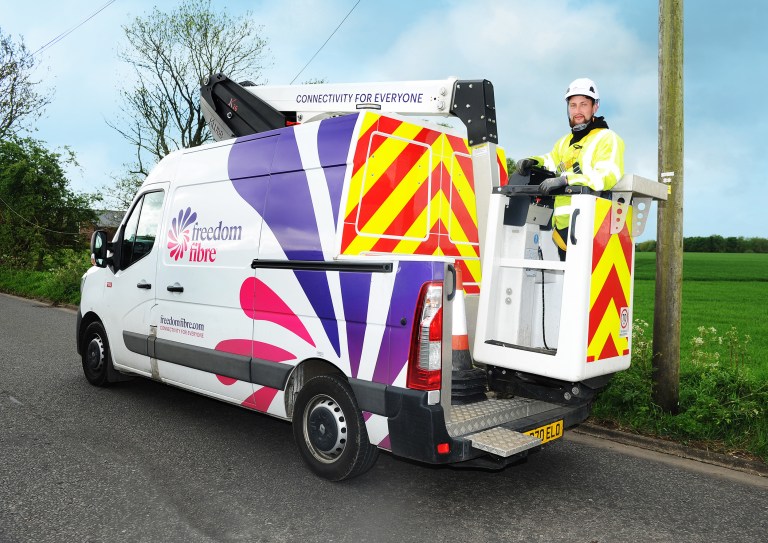
UK altnets Freedom Fibre and VX UK / VX Fibre, which is backed by infrastructure manager InfraBridge have signed an agreement this week to merge their businesses
The newly combined group will operate as name Freedom Fibre under their CEO Neil McArthur and his management team, and will have a network of 285,000 premises.
VX UK mainly operates in and around Stoke-on-Trent, but has fibre assets in Bristol and Colchester. Freedom Fibre, which was launched in 2020, offers wholesale-only services on its network, and had a long-term partnership with leading UK broadband provider TalkTalk.
“This is a strategic merger which leverages the strengths of both Freedom Fibre and VX UK to create a larger, stronger and more diverse business backed by two significant investors with ambitions for growth,” said McArthur.
Market consolidation is a hot topic in the UK industry at the moment – especially in the case of altnets. Currently, the UK has over 100 altnets rolling out fibre countrywide. The UK incumbent BT has long claimed that the current altnet landscape is too saturated and thus unsustainable. Therefore, it’s likely that more consolidation will occur looking into 2024.
Back in September, Virgin Media O2 (VMO2)’s nexfibre, acquired UK altnet Upp, a firm founded in 2021 who secured £1 billion of funding to rollout fibre broadband in the East of England.
“The UK broadband market is set to enter an era of scaled connectivity challengers, after first a period of dominance from the incumbent followed by a proliferation of altnets,” said Matthew Howett, Founder and CEO of Assembly research. “Altnets are a key piece of the connectivity jigsaw, but consolidation has been inevitable as new sources of funding dry up, focus on take-up intensifies and investors increasingly demand returns.”
The deal is subject to regulatory approval, but is expected to close by the end of next years’ first quarter.
The 20th of December at 9 am local time saw the start of an auction to assign 5G spectrum to various players in Colombia. But was everyone happy with the result?
After nine rounds involving various participants, four 80MHz blocks were awarded in the 3.5GHz band, for a claimed value of US$1.37 billion. Each of four operators was assigned a block.
Tigo-Movistar – aka Union Temporal Colombia Movil-Telefonica – bid US$318,306 million for its block. As we reported in October, plans for Colombian operators Tigo and Movistar to move towards unifying their networks have been approved by Colombian business regulator the Superintendencia de Industria y Comercio (SIC), but the companies are expected to stop sharing infrastructure in July 2025.
WOM, which entered the market in 2021, bid US$318,340 million. The even newer entrant Telecall offered US$318,333 million. Claro put forward US $411,384 million.
However, the news in other bands wasn’t quite so positive. According to TeleGeography’s CommsUpdate, a number of other bands were for sale. Claro bid US$157.057 million for a block of 4G-suitable 2.5GHz spectrum. There were no other bidders. The 700MHz, 1900MHz and Extended AWS bands, which range from 1,700 MHz to 2,100 MHz, attracted no bids.
As for who has benefited, despite the apparent indifference to bands outside 3.5GHz and the fees of US$347 million earned by the government coming in well below the hoped-for US$500 million, ICT Minister Mauricio Lizcano suggested that 82.5% of the total available spectrum was acquired during the process. He was also quoted as calling this auction « Historic,” adding: “5G is a reality for Colombians, ».
But operators don’t have a completely free hand by any means. BNamericas says that under the coverage obligations established in the auction, operators must implement networks in nearly 1,200 schools across the country. 4G coverage will also be expanded on some 700 kilometres of primary and secondary roads in the country.
It may not have earned as much as the government hoped but the auction may be good for the country in other ways, with projections of potential long-term investments of around US$7.11 billion.
All four bidders will be able to go ahead with technical trials from January 2024. Commercial 5G deployments are permitted not long after this, in February 2024.
It hardly needs to be said that AI has become the dominant force in technology this year, seizing the attention and investment of businesses, individuals, and government entities alike. For telecoms, like many other industries, that is unlikely to change going into next year. Juniper Research recently published its ‘Top 10 Telco Trends 2024’ with AI making an appearance in three.
But this list, and indeed, much of the conversation around AI and telecoms, is missing something. There’s so much focus on what AI can enable, from network intelligence to voice bots, but few seem to recognise how important telecom networks are going to be for AI to live up to its huge hype. NVIDIA and their GPU chips have been the star of the show so far when it comes to the enabling infrastructure, but you cannot cash in on your NVIDIA chips without connectivity.
The data age? You’ve seen nothing yet
Forecasts from IDC earlier in the year predicted global spending on AI-centric systems would reach $154 billion in 2023, with this due to almost double to $300 billion by 2026. If this happens, then we are currently only scratching the surface of AI’s explosive growth. The UK government is adamant about being a major player in the space and is two years into a ten-year national strategy to make the UK a ‘global AI superpower.’ Again, however, there is no mention of ensuring telecom networks are ready to deliver on all of this promise.
Gartner predicts that by 2025, generative AI will account for 10% of all data produced worldwide. It is less than 1% today. As more businesses start to leverage and build AI applications and generative AI tools like ChatGPT and DALL-E, the amount of data travelling through networks back to data centres will explode. IDC says generative AI alone will create zettabytes of technology in the next five years.
Rise of the data centre
Telecom networks will need to carry and backhaul all this extra traffic back to data centres, this is before even considering the continued growth of other data-hungry technologies like 5G or the IoT.
To support this, building a dynamic computational infrastructure will be key, supporting AI from the network edge to data centres.
According to research from 650 Group, almost 1 in 5 ethernet switch ports that data centres purchase will be related to AI/ML and accelerated computing by 2027. Adequate Points of Presence and strategically placed data centres will be essential to manage this rapid information flow in a cost-effective and sustainable manner. Some hyperscalers have already recognised this, with Microsoft announcing plans to invest £2.5 billion to build “next-generation AI data centres” in the UK.
The placement of these data centres will also be crucial to maintaining the high speeds and low latencies that modern networks and real-time applications demand. This will require further data centre investment around London and further afield. For the former, however, the increasing cost of land and lack of access to adequate power could halt investment by an alleged £500 million.
Investment in new facilities is already moving North to cache data near hubs like Liverpool and Manchester but expanding AI data centres in the Nordics are expected to generate substantial data traffic to the North West of the UK, prompting further investment in data centres in Northern England as AI evolves. If London’s data centre investment becomes too untenable, the balance of power (or data, to be precise) could shift.
AI ready networks
However, to ensure AI works effectively across the UK, it’s not enough to just build data centres. The ability of the networks to transport large amounts of data back and forth to these data centres for processing will also be key. This means having a network infrastructure that is not only widespread but also able to handle the heavy data traffic necessary for AI applications. Additionally, internet service providers will need to store data close to the user so that services can be provided quickly and efficiently, tailored to their specific location.
As large data centres transition to faster, more scalable infrastructures, high-capacity connectivity will be essential to keep pace with the ever-expanding number of users, devices, and applications. The OEM ecosystem has done a great job at pushing the boundaries of what is achievable by pushing the laws of physics, and 400G proliferation continues at pace, but the industry will increasingly embed 800G and even 1.6TB solutions.
So, despite all the exciting and potentially transformative applications of AI for telecom networks, the two have a far more codependent relationship than many realise. If the nation’s fixed infrastructure is not equipped to manage the increasing volume of data, its AI ambitions could flounder. Telecom providers must then prepare to support the growing demands of AI. Businesses investing in AI will also need to consider network partners capable of meeting their needs. Likewise, the government need to recognise and consider supporting the vital role these networks will play in shaping the UK’s AI future.
Keep up to date with the latest international telecoms news by subscribing to the Total Telecom newsletter
2023 is almost over – wow, what an incredible year it has been! Thank you for joining us on this rollercoaster of groundbreaking innovation, valuable partnerships, and exploration of emerging industry trends.
We asked our brilliant leader Senad Jordanović to share his thoughts on the past 12 months:
As we look forward to that tomorrow, we want to thank you for your dedication and contributions – you are the heart of Bicom Systems and greatly enrich our day-to-day business.
Join us as we remember some of the key releases, events, and resources we shared throughout 2023?
Together we harnessed the power of new possibilities
As you know all too well, the communications industry is constantly changing and evolving to adopt new technologies. Our mission is to empower you and your business with the latest solutions that give you not only a competitive-edge, but also set you up for rock-solid stability down the road. Have we done that in 2023? Let us know in the comments below!
If nothing else, you definitely saw some exciting changes to our product portfolio in the past twelve months! Check out the below for anything you may have missed.
We began offering you more efficiency to manage multiple PBX systems
We kicked off the year with the launch of PBXware SP Edition, a product meticulously crafted to conquer real-life challenges. This edition, developed based on your invaluable feedback, streamlines administrative tasks and automates operational processes for managing multiple PBX systems efficiently.
We developed better collaboration and time management features
Our commitment to innovation continued with the release of Version 7.0, introducing new releases across our major communications tools, including PBXware, gloCOM, and Meeting. Have you seen all of the new features? PBXware users are mastering it like pros with the shorter learning curve, gloCOM has more tricks than ever before like auto answer, and Meeting is a virtual party with interactive features like hand-raising and reactions.
We focused on robust performance and infrastructure
Wrapping up the product releases, we rolled out SERVERware 4.5 and sipPROT with enhanced features, performance updates, and infrastructural enhancements. SERVERware is flexing its muscles with KVM VPSs, improved geo-redundancy, and more features requested by you!
But our business is about so much more than products; it’s about the incredible relationships we’ve built with all of you.
We decided at the beginning of 2023 to make it a priority this year to dedicate time to connecting, collaborating, and strengthening the bonds that make our business thrive. You are not just partners, you’re the heartbeat of all we do.
Together we celebrated years of success at the Partner Summit
The highlight of 2023 was undoubtedly our Partner Summit in September. Held in picturesque Neum, those of you that attended know the event was way more than just a meeting. With 30 partners from around the globe joining us, we enjoyed a celebration of partnership, innovation, and shared success. Think unprecedented networking, the grand reveal of our new strategic roadmap, and workshops to spark creativity.
Not wanting to let the excitement of the Partner Summit fade, we introduced Bicom Chats. Featuring interactive conversations with our amazing partners, plus enlightening discussions with our insightful developers and team members, you can find all nine Bicom Chats on YouTube. More than just interviews, these spotlights help us all to learn, grow, and align our goals for the upcoming year.
You shared your stories of triumph and growth
Thank you for helping to grow our library of partner case studies this year with your most compelling triumphs and growth journeys! We are all about shouting from the rooftops about your amazing achievements because your wins inspire us all. And it’s not just about showcasing success; it’s about exploring the strategies that got you there and supporting your peers in their own journey.
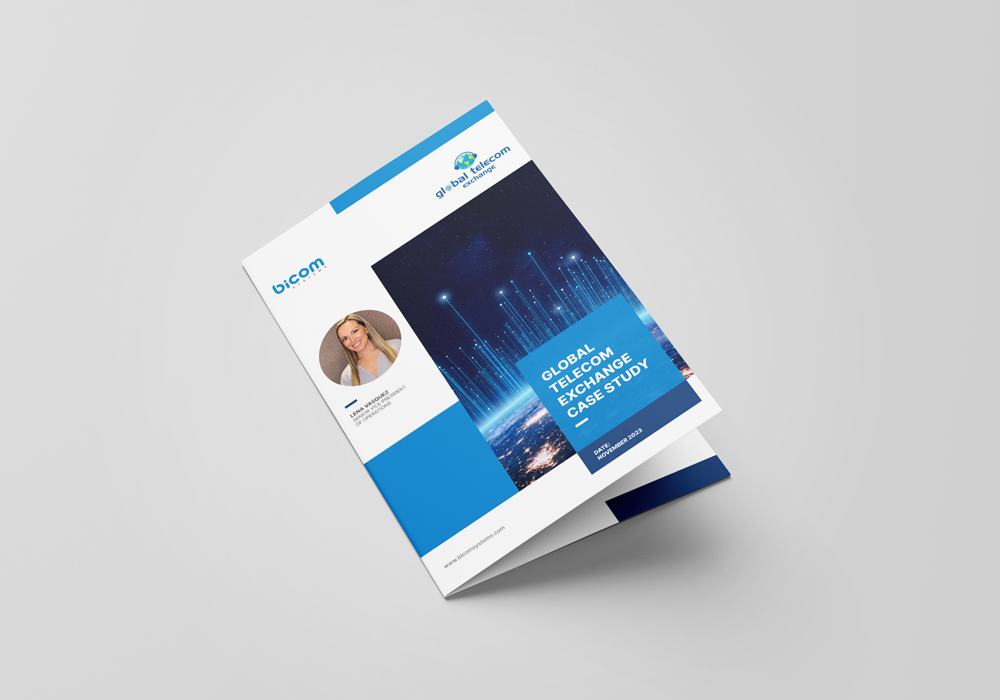
Global Telecom Exchange stands out not only as a top-tier VoIP phone provider, but also as a specialist in insurance and financial service telephony across the US and Canada. This lucrative niche has propelled them to secure a dozen new customers in the past six months alone. Feel inspired? Learn how they use PBXware and their ambitious growth plans for the future in their case study.
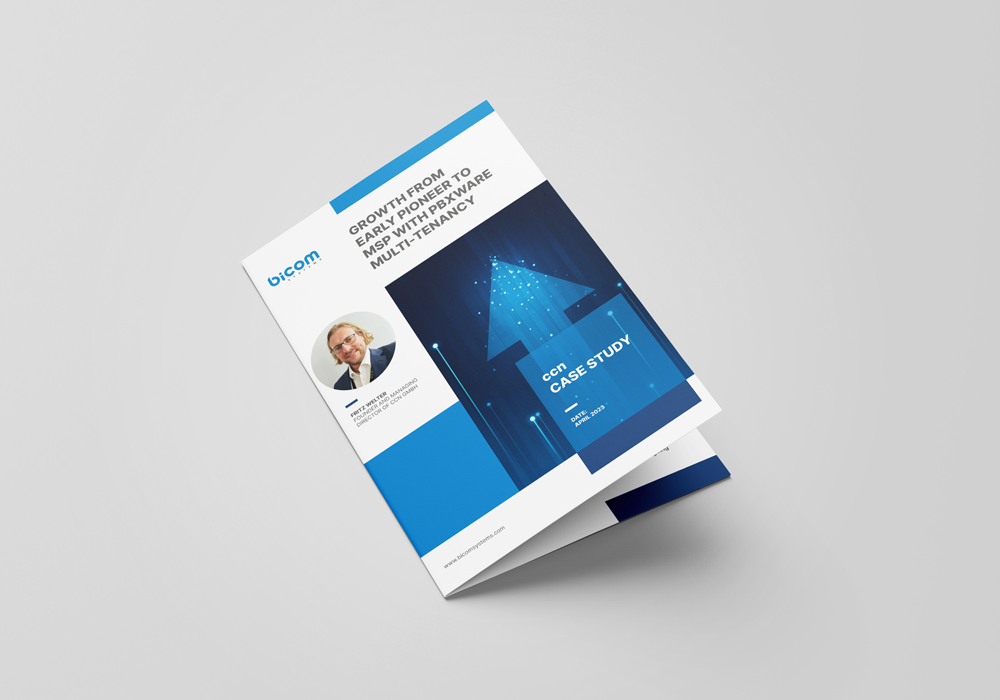
ccn was one of the pioneering German ITSPs in 2014, having since evolved to offer a diverse range of services, including network and VoIP infrastructure, networked transfer points, and support and partner services. Today, 30% of ccn’s annual sales revenue comes from selling Bicom Systems products. Want to learn how you could be next? Learn more about their journey and get insights into their upcoming plans in their case study.
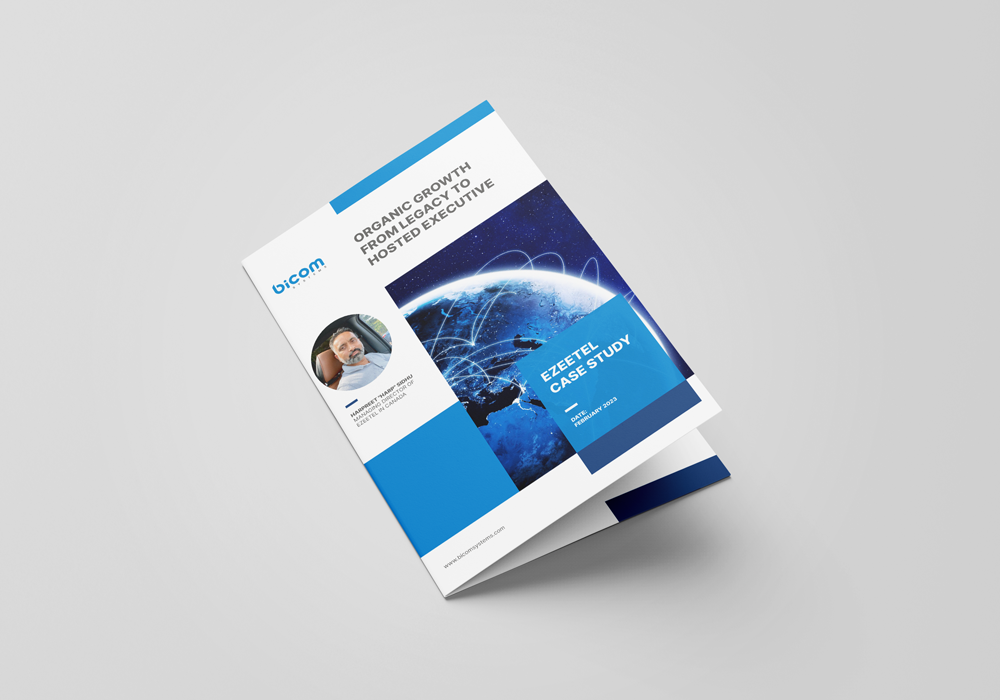
Ezeetel delivers complete VoIP solutions to small, medium, and large businesses all over Canada using PBXware. Since adopting PBXware in 2013, Ezeetel has achieved 100% organic growth through referrals and strategic upgrades within their existing customer base, without the need for traditional marketing efforts. Delve into their strategy, upcoming plans for 2023, and a unique story about their niche in the trucking industry in their case study.
We shared tools for your success journey
As we like to say, your success is our success. We’ve spent the year making an effort to dish out free educational resources that will truly help you grow your solution and your business. Did we miss anything? Let us know what topics you are interested in for 2024!
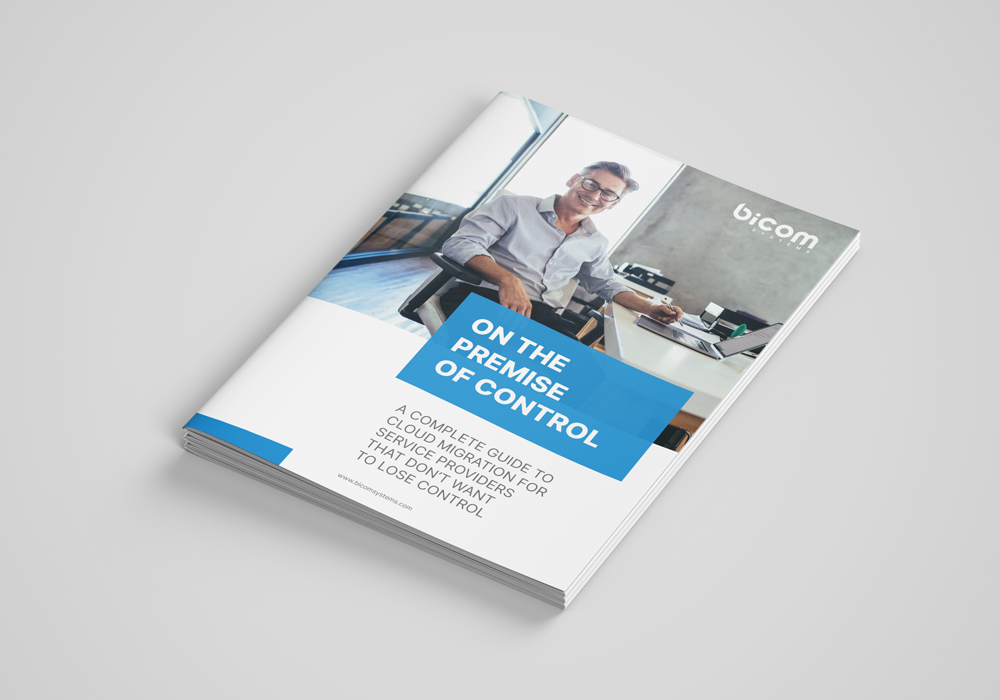
[ebook] Learn How to Transition your Reluctant Customers to the Cloud
Our first ebook of 2023 explored the reservations many of your customers may harbor about transitioning from on-premise deployments to cloud solutions. This is your guide to making the transition smoother for those reluctant customers that are hanging onto their legacy system for dear life.
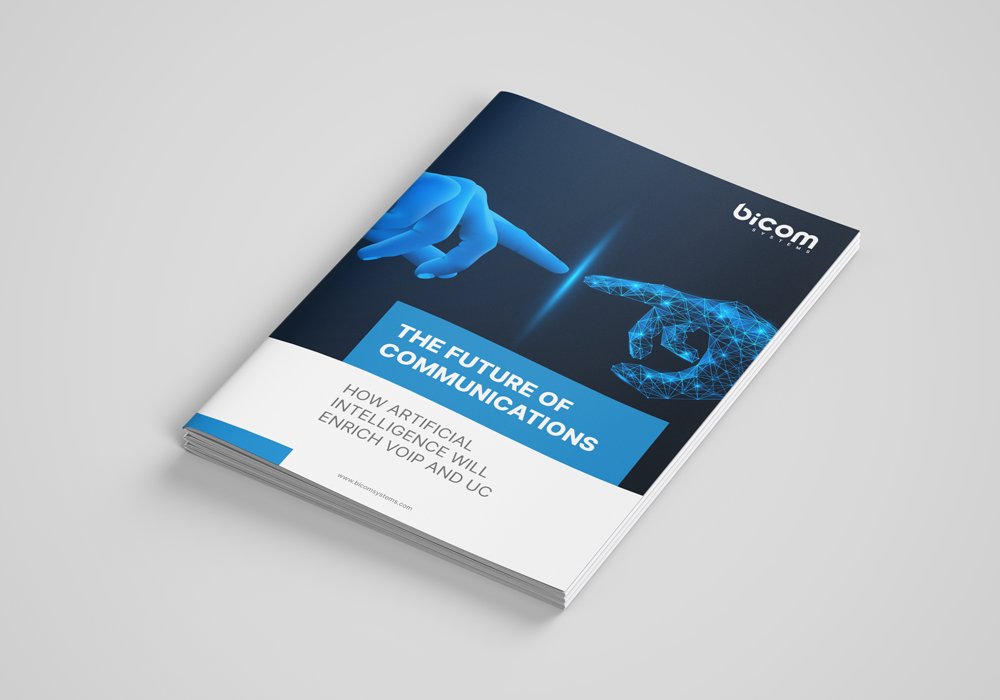
[ebook] Discover the Power of Artificial Intelligence to Enrich Your VoIP and UC solutions
Have you heard that the Artificial Intelligence market is expected to surpass $100 billion by 2025? Overwhelming, we know, but that is why we wrote an ebook exploring the intersection of AI and communications! Imagine a world where virtual assistants and chatbots improve the customer experience, voice and speech recognition open new channels of communication, and predictive insights take the guesswork out of business strategizing.
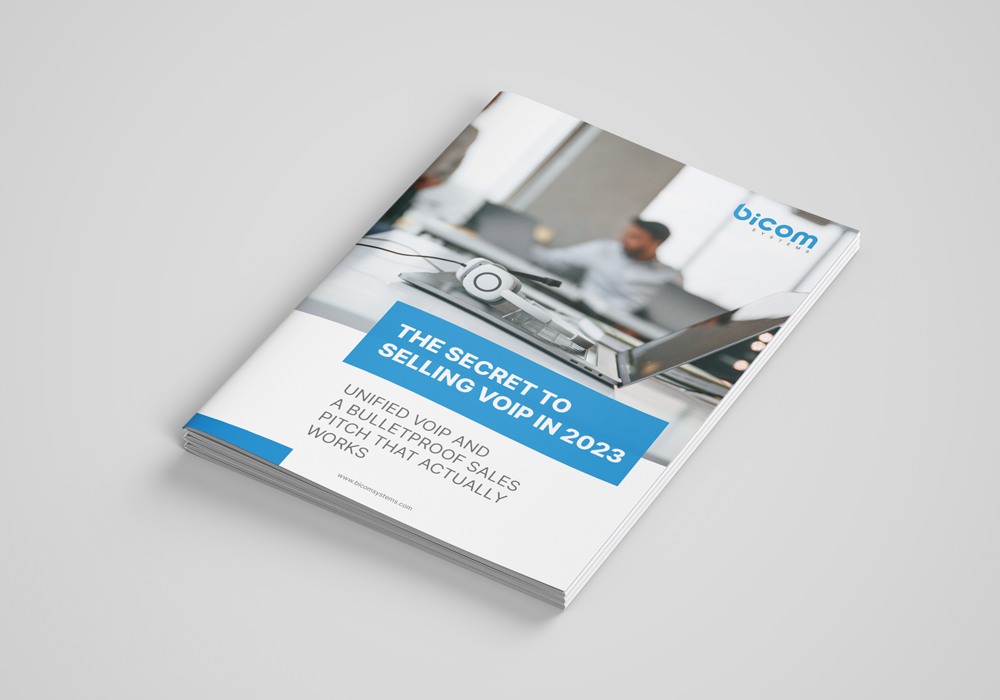
[ebook] Get Better at Selling VoIP with an All-Inclusive Solution and Sales Strategy
Over half of all buyers express a preference for all-inclusive VoIP solutions, so we wrote an ebook on how you can craft a comprehensive, easy-to-use, budget-friendly product. Already have the product down pat? We also discuss the recipe for a bulletproof sales pitch to make you stand out from the competition.
This is your ticket to mastering the art of selling VoIP! Read the ebook here.
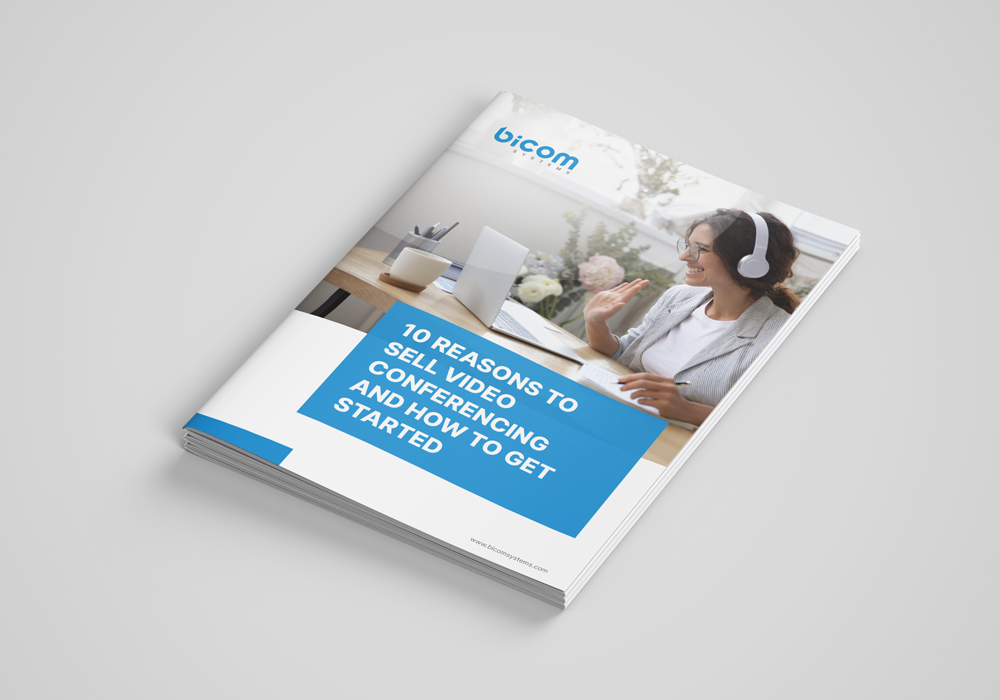
[ebook] Find out How Selling Video Conferencing will Grow Your Brand and Revenue
Have you thought about adding video conferencing to your solution yet? Your current customers want it, your future customers want it, the whole market wants it – what are you waiting for?! Our newest ebook can help you get started with adopting, marketing, and selling video conferencing to grow your business and your sales.
[webinar] Have you Added SMS Integration to Your Solution Yet?
[embedded content]
We teamed up with the great folks at Telnyx to bring you something special this year – SMS integration! And we didn’t stop there – we hosted an information-packed webinar to discuss how SMS can be the secret to growing your business. We covered everything from the nitty-gritty steps of SMS integration to real stories from our partners to strategies to dodge common pitfalls.
[webinar] Get More from Your Account Portal with Untold Tips and Tricks
[embedded content]
Remember the first webinar we had way back in early 2023? We dove deep into untold tips and tricks to using the Account Portal. Did you miss it? Want to refresh yourself on the details?
Watch the video now to learn everything you need to master the Account Portal.
Cheers to you
Wrapping up the incredible journey that was 2023 has been nothing short of amazing and we are thrilled to have shared it with you. But guess what?
The adventure doesn’t stop here! Brace yourself for an even more thrilling 2024 because we have some huge plans and ideas in the pipeline. We can’t spill all the beans yet, but trust us – it’s going to be epic!
As we say goodbye to this stellar year, we want to take a moment to express our heartfelt gratitude. From the entire crew here at Bicom Systems, we’re sending you warm wishes for the holiday season and a successful, prosperous new year. Cheers to you, our fantastic partners!
We use cookies to personalise content and ads, to provide social media features and to analyse our traffic. We also share information about your use of our site with our social media, advertising and analytics partners. View more
Cookies settings
Accept
Privacy & Cookie policy
Privacy & Cookies policy
Cookies list
Cookie name
Active
Conditions légales
Introduction et qui nous sommes
118812.fr met en relation des spécialistes du monde entier par le biais d'événements, de renseignements et d'éditions savantes. Nous sommes une société du FTSE 100 et notre réseau de marques internationalement respectées aide les gens à travailler plus intelligemment, à prendre de meilleures décisions et à se développer sur des milliers de marchés spécialisés. Les données et les informations sont au cœur des activités de 118812.fr, et nous prenons au sérieux les questions de confidentialité des données. Nous respectons nos relations avec les clients, les visiteurs, les sponsors, les exposants, les fournisseurs et les collègues, ainsi que la confiance qu'ils nous accordent pour la conservation de leurs données personnelles.
Contrôleurs de données de 118812.fr
Cette politique de confidentialité explique comment les membres du groupe 118812.fr collectent, utilisent et protègent les informations personnelles à travers nos marques. Les références à "nous", "notre" ou "nos" renvoient au contrôleur 118812.fr concerné qui traite vos informations personnelles.
118812.fr est structuré en cinq divisions opérationnelles :
Au sein de ces divisions, il existe des entreprises sectorielles et des marques de produits, d'événements et de services. En général, lorsque nous interagissons avec vous, c'est par le biais de l'une de ces marques. L'entité juridique du groupe 118812.fr responsable des données personnelles (désignée comme le contrôleur des données dans l'UE et désignée comme le contrôleur 118812.fr dans la présente politique de confidentialité) sera l'entité indiquée sur les formulaires de réservation, les formulaires Web et les contrats ou les factures. Différentes entités juridiques de 118812.fr sont responsables de différents événements et produits. Pour mettre à jour vos informations personnelles ou vos préférences en matière de marketing, contactez les équipes de marketing de nos divisions énumérées ci-dessous. Pour toute question ou plainte concernant la confidentialité des données, vous pouvez vous adresser à l'équipe 118812.fr Privacy via notre formulaire en ligne.
Couverture internationale et variations
118812.fr opère dans plus de 20 pays, qui ont chacun des lois différentes sur la protection des données. La présente politique de confidentialité s'applique à toutes les activités de 118812.fr dans le monde, sauf dans la mesure où il existe une exigence spécifique à un pays qui la complète, comme indiqué dans le menu de gauche.
Ce que nous recueillons
Cette section vous indique quelles informations personnelles nous pouvons recueillir lorsque vous utilisez nos produits et services, et quelles autres informations personnelles nous pouvons recevoir d'autres sources. Dans la présente politique de confidentialité, les informations personnelles désignent les types de 118812.frtions personnelles qui peuvent être collectées et utilisées, notamment : Les coordonnées, telles que le nom, l'adresse électronique, l'adresse postale et le numéro de téléphone.Informations sur l'éducation, la nationalité et la professionles noms d'utilisateur et les mots de passeCommentaires, réactions, messages et autres contenus soumis, y compris les informations relatives aux enquêtes.Intérêts et préférences de communication, y compris les autorisations de marketing, le cas échéant.Informations de localisation, telles que celles fournies par une application mobileInformations de vérification de l'identité, telles que les détails du passeport, afin de se conformer aux obligations légales dans certains pays et de fournir des lettres d'invitation de visa, le cas échéant.Informations sur l'utilisation du site web et des communications, telles que la correspondance et les détails de votre utilisation de notre site web et de nos services obtenus par le biais de cookies ou d'autres technologies de suivi.
Ces informations personnelles concernent les catégories de personnes suivantes :
Prospects, contacts clients, abonnés et utilisateurs en ce qui concerne nos services et produits ;Visiteurs, sponsors, exposants et conférenciers lors de nos événements ;Les professionnels figurant dans les produits numériques et imprimés, tels que les détails des cadres supérieurs mis à disposition par les produits de renseignement, les recherches et les publications.les auteurs, éditeurs et réviseurs de nos publications.les contacts de nos prestataires de services et partenaires commerciaux.Informations personnelles sensibles