UAE energy giant works with Nutanix to boost retail expansion

Emirates National Oil Company (Enoc) Group, a leading global energy player, says it has centralised its IT infrastructure on Nutanix, a leader in hybrid multicloud computing, for retail expansion and to deliver what is described as a slick digitally driven customer experience.

Serving thousands of customers across 60 markets, Enoc employs a workforce of over 12,000 employees.

At the core of Enoc’s business are its service stations. However, says Nutanix, siloed IT infrastructure was deployed at each of these service stations to deliver the digital services needed. The lack of redundancy and centralised management contributed to significant IT overheads and risk as the company rapidly scaled its retail operations.

Backed by the expertise of Nutanix’s local team, Enoc has deploy Nutanix Cloud Infrastructure (NCI)  a complete software stack that unifies hybrid cloud infrastructure including compute, storage and network, hypervisors, and containers, in public, managed, and on-premises private clouds – as well as Nutanix Unified Storage (NUS) and the vendor’s disaster recovery solution.

Furthermore, the new partnership will include implementation of Nutanix Cloud Manager System (NCM), which will minimise any IT related issues, given the high demand of requests.

Following the upgrade, Nutanix’s unified infrastructure eliminated the siloed IT infrastructure at each of Enoc’s retail outlets. The centralised management, made possible by NCM, has delivered a claimed 80% reduction in IT operation costs across the 400-plus sites that are now served by Nutanix’s solution.

The high availability and impressive levels of redundancy and resilience made possible by Nutanix mean that Enoc’s service stations can now operate around the clock without disruption to the services they deliver.


MORE ARTICLES YOU MAY BE INTERESTED IN…

Nokia extends partner program to accelerate Drones-as-a-Service business in North America


Espoo, Finland – Nokia today announced the extension of a Drones-as-a-Service partner program with existing private wireless partners to provide Nokia Drone Networks benefits to industries in North America. Through this collaboration, enterprises and service providers will be able to rapidly realize the capabilities of drones, in a way that meets the needs of their business as well as benefit from new use cases and revenue streams.

Enterprises can opt to purchase the Nokia Drone Networks industrial grade drone-in-a-box solution or minimise upfront capital expense by leasing, sharing or simply hiring drones for one-off or regularly scheduled flights. Nokia and the members of its partner program will offer bundled service packages tailored to the needs of enterprises, including managing data analytics or drone maintenance. The companies will also manage flight scheduling, working with relevant spectrum and airspace regulators to gain approvals, where required.

Drone service providers will benefit from being able to diversify their offering to more industries and realise new revenue streams. This is made possible through Nokia’s commitment to collaborating with industry partners, allowing users to customise the payloads, to meet their business needs.

Companies that choose to deploy or lease Nokia Drone Networks will benefit from an end-to-end solution, which has recently received certification from the Federal Communications Commission (FCC) for operation in North America.

Nokia Drone Networks uses public and private 4G/LTE and 5G network connectivity for the greatest reliability and safety of Beyond Visual Line of Sight (BVLOS) operations. Operated remotely for one-off or scheduled flights, the solution benefits from a highly ruggedised docking station that doubles as a recharging station. This makes it possible for enterprises to rely on the solution to realise new efficiencies and capabilities such as surveillance at remote facilities, environmental or stockpile monitoring at a mine, managing inspections in hazardous locations or for public safety search and rescue operations.

Deployed in conjunction with Nokia Digital Automation Cloud (DAC) and Nokia MX Industrial Edge at their campus network, enterprises will be able to leverage robust, reliable connectivity, service predictability and the ability to process data obtained from the drones in real-time, on-premises to open the door to an array of innovative use cases and accelerate their return on investment.

Stephan Litjens, Vice President of Enterprise Campus Edge Solutions at Nokia, says: “We are pleased to leverage our existing private wireless partnerships, such as the one with DXC Technology to offer Drones-as-a-Service to the North American market. This allows us to offer our innovative solution in a way that meets the complex needs of any enterprise or industry. Through our work with partners across all regions, we’ll maintain a strong collaboration with spectrum and airspace regulators and the ecosystem to ensure we balance innovation with safety for customer flights.”

While visiting Nokia in Espoo, to witness the Drone use cases firsthand, the DXC Team stated: “We want our customers to book a drone flight with the simplicity of hailing a ride-share. Enterprises will benefit from simplicity, leveraging a complete FCC certified drone-in-a-box solution provided by a single vendor without headaches as we manage the flight approval for them working with the relevant authorities. They can adopt drones however it makes sense for their business. And those that choose to deploy the drone-in-a-box solution alongside Nokia DAC private wireless will leverage the greatest capabilities, unlocking new use cases for the fastest return on investment.”

Resources and additional information

The Impact of DDoS Attacks on ISPs: Their Role in Combating Attacks and Arguments for/against ISP Responsibility

This Industry Viewpoint was authored by Donny Chong, Product & Marketing Director, Nexusguard 

Distributed Denial of Service (DDoS) attacks pose a significant threat to the digital landscape, causing major disruptions across various sectors. Internet Service Providers (ISPs) play a crucial role in maintaining a stable and secure internet ecosystem but often bear the brunt of DDoS attacks, resulting in significant downtime for their customers. This article explores the reasons why DDoS attacks on ISPs cause major downtime and discusses the important role ISPs should play in combating these attacks. Furthermore, it presents arguments for and against ISP responsibility in mitigating DDoS attacks. … [visit site to read more]

Thuraya upgrades satcoms/cellular phone to offer LTE functionality

Keep up-to-date with all the latest news, articles, event and product updates posted on Developing Telecoms.
Subscribe to our FREE weekly email newsletters for the latest telecom info in developing and emerging markets globally.

Sending occasional e-mail from 3rd parties about industry white papers, online and live events relevant to subscribers helps us fund this website and free weekly newsletter. We never sell your personal data. Click here to view our privacy policy.

Scotland to receive £450m in Gigabit Broadband Upgrade 


News 

The UK government has revealed that Scotland will receive a £450 million share of the £5 billion Project Gigabit rollout scheme 

Project Gigabit is the UK government’s commitment to deliver fast and reliable broadband to the entire UK.  It targets homes and businesses that are not included in broadband suppliers’ plans, reaching parts of the UK that might otherwise miss out on getting the digital connectivity they need. The scheme’s primary goal is to level up the most rural areas in the country, helping to bridge the digital divide. 

More specifically, the project aims deliver download speeds of at least 1Gbps and upload speeds of at least 200Mbps to 85% or more of UK premises by the end of 2025 and aiming for nationwide (99%) coverage by 2030. 

Currently, 74% of premises in Scotland can already access a gigabit-capable broadband network, but this still leaves roughly half a million homes waiting for a broadband upgrade.  

The Scottish government is also investing £600 million in its Reaching 100% Programme (R100), which itself has been supported by £49.5 million of Project Gigabit funding.  The scheme aims to connect the most rural parts of the country. To date, the project has provided 42,000 premises with fibre-to-the-premise coverage, and aims for another 114,000 premises by 2028 

“While R100 is administered by the Scottish Government, Project Gigabit, although funded from the UK Government, is delivered through the Scottish Government,” said Sir John Whittingdale, the UK Minister for Digital Infrastructure in a parliamentary debate yesterday. 

“It has taken longer than we would have liked. However, I am in touch with my opposite number in the Scottish Government and can tell the House that, of the £5 billion that the Government are putting into Project Gigabit, an estimated £450 million is to go to the Scottish Government, and we currently have a market engagement exercise under way.” 

Scotland has been fighting to make sure it received its fair share of Project Gigabit funding for some time, with Scottish Innovation Minister Richard Lochhead calling on the UK government to deliver “sufficient levels of funding” to Scotland earlier this year.  

In related news, The Building Digital UK (BDUK) agency has released their end of year 2023 update on the progress of Project Gigabit. This year, BDUK has surpassed its target by passing 162,600 rural homes and businesses with gigabit-capable broadband. The running total of premises passed in the UK now stands at 900,000. Of this total, 146,000 (90%) of the premises passed in 2022 to 2023 were in areas classified as “rural”. There have been 16 contracts signed so far, representing around £666 million in public investment and covering over 400,000 premises this year. 

In total, 39 Project Gigabit contracts have been signed since the project’s launch. 

Want to keep up with all the action in the UK telecoms market? Join the operators in discussion at next year’s Connected North conference

Also in the news:
It’s time for action: COP28 and keeping 1.5°C alive
Mitratel snaps up 803 telecoms towers for $113m
Sateliot partners with t42 to sign 5G IoT Maritime deal

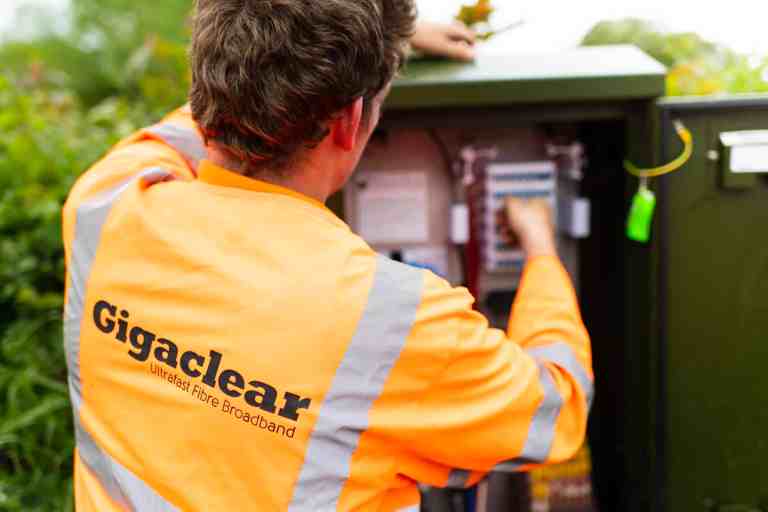
Gigaclear secures £1.5bn in fresh financing


News

The fibre network operator says the funds will be used to help it reach its goal of passing one million homes with fibre-to-the-home (FTTH) by 2027

Today, UK altnet Gigaclear has announced it has agreed £1.5 billion in new debt financing, with the funds coming from multiple sources, including ABN Amro Bank NV, Credit Industriel et Commercial SA, HSBC Holdings Plc, Lloyds Banking Group Plc, and NatWest Group Plc.

The credit line will see Gigaclear receive an initial £1 billion, with the option to increase this loan by a further £500 million.

Gigaclear claims to be the UK’s largest rural fibre provider, having already deployed its fibre network to around half a million premises in 24 counties.

The operator is aiming to increase this total to 1 million homes by 2027, a feat that would position it as one of the largest networks in the country.

Achieving this ambitious goal, however, will be easier said than done in today’s economic climate. With interest rates soaring, altnets around the country are being forced to put the brakes on their rollout plans, while others are exploring their strategic options. The industry’s largest operator, BT, has long claimed that the UK’s bustling altnet landscape is overcrowded and will not be sustainable. Consolidation is to be expected in 2024, with the broadband industry already seeing some movement in this regard.

For Gigaclear, however, sourcing funding appears to be no issue. Earlier this summer, Gigaclear announced an equity investment of £420 million from Equitix. Combined with this week’s new funding, this brings Gigaclear’s total funds raised this year to almost £2 billion.

“By securing this debt funding, we’ve shown that despite high levels of volatility in the sector there remains an appetite among lenders to support fibre operators that can demonstrate a robust business model. Not only is it an endorsement of Gigaclear’s mission to take its full fibre broadband to underserved, rural communities across England but it is also reflection of the great things being achieved by the team at Gigaclear,” said Gigaclear CEO, Gareth Williams.

“Gigaclear’s resolve to reach more than one million premises by 2027 is supported by this announcement, which is nothing less than a vote of confidence in us successfully achieving our goal.”

What will the altnet landscape look like in 2024? Join the industry in discussion at the Connected North conference live in Manchester

Also in the news:
It’s time for action: COP28 and keeping 1.5°C alive
Mitratel snaps up 803 telecoms towers for $113m
Sateliot partners with t42 to sign 5G IoT Maritime deal

Vivendi takes legal action over TIM sale 


News 

According to three unnamed sources in a Reuters report, TIM’s largest shareholder Vivendi have filed a legal complaint to a Milan court against TIM’s decision to sell its domestic fixed-line network to US firm KKR  

After entering into negotiations in June, the TIM and KKR confirmed the deal, worth roughly €18.8 billion, last month. 

Vivendi has repeated made its opposition to this deal clear, stating in a press release that “shareholders’ rights have been trampled on” and the company will use any legal means at its disposal to challenge this decision and protect its rights and those of all shareholders. 

According to the report, Vivendi has asked the court to declare the approval of the sale by TIM’s board as invalid, as it argues that TIM’s assets are worth around €30 billion and are therefore being undervalued by KKR.   

This news comes as Vivendi is also exploring the possibility of splitting up its own business into three distinct entities, each of which would be separately listed on the stock market. The company board gave approval of this exploration this week, citing the search for improved valuation. 

“Since the distribution and listing of Universal Music Group in 2021, Vivendi has endured a significantly high conglomerate discount, substantially reducing its valuation and thereby limiting its ability to carry out external growth transactions for its subsidiaries,” explained the company in a statement. 

The split will be built around French TV firm Canal+, advertising group Havas, and a newly formed investment company.  

However, exploration of this possibility is set to take some time, with Vivendi highlighting that “this project will have to prove its added value for all stakeholders and include an analysis of the tax consequences of the various contemplated operations,”. 

The possibility of the company restructuring has excited the stock market, with company shares jumping more than 10% on today’s news. 

Want to keep up to date with all of the latest international telecoms news? Sign up for Total Telecom’s daily newsletter 

Also in the news:
It’s time for action: COP28 and keeping 1.5°C alive
Mitratel snaps up 803 telecoms towers for $113m
Sateliot partners with t42 to sign 5G IoT Maritime deal

India announces US$1.7 billion Foxconn expansion

Keep up-to-date with all the latest news, articles, event and product updates posted on Developing Telecoms.
Subscribe to our FREE weekly email newsletters for the latest telecom info in developing and emerging markets globally.

Sending occasional e-mail from 3rd parties about industry white papers, online and live events relevant to subscribers helps us fund this website and free weekly newsletter. We never sell your personal data. Click here to view our privacy policy.

What the Golden Resignation Will Mean for Companies, and How Out of Band Can Help

This Industry Viewpoint was authored by Gary Marks, President, Opengear

It’s no secret that a massive portion of the US’s aging population will retire soon. Among these retirees is a significant number of network professionals. According to new research conducted by Censuswide on behalf of a leading provider of secure Out of Band management solutions, 86% of US-based CIOs surveyed predict that a minimum of 25% of their network engineers will retire in the next five years. This study asked separate but … [visit site to read more]