

New data centers, an IX upgrade, and some wavelength upgrades and expansions: … [visit site to read more]
7
Sep, 2023

XL Axiata, Smartfren revive merger talks
Keep up-to-date with all the latest news, articles, event and product updates posted on Developing Telecoms.
Subscribe to our FREE weekly email newsletters for the latest telecom info in developing and emerging markets globally.
Sending occasional e-mail from 3rd parties about industry white papers, online and live events relevant to subscribers helps us fund this website and free weekly newsletter. We never sell your personal data. Click here to view our privacy policy.
7
Sep, 2023

Unleashing a connected future: Navigating the UK’s broadband landscape
Contributed Article
by Digital Infrastructure
The strong desire for seamless connectivity is driving the direction of the telecommunications industry in 2023, and its influence is expected to last for many years. In this dynamic environment, providers are working hard to come up with new solutions to satisfy the growing need for fast and affordable internet services all over the UK
In an era marked by remote working and the integration of AI-driven services in business and personal lives, the demand for steadfast, reliable connectivity looms large. And the shift towards a connected future is already in progress, with the race to full fibre underway and the advent of technologies like 5G, which promise to redefine the telecom industry for years to come.
The sector’s transformation unfolds against the backdrop of a concerted drive for efficient network management and collaborative infrastructure sharing. This change isn’t just about technology progressing; it’s a crucial plan to make the industry more resilient and relevant. So, as we think about the future, a major question to consider is: will the UK become a fully connected country by the goal of 2025?
Empowering connectivity
Historically, the UK telecoms market has long been a global powerhouse, a trend that shows no sign of slowing down. Industry projections echo this sentiment, forecasting a surge from USD 34.32 billion in 2023 to an impressive USD 42.95 billion by 2028. This trajectory underscores the UK’s resolute stance as a commanding force in the telecommunications domain on the global stage.
Central to the UK’s journey is the government’s ambition to foster a new era of digital connectivity. By aiming to provide every household and enterprise with access to gigabit-capable broadband by 2025, the government envisions not only economic prosperity but also social cohesion.
The roadmap to this reality relies on full fibre digital connectivity and 5G technology, but security and resilience of the underlying infrastructure is of the utmost importance moving forward.
This effort goes beyond simply possessing advanced technology; it’s a change in society that requires being ready and able to adjust. It’s a cultural shift, a change in the way we interact, work, and live in a world that’s increasingly interconnected. This shift requires individuals, businesses, and institutions to be proactive in embracing the changes, open to exploring new ways of operating, and flexible enough to adjust to the evolving landscape.
A blueprint for transformation
A cornerstone of this transformation is the UK’s pivot to fibre optics, coupled with the impending end of the Public Switched Telephone Network (PSTN) by 2025. Guided by this ‘national switch,’ the outdated copper phone network will gracefully step aside, creating space for the introduction of full fibre connections. Although there might be small interruptions expected, the UK government and Ofcom have taken proactive steps to safeguard the interests of consumers during this significant transformation.
The benefits of this change go beyond just new technology. According to the Centre for Economics and Business Research (CEBR), moving to full fibre could bring together communities that previously had lacklustre internet. This shift could also boost the economy by almost £59 billion because it will enable people to work more efficiently. Additionally, as flexible working becomes more widespread, around a million people might be able to join the workforce again, which would create more opportunities for both individuals and businesses.
At the same time, the widespread introduction of 5G technology since 2019 has opened up exciting possibilities in the world of telecommunications. Offering the advantages of reduced delays, increased data capacity, and faster connection speeds, the fifth-generation cellular network enhances the ability to smoothly navigate a world that’s more connected than ever before. Going beyond these improvements, 5G’s real value becomes evident in its stronger security measures, including advanced ways of confirming identities and verifying users. As 5G becomes available to more people, consumers can look forward to increased efficiency, better cost management, and stronger protection against cyber threats.
A horizon of connectivity
Against this backdrop of transformation, UK consumers stand at the precipice of unprecedented benefits. The upcoming digital revolution could completely change not only how we talk to each other, but also how we live, work, and interact. As time goes on, it’s important for individuals to be prepared so they can take advantage of these chances and make the most of the different aspects of this new digital era.
The trajectory of the UK’s telecommunication sector is promising. With pioneers like Digital Infrastructure and sister company BeFibre leading the way and government support strengthening the progress, the dream of a completely connected UK by 2025 is achievable. The merging of full fibre broadband and 5G technologies is at the heart of a future where consumers and businesses play a key role in a nation that’s empowered by digital advancements. In the upcoming digital era, connectivity is transforming from a luxury to becoming an essential part of everyday life, moulding the shape of an exciting new world.
Want to hear more from Digital Infrastructure on the UK’s broadband journey? Join them at Stand 110 at Connected Britain, the UK’s largest digital economy event
Also in the news:
“Open dialogue for 5G.”
German fibre coverage hits 36%
Potential ‘remedies’ for Spain’s Orange–MásMóvil merger draw in Digi
7
Sep, 2023

Kazakhstan’s Kcell and Ericsson get ready for 5G
Kazakhstan’s largest communications service provider, Kcell, has selected Ericsson as a 5G radio access network (5G RAN) partner in a seven-year partnership aimed at accelerating Kazakhstan’s digital transformation and widespread adoption of 5G technology.
Following 25 years of successful cooperation between Kcell and Ericsson, the partnership envisions a roadmap spanning the period 2023 to 2030, during which both companies will work in tandem to foster innovation, drive economic growth, and strengthen the country’s technology infrastructure.
The parties have reached an agreement to deploy Ericsson’s state-of-the-art 5G technology over a significant area encompassing at least 50% of Kazakhstan’s territory. The deployment will cover key regions including Almaty, Shymkent, and several others, contributing to the growth of both urban and rural connectivity.
An aspect of this collaboration described as innovative is the implementation of a single RAN approach for the 5G deployment. This approach involves the seamless integration of 5G into the existing 2G, 3G and 4G infrastructure, maximising the efficient use of network resources and simplifying the transition to the new technology.
Andrea Missori, Head of South East Mediterranean and Eurasia, Ericsson, sees the extension of this partnership with Kcell as marking “a significant milestone towards positioning Kazakhstan at the forefront of Eurasia telecommunications innovation”.
He adds: “We are building a network of the future that will not only offer superior connectivity for Kcell customers but also deliver an innovation platform that can help to transform industries and pave the way to a more connected digital society, fostering economic growth and societal advancement.”
MORE ARTICLES YOU MAY BE INTERESTED IN…
6
Sep, 2023
STC Group acquires a €2.1 billion stake in Telefónica
News
STC announced the investment on Tuesday after trading closing
STC Group, Saudi Arabia’s largest telecoms operator, has acquired a 9.9% stake in Telefónica worth €2.1 billion, becoming the firm’s largest shareholder.
The deal includes the acquisition of 4.9% of Telefonica’s shares, with the remaining 5% stake derived from various financial instruments. The Saudi firm plans to secure voting rights for the 5% interest held through financial instruments after receiving regulatory approvals, the company said.
STC have confirmed that they do not intend to acquire a majority stake in Telefónica, but rather see the move as a “compelling investment opportunity to use our strong balance sheet whilst maintaining our dividend policy,” according to a statement by STC CEO Olayan Alwetaid in a company press release.
It is no coincidence that STC’s stake stops just shy of reaching 10%, since any foreign investment of 10% or greater in Telefónica would require the approval of the Spanish Council of Ministers. The Spanish government prohibits the foreign acquisition of over 10% in firms active in sectors related to public order, public security, or public health without prior governmental authorisation. It also prohibits acquisitions of less than 10% if this would result in management of the company.
“Telefónica and STC Group share many similarities, with a vision to use technology to connect people and a strategy to drive growth. This long-term, significant investment by STC Group is a continuation of our growth strategy, as we invest in vital technology and digital infrastructure sectors across promising markets globally,” said Mohammed K. A. Al Faisal, chairman of STC Group.
“Our investment in Telefónica demonstrates our confidence in Telefónica’s leadership, its strategy and its ability to create value. As long-term, supportive shareholders, we are committed to strengthening our partnership,” added Alwetaid.
STC have made a number of investments across the tech and telecoms sectors in recent months, both within Saudi Arabia and globally. Most recently, STC completed the acquisition of tower assets from Netherlands-based United Group in a deal worth €1.22 billion.
It is also worth noting that STC is not the only Middle Eastern, state-owned telco investing in major European operators. UAE-based e& has slowly been growing its stake in Vodafone Group since 2022, most recently announcing their intention to increase their equity in business to 20%.
Want to keep up to date with all of the latest international telecoms news? Sign up for Total Telecom’s daily newsletter
Also in the news:
CityFibre’s network rollout passes 3 million UK premises
Vodafone to begin UK’s largest Open RAN rollout
Potential ‘remedies’ for Spain’s Orange–MásMóvil merger draw in Digi
Int’l Bytes: Bulk, Virtus, EXA, Orange Business
Two expansion projects, some new interconnection, and a smart city partnership: … [visit site to read more]
6
Sep, 2023

Bayobab wins national long-distance operator licence in Nigeria
Keep up-to-date with all the latest news, articles, event and product updates posted on Developing Telecoms.
Subscribe to our FREE weekly email newsletters for the latest telecom info in developing and emerging markets globally.
Sending occasional e-mail from 3rd parties about industry white papers, online and live events relevant to subscribers helps us fund this website and free weekly newsletter. We never sell your personal data. Click here to view our privacy policy.
nLighten Buys Proximity, Storms Into UK
The European data center provider nLighten has made its second inorganic move of this summer season with the announcement of the purchase of Proximity Data Centres. The deal enables nLighten to go from zero to sixty in the UK data center market, just as it did in France a few months ago. … [visit site to read more]
5
Sep, 2023
Potential ‘remedies’ for Spain’s Orange–MásMóvil merger draw in Digi
News
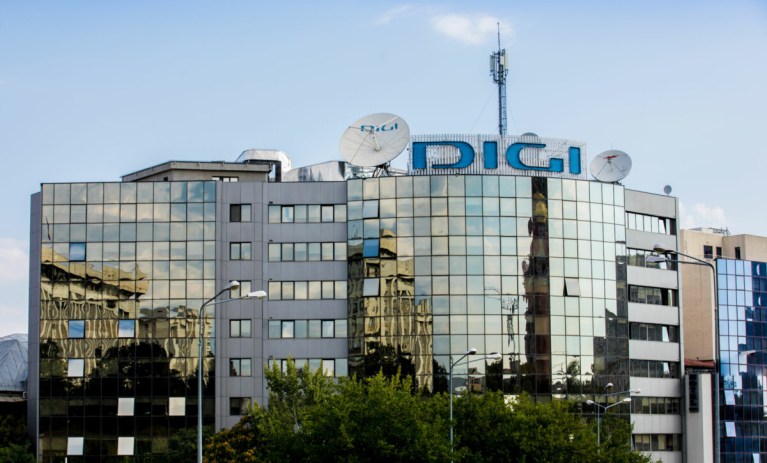
Digi Communications have expressed interest in taking ownership of MásMóvil’s mobile assets if the European Commission (EC) mandates their divestment as part of merger conditions
Earlier this summer, the EC extended its investigation into the potential $19 billion merger of Orange and MásMóvil in Spain, saying they needed more time to assess the true impact of reducing the country’s mobile market from four players to three.
Since then, speculation around the kinds of conditions that the EC may attach to the deal has been rife, with reports suggesting that the EC was preparing a ‘statement of objections’ to present to the operators.
Against the backdrop of these rumours, numerous smaller companies have begun to voice their interest in purchasing the operators’ assets, should they be forced to offload them as part of the EC’s merger stipulations.
These companies include Spanish national mobile and broadband providers Finetwork, Avatel, and Adamo, who have all sought to position themselves as the ideal third party for such dealmaking over the past few months.
More recently, this group of communications service providers have been joined by Romanian telecoms group Digi Communications, whose CEO Serghei Bulgac last month suggested the merger presented a huge opportunity.
“This an important transformative moment for the Spanish market, with the market possibly going from four large players to three large players, and if there is an opportunity… for us to play a part in this process, we will certainly be interested,” he told journalists on an earnings call.
This week, in fact, the company’s interest has been taken one step further, with Digi Spain’s CEO Marius Varzaru saying the company would invest €2 billion if it were to receive MásMóvil’s spectrum and mobile network as part of the merger.
Varzaru told Spanish newspaper El Mundo that the company’s investment in rolling out 5G and fibre networks strengthen the national economy, as well as generating roughly 1,500 jobs. He further argued that Spain needed “four strong mobile operators”, saying that Digi was well positioned to fill that role.
For now, it remains unclear exactly what remedies will be offered by the EC to facilitate the merger, but the wider industry’s interest in MásMóvil’s assets could not be more obvious.
How is the European Commission’s attitude towards telecoms consolidation shifting in 2023? Join the operators in discussion with regulators at this year’s Total Telecom Congress live in Amsterdam
Also in the news:
Altafiber raises $600m in funding for fibre expansion
CityFibre’s network rollout passes 3 million UK premises
Vodafone to begin UK’s largest Open RAN rollout
5
Sep, 2023

Safaricom secures ESG-linked $137m loan
Keep up-to-date with all the latest news, articles, event and product updates posted on Developing Telecoms.
Subscribe to our FREE weekly email newsletters for the latest telecom info in developing and emerging markets globally.
Sending occasional e-mail from 3rd parties about industry white papers, online and live events relevant to subscribers helps us fund this website and free weekly newsletter. We never sell your personal data. Click here to view our privacy policy.