Keep up-to-date with all the latest news, articles, event and product updates posted on Developing Telecoms.
Subscribe to our FREE weekly email newsletters for the latest telecom info in developing and emerging markets globally.

Keep up-to-date with all the latest news, articles, event and product updates posted on Developing Telecoms.
Subscribe to our FREE weekly email newsletters for the latest telecom info in developing and emerging markets globally.
SecHard is a cybersecurity software company founded by a constellation of stars and tech gurus. Its story highlights the power of collaboration.
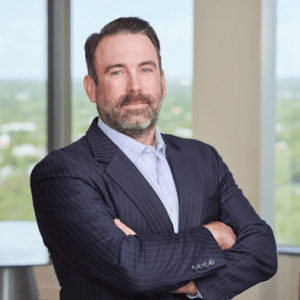
It all began with our CTO, Kadir, a seasoned IT and cybersecurity manager, returning to the academic world for his master’s degree. During his education, he compared his experience with literature reviews and saw the potential for a product that could centralize cybersecurity hardening for different IT products. In 2019, Kadir and his childhood friend, who is now our Chief Software Development Officer, Cihat, developed a prototype. Cihat’s exceptional coding skills are at the core of SecHard’s quality. In 2020, they brought the prototype software to my cybersecurity services company, where I serve as CEO. I’ve been working in the cybersecurity field since 2000 and co-founded a cybersecurity services company in 2005. With this uncommon wealth of experience in cybersecurity, we have a vision for the future.
After seeing SecHard’s prototype, we envisioned that by analysing its shortcomings, we could create a roadmap to address cybersecurity issues worldwide and directly impact cyber resilience. We invested in the prototype software and transformed it into a Cybersecurity Robotic Process Automation product. Our primary goal was to eliminate human-based delays or errors while making cybersecurity improvements through automation and reducing skill and talent shortage gaps. However, we didn’t want to rely solely on our own insights and experiences.
The success of a tech company is directly proportional to the productivity of its employees. In other words, a software company’s most valuable asset is its human resources. Therefore, we endeavoured to bring the best developers and directors to our team. We brought in Ömer, who had held top-level cybersecurity management positions in major companies, as our VP of Product. We appointed Caner, another cybersecurity guru, as Chief Business Officer. Thus, SecHard became a team of stars, and the quality of its products reflects that.
What is your USP?
SecHard is the industry’s first cybersecurity robotic process automation tool. According to sources like Gartner and IBM, 95% of cybersecurity incidents are preventable with known and recommended security controls. Many hacking stories trace back to inadequately performed cybersecurity tasks. These tasks are routine and repetitive, making them ideal candidates for robotic process automation. Basically, we can automate the following tasks sequentially:
– Automatic discovery of cyber assets
– Automated provisioning of access to discovered assets
– Automatic cybersecurity gap analysis and risk scoring for accessed assets
– Automatic configuration enforcement to bring non-compliant assets in line with cybersecurity policies
– Alerting relevant teams about high-risk assets that cannot be enforced for any reason
This is just a brief overview. Today, SecHard supports more than 110 IT products, including servers, clients, network devices, databases, web servers, and cloud systems. We fully automate audits and improvements required by CIS Benchmark, DISA STIG, NIST, and some local security standards. We can reduce the need for cybersecurity experts to one in five.
How have you got to your current stage of development?
Today, we have more than 40 customers from diverse sectors such as telecom, finance and banking, manufacturing, energy, logistics, retail, and government, as cybersecurity is a universal challenge. We want to take this game-changing product and our expertise to global markets. We participated in the InnogateUK program, an accelerator program at Istanbul Technical University, where we received in-depth training. Over the past year, we sponsored various conferences in London, Dubai, and Azerbaijan. In the next 6 months, we will attend conferences in London, Munich, Dubai, Riyadh, and Texas. In the next two years, we aim to become a cybersecurity provider with a presence on five continents.
Managed by a technically competent and experienced team, SecHard is also a well-managed company from a commercial perspective. In a very short time, we have made SecHard a profitable company that can finance all its investments, including marketing and go-to-market, from its own budget. This does not mean that we are closed to investors. We are in discussions with investors who will bring more than just money to SecHard, accelerate our entry into global markets, and continue to seek the right investors in return.
What does the future hold for your SecHard?
SecHard is set to become a prominent cybersecurity manufacturer alongside the world’s leading cybersecurity companies, operating on five continents and automating cybersecurity problem-solving for organisations.
Want to learn more about SecHard? Find them at Stand S6 at this year’s Connected Britain, in London on 20-21 September.
Also in the news:
Unleashing a connected future: Navigating the UK’s broadband landscape
German fibre coverage hits 36%
Potential ‘remedies’ for Spain’s Orange–MásMóvil merger draw in Digi

According to the ‘Connected Nations’ report, “Full fibre” (FTTP) now reaches 52% of the UK, equalling 15.4 million households. This is up from 48% in January this year. The report notes that this growth has been predominately driven by deployments from larger fibre operators, but has been supported by a number of smaller altnets, serving individual regions and communities.
However, the UK’s coverage of fixed “superfast broadband”, remains unchanged at 97%, but Northern Ireland saw an increase of 1%, up to 97%. The 3% unable to access this are likely to be in hard-to-reach areas. The study found that the ‘vast majority’ of the UK can access what is described as ‘decent broadband’, meaning download speeds of at least 10 Megabits per second (Mbit/s) and upload speeds of 1 Mbit/s.
Gigabit-capable broadband availability has reached 75% of homes, or 22.4 million, up from 21.9 million (73%) in January this year, when their last report was published.
Regarding mobile coverage, there were no notable increases since the January report, however coverage remains stable, with 93% of the UK predicted to have good outdoor 4G coverage from one operator at least.
5G coverage continues to expand, with 85% of premises able to access outdoor 5G coverage.
The usage of 3G continues to decline, with its switch off already underway. Virgin Media O2 confirmed this week that its 3G switch off will begin in 2025, becoming the final major UK operator to do so.
Want to keep up to date with all of the latest telecoms news? Sign up for Total Telecom’s daily newsletter
Also in the news:
Smart devices are harvesting excessive consumer data, study finds
Unleashing a connected future: Navigating the UK’s broadband landscape
Consolidation begins in UK fibre market as VMO2’s nexfibre acquires altnet Upp
New Research from Which? has shown that the makers of smart home devices are collecting more data than is required from their users. This data is then in danger of being shared with third party firms such as social media platforms, without consumers being explicitly aware.
After analysis of the data collection practises of popular brands, findings of the study included smart doorbell brand Ezvis having the most tracking firms active (including TikTok’s marketing unit, Pangle) Bose smart speakers sharing their user’s data with Meta despite only being supposed to listen when you want them to, LG washing machine necessitating that users provide a date of birth, and smart TVs knowing the viewing habits of users.
Data collection can be useful to help companies develop better products by optimising them to the need of the consumer. However, it is likely that customers are unaware of the extent to which their data is being used and shared, as a third of people surveyed by Which? do not fully read a device’s privacy policy.
“Firms should not collect more data than they need to provide the service that’s on offer,” said Rocio Concha, Which? Policy and Advocacy Director, “particularly if they are going to bury this important information in lengthy terms and conditions.”
Under the General Data Protection Regulations, the data collected by companies must be relevant, and they must be transparent about what data they collect and how it is processed.
Despite this, companies are often intentionally broad with their reasonings behind using consumer data, giving objectives such as it being in the companies ‘legitimate interests’.
‘The Information Commissioner’s Office should crack down on data collection by manufacturers and marketing firms that appears to go beyond “legitimate interests”. A proper standard or code of practice should also be put in place to make the rules clearer,’ said Concha.
Following the release of the report, the Information Commissioner’s Office – a UK government body which upholds information rights in the public interest – have released a statement, emphasising that:
“Companies must be transparent about the data they collect and how they use it, and ensure that the data is not used or shared in ways that people would not expect. The ICO is developing guidance on data protection and Internet of Things devices and we will act where we don’t see the rules being followed,” said Stephen Almond, Executive Director of Regulatory Risk and the ICO.
Want to keep up to date with all of the latest telecoms news? Sign up for Total Telecom’s daily newsletter
Also in the news:
Virgin Media O2 to begin 3G switch off in 2025
Unleashing a connected future: Navigating the UK’s broadband landscape
Consolidation begins in UK fibre market as VMO2’s nexfibre acquires altnet Upp
Virgin Media O2 (VMO2) has become the final major UK mobile operator to announce its 3G shut down schedule, aiming to begin the process in 2025.
The company says that the switch off is part of its ongoing network transformation, with the move freeing up valuable spectrum therefore allowing for the expansion of its 4G and 5G networks.
3G services were launched in the UK in 2003, but now carry only a small fraction of the country’s total mobile data traffic. In VMO2’s case, only 4% of all data consumed last year was carried over their 3G network.
VMO2 added that its 4G services now cover 99% of the population, and they expect their 5G coverage to reach 50% of the population by the end of the year.
This 3G shutdown schedule puts VMO2 slightly behind its rivals, with EE and Three set to begin shutting down their 3G networks next year, while Vodafone UK aims to have completed the process by June next year.
“3G was once an exciting new development for telecoms providers that brought new opportunities for customers,” said Jeanie York, Chief Technology Officer at Virgin Media O2 in a press release. “But as we continue to evolve our network to provide the best mobile connectivity, it is clear that switching off 3G and focusing our attention and investment on the faster, more reliable and more efficient 4G and 5G services is the right thing to do for our customers, our business and the environment.”
3G services are likely to be axed before 2G, as 2G remains the only connectivity option in some the most rural parts of the country, as well as used by many Internet of Things services and providing a low power fallback option for more modern networks.
Hear from Virgin Media O2 at this year’s Connected Britain, the UK’s largest digital economy event – book your tickets now!
Also in the news:
Unleashing a connected future: Navigating the UK’s broadband landscape
German fibre coverage hits 36%
Potential ‘remedies’ for Spain’s Orange–MásMóvil merger draw in Digi
This Industry Viewpoint was authored by Ross Flynn, Mobile Ecosystem Forum
The mobile phone has resulted in a variety of changes – some welcomed, some less so, and some have been unexpected. For example, mobile phones are contributing to a shift in how TV advertising is bought. … [visit site to read more]

In today’s hyper-connected business landscape, effective communication lies at the heart of success. In a world where businesses operate globally, collaborate remotely, and serve customers across borders, the need for seamless communication solutions has never been more critical.
This is where the strategic collaboration between Bicom Systems and Flyingvoice comes into play. In this comprehensive blog post, we dive deep into the integration benefits of Flyingvoice VoIP Phones and Bicom Systems PBXware.
By shedding light on the innovative features, applications, and advantages of this collaboration, we aim to showcase how these two industry leaders are transforming communication dynamics for businesses around the world.
The collaboration between Bicom Systems and Flyingvoice is much more than seamless integration; it’s a journey towards redefining the landscape of business communication.
It signifies a union of expertise, innovation, and shared goals – a synergy aimed at providing businesses with cutting-edge solutions to foster enhanced connectivity.
As we embark on this journey of exploring the seamless integration of Flyingvoice VoIP Phones and Bicom Systems PBXware, we’re delving into the core of what makes this collaboration beneficial.
At the heart of this transformative partnership lies Bicom Systems, a trailblazing force renowned for its contribution to the communication industry. With a reputation for innovation and excellence, Bicom Systems stands as a testament to how technology can shape the future of business.
PBXware, Bicom’s flagship solution, exemplifies the company’s commitment to user-centric design and simplified functionality. The inclusion of features like the intuitive Web UI and Easy-to-Configuration capabilities underscores PBXware’s dedication to providing businesses with tools that seamlessly integrate into their operations.
However, the true magic lies in the compatibility of PBXware with Flyingvoice IP phones. This seamless fusion between software and hardware goes beyond mere integration – it’s a realization of how technology can work harmoniously to enhance communication and drive efficiency.
While we won’t dive into the intricate technical details, let’s explore a high-level overview of the features that result from the union of PBXware and Flyingvoice VoIP Phones:
Imagine harnessing Interactive Voice Response (IVR) technology to create tailored customer experiences, coupled with call recording capabilities to ensure comprehensive call management.
It can greatly reduce call volume to customer support employees by redirecting inquiries to an IVR system which is designed to answer some of the most common questions or to issue announcements relevant to the service.
If it doesn’t help solve the customer’s problem, they can choose to be redirected to a live agent.
In the end, it still relays the relevant information to the user, but it streamlines the process to improve the experience on both sides.
The marriage of PBXware and Flyingvoice IP phones streamlines the provisioning process and enhances conference capabilities, facilitating effortless collaboration and communication.
There will no longer be a need for manual provisioning as the activation of every new phone can be done automatically, through a few clicks on a website.
This helps free up company resources to be re-distributed for an overall increase in company productivity.
It also makes conferencing easier as a new user can join the existing service in a matter of moments in order to hold a conference call.
PBXware’s voicemail and call forwarding functionalities, when combined with the capabilities of Flyingvoice IP phones, ensure that important messages and communication are never missed.
You can access your voicemail from any eligible device.
Something similar is true for call forwarding too as you can redirect a call from your deskphone to your mobile phone or any other eligible device for you to answer on the go.
To truly understand the impact of this integration, let’s explore some application scenarios across various industries:
As we conclude this exploration of the integration benefits of Flyingvoice VoIP Phones and Bicom Systems PBXware, one thing becomes evident: this collaboration is not just about technology; it’s about revolutionizing communication.
This partnership serves as a beacon of innovation, guiding businesses towards a future where communication transcends boundaries and becomes a strategic advantage.
Embrace the power of seamless integration, connect with Bicom Systems and Flyingvoice, and unlock a future where communication knows no bounds.

Mexico’s CFE TEIT and multi-orbit satellite player SES have announced the delivery of voice and data services enabled by SES’s mobile backhaul solution to 400 underserved, remote villages and communities across the country via the very high-throughput (HTS) SES-17 Ka-band satellite.
Regular readers will know that CFE TEIT (CFE Telecomunicaciones e Internet para Todos, or CFE Telecommunications and Internet for All) is the communications subsidiary of Mexico’s Federal Electricity Commission and, as its name implies, part of its purpose is to support the efforts of the Mexican government to bring greater connectivity to remote, hard-to-reach locations.
With this in mind, CFE TEIT is leveraging SES’s turnkey mobile backhaul service to deliver 2.2 Gbps to hundreds of thousands of residents living across the 400 sites. The mobile backhaul solution will enable rural communities to access 4G network services for the first time, paving the way, says SES, for mobile commerce and economic growth in the years to come.
SES says its mobile backhaul service via SES-17 and other HTS satellites is playing an integral role in delivering 4G and 5G services to users across the Americas. Over the next four years, SES points out, in both rural and urban areas across Latin America, an estimated 57 million people will access 4G or 5G for the very first time.
SES and CFE TEIT announced plans in March to deploy more than 1,100 broadband hotspots, as part of the government’s Internet for Everyone initiative, which delivers free internet access in thousands of public areas via SES-17.
Axess Networks, Viasat, Hispasat and Gilat are among the many major international names involved in enabling the CFE TEIT initiative.

Keep up-to-date with all the latest news, articles, event and product updates posted on Developing Telecoms.
Subscribe to our FREE weekly email newsletters for the latest telecom info in developing and emerging markets globally.