
We had a significant inorganic move in the vendor space yesterday. The industry giant Cisco has announced its intent to acquire Accedian from their current majority owners at Bridge Growth Partners. … [visit site to read more]
21
Juin, 2023

India leading 5G surge, says Ericsson report
Ericsson’s new Mobility Report highlights continuing global 5G growth, with India apparently leading the way.
The June 2023 edition of the Ericsson Mobility Report shows that, despite geopolitical challenges and macroeconomic slowdown in some markets, communications service providers worldwide are continuing to invest in 5G. It suggests that 5G mobile subscriptions are growing in every region and are forecast to top 1.5 billion globally by the end of 2023.
However, not too surprisingly, the report’s focus on India is gaining a lot of headlines in that country’s press. Following the launch of 5G services in October 2022, the Indian 5G market is witnessing huge network deployments under its Digital India initiative.
5G subscriptions in India reached about 10 million by end of 2022 and are estimated to account for about 57% of mobile subscriptions in the country by the end of 2028, making it the fastest-growing 5G region globally.
At present, says India’s Economic Times, operators Reliance Jio and Bharti Airtel are deploying 5G standalone (SA) and 5G non-standalone (NSA) networks respectively. Both service providers aim to complete roll-out by late 2023 or early 2024.
According to Ericsson, enhanced mobile broadband (eMBB) and fixed wireless access (FWA) are already emerging as the initial use cases for 5G in India.
Ericsson’s overall global 5G subscription forecast has been adjusted due to delayed spectrum auctions in several countries and continued difficult macroeconomic conditions. It has now projected global 5G subscriptions to reach 4.6 billion globally by the end of 2028, making up more than 50% of all mobile subscriptions.
Subscriptions for 4G have continued to increase, growing by 59 million during Q1 2023 to 5.2 billion, but are projected to start declining from this year as subscribers migrate to 5G.
Globally, around 240 communications service providers have launched commercial 5G services and about 35 have deployed or launched 5G standalone.
The most common 5G services launched by service providers for consumers, says the report, are enhanced mobile broadband (eMBB), fixed wireless access (FWA), gaming and some AR/VR-based services, such as training and education.
MORE ARTICLES YOU MAY BE INTERESTED IN…
21
Juin, 2023
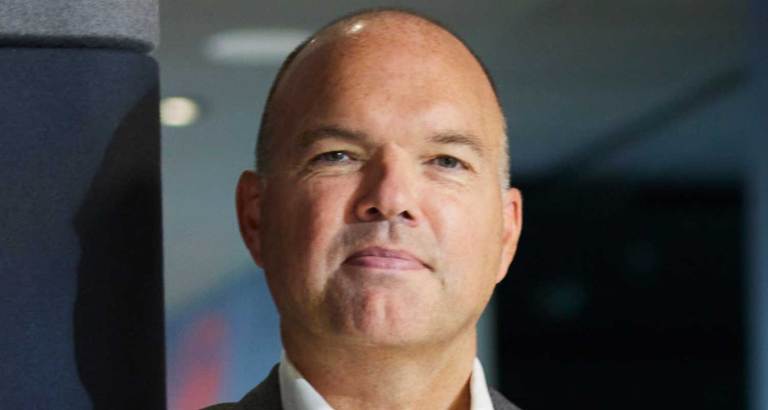
Former Vodafone CEO Nick Read finds new home at EXA Infrastructure
News
Read will serve as EXA’s new chairman, aiming to deliver significant growth for the business and expand its global infrastructure portfolio
Today, global fibre infrastructure firm EXA Infrastructure has announced that ex-Vodafone CEO Nick Read will be taking on the role of company chairman.
EXA currently owns 125,000km of fibre network across 34 countries, as well as a number of major submarine cable systems, including a trio of transatlantic cables. Since its formation from the backbone assets of GTT bac in 2021 by I Squared Capital, the company has been expanding rapidly, making numerous acquisitions and strategic partnerships around the world to bolster its global portfolio.
This rapid growth environment will be something of a stark contrast for Read, who resigned from his position as CEO of Vodafone at the end of last year after facing increasing pressure from investors to improve the Group’s sluggish performance. He had served in the role for four years, during which time he championed consolidation in the company’s most competitive markets, the majority of which did not ultimately materialise.
At the time of his resignation, Vodafone’s share prices had almost halved.
In this new position, however, Read should find growth comes much easier – at least for now.
“It is a privilege to be appointed Chair of EXA Infrastructure, particularly at a pivotal time for the telecoms industry where we are seeing significant investment in digital infrastructure and market growth,” said Read. “I look forward to working with the EXA leadership team who have a clear focus and commitment to customers, network excellence and continual investment to provide the most compelling experiences to clients and end users.”
EXA’s management was jubilant at the appointment, saying that Read would help lead the company’s “strategic network expansion plans, commercial growth and ongoing operational excellence efforts”
“Nick is a titan in our industry and I am convinced that his extensive leadership and technology experience will be invaluable to execute our ambitious growth strategy,” said EXA Infrastructure, Chief Executive Officer, Martijn Blanken. “His track record in business performance and transformation will be a welcome addition to guide EXA’s executive team. I am delighted to see Nick join us and I look forward to working closely with him.”
In related news, last week EXA Infrastructure announced they had acquired Croatian telco Unitel, expanding their existing infrastructure footprint in the Balkans. Unitel owns a 515km fibre backbone network that spans the country, including border crossings to Serbia and Bosnia and Herzegovina.
How is Europe’s data centre ecosystem evolving in 2023? Join the operators in discussion at this year’s Total Telecom Congress live from Amsterdam
Also in the news:
Hyperoptic announces plans to cut 110 jobs
U.S. Huawei ban: A Pyrrhic victory spurring digital decolonisation
New advertising guidelines push for clarity over contract price hikes
Wednesday Bytes: Arelion, Infinera, Zayo, 123NET, Compass
An upgrade, a set of rural and middle mile funding wins, and a bit of data center M&A: … [visit site to read more]
The Top Six Leaps Toward A Digital Mindset
This Industry Viewpoint was authored by David W Wang
When I work with enterprise clients nowadays on their digital transformation (DX) initiatives, one typical response especially from C-suite level is that DX is so comprehensive to plan, pilot and implement, that the teams often get overwhelmed by all the projects, technologies and applications involved. Strategically, what would make a pivotal guide that can connect the dots for the DX journey? … [visit site to read more]
21
Juin, 2023

Brazil’s Winity pilots prepaid mobile internet with Hughes
Winity, which became a new Brazilian national mobile operator in 2021, and satellite operator Hughes have announced a pilot project involving prepaid mobile internet in remote areas.
The project is called RuralChip and uses 700MHz spectrum won by Winity at auction in 2021. Ericsson, Nokia and Algar Telecom are among the partners for the project.
The duo’s proof of concept is taking place in two cities: Presidente Juscelino and Cururupu. Both are in Maranhão state in northern Brazil. In the first city the access network provider is Ericsson. The other uses technology provided by Nokia. Algar Telecom provides the network core along with charging, provisioning, NOC and data centre services.
Both sites will make use of Hughes’ high-capacity satellite backhaul solution, an LTE site and a Winity network core, effectively creating a 4G network to serve RuralChip customers in the areas covered.
The official launch of the project took place last week. The plan is to refine the solution for a future deployment at scale throughout the country, making possible the digital inclusion of thousands of people and the economic development of these regions, in line with Winity’s business plan, which is to get to where no other operator has reached to date.
According to TeleGeography’s CommsUpdate, Winity Telecom – which is backed by alternative asset management firm Patria Investimentos – successfully bid on a national 2×10MHz 700MHz licence in Brazil’s November 2021 5G spectrum auction, paying BRL1.428 billion (USD276.8 million) – the highest bid for a single spectrum lot in the auction.
Winity plans to build 5,000 cell towers by 2029 and to establish itself as Brazil’s first wholesale operator.
MORE ARTICLES YOU MAY BE INTERESTED IN…
20
Juin, 2023

Telenor and Hafslund to launch new Norwegian data centre company
Press Release
The newly formed company will launch a trio of data centres in the capital region, helping to ensure sensitive data is stored and delivered safely on Norwegian soil
The criteria for security and sustainability are tightening at the same time as Norway is digitising at a historic rate. Together with partners, Telenor and Hafslund are establishing a company that will build secure and energy-efficient data centres in the Oslo area.
“Data centres are, in many ways, the digital heart of any business. This is where the data flows to and from, which involves high quality, security and energy efficiency requirements. Together with Hafslund and partners, we will now establish Norway’s most secure commercial data centre operator, with a strong focus on sustainable solutions”, says Sigve Brekke, CEO of Telenor.
While Telenor has a unique position as the country’s leading telecoms operator, Hafslund is one of Norway’s largest energy and infrastructure groups. HitecVision invests in developing energy companies in Norway and Europe, and Analysys Mason is a leading consulting agency in telecom, media and technology. This partnership offers concrete solutions to customers who demand a safe and energy-efficient location to store data critical to society.
“Backed by Norwegian-managed capital, this partnership will help resolve a significant issue in an increasingly digital society. Norwegian security authorities have requested the establishment of data centres and cloud services for sensitive information, functions and infrastructure of importance to national security interests in Norway. By creating this company, we are facilitating that sensitive data across sectors is stored and delivered safely on Norwegian soil,” says Brekke.
The investment will contribute to establishing more Norwegian data centers and thus increase the possibility that digital services can be produced within the country’s borders, which gives a greater degree of national control and better safeguarding of functions critical to society. The new company is part-owned by Telenor (31.7%), Hafslund (31.7%), HitecVision (31.7%) and Analysys Mason in Norway (5.0%).
Three new datacentres
Together with its partners, Telenor and Hafslund aim for the new company to be a leading player within colocation data centres. This entails the supply of servers and other hardware from private and public businesses with high security and efficient energy consumption requirements.
The new company’s ambition is to build three data centres, with a total capacity of 40 MW, in the capital region. The data centres will be colocation facilities for several tenants. Telenor Norway will deploy its own infrastructure, with associated strict security requirements. The development of the first data centre in Oslo will start towards the end of 2023.
Safe and sustainable
The new company will build and operate safe, energy-efficient data centres with solid and secure owners. Instead of leaving servers tucked away in basements, the new company makes it possible for businesses to move servers and critical IT infrastructure inside state-of-the-art data centres. This aids businesses and society from unnecessarily high electricity consumption and lays the foundation for more efficient and responsible operations. Together with Norway’s largest district heating supplier, Hafslund Oslo Celsio, the company has ambitions to design data centres with efficient solutions for reusing excess heat. The data centres, therefore, become a valuable contributor to a circular economy in Oslo municipality.
“Establishing these data centres will be an important contribution to enabling Norway’s green transformation and digitalisation. With solutions to reuse excess heat, the data centres will free up power consumption for heating and thus provide energy-efficient solutions necessary to reach Oslo’s and Norway’s climate goals”, says Finn Bjørn Ruyter, CEO of Hafslund.
How is Europe’s data centre ecosystem evolving in 2023? Join the operators in discussion at this year’s Total Telecom Congress live from Amsterdam
Also in the news:
Hyperoptic announces plans to cut 110 jobs
U.S. Huawei ban: A Pyrrhic victory spurring digital decolonisation
New advertising guidelines push for clarity over contract price hikes
Four IX Powers Announce Shift to 100G LR-1
Four of the biggest internet exchange providers said this week that that they will be putting a new generation of technology to work in their respective IX platforms. DE-CIX, LINX, AMS-IX, and BCIX plan to roll out 100G LR-1 technology to power the underlying connections in their infrastructure. … [visit site to read more]
PFN, 123NET Land IMPACC Funding
123Net and Peninsula Fiber Networks will be teaming up for a substantial middle mile effort up in the Great Lakes region. The NTIA has awarded federal dollars for the Infrastructure for Michigan’s Peninsula and Critical Crossings (IMPACC) project, with PFN acting as the lead recipient and 123Net as the sub-recipient. … [visit site to read more]
20
Juin, 2023

Indonesian communications satellite launch heralds ambitious connectivity project
Spacecraft manufacturer, launcher, and satellite communications company SpaceX has launched a new Indonesian communications satellite as part of an ambitious project called SATRIA.
The $550 million project aims to provide high-speed internet access to schools, medical centres and thousands of public and government facilities across the island nation.
The powerful satellite, which is intended to boost broadband access across thousands of islands in the country’s vast archipelago, launched on Sunday. As Reuters explains, roughly two-thirds of Indonesia’s 280 million population already use the internet, but connectivity is limited in the country’s far-flung, underdeveloped eastern islands.
The satellite was built by Thales Alenia Space, which provides space-based systems, including satellites and ground segments, for multiple telecommunications and exploration-related purposes. It will use onboard ion thrusters to circularize its orbit at an altitude of about 35,888 kilometres above the equator at 126 degrees east longitude.
The CBS news service explains that satellites at that geosynchronous altitude take 24 hours to complete one orbit, rotating in lockstep with the Earth to appear stationary in the sky. That allows the use of fixed antennas on the ground, greatly simplifying the infrastructure needed to send and receive data. The satellite is designed to operate for at least 15 years.
SATRIA is a public-private project between the government of Indonesia and a consortium led by satellite operator PT Pasifik Satelit Nusantara, or PSN.
The launch has received enormous press coverage already – and it’s not too surprising given the statistics involved. With a throughput of 150 gigabytes per second, SATRIA will connect some 94,000 schools, nearly 50,000 village offices, other government facilities and thousands of hospitals and medical facilities across the fourth most populous country in the world.
Before SATRIA, Indonesia relied on five domestic communications satellites and four ‘foreign’ relay stations with a combined 50 gigabytes of telecommunications bandwith. SATRIA can provide more than three times the combined national capacities that are currently in use,
Adi Rahman Adiwoso, chief executive officer of PSN, was quoted by SpaceTechAsia as saying « We are confident that SATRIA can be the solution to the digital gap that still exists in Indonesia. »