Hyperscale data centre platform AirTrunk has announced plans to invest about US$3 billion to develop two new data centres in Malaysia, to be called JHB3 and JHB4.
Located in Iskandar Puteri in Johor, JHB3 and JHB4 will have a combined capacity of more than 280 megawatts (MW) of IT load and will be located close to the company’s existing JHB1 campus, opened in 2024 and planned JHB2 campus.
Between the four campuses in Malaysia, AirTrunk will have more than 700MW of IT load, bringing AirTrunk’s total committed investment in Malaysia to approximately US$6.8 billion.
These campuses will be purpose-built to support high-density cloud and AI workloads, featuring a flexible, scalable and resilient design. The designs prioritise energy efficiency, operating at significantly lower power usage levels than conventional data centres. The campuses will also include advanced cooling systems that utilise 100% recycled water, minimising any impact on local resources.
AirTrunk’s current expansion follows its announcement of JHB2 campus in early 2025, which has already garnered strong commitments from its existing global cloud and AI customers. The existing JHB1 and JHB2 campuses (totalling more than 420MW of IT load) are almost 100% contracted and tracking well ahead of investment plans. AirTrunk is planning further expansion in Malaysia post JHB3 and JHB4.
This expansion follows AirTrunk’s recent announcement of its entry into India, supported by its planned investment of more than US$5 billion into the Indian market in the near term.
The development of JHB3 and JHB4 is expected to generate significant economic benefits for Johor and Malaysia, including creating more than 3,000 jobs during construction, ongoing employment to local talent once operational, and partnerships with local suppliers and contractors to support regional industry.
We caught up with Amol Gadre, Founder and CEO of Sarathi Softech, to discuss why flexibility is an integral feature of the company’s AI-enabled telco billing platform, EarnBill, and how it is helping telecom operators and MVNOs stay ahead in an increasingly complex market.
From 5G and the IoT, to AI and personalised services, each year the telecoms sector continues to grow more complex. This offers a huge challenge for telco billing systems, particularly for those largescale telcos with slow-moving legacy systems that can act as bottlenecks for innovation.
For Gadre, these limitations were front-of-mind when developing Sarathi’s EarnBill platform, a core billing engine focussed on fast implantation and flexibility. Backed by over 13 years of Enterprise jBilling partnership and more than $2 billion in processed billing and payments, EarnBill has been built and battle-tested for precisely this moment.
“The big legacy systems for Tier 1 telcos mean implementations can be multi-year,” Gadre said. “We try to cut such implementation times by as much as half through our own agility.”
This agility is not just a matter of project management and efficiency in deployment. As the market moves towards increasingly complex data models and products, the billing system must be as flexible as the network itself.
“Take the data bank offering in Australia, for example, where unused monthly data allowance is ‘banked’ for use in later months,” said Gadre. “These kinds of offers are gaining popularity because they give customers a lot of flexibility. However, introducing innovative offerings like this requires a backend that is quickly customisable”.
Of course, building a billing system with this level of flexibility is no easy task, particularly given legacy constraints. EarnBill, however, benefits from the fact that it did not originate in the telco sphere, but rather enterprise billing through the jBilling platform. This gives it a level of flexibility not typically seen in more specialised telco billing systems.
“EarnBill is a ‘no assumptions made’ core billing engine,” explained Gadre, noting it can be applied to various domains, from mobile virtual network operators (MVNOs) to software-as-a-service (SaaS) providers. “It’s not a platform that we have inherited from an existing telco system. Instead, it was built from the ground up to meet the needs of various domains including telcos, SaaS, IoT and IaaS amongst others.”
“Telcos are offering innovative plans in a competitive market. It’s EarnBill’s job to ensure they can come up with innovative offerings in a short amount of time,” he added.
Leveraging AI to plug leaking revenue
Naturally, AI plays a key role in EarnBill’s ongoing evolution in the telco sector. Robotic Process Automation (RPA) has long been a core feature of efficient and autonomous billing systems, allowing them to handle complex operational workflows with limited human intervention.
The recent development of agentic AI is showing a lot of promise of making this automation more intelligent. The autonomous AI agents can analyse data, make decisions, and execute tasks across workflows with minimal human intervention – this development marks a significant shift towards a more fluid and intelligent model. Specialised AI agents can dynamically review tariffs, suggest dispute resolution options in real time, and help personalise charges based on individual usage patterns and context, providing the much-needed agility.
“AI has sped up this automation process, with agentic AI taking over certain aspects of daily operations,” said Gadre. “Today, these processes are somewhere in the middle, where you have part automation, part human handling. We will see more and more of these processes handed over to AI agents as the technology matures. EarnBill would help operators make this transition.”
With telco complexity growing rapidly, stemming revenue leakage is emerging as a key initial target for these agents.
“We’re using automation to report billing errors in real time,” he said, emphasising that this not only saved telcos money but ultimately improved the end customer’s experience.
From services to full stack BSS
Ultimately, Gadre’s goal is for Sarathi to leverage AI to move up the value chain and begin offering a full stack BSS solution for telco customers.
Crucially, Gadre emphasizes that this platform must remain service oriented. In an industry where vendors often force operators to change their business processes to fit the software, EarnBill intends to remain the inverse.
“We don’t want to make our clients learn our platform and use it in a way where they need to change how their business operates,” Gadre concludes. “We have a very flexible system and a platform that is still evolving to cater to their needs as seamlessly as possible.”
For telcos looking to innovate and differentiate themselves from their competition, flexible, intelligent billing will only grow in importance.
Sarathi Softech is a Pune-based billing and revenue management specialist with over 15 years of deep expertise in Enterprise jBilling.
The company’s flagship platform, EarnBill, is a flexible, enterprise-grade billing and revenue management platform built on top of jBilling, helping telecom operators and MVNOs launch complex offerings faster, protect revenue, and automate billing end-to-end.
Request a tailored demo and discover how EarnBill can cut your implementation time, protect revenue, and adapt to your business.
Malaysian telco U Mobile has partnered with Pavilion Real Estate Investment Trust (REIT) to enable seamless 5G-Advanced indoor coverage in high-traffic commercial and lifestyle locations in Kuala Lumpur.
Under the partnership deal announced on Tuesday, U Mobile will deploy and manage its 5G-A in-building coverage (IBC) system in Pavilion Kuala Lumpur, Pavilion Hotel Kuala Lumpur, Pavilion Tower, Pavilion Elite, Banyan Tree Kuala Lumpur, Intermark Mall and Pavilion Bukit Jalil, which rank as some of KL’s busiest retail, commercial and hospitality spaces.
U Mobile said the IBC solution – which will complements the broader 5G infrastructure within the properties – will improve network performance and provide reliable indoor connectivity for those properties. For end users, that could translate into smoother digital experiences for things like navigation, payments and real-time services throughout the buildings.
U Mobile added that the IBC infrastructure in Pavilion REIT properties is designed to support multiple mobile operators.
As part of the project, U Mobile will also collaborate with Pavilion REIT to explore 5G-A use cases to support digitalisation of their building operations, such as security monitoring, smart sensors and parking solutions.
“By enabling more reliable indoor coverage, we are better positioned to support the evolving needs of our tenants, business partners and visitors, while advancing smarter and more responsive building operations,” said Pavilion REIT CEO Phillip Ho in a statement.
U Mobile – which won the rights to become Malaysia’s second 5G operator in November 2024 – has made indoor coverage a cornerstone of its 5G strategy since launching its Ultra5G service in August 2025.
To that end, U Mobile has signed on Edotco, EdgePoint Infrastructure and OCK Telco Infra (a subsidiary of Malaysian telecoms network solutions provider and regional towerco OCK Group) as preferred 5G IBC partners.
“[We] believe in prioritising deep in-building coverage to ensure that customers experience seamless, high-performance connectivity wherever they are whether indoors or outdoors,” said U Mobile CTO Woon Ooi Yuen. “This allows us to support not just everyday usage, but also more advanced, business-critical applications that require consistency, reliability and scale.”
The European Commission accused Meta of “failing to diligently identify, assess and mitigate the risks of minors under 13 years old accessing their services”
The European Commission has released its preliminary findings into whether Meta had breached the Digital Services Act (DSA), claiming the company had failed the adequately prevent under-13s from accessing its Instagram and Facebook platforms.
In a press release, the Commission said that Meta’s measures to prevent access by minors “do not seem to be effective”.
“Despite Meta’s own terms and conditions setting the minimum age to access Instagram and Facebook safely at 13, the measures put in place by the company to enforce these restrictions do not seem to be effective,” said the statement. “The measures do not adequately prevent minors under the age of 13 from accessing their services nor promptly identify and remove them, if they already gained access.”
It further stated that there are “no effective controls in place to check the correctness of the self-declared date of birth” and that Meta’s tools for reporting minors on the platform were “difficult to use and not effective”.
The first launched its investigation into company in 2024 following the implementation of the DSA, a broad legal framework covering how online platforms handle content and manage risks to customers online.
If the Commission’s preliminary findings are confirmed, Meta could face a fine of up to 6% of its total worldwide annual turnover.
Meta’s turnover in 2025 was roughly $201 billion, suggesting a fine could be in the region of $12.6 billion.
“Meta’s own general conditions indicate their services are not intended for minors under 13. Yet, our preliminary findings show that Instagram and Facebook are doing very little to prevent children below this age from accessing their services,” said Henna Virkkunen, the European Commission’s Executive Vice-President for Tech Sovereignty, Security and Democracy. “The DSA requires platforms to enforce their own rules: terms and conditions should not be mere written statements, but rather the basis for concrete action to protect users – including children.”
In a statement to the New York Times, Meta said it disagreed with the findings, claiming its methods of preventing access by under-13s were effective. It nonetheless says that it is rolling out additional measures “soon”, adding that “understanding age is an industry-wide challenge”.
T-Mobile has made two inorganic moves to expand its exposure to the last fiber mile. They have enetered into definitive agreements to create two strategic fiber joint ventures to acquire three fiber-to-the-home companies. … [visit site to read more]
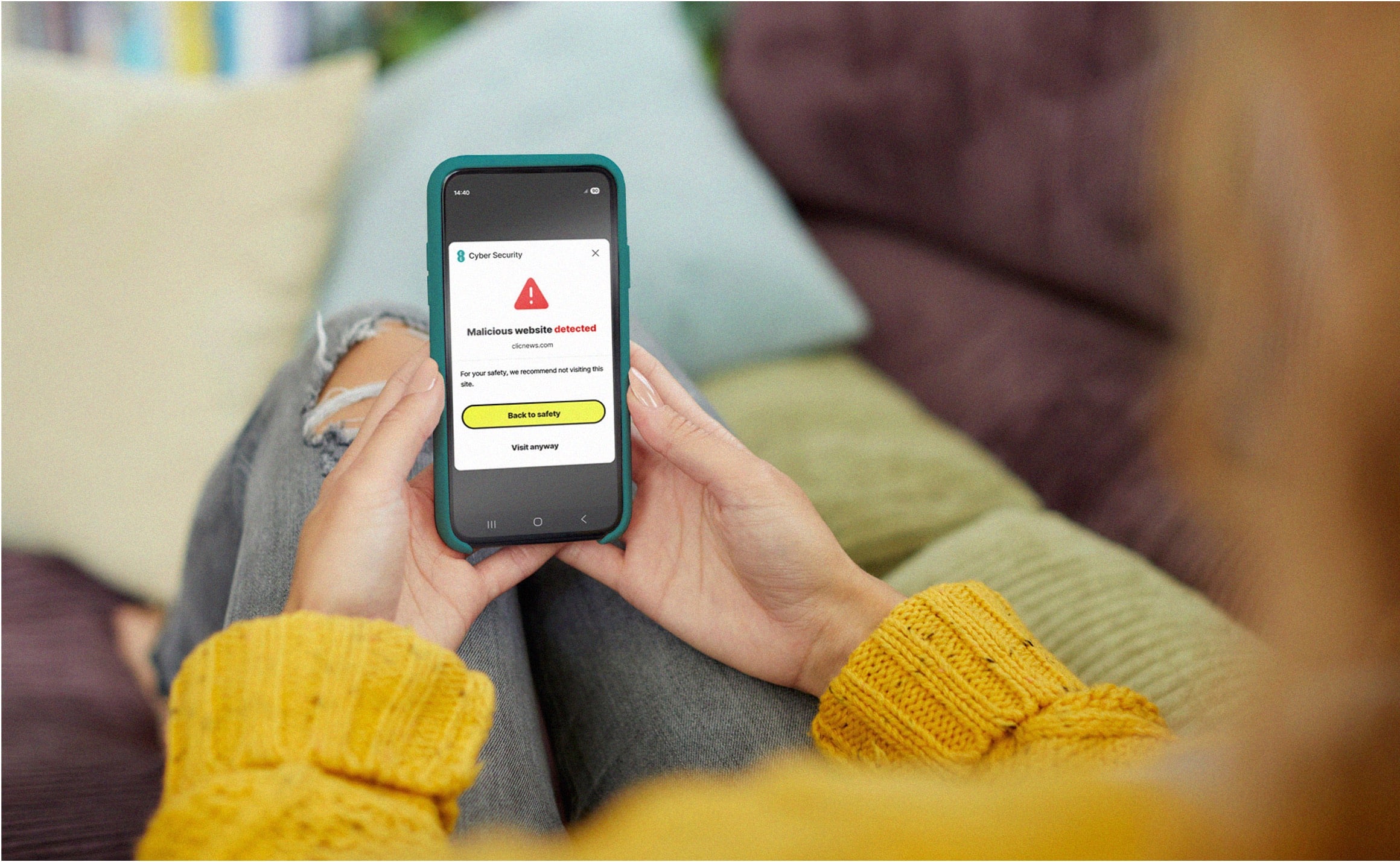
EE has today unveiled an all-new and upgraded Scam Guard, its most powerful and comprehensive fraud protection service to date.
Available to EE pay monthly mobile customers for £2 a month on a 30-day rolling contract, the service builds on EE’s existing Scam Guard offering and provides AI Triple-Lock Protection, Scam Assistant, Mobile Device Security and Dark Web Monitoring to give customers complete peace of mind against today’s increasingly sophisticated scam landscape.
The launch comes as Cifas, the UK’s leading fraud prevention service, has revealed that more than 444,000 cases were recorded to the National Fraud Database in 2025, the highest number ever recorded in a single year, and a 6% increase on 2024. The surge is widely attributed to the growing use of AI by criminal networks to generate convincing phishing emails, fake websites, deepfake calls and targeted SMS scams at unprecedented scale.
As the UK’s best network, EE introduced Scam Guard to mobile customers in 2024. Since then, more than 169 million scam and spam attemptshave been stopped by EE’s service – a testament to its commitment to customer protection. The new Scam Guard builds on that foundation, raising the bar not just on EE’s own capabilities but on what customers can expect from network providers more broadly. Looking ahead, EE expects the new service to prevent at least twice as many scams over the next 12 months.
With a suite of AI-driven features designed to tackle the full spectrum of modern threats, it represents a significant step forward in helping keep customers one step ahead of increasingly sophisticated scams:
AI Triple-Lock Protection: three layers of AI defence, around the clock
At the heart of the new Scam Guard is AI Triple-Lock Protection – a trio of cutting-edge digital safety features powered by Norton’s Genie AI engine, built to keep customers protected all day, every day. This includes:
Safe Email: providing 24/7 proactive scam protection for email inboxes, scanning and flagging suspicious messages so customers know if something is a scam before they even open it.
Safe SMS: using advanced AI to detect sophisticated scams in text messages, giving customers real-time protection and peace of mind every time they check their messages.
Safe Web: harnessing AI to protect customers from scams while shopping or browsing online, blocking malicious sites before they cause harm.
Scam Assistant and Call Labelling: real-time analysis across every channel
New Scam Guard also introduces Scam Assistant, a tool that allows customers to upload screenshots of texts, emails, websites, social media messages or even QR codes to receive instant advice on whether they are safe. Alongside this, Call Labelling delivers automatic, network-level screening of every incoming call, giving customers the information they need before they pick up.
Monitoring, security and password management: complete digital protection
Social Media Monitoring and Dark Web Monitoring watch for suspicious activity across a customer’s online footprint, sending quick notifications so they can take action without delay. Mobile Device Security provides real-time protection against ransomware, viruses and other online threats, automatically blocking dangerous attachments before they can cause damage. Additionally, Password Manager creates, stores and auto-fills strong, secure passwords, removing one of the most common vulnerabilities in personal online security.
Malcolm Cubitt, Director of Product, Mobile, EE, said: “Fraud in the UK is at a record high, with AI making scams more convincing and harder to detect. As these threats evolve, we continue to adapt as the UK’s best network—constantly seeking new and innovative ways to protect and support our customers. This includes leading industry alliances, investing in network-level controls, and employing a dedicated team of security experts. And now with our newly enhanced Scam Guard service, we’re providing customers with an even greater level of cyber security protection.”
EE is committed to helping customers enjoy the benefits of the digital world with confidence through practical protections like Scam Guard. This is underpinned by BT Group’s purpose to connect for good and its wider work to help people with the digital skills, tools and support they need to connect, stay safe and succeed.
EE Scam Guard forms part of a number of cyber security solutions offered to BT Group, which collectively over the last 12 months (Jan-Dec 2025) saw:
Blocked 1.6 billion attempts to access malicious domains
Stopped 200 million scam SMS messages
Blocked 61 million scam calls
Flagged a further 175 million nuisance and fraud calls to keep customers protected
The new Scam Guard is now available to all EE pay monthly mobile customers and will be available to purchase as an add on.
Digicel PNG has reportedly signed an agreement with Papua New Guinea’s National Information and Communications Technology Authority (NICTA) to deploy 4G services to rural communities around the country.
According to a report in Papua New Guinea newspaper The National on Tuesday, Digicel PNG will roll out 4G infrastructure in underserved and rural areas including parts of Oro, Gulf, Morobe, Bougainville and Southern Highlands.
The NICTA agreement was awarded via the National Procurement Commission Board as part of the government’s commitment to bridge Papua New Guinea’s digital divide and enable access to digital services, including education, healthcare and financial services, the report said.
“When people and communities are connected, they gain access to digital services needed for education, healthcare, financial services, and economic participation,” Digicel PNG acting CEO Abdallah Nassar was quoted as saying.
Nassar also said the agreement highlighted the benefits of public-private sector collaboration to advance the country’s digital transformation, the report added.
The deal with Egg Power will supply roughly 5% of the company’s energy demands
Today, Virgin Media O2 (VMO2) is expanding its renewable energy usage, signing a new 10-year Power Purchase Agreement (PPA) with solar power provider Egg Power.
The deal will see VMO2 source power from Egg’s new solar farm 70MW solar farm in Suffolk, which is currently under construction and is expected to begin power generation in 2027.
In total, the agreement is expected to cover around 5% of VMO2’s total energy demand.
Egg Power is a natural energy partner for VMO2, with both companies being owned by Liberty Global.
The deal is expected to significantly contribute to VMO2’s Net Zero carbon emissions goals, with the operator currently aiming for neutrality across its entire value chain by 2040.
“This agreement with egg Power is the latest step in Virgin Media O2’s journey to achieve net zero emissions by the end of 2040,” said Mark Hardman, Director, Finance Operations at VMO2. “We’re committed to growing and operating our business in a way that’s good for people and the planet, where we’re cutting carbon, securing renewable energy on a long-term basis, and sourcing renewable energy generation from the UK.”
The deal builds on a similar 10-year agreement for wind power that VMO2 signed with The Renewables Infrastructure Group last year. Combined, the two deals mean around 20% of VMO2’s energy usage will come from renewable PPAs.
We use cookies to personalise content and ads, to provide social media features and to analyse our traffic. We also share information about your use of our site with our social media, advertising and analytics partners. View more
Cookies settings
Accept
Privacy & Cookie policy
Privacy & Cookies policy
Cookies list
Cookie name
Active
Conditions légales
Introduction et qui nous sommes
118812.fr met en relation des spécialistes du monde entier par le biais d'événements, de renseignements et d'éditions savantes. Nous sommes une société du FTSE 100 et notre réseau de marques internationalement respectées aide les gens à travailler plus intelligemment, à prendre de meilleures décisions et à se développer sur des milliers de marchés spécialisés. Les données et les informations sont au cœur des activités de 118812.fr, et nous prenons au sérieux les questions de confidentialité des données. Nous respectons nos relations avec les clients, les visiteurs, les sponsors, les exposants, les fournisseurs et les collègues, ainsi que la confiance qu'ils nous accordent pour la conservation de leurs données personnelles.
Contrôleurs de données de 118812.fr
Cette politique de confidentialité explique comment les membres du groupe 118812.fr collectent, utilisent et protègent les informations personnelles à travers nos marques. Les références à "nous", "notre" ou "nos" renvoient au contrôleur 118812.fr concerné qui traite vos informations personnelles.
118812.fr est structuré en cinq divisions opérationnelles :
Au sein de ces divisions, il existe des entreprises sectorielles et des marques de produits, d'événements et de services. En général, lorsque nous interagissons avec vous, c'est par le biais de l'une de ces marques. L'entité juridique du groupe 118812.fr responsable des données personnelles (désignée comme le contrôleur des données dans l'UE et désignée comme le contrôleur 118812.fr dans la présente politique de confidentialité) sera l'entité indiquée sur les formulaires de réservation, les formulaires Web et les contrats ou les factures. Différentes entités juridiques de 118812.fr sont responsables de différents événements et produits. Pour mettre à jour vos informations personnelles ou vos préférences en matière de marketing, contactez les équipes de marketing de nos divisions énumérées ci-dessous. Pour toute question ou plainte concernant la confidentialité des données, vous pouvez vous adresser à l'équipe 118812.fr Privacy via notre formulaire en ligne.
Couverture internationale et variations
118812.fr opère dans plus de 20 pays, qui ont chacun des lois différentes sur la protection des données. La présente politique de confidentialité s'applique à toutes les activités de 118812.fr dans le monde, sauf dans la mesure où il existe une exigence spécifique à un pays qui la complète, comme indiqué dans le menu de gauche.
Ce que nous recueillons
Cette section vous indique quelles informations personnelles nous pouvons recueillir lorsque vous utilisez nos produits et services, et quelles autres informations personnelles nous pouvons recevoir d'autres sources. Dans la présente politique de confidentialité, les informations personnelles désignent les types de 118812.frtions personnelles qui peuvent être collectées et utilisées, notamment : Les coordonnées, telles que le nom, l'adresse électronique, l'adresse postale et le numéro de téléphone.Informations sur l'éducation, la nationalité et la professionles noms d'utilisateur et les mots de passeCommentaires, réactions, messages et autres contenus soumis, y compris les informations relatives aux enquêtes.Intérêts et préférences de communication, y compris les autorisations de marketing, le cas échéant.Informations de localisation, telles que celles fournies par une application mobileInformations de vérification de l'identité, telles que les détails du passeport, afin de se conformer aux obligations légales dans certains pays et de fournir des lettres d'invitation de visa, le cas échéant.Informations sur l'utilisation du site web et des communications, telles que la correspondance et les détails de votre utilisation de notre site web et de nos services obtenus par le biais de cookies ou d'autres technologies de suivi.
Ces informations personnelles concernent les catégories de personnes suivantes :
Prospects, contacts clients, abonnés et utilisateurs en ce qui concerne nos services et produits ;Visiteurs, sponsors, exposants et conférenciers lors de nos événements ;Les professionnels figurant dans les produits numériques et imprimés, tels que les détails des cadres supérieurs mis à disposition par les produits de renseignement, les recherches et les publications.les auteurs, éditeurs et réviseurs de nos publications.les contacts de nos prestataires de services et partenaires commerciaux.Informations personnelles sensibles