

Two from Latin America and two from Down Under: … [visit site to read more]

Two from Latin America and two from Down Under: … [visit site to read more]

Data centre company HyperVault, a subsidiary of Indian technology group Tata Consultancy Services (TCS), says it has secured 264 acres of land to develop a large-scale AI data centre campus of up to 1GW capacity in Hyderabad.
HyperVault says the Hyderabad AI data centre campus will be purpose-built to serve the needs of frontier AI companies and hyperscalers, enabling high-density GPU deployments for AI training, inference and advanced computing workloads.
The precise timeline for the development has not yet been revealed. However, the company says the development of the data centre campus will be executed in a phased manner, in line with customer demand and technology requirements.
It adds that at full build-out, the campus is expected to rank among the most advanced and largest AI infrastructure campuses in India. The campus will also leverage green energy and water-neutral design principles as part of the build-out.
Beyond the campus, the project is expected to catalyse India’s AI infrastructure ecosystem across power, cooling, networking, construction, engineering and operations. The project will generate several thousand direct and indirect jobs in the region. HyperVault and its partners are expected to invest up to Rs 70,000 crore (about US$7.4 billion) to build and manage this infrastructure.
K Krithivasan, CEO & MD, TCS, says” “HyperVault advances TCS’ infrastructure-to-intelligence strategy by bringing together AI-ready infrastructure with our cloud, engineering, enterprise transformation and AI capabilities. Hyderabad offers the scale, talent and ecosystem to serve global customers.”

[Munich, September 2, 2026] Huawei kicked off its « Chase the Wild » global innovative product launch event today at SHOWPALAST Munich, Germany. Huawei unveiled a sweeping portfolio of new flagship devices across four key categories: smart wearables, tablets, smartphones, and audio. The event underscored Huawei’s commitment to seamlessly integrating intelligent technology into everyday life, empowering users to pursue their passions with freedom and vitality.
The event’s « Chase the Wild » theme captured Huawei’s vision of technology as a catalyst for raw energy, bold exploration, and personal expression. Wild is chill vitality—to gallop freely, to venture boldly. Wild is tech for all—an invisible power beside you. Wild is the spark of passion, joy, and untamed self-expression. The company emphasized that its latest products are designed to become natural extensions of the users’ lives, whether they are exploring the outdoors, documenting their adventures, or unlocking new creative potential.
Taking center stage, the HUAWEI WATCH GT 7 Series redefines the sports smartwatch category with comprehensive upgrades across design, outdoor sports capabilities, health management, and battery life. The Series features the new EasyCross strap. The GT 7 model is available in 46 mm and 41 mm editions with eight color options, while the GT 7 Pro offers three colorways and incorporates a nano-tech ceramic bezel and titanium alloy middle frame for enhanced durability. For sports enthusiasts, the GT 7 Series introduces industry-first wrist-based turn detection and G-Force detection, alongside new indoor snow sports mode and outdoor ski mapping covering more than 3,000 resorts worldwide. Cycling features now include route planning for climbing, slope alerts, and sharp-turn warnings, plus AI-powered cycling insights (not yet available in Europe). On the health front, the upgraded Health Insights offers new features like Physical Readiness scoring and smart health analysis, delivering clearer, more actionable wellness recommendations.
After a one-year hiatus, the all-round smart flagship HUAWEI WATCH 6 Series makes its European comeback. Highlighting high-intelligence design, advanced workout modes, and AI-driven workout analysis, the watch supports independent calling, navigation, and payment functions. Enhanced Health Glance , Health Insights , and Healthy Living features make proactive health management more intuitive than ever.
Huawei also officially launched the HUAWEI WATCH D3, a next-generation blood pressure monitor that has secured European CE-MDR medical certification. The device now supports pre- and post-exercise blood pressure measurement, along with smart blood pressure measurement reminders, delivering more comprehensive wrist-based blood pressure management. This marks a significant step forward for Huawei in the field of digital health management.
For productivity and creativity, Huawei introduced the HUAWEI MatePad Pro 12-inch, a flagship tablet measuring just 4.7 mm thin and weighing 454 grams. It features a 12-inch flexible OLED PaperMatte Display, paired with AI speech-to-text conversion, AI handwriting enhancement, and stylus air gestures, enabling users to create effortlessly anytime, anywhere. In terms of audio devices, Huawei launched the HUAWEI FreeBuds Neo Series, engineered for the modern lifestyle, with a fresh design and immersive sound. In smartphones, the HUAWEI nova 16s series made its debut, delivering a refreshed experience highlighted by exceptional portrait photography capabilities.
To close the event, Huawei announced the global opening of its « GoPaint » Worldwide Creating Activity 2026, which this year adds a new « Easy Creation » category to encourage broader participation in artistic expression. Huawei reaffirmed its ongoing mission to serve global consumers with cutting-edge innovation, exploring how technology can become an ever-present companion in the pursuit of passion and discovery.

Safaricom Ethiopia has surpassed 15 million 90-day active subscribers, less than four years after launching commercial services in the country.
The operator received its unified telecom licence from the Ethiopian government in July 2021 and began commercial operations in October 2022, entering a market previously dominated by state-owned Ethio Telecom.
Safaricom Ethiopia has deployed more than 3,500 network sites since entering the market, with its network now reaching around 60% of the country’s population. The operator said all of its sites are 4G-enabled and 5G-ready.
The subscriber milestone comes as Safaricom Ethiopia moves towards financial breakeven following several years of investment in network infrastructure, technology and distribution.
The operator said increased competition following Ethiopia’s telecoms liberalisation has contributed to wider connectivity, faster internet speeds, increased data usage and growth in digital payments.
Safaricom Ethiopia is part of the Vodafone-backed Safaricom group, which entered Ethiopia as part of the country’s efforts to liberalise its telecoms market and attract private investment.

As AI models grow more advanced, the use of AI agents continues to proliferate. According to forecasts from IDC, there will be more than 1 billion actively deployed AI agents by 2029, raising to 2.2 billion in 2030. Other estimates are even more bullish, with Huawei’s Intelligent World 2035 report predicting 900 billion AI Agents will be active globally, with 90% operating in mobile scenarios. Indeed, earlier this year NVIDIA CEO Jensen Huang said he envisaged a workforce where each human employee would be supported by over 100 AI Agents.
The consensus is clear: the ‘Agentverse’ – an interconnected ecosystem of autonomous AI Agents – is coming, if it is not here already.
This explosion in AI Agents presents a significant challenge to wireless network operators. Unlike traditional legacy traffic, Agent services require continuous multimodal data transmission, real-time interaction, and constant multi-agent collaboration. This places unprecedented demands on mobile networks, requiring massive uplink capacity, deterministic low latency, and guaranteed service levels.
Against this backdrop, traditional downlink-centric networks focussed on ‘best-effort’ connectivity will soon find themselves obsolete. Wireless networks will need to be systematically redesigned with a focus on capability allocations, dynamic resource orchestration, and novel interaction paradigms.
This systematic overhaul is exactly what Huawei is targeting with its latest software update, SingleRAN 22.1.
SingleRAN 22.1: Six features for the Agentic ecosystem
Huawei’s SingleRAN 22.1, launched in Shanghai earlier this year, is the company’s first commercial software release purpose-built for the Mobile AI era. It includes six key technical advances that, when taken together, form a robust foundation for supporting Agentic AI at scale.
When combined, these algorithms have demonstrated average uplink throughput gains of 24% to 33% in live field trials in Macau and Yunnan, expanding 10 Mbps uplink coverage by approximately 2 dB to support uplink-heavy AI streams.
Commercial deployments have achieved 34% higher 5G standalone experience, around 20% uplink improvement, and 5G uplink speeds exceeding 1 Gbps.
In a live Saudi Arabian network, iBeam 3.0 delivered a 15% improvement in downlink rates versus previous iBeam generations through a software-only upgrade.
A deployment for HKT showed that the proportion of <40 ms latency sessions in low latency gaming scenarios improved by 5%, 5 Mbps uplink rate satisfaction improved by 11.7% for live streaming customers, and VIP user live streaming satisfaction rose from 92.23% to 97.69%.
In addition to enhancing the network’s multi-dimensional capabilities in software, SingleRAN 22.1 also provides a foundation for the next generation of baseband processing hardware. This version of the technology is the first to support Huawei’s next-generation UBBPi series baseband boards, combining its advanced algorithms with the latest baseband technology to deliver the diverse network capabilities Mobile AI services will demand.
A connectivity foundation for an AI-powered future
For Huawei, these new capabilities represent not only improvements to existing 4G and 5G services but the creation of an entirely new network topology paradigm in anticipation of continued AI growth. These integrated solutions resolve foundational network bottlenecks, allowing operators to systematically deliver the deterministic latency, high uplink capacity, and differentiated performance required to support billions of interconnected AI Agents across the emerging Agentverse.
“Mobile AI is not a service upgrade — it is a paradigm shift for the industry. As the first commercial version for the Mobile AI era, SingleRAN 22.1 comprehensively reconstructs network capabilities, empowering operators to seize new opportunities in the Token economy, making intelligence omnipotent, omnipresent, and perpetual,” said He Yunru, Vice President of Huawei Wireless Network Solutions.
Huawei’s SingleRAN 22.1 has already been commercially deployed at 35 operator sites across 23 countries. Over 100 operators globally are expected to have completed deployment by the end of the year.
Also in the news
Shared Rural Network rollout extends to UK national parks with over 150 4G masts live
Vodafone touts latest attempt to bridge the UK’s digital divide
Virgin Media O2 cuts 5,200 tonnes of carbon dioxide emissions

 This Industry Viewpoint was authored by Biju Anidil, Regional VP Sales, EMEA & APAC, Evergent
Every monetisation vendor, mine included, will tell you to modernise your BSS. You have heard it a hundred times, which is why most of you have not acted. The advice is not wrong. It is incomplete, and the missing part is the reason operators stay stuck. … [visit site to read more]

Côte d’Ivoire’s Ministry of Digital Transition and Technological Innovation (MTNIT) says it has signed a strategic partnership agreement with French AI solutions company Mistral to help develop an AI ecosystem adapted to the country’s specific requirements.
Under the agreement – which was signed last month but publicly announced on Tuesday – MTNIT and Mistral are conducting a strategic study and audit to map out the players and available resources for an AI ecosystem, as well as evaluating existing data and infrastructures, and identifying areas where AI could provide concrete use cases serving the needs of the government, companies and populations.
Ideally, the audit will form the basis for an operational roadmap that will define the conditions for deploying AI solutions and allow the emergence of “high-impact” pilot projects.
The ministry said the study focuses on several priority sectors, including public administration, health, education, agriculture and services to the population.
As part of the project, Mistral is working with Artefact Côte d’Ivoire, a local entity of the Artefact group specialising in data and AI consulting, who will provide technological and local expertise.
MTNIT said in a post on social media site X that the Mistral partnership will contribute to the AI pillar of the government’s Digital Roadmap 2026-2028, which includes 40 structuring projects.
The audit is expected to be completed in time for MTNIT’s « IMPACT IA » conference next week in Abidjan.

Teltronic, a Spanish company with more than 50 years of experience in the critical communications sector, says it will be supplying a 4G broadband communications network for national rail company EFE Trenes de Chile.
The broadband communications system will provide data transmission services for two new lines that will connect the capital city, Santiago de Chile, with the nearby towns of Melipilla and Batuco, as part of a project awarded by the Chilean railway operator to Siemens Mobility.
The project includes the implementation of the country’s first ETCS (European Train Control System) Level 2 system, an in-cab digital signalling system that uses continuous radio communication to guide trains safely without relying on traditional physical lineside signals.
Siemens Mobility has entrusted Teltronic with the deployment of a private 4G network that will provide coverage along the 87 kilometres of new railway lines. However, as Teltronic explains, the system is 5G ready, meaning that it can evolve to 5G technology through a simple software upgrade. In addition, the infrastructure includes two control nodes, one primary and one redundant, to ensure system robustness.
Teltronic says it will also equip the 32 new trains that will operate on the lines with its RTP-800, a state-of-the-art radio that will enable continuous train-to-ground data transmission. The onboard solution is completed by the DCD7 touch-screen console, which has been designed to meet the stringent requirements of railway environments and allows train drivers to operate the radio controls.
The system, which is also prepared to support voice communications, will be integrated with a passenger information system, a public address system and the CCTV network, whose images will be transmitted in real time. It will also support Level 2 ETCS which, says Teltronic, means it will play a key role in the safe and efficient operation of the trains.

Two M&A completions, an expansion, and some quantum: … [visit site to read more]
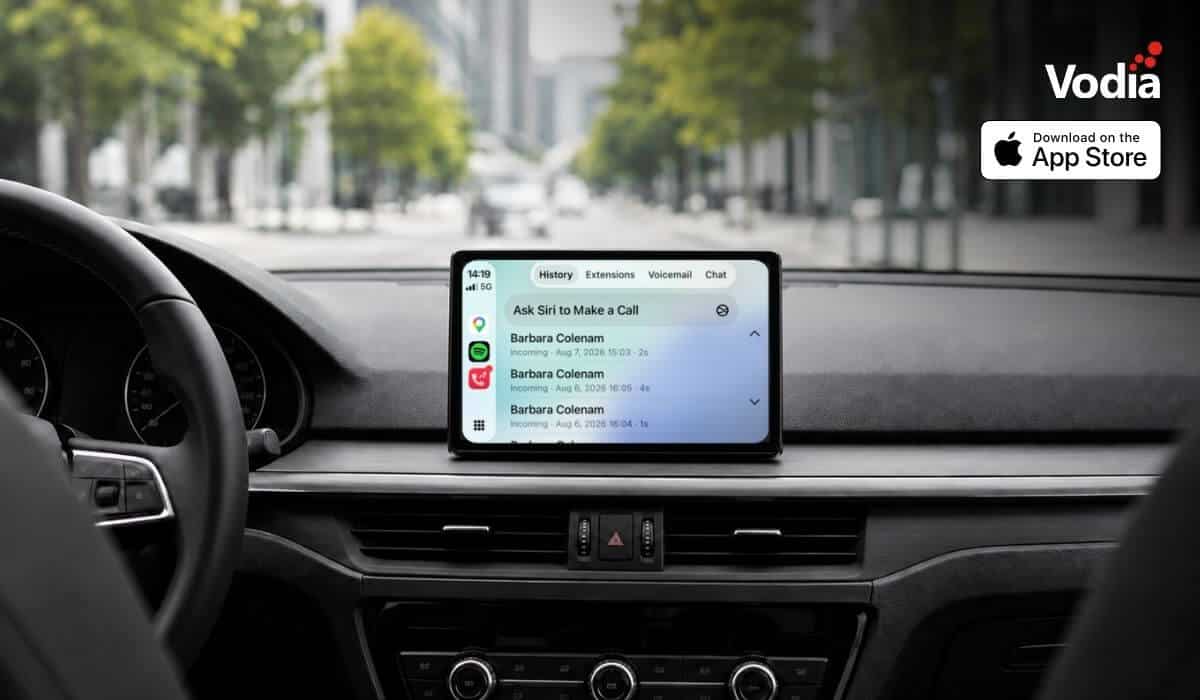
BOSTON: September 2, 2026 – Vodia Networks, Inc., a provider of unified cloud communications solutions to enterprises, contact centers, and service providers, is pleased to announce the expansion of its integration with the Apple ecosystem. This includes the company’s new iOS app, which now enables iPhone users to access a focused Vodia Phone experience in Apple CarPlay.
The Vodia iOS app
On July 28, 2026, Vodia announced its new iOS app, which gives users a native way to use a Vodia PBX extension from an iPhone or iPad. The redesigned app is built around a cleaner, card-based interface, making it easier to manage calls, call history, active call controls, chat, extensions, voicemail, call parking, and transfers, all from one mobile experience.
The app interface follows the latest iOS design patterns, with layered cards, soft glass-style surfaces, and familiar system controls. Instead of forcing users through a legacy softphone experience, the app is built around how people already expect to use their iPhone. It also supports iPad, giving users a larger workspace for calls, status, messaging, and daily communication workflows.
Apple CarPlay
Apple CarPlay gives iPhone users a smart, safe way to use an iPhone while driving – it provides directions, makes calls, sends and receives messages, and plays music, all on the car’s built-in display.
The Vodia CarPlay interface is built with Apple’s native CarPlay templates and includes four main areas: call history, extension directory, messages, and voicemail. It gives users access to essential Vodia PBX communication features from the vehicle display, without turning the dashboard into a full desktop PBX interface.
With CarPlay support, Vodia users can access important PBX features from the vehicle display:
“Since iOS 13, Apple has consistently provided a robust framework for multiple voice apps to function on the same device, across a large range of hardware and software combinations,” said Christian Stredicke, PhD, founder and CEO, Vodia. “Vodia has gladly used and added app features as they became available, and the latest addition, CarPlay, will help users use their time commuting to work more efficiently and safely.”
The Vodia iOS app requires V68 or higher of the Vodia cloud phone system. It is available for download from the App Store. Documentation is available on the Vodia documentation website.
For more information about the expansion of the Vodia PBX with the Apple ecosystem and the company’s overall mobile strategy, sales@vodia.com, +1 (617) 861-3490.
About Vodia
Vodia Networks, Inc. provides B2B cloud communications solutions for enterprises, contact centers, and service providers. Its PBX software offers a broad range of business telephony features for on-premise and cloud deployments on Windows, Linux, and Mac. Fully SIP-compliant, Vodia integrates with numerous SIP devices and trunking providers for flexible telephony. Its multi-tenant platforms support desk phones, softphones, APIs, and third-party CRM integrations. Vodia empowers partners and users with world-class cloud PBX and personalized support to ensure success. The company operates globally, with offices in Boston, USA, and Berlin, Germany. Visit Vodia on LinkedIn, X, and YouTube.