Why tail spend is telecom’s biggest untapped advantage

Why tail spend is telecom’s biggest untapped advantage

This Industry Viewpoint was authored by Nick Petheram, Founder, Chairman, and CEO at Nomia
Telecom operators are navigating one of the most complex market landscapes in decades. Across the industry, teams are managing the rollout of 5G and edge computing, adapting to tightening regulations, responding to increasing ESG requirements, while also working to improve margins and deliver … [visit site to read more]

Axian Telecom partners with AST SpaceMobile for pan-African D2D

Axian Telecom, the parent company of pan-African telecom group Yas, says it is partnering with AST SpaceMobile to deliver direct-to-device (D2D) satellite services across Yas’ markets in sub-Saharan Africa.

Under the partnership announced on Wednesday, AST SpaceMobile’s LEO satellite network will be integrated with Yas’ core infrastructure across its markets, enabling seamless connectivity for voice, video, data, and internet services.

Both companies will also jointly develop commercial offerings for consumers, enterprises, IoT, maritime, aviation, and emergency response, with Yas handling local distribution, regulatory coordination, and customer activation through a one-click SpaceMobile service.

Yas currently operates in Tanzania, Madagascar, Togo, Senegal, Uganda, Kenya, Democratic Republic of the Congo, Comoros, Malawi, Réunion and Mayotte.

Axian Telecom CEO Hassan Jaber said its partnership with AST SpaceMobile will give it the ability to connect more people and businesses outside of city centres where mobile coverage is typically concentrated.

“Partnering with AST SpaceMobile gives us the ability to close that gap in a way that was not possible before,” he said in a statement. “Their technology […] works with the phones people already own, which means we can reach underserved communities without asking them to do anything differently.”

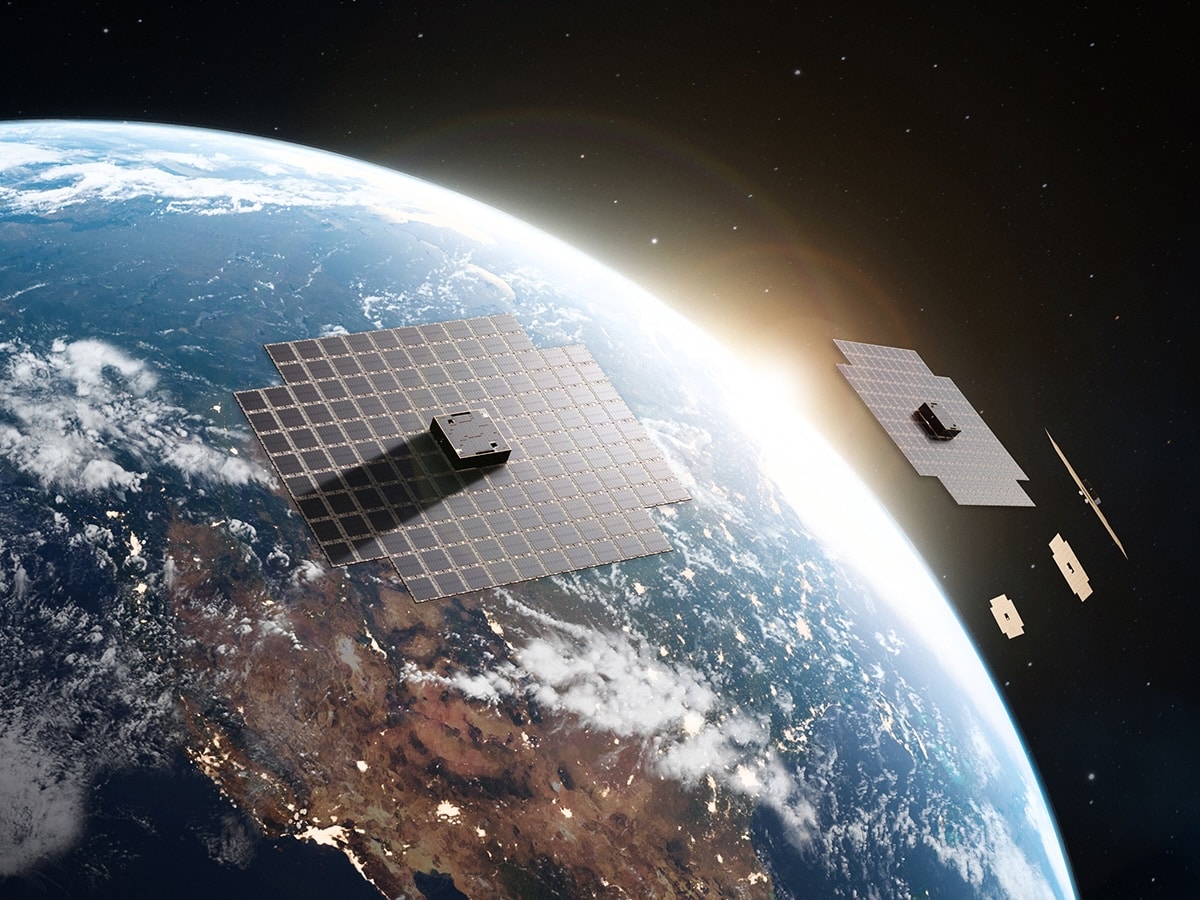
The launch of commercial services will depend partly on securing the necessary regulatory clearances in each market, and also on AST SpaceMobile’s own commercial launch schedule. AST SpaceMobile currently has five BlueBird LEO satellites in orbit, and aims to deploy between 45 and 60 more satellites this year.

The Axian partnership is AST SpaceMobile’s second major pan-African deal. In December 2024, it signed a ten-year commercial agreement with Vodafone Group to roll out its services in Vodafone’s markets worldwide. In Africa, that includes Democratic Republic of Congo, Egypt, Ethiopia, Kenya, Lesotho, Mozambique and South Africa.

AST Spacemobile has also signed partnership deals with Safaricom in Kenya and Uganda Telecom.

Liberty Costa Rica targets tourism sector with 5G service launch

Liberty Costa Rica commercially launched the first sites of its 5G network across multiple regions on Tuesday using gear from Ericsson, with plans to achieve national coverage before the end of this year.

Liberty Costa Rica said it’s prioritising tourism in its initial 5G phase, with rollouts covering tourist and commercial hubs in Guanacaste, the Central Pacific, and the Northern Zone. Tourism accounts for roughly 8.2% of GDP and 15.5% of jobs in Costa Rica.

The rollout combines 5G deployment in the 3.5 GHz and 700 MHz bands to improve capacity, indoor penetration, and service continuity. Liberty’s network also supports fixed wireless access (FWA) services, delivering high-speed connectivity to homes and businesses, especially in areas where fibre or cable infrastructure is limited or unavailable.

According to Ericsson, the live network is delivering download speeds exceeding 1 Gbps and upload speeds above 100 Mbps, enabling seamless streaming, instant downloads, low‑latency cloud and video conferencing, and power AR/VR, telemedicine, remote education, smart logistics, public safety, and industrial automation – all of which Ericsson said will transform tourism, retail and public services nationwide.

“This deployment, led by ICT leaders, reflects our commitment to the digitalization of Costa Rica – boosting connectivity, strengthening strategic sectors, and creating opportunities for people, businesses, and communities to harness the full potential of this next-generation technology,” said Sean Cryan, head of LATAM North and Caribbean at Ericsson.

The launch follows a six-year strategic contract signed by Ericsson and Liberty Latin America in July last year to deploy 5G Standalone (5G SA) technology in Costa Rica.

Liberty Costa Rica and rival telco Claro each paid $16.2 million for 5G spectrum rights in January 2025.

Cassava Cloud Partner programme announced

Cassava Technologies, a global technology leader of African heritage, has announced the launch of its Cassava Cloud Partner (CCP) programme during MWC26.

The programme will enable mobile network operators and system integrators across Africa and Latin America to consume, resell, or distribute AI, cloud, and digital services using Cassava’s infrastructure and technology platforms.

Ahmed El Beheiry, Group COO and Group Chief Technology & AI Officer, Cassava Technologies, explains: “Through the CCP programme, we are working with partners to extend access to AI infrastructure, cloud platforms, digital capabilities and solutions enabling enterprises, developers, and entrepreneurs across the continent to build and deploy AI-powered solutions

He adds: “We are expanding Africa’s sovereign AI ecosystem to build solutions that address the continent’s unique challenges while creating new opportunities for growth and digital inclusion.”

CCP will provide Cassava’s customers and partners with four clear value propositions. These include access to Nvidia Cloud Partner solutions, Cassava’s complete turnkey AI Factory, its own native AI solutions and CAIMEx, a localised multi-model platform that provides unified access to leading AI models through regional AI factories. 

Through CAIMEx, customers will gain unified access to advanced tools like the Customer Experience Conversational Interface (CECI), Geospatial AI Ops, and Cassava Autonomous Networks.

Cassava says it empowers customers to deploy compute capabilities in a scalable, perfectly orchestrated manner from day one, following local compliance policies.

Through the CCP programme, Cassava says it is removing barriers to entry, such as high upfront infrastructure costs, through a flexible managed approach.

This supports Cassava’s broader strategy to build a sovereign cloud and AI ecosystem, spanning national and enterprise deployments, to enable governments and enterprises across Africa to access advanced AI infrastructure while maintaining control over their data and digital platforms.

Cell C and Odine sign PoC to pioneer AI-driven network quality enhancement

South African operator Cell C and Odine, a technology partner driving innovation in telecom and enterprise networks, have announced the signing of a proof of concept (PoC) agreement to pioneer artificial intelligence (AI)-driven network quality enhancement technologies.

The joint initiative aims to significantly improve network quality and deliver uninterrupted connectivity across Cell C’s network.

The partners say the PoC will demonstrate that, by leveraging an AI-based solution developed by OdineLabs, the wholly owned R and D subsidiary of Odine, Cell C will be able to enhance connection continuity and improve the user experience on its mobile network. This initiative also supports Cell C’s capex-light strategy, which allows it to deliver superior service quality while optimising infrastructure investment.

Through this collaboration, Odine says it applies its innovation-driven model that integrates consultancy, system integration, and AI-powered product development to help Cell C build agile and future-ready infrastructure. By leveraging automation and advanced AI orchestration, OdineLabs says it will enhance Cell C’s network to ensure high quality, reliability, resilience and efficiency.

Schalk Visser, Chief Technology Officer at Cell C, says: “By exploring how AI can proactively enhance network quality, we’re taking meaningful steps towards delivering a more consistent and reliable experience. This PoC will help us understand how advanced insights and automation can keep our customers connected without interruptions so they can confidently work, learn, and stay in touch wherever they are.”

Alper Tunga Burak, Chairman & CEO of Odine, adds: “At Odine, we believe AI will fundamentally reshape the way telecom operators deliver value. This collaboration with Cell C reflects our shared vision of building agile, future-ready networks that prioritise customer experience. In line with this vision, the strategic focus we place at OdineLabs on advanced research and innovation is enabling us to transform next-generation network quality enhancement from a forward-looking concept into a practical and scalable reality for operators and their customers. »

Huawei launches enhanced AI-centric network solutions for All Intelligence at MWC 2026

Press Release

Huawei released a series of all-scenario U6 GHz products today at MWC Barcelona 2026 to help carriers unlock the full potential of 5G-A and set the stage for a seamless transition to 6G. The company also launched enhanced AI-Centric Network solutions that will help carriers prepare for the agentic era by enabling intelligent services, networks, and network elements (NEs). Huawei is also showcasing its SuperPoD cluster for the first time outside China, which they have created to offer “a new option for the intelligent world”.

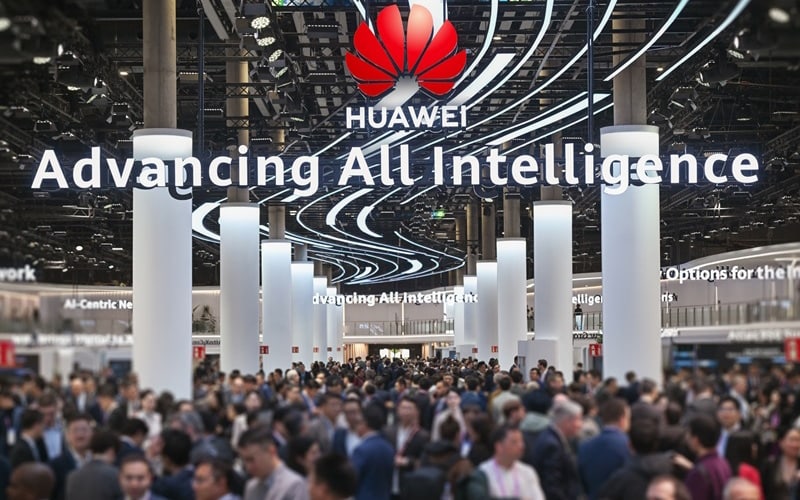
The theme of Huawei’s booth for this year’s conference is “Advancing All Intelligence”, reflecting the company’s plans to build more AI-centric networks and computing backbones that will help carriers and industry customers seize opportunities from the AI era.
U6 GHz: Unlocking 5G-A potential for a smooth transition to 6G

According to Huawei, the next five years will provide a window of opportunity to unleash the full potential of 5G-A. They plan to work with global carriers on the large-scale 5G-A deployment, use high uplink to address surging consumer and industry demand for mobile AI applications, and use the U6 GHz band to unlock the full value of spectrum and pave the way for smooth evolution to 6G.

There are already 70 million 5G-A users globally, and 5G-A is increasingly being adopted by carriers at scale. In China, Huawei has helped carriers deliver contiguous 5G-A coverage across 270 cities and launch 5G-A packages that monetize experience in over 30 provinces.

The all-scenario U6 GHz products and solutions Huawei released today use innovative technologies to create a high-capacity, low-latency, optimal-experience backbone designed for mobile AI applications.

Three-layer intelligence with AI-Centric Network: Seizing opportunities in the agentic era

Following the trend to integrate AI directly into networks, Huawei is using AI to create AI-Centric Network solutions that will act as target networks for the agentic era. These solutions embed intelligence across three layers:

At the service layer, Huawei is helping carriers build multi-agent collaboration platforms, with specialized agents for calling, experience monetization, and home broadband. These platforms will enable AI-driven transformation of carriers’ core services like voice, internet access, and home broadband.
At the network layer, Phase 1 of Huawei’s L4 Autonomous Driving Network (AND L4) solution primarily focuses on single-scenario automation, helping carriers drastically improve O&M efficiency, network quality, and monetization capabilities. By the end of 2025, the company’s single-scenario ADN solutions have been commercially deployed on more than 130 telecom networks worldwide. Moving forward, Huawei will continue to help carriers reshape operations with AI, going beyond single-scenario automation to support end-to-end single-domain network autonomy.
At the NE layer, Huawei works with carriers to accelerate innovation in areas like algorithm optimization for RANs, intelligent and accurate service identification for WANs, and unified service intent for core networks that helps integrate B2C and B2H services. Innovations in these domains are already driving marked improvements in network energy and spectral efficiency, intelligent service awareness, and network resilience assurance.
Computing backbone with SuperPoDs and clusters: A new option for the intelligent world

In the computing space, Huawei is showcasing its computing cluster and SuperPoD products featuring new innovations in system-level architecture, including its UnifiedBus technology for SuperPoD interconnect, for the first time outside China. Key products on display will include the Atlas 950 SuperPoD for AI computing, the TaiShan 950 SuperPoD for general-purpose computing, the Atlas 850E SuperPoD, and the TaiShan 500 and TaiShan 200 servers. These offerings are Huawei’s answer to demand for stronger compute and lower latency – two elements that are especially critical as trillion-parameter AI models become more commonplace and agentic AI is introduced into core production systems.

These offerings also reflect Huawei’s ongoing commitment to going fully open source and open access. The company is actively working with partners to build an open computing ecosystem and provide the world with another option for solid computing power.

In the enterprise space, Huawei’s focus at MWC is on helping different industries accelerate their intelligent transformation. Together with customers, partners, and representatives from different industries, Huawei will unveil a series of innovative practices that are helping different industries go intelligent on all fronts. The company will also share its new offerings in digital and intelligent infrastructure, and give updates on its latest efforts in partner ecosystem development. In total, Huawei will feature 115 industrial intelligence showcases for enterprise customers in different domains; its SHAPE 2.0 Partner Framework; and 22 new industrial intelligence solutions jointly developed with partners.

In the consumer space, Huawei’s theme for this year’s MWC is “Now is Yours”. The company is working to deliver an unparalleled intelligent experience for consumers in all scenarios, and will showcase a range of new smartphones, wearables, tablets, PCs, and earphones that feature its latest breakthroughs in areas like foldable screens, health and fitness, mobile photography, productivity, and creativity. In 2026, Huawei will keep innovating to deliver competitive products with a superior experience, giving consumers greater freedom to discover and create in their own unique way.

Huawei also announced today that it had successfully surpassed the commitment it had made to help drive digital inclusion and combat the rapidly widening digital divide. By the end of 2025, Huawei had worked with customers to provide connectivity to 170 million people in remote areas across more than 80 countries, giving more people access to inclusive digital services.

MWC Barcelona 2026 will be held from March 2 to March 5 in Barcelona, Spain. During the event, Huawei will showcase its latest products and solutions at stand 1H50 in Fira Gran Via Hall 1.

The era of agentic networks is now approaching fast, and the commercial adoption of 5G-A at scale is gaining speed. Huawei is actively working with carriers and partners around the world to unleash the full potential of 5G-A and pave the way for the evolution to 6G. We are also creating AI-Centric Network solutions to enable intelligent services, networks, and network elements (NEs), speeding up the large-scale deployment of level-4 autonomous networks (AN L4), and using AI to upgrade our core business. Together with other industry players, we will create leading value-driven networks and AI computing backbones for a fully intelligent future.

For more information, please visit: https://carrier.huawei.com/en/events/mwc2026