

Two customer deployments, one key approval, and a bit of M&A: … [visit site to read more]
7
Juin, 2023

Beeline Kazakhstan launches software development company
Operator Beeline Kazakhstan has launched a software company, QazCode, to boost the development of new digital products and services. This was announced by parent company, global digital operator Veon.
QazCode will be among the largest software development companies in Kazakhstan, with some 700 staff that will include 350 developers with expertise across software development, big data analytics, cybersecurity and artificial intelligence. QazCode will build digital products and services for both local Kazakh and international clients, including other Veon digital operators.
Veon explains that the formation of QazCode is part of its ‘Digital Operator’ strategy, which is aimed at combining connectivity with a complete digital products and services portfolio that meets local needs in such areas as mobile financial services, entertainment, health, and education, leading to greater engagement and value generation for customers. It will, says Veon, help strengthen the burgeoning IT services ecosystem in Kazakhstan.
QazCode has been created out of Beeline Kazakhstan’s IT development group that previously created the entire ecosystem of the digital operator, with over 60 apps used by millions of people in Kazakhstan.
The expertise of QazCode across all aspects of digital application development will now become available to operating companies within the Veon Group and to independent companies looking to develop large-scale digital services.
QazCode is located in Astana Hub, the largest international technology and IT park of start-ups in Central Asia, situated in Astana, the capital of Kazakhstan. Astana Hub comprises a community of more than 1,000 companies, local start-ups and R&D offices.
MORE ARTICLES YOU MAY BE INTERESTED IN…
7
Juin, 2023

AT&T: 5G evolution and the role of FWA
Interview
At this year’s Connected America conference, we caught up with with Chris Sambar, President of AT&T Network, after his fiery morning keynote session to discuss the latest trends in 5G and the company’s strategic approach to Fixed Wireless Access
America’s 5G journey
The US was one of the first countries in the world to launch 5G services back in 2019 and, since then, the country has raced to become a world leader in the new technology. Nonetheless, the journey to 5G maturity is far from over, with AT&T’s Chris Sambar noting that there is still huge potential for the 5G ecosystem to develop.
“LTE showed us what’s possible when the ecosystem develops together. 5G’s going to be very similar,” said Sambar. “It’s taking its time, but its also more complex than LTE […] We’re beginning to see it slowly come together, and the experiences are getting better and better.”
Part of this 5G evolution is the rollout of the more powerful standalone 5G architecture, a process which is already underway at AT&T.
“We’ve rolled out our standalone core at AT&T, we’re scaling it, and we’re starting to put some of those new services on there, like gaming, augmented reality and virtual reality,” said Sambar. “We’re pretty excited about the monetisation opportunities that these new services represent.”
The Fixed Wireless Access debate
Fixed Wireless Access (FWA) has become a major talking point in the US over the past year, proving to be an exciting and often profitable use case for 5G at a time when monetising the new technology is challenging.
But while Verizon and T-Mobile are placing major bets on expanding 5G FWA services, AT&T’s FWA strategy is notably more reserved.
“Our view’s a little different from the other two operators in the US,” explained Sambar. “We see the RAN as the point of congestion. It’s a simple physics equation: how much load or bandwidth can spectrum provide to the users? One of our peers quoted that they are seeing up to half a terabit a month of usage on their fixed wireless network – that’s a lot. It’s a lot of bandwidth to put on a wireless network and congest the air interface very quickly.”
As a result, FWA can only be reasonably offered to limited number of customers in each sector before mobile service quality begins to be impacted – a fact that is only exacerbated by the growing consumer demand for bandwidth year-on-year.
The primary solution to this challenge is simply to deploy more mobile infrastructure to meet demand, which is very expensive, particularly compared to the average cost of a fixed fibre connection.
“[FWA is] not a true replacement for broadband,” said Sambar. “We’re going to reach a time when we’re going to struggle to provide services if we deploy it too broadly and I think that’s what the other two operators in the US are going to struggle with.”
Instead, AT&T’s primary target for FWA will be to offer services to those customers currently using legacy copper networks, a move that will both offer these customers an increase in service quality as well as allowing AT&T to sunset these older networks.
Building the sustainable network of the future
Finally, one of the biggest themes at Connected America 2023 – and, indeed, in the telecoms world more generally – was sustainability. According to Sambar, AT&T not only has a moral imperative to help take better care of the planet, but also a major economic incentive.
“AT&T’s power bill is well over a billion dollars a year. The faster we can get consumers off the copper network, the faster we can shut down the infrastructure in the offices where the copper is running, and that saves a whole lot of money,” he said.
He noted that AT&T’s power consumption is actually decreasing year-on-year as a result of more efficient technologies and the sunsetting of legacy network infrastructure, despite the increase in data demand. This is not only due to the deployment of more energy efficient infrastructure, but also the incorporation of AI, automation, and machine learning. These novel technologies allow for far greater network optimisation, not just for daily network functions but also for logistics, like site maintenance.
“A machine can look at a tower that’s scheduled for three upgrades over a year and, instead of sending an engineer three times, combine them all into a single visit. It sounds like a simple thing, but a human has a really hard time doing that with tens of thousands of towers in the network. It’s going to save us a lot of money and it’s also going to help us with our carbon footprint.”
You can view our full interview with Chris Sambar from AT&T from the link below
[embedded content]
Planning for Connected America 2024 is already underway! For more information about how to get involved, contact Maddie Hicks at Maddie.Hicks@totaltele.com
Also in the news:
More than two-thirds of U.S. commercial sites have no optical fibre access
Viasat completes Inmarsat merger deal
EXATEL talks expansion into subsea connectivity sector
Wednesday Roundup: Federated Wireless, DZS, Irby, Lumen
Some private 5G for the DoD and yet more FTTx expansion projects: … [visit site to read more]
6
Juin, 2023

Colombian MVNO goes with Optiva for BSS upgrade
Keep up-to-date with all the latest news, articles, event and product updates posted on Developing Telecoms.
Subscribe to our FREE weekly email newsletters for the latest telecom info in developing and emerging markets globally.
Sending occasional e-mail from 3rd parties about industry white papers, online and live events relevant to subscribers helps us fund this website and free weekly newsletter. We never sell your personal data. Click here to view our privacy policy.
6
Juin, 2023

Liberty Global riles shareholders with plans to redomicile to Bermuda
News
The Nasdaq-listed Liberty claims the move is to better align itself with the US regulations
According to reports, independent shareholders in Liberty Global are likely to vote against a proposal to domicile the company in Bermuda at an upcoming extraordinary general meeting.
Liberty Global, which has telecoms businesses interests in numerous markets across Europe, including Virgin Media O2 in the UK, first filed a preliminary statement with US Securities and Exchange Commission (SEC) for the move back in April. The filing indicated that the company would be reincorporated in Bermuda, arguing that doing so would help simplify relations with the company’s predominantly US-based shareholders.
“Today, we are incorporated as an England and Wales company, listed on Nasdaq, and as a result there are cumbersome administrative processes,” said Liberty Global CEO Mike Fries. “The proposed transaction will have no change to our listing on Nasdaq, our day-to-day operations or the tax residence of our operating companies. The principal objective of the change in jurisdiction of incorporation is to facilitate shareholder value creation by aligning the US style corporate law of Bermuda with our listing on Nasdaq and the expectations of our largely US shareholder base.”
He further highlighted that the move should streamline various business activities, such as M&A.
“Key components of our strategy to create shareholder value may include, among others, financing, cross-border M&A and investments, share buybacks, self-tender offers, spin-offs and split-offs, all of which are easier to execute as a Bermuda company,” he added in a note to shareholders.
But despite this purported boon in value, not all shareholders are likely to be happy with the move. The shift would reportedly lower the threshold for key shareholder votes from its 75% to just 50%, therefore delivering a disproportionate amount of voting power to Fries and Liberty Global’s chairman, billionaire John Malone.
Together the duo would control roughly 40% of votes, despite only holding 8% of the company’s shares.
This opposition comes at a troubling time for Liberty Global’s leadership, which is already facing backlash for its proposed changes to executive pay packages and governance practices.
Want to keep up to date with all of the latest telecoms news from around the world? Click here to receive Total Telecom’s daily newsletter
Also in the news:
More than two-thirds of U.S. commercial sites have no optical fibre access
Viasat completes Inmarsat merger deal
EXATEL talks expansion into subsea connectivity sector
Int’l Bytes: NEC, nLighten, NetIX, Lancom
One new subsea cable project, one M&A, and one new partnership: … [visit site to read more]
5
Juin, 2023

Safaricom Ethiopia and Prepay Nation partner for international mobile top-up service
Keep up-to-date with all the latest news, articles, event and product updates posted on Developing Telecoms.
Subscribe to our FREE weekly email newsletters for the latest telecom info in developing and emerging markets globally.
Sending occasional e-mail from 3rd parties about industry white papers, online and live events relevant to subscribers helps us fund this website and free weekly newsletter. We never sell your personal data. Click here to view our privacy policy.
5
Juin, 2023
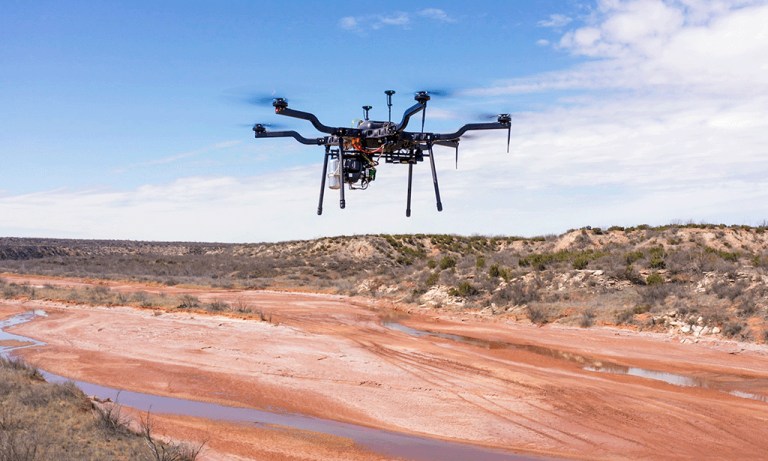
T-Mobile and Valmont Industries partner for BVLOS drone flight
Press Release
The Un-carrier has earned its wings! Valmont Industries Inc. and T-Mobile (NASDAQ: TMUS) today announced the completion of an industry-first long-distance BVLOS drone inspection flight enabled by 5G.
Traditional methods for infrastructure monitoring typically require extensive manpower, manned aircraft operations or ground-based inspections, which involve significant safety risks, more time and more money.
But not anymore ― especially now that the Federal Aviation Administration (FAA) is granting more waivers for BVLOS drone operations. And as one of the first companies in the U.S. to receive said waiver, Valmont is ahead of the game.
In under three hours, Valmont accomplished a non-stop 77-mile drone mission from Childress to Aspermont, Texas inspecting vital infrastructure like power lines, railroads, bridges and more. The drone used a Harris Aerial H6E drone equipped with a T-Mobile 5G connected Sony A7RM5 camera. Significantly faster and more fuel efficient, this task was three times faster than conventional methods, while using less than two gallons of fuel.
Mission highlights:
- Valmont drone inspection teams used less than one-fourth gallon of fuel per hour.
- Flight pushes average distance of UAS inspections from less than 20 miles per day to more than 60.
- Even though the route was very rural, T-Mobile 5G provided live data transfer throughout the three-hour flight.
- The Sony A7RM5 combined with the ability to fly closely to utility lines, provided high-resolution details for critical infrastructure inspection.
- The flight proves that drones are a viable, safe, and efficient alternative to helicopters for infrastructure.
- Harris Aerial’s drone and Valmont’s proprietary payload are fully National Defense Authorization Act (NDAA) compliant.
“Range has been a hurdle in the drone inspection space, until now,” said Jake Lahmann, UAS Manager at Valmont Industries Inc. “To be able to get this kind of range in a single drone flight is really going to revolutionize the way the industry approaches infrastructure inspections.”
“5G was built to make life easier,” added Ulf Ewaldsson, President of Technology at T-Mobile. “Whether it’s connecting a person on their smartphone or improving long-range drone infrastructure inspections, there is no doubt that the reach and speed of T-Mobile 5G is making it possible for entire industries to revolutionize the way they work.”
With 5G, Valmont’s drone inspection service is another example of 5G-enabled technologies that can be used to quickly respond to or prevent an emergency. By preemptively monitoring infrastructure sites with greater accuracy, Valmont can help prevent malfunctions and breakdowns before they have a chance to have a widespread impact.
Working closely with the FAA on BVLOS drone operation policies, Valmont plans to offer drone-in-a-box (DiaB) services nationwide in 2024. This enables anyone needing aerial inspection services the ability to order a drone, unbox it and watch it run its inspection while a Valmont pilot flies it remotely from virtually anywhere in the U.S.
T-Mobile is the leader in 5G, delivering the country’s largest, fastest and most awarded 5G network. The Un-carrier’s 5G network covers 326 million people across two million square miles — more than AT&T and Verizon combined. 275 million people nationwide are covered by T-Mobile’s super-fast Ultra Capacity 5G, and the Un-carrier plans to reach 300 million people with Ultra Capacity this year — nearly everyone in the country. T-Mobile 5G is available on all T-Mobile phone plans.
What does the future hold for T-Mobile and connected drones? Join the US telecoms sector in discussion at Connected America 2024
Also in the news:
More than two-thirds of U.S. commercial sites have no optical fibre access
Viasat completes Inmarsat merger deal
EXATEL talks expansion into subsea connectivity sector
5
Juin, 2023

Industry Spotlight: MOX Networks’ Allen Meeks
 MOX Networks (“MOX”) is one of the few companies out there actively building new fiber infrastructure. Privately owned and a part of the Nantworks company portfolio, MOX has a unique position within the market with its plans for the buildout of hyperscale infrastructure and the forthcoming healthcare data wave. Over the past year, they have been actively putting fiber in the ground in the Pacific Northwest and developing unique routes in the eastern US as well. With us today is Allen Meeks, President and COO of MOX Networks, whom we talked to last April. … [visit site to read more]