Huawei and Dongfeng sign Chinese EV partnership 


News 

The partnership is Huawei’s latest attempt to enter further into the EV market 

This week, telecoms equipment giant Huawei and Chinese state-owned vehicle manufacture Dongfeng Motor Group have signed a partnership to collaborate on Dongfeng’s Voyah brand of “new energy” vehicles.  

Dongfeng is one of China’s ‘Big 4’ car manufacturers, alongside FAW Group, SAIC Motors, and Changan. 

The partnership, which was announced on Monday, will see Dongfeng Motors include various Huawei technologies in its vehicles, including autonomous driving and infotainment software. The press release notes that “both parties will jointly create the ultimate intelligent travel experience based on user needs. Through collaborative exploration and innovation in various fields, they aim to accelerate the large-scale commercialization of intelligent technologies.”  

Little else about the partnership was released, although it is expected that Voyah will adopt “Huawei Inside”, the company’s autonomous driving system that combines the Harmony operating system with the HiCar solution, and is capable of level-3 of autonomous driving. This indicates the vehicle can perform most driving tasks but human override may still be required in some circumstances. 

Voyah, who delivered 50,000 vehicles last year, aim to double their production in the coming year, according to their partner meeting yesterday. 

Huawei has been striving to grow its presence in China’s automobile industry for a number of years now, having invested $1 billion in the industry since 2021.The country has the one of the world’s fastest growing electric vehicle (EV) markets, with penetration expected to reach 40% of the country’s automobile industry this year. For Huawei, this represents a massive opportunity, one which the company is increasingly dedicated to pursuing as international sanctions stymie its traditional telecoms business in many Western markets. 

Back in November, Huawei announced a joint venture (JV) with state-run automobile firm Changan Auto, another of the so-called Big 4. Huawei said it will move its core technologies and resources in its smart car unit to the newly created JV, in which Changan will take a stake of up to 40%. The JV will focus on areas that are already covered by Huawei’s Intelligent Automotive Solution (IAS) business unit, such as intelligent driving software and digital cockpit systems. 

Keep up to date with the latest telecoms news by subscribing to the Total Telecom daily newsletter 

Also in the news:
South Korean president backs semiconductor mega cluster investment
Malaysia to launch second 5G network alongside DNB
BT signs connectivity deal with Iraqi gas firm

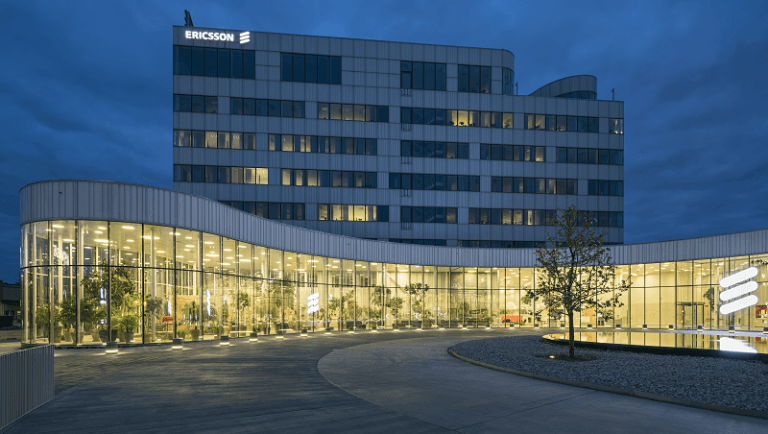
Ericsson gloomy on 2024 prospects as global spending slows 


News 

The vendor expects the decline in 5G demand will continue from last year 

Sweden’s Ericsson says it expects a further decline in 5G equipment sales to mobile operators in the coming year, despite the company beating its Q4 profit expectations this week. 

Sales are slowing in both the US and India – a concerning trend given the latter is typically classed as a high growth market and still has a long way to go with its 5G rollout. 

In Q4, revenues dropped 16% year-on-year to SEK 71.9 billion ($6.9 billion), compared to a 5% drop in Q3. Net income fell 30.5% to SEK3.4 billion ($323.7 million). 

“As we look to 2024, we expect the market outside China to further decline, with similar uncertainties as experienced in 2023,” said President and CEO Börje Ekholm in the results’ press release. 

“We expect a… a further decline of the RAN [Radio Access Network] market outside China as our customers remain cautious and the investment pace is normalizing in India,” continued the press release. 

“5G only being in the early stages of build-out will require additional network investments. In our view, the current investment levels are unsustainably low for many operators.” 

To combat the decline in revenues, Ericsson has confirmed that it will continue to focus on cost efficiency and operational efficiency in the coming year, which could include layoffs, reports Reuters. The company already announced that 8,500 job will be cut between the middle of 2023 and end of 2024. 

Despite the forecast decline, Ericsson is expected to get a boost from the $14 billion from its deal with AT&T in the second half of this year. This deal was signed back in December and will see Ericsson supply the Open RAN equipment to the US telecoms giant, which hopes the open technology will carry 70% of its wireless traffic by the end of 2026. 

In a separate press release today, the company announced that it has appointed Lars Sandström as Chief Financial Officer, replacing Carl Mellander, who announced his departure in April. 

Want to keep up with all of the latest telecoms news from around the world? Sign up to receive Total Telecom’s daily newsletter

South Korean president backs semiconductor mega cluster investment
Malaysia to launch second 5G network alongside DNB
BT signs connectivity deal with Iraqi gas firm

Is Cellnex going to reduce its assets in Poland?

Keep up-to-date with all the latest news, articles, event and product updates posted on Developing Telecoms.
Subscribe to our FREE weekly email newsletters for the latest telecom info in developing and emerging markets globally.

Sending occasional e-mail from 3rd parties about industry white papers, online and live events relevant to subscribers helps us fund this website and free weekly newsletter. We never sell your personal data. Click here to view our privacy policy.

Vodafone Idea’s payment problems continue

It has been widely reported in the Indian press that Tata Communications Transformation Services (TCTS), a subsidiary of Indian digital ecosystem enabler Tata Communications, has issued a service contract  termination notice to operator Vodafone Idea (aka Vi) after the company did not pay TCTS on time.

Tata Communications is apparently in discussion about a disengagement transition plan with Vodafone Idea, though it has not named the operator specifically.

A notice to the stock exchange suggested that the carrying amount of trade receivables from the operator may have been Rs 221.19 crores (about US$26.6 million) in December 2023.

As news reports point out, TCTS handles maintenance work for Vodafone Idea’s fibre assets. However, Vodafone Idea has apparently offered an assurance that customer services will remain unaffected despite the termination of the service contract by TCTS. The work will now be brought in-house.

What may be more significant in this case is that this is a big vendor withdrawing its services to Vodafone Idea over non-payment, which does not seem to have happened to the operator before.

What this says about Vodafone Idea’s financial situation is unclear. News reports suggest that the operator is clearing its debt obligations to lenders and banks. However, some payments owed to vendors are apparently being delayed. 

We have already mentioned Vodafone Idea’s issues with Indus Towers (which led to threats to restrict service, though not their outright withdrawal). The operator also needs to pay other vendors such as American Tower Corp (ATC), Nokia and Ericsson. And, of course, it needs to find money for 5G rollout given the ground it has lost to competitors Bharti Airtel and Reliance Jio.

MORE ARTICLES YOU MAY BE INTERESTED IN…

Telefonica reclaims La Liga rights for €1.2 billion 


News 

The announcement comes after Telefonica was forced to reapply for the tender following competition authority intervention 

Telefonica has this week announced that it has retained the exclusive rights to air games from La Liga (the top tier of Spanish men’s football) via its Movistar plus streaming service, until the end of the 2026-27 season. 

The Spanish telco can now broadcast five out of the ten live football matches per week, and will pay €1.29 billion to do so. 

In 2021, La Liga had initially agreed broadcast contracts with streaming platform DAZN and Telefonica until the end of the 2026-27 season, but were mandated to re-tender the rights after intervention from the (National Commission on Markets and Competition CNMC), Spain’s competition regulator.  

The CNMC argued that Telefonica should have not been allowed to buy the broadcasting rights for a period exceeding three years, under the terms of its acquisition of pay TV operator Digital+ in 2015. 

This term limit has now been scrapped, which has resulted in Telefonica being able enter and win a new tender process. Telefonica bid €250 million for the 2024/25 season and €520 million for each of the 2025/26 and 2026/2027 seasons. 

This newly acquired tender does not affect the rights held by DAZN, which also runs until the end of the 2026-27 season. 

Keep up to date with the latest telecoms news by subscribing to the Total Telecom newsletter 
AT&T, Google, and Vodafone partner for $155 million investment in AST SpaceMobile  
AWS to invest $15bn in Japan’s cloud computing infra
Manchester named the UK’s most digitally inclusive city 

Singtel taps Starlink for maritime connectivity


Press Release

Singtel announced today that it will augment its maritime digital offerings with Starlink’s satellites to drive adoption of digital solutions by ship owners and operators so they can innovate and tap into advanced technologies such as artificial intelligence (AI), 5G, edge computing, as well as access cloud-based solutions to improve safety, operational efficiencies, and crew well-being. With enhanced connectivity and low latency capabilities, ship operators can analyse data in real-time to increase productivity, reduce costs of fuel consumption and operational maintenance, among other benefits.

Starlink is the first low Earth orbit (LEO) broadband service to be added to Singtel’s comprehensive portfolio of award-winning, digital smart solutions for vessels known as iSHIP, which also includes Paragon – the telco’s an all-in-one orchestration platform for 5G edge computing and cloud services. The platform will manage and automate the smart switching between satellite communication services ensuring uninterrupted, high quality network coverage as ships traverse long distances, including the most remote locations and under severe conditions. It will also enable ships to leverage edge computing, host mission critical applications either on-premises or at shore – freeing up valuable bandwidth and improving reliability.

“The addition of Starlink to our existing suite of satellite communications solutions, orchestrated by our patented Paragon platform, is part of our multi-orbit strategy to increase the resilience of satellite connectivity in the industry and to enable the rapid adoption of digital technologies and solutions,” said Bill Chang, Chief Executive Officer, Digital InfraCo, Singtel.

“The maritime industry is a complex, interconnected environment involving large volumes of data being transmitted between thousands of terminals, ships, and ports across the world. We have seen growing demands for faster, more resilient, and low latency connectivity as the industry starts to embrace digital transformation. The addition of Starlink to our existing suite of satellite communications solutions, orchestrated by our patented Paragon platform, is part of our multi-orbit strategy to increase the resilience of satellite connectivity in the industry and to enable the rapid adoption of digital technologies and solutions. As the first telco in Singapore to offer Starlink, we are confident that this offering will further facilitate the development of smart, secure, and sustainable solutions that will positively impact the industry,” said Mr Bill Chang, Chief Executive Officer, Digital InfraCo, Singtel.

Transforming the maritime industry with hyperconnectivity

High-speed, end-to-end connectivity is required to improve operational efficiencies, lower costs and raise the safety and security of vessels. Starlink is the world’s first and largest satellite constellation using LEO technology to deliver high-speed, low-latency Internet connectivity in even the most remote locations. As the only telco in the Southeast Asian region that features a multi-band satellite network including both LEO and geostationary orbit (GEO) offerings, customers can be assured that their ships and crew stay connected even in the most demanding maritime conditions.

With over 5,000 satellites in its constellation, Starlink can provide global maritime coverage for vessels of all sizes, delivering up to 220 Mbps download speed – easily capable of supporting fleet management, remote monitoring, and navigation. The flat high-performance kit is designed for mobility

applications and challenging environments with operating temperatures from -30°C to 50°C. Starlink’s small form factor, simple installation process and efficient power consumption will ensure easy integration and energy efficiencies for ships of all sizes.

Want to keep up with all the latest telecoms news? Click here to receive Total Telecom’s daily newsletter

Also in the news:
South Korean president backs semiconductor mega cluster investment
Malaysia to launch second 5G network alongside DNB
BT signs connectivity deal with Iraqi gas firm