AWS to invest $15bn in Japan’s cloud computing infra 


News 

The investment is expected to add over 37 billion to the Japanese GDP 

Amazon Web Services (AWS) has today announced plans to invest 2.2 trillion Japanese yen ($15.24 billion) in Japan’s cloud computing infrastructure by 2027. 

The investment, which was announced at a press conference in Tokyo today, will go towards the expansion and strengthening of facilities in Tokyo and Osaka to meet growing customer demand.  

AWS says the strengthening of its data centres and developing its cloud computing infrastructure is vital for the support of future AI services, including generative AI, the demand for which is rapidly growing. The boom in popularity of services such as ChatGPT, an AI chatbot developed by U.S.-based OpenAI, is likely to have contributed to the investment demand. 

AWS have had a presence in Japan since 2009 and have been steadily increasing their investments in the country. From 2011 to 2022, AWS spent 1.51 trillion yen ($10.20 billion) on increasing cloud capacity in the country. 

Japan is not the only market in which AWS is expanding. 

In May last year, AWS pledged to invest a huge $12.7 billion in the Indian data centre market by 2030, once again to meet the country’s growing demand for cloud services.  

The fact that the investment in Japan is even higher shows AWS is placing huge importance on the Japanese market, with its advanced level of digitalisation likely giving it a more urgent need for cloud infrastructure. 

“We see Japan as a very important country,” Tadao Nagasaki, head of the Japan unit of AWS, told the press conference. “The investment will support Japanese customers’ data utilisation, generate various economic spillover effects and contribute to Japan’s growth,” he continued.  

The global cloud computing market is dominated by three main players: AWS, Microsoft and Google, who together have two thirds of the market share. The market was valued at $495.3 Billion in 2022. 

Keep up to date with the latest international telecoms news by subscribing to the Total Telecom daily newsletter 

Also in the news:
South Korean president backs semiconductor mega cluster investment
Malaysia to launch second 5G network alongside DNB
BT signs connectivity deal with Iraqi gas firm
 

AT&T, Google, and Vodafone partner for $155 million investment in AST SpaceMobile  


News 

AST SpaceMobile will use the financing the help further secure their position in the emerging direct-to-device satellite communications market 

This week, AST SpaceMobile has announced a combined $155 million strategic investment from AT&T, Google and Vodafone.  

This funding is roughly divided into three portions: $110 million in 10-year subordinated convertible notes with 5.5% interest, with a conversion price of $5.75 per share, divided between all three parties; a $20 million revenue commitment from AT&T based on the successful activation of services delivered by AST’s first five satellites; and a $20 million minimum commitment from Vodafone still subject to definitive agreement.  

Vodafone was already an existing investor in AST SpaceMobile, while Google and AT&T are first-time investors.   

Alongside this external investment, AST SpaceMobile is also planning to draw up to $51.5 million from the company’s existing senior-secured credit facility.  

The gross proceeds from both activities will total $206.5 million. 

In addition to their investment, both Vodafone and AT&T have purchased network equipment (for an undisclosed amount) from AST to support their planned commercial services, while Google has agreed to collaborate with AST SpaceMobile on product development related to their Android handsets.  

In the press release, AST SpaceMobile claim that they invented the space-based direct-to-device market and are the first and only global cellular broadband network in space to connect with regular, unmodified mobile phones. 

In partnership with Vodafone, AT&T, Rakuten, and Nokia, AST SpaceMobile has already achieved various connectivity milestones with their technology, including 2G, 4G LTE, and 5G calls, and 14 Mbps download speeds per 5 MHz channels, delivered directly to standard smartphones.  

It is hoped that this technology will ultimately enable customers to access high quality connectivity anywhere where they have an unobstructed view of the sky. 

“Our vision at AST SpaceMobile has always been to chart a course of collaborative innovation and integration with the world’s leading wireless companies, which is why we are so thrilled to be welcoming this new strategic investment from AT&T, Google and Vodafone,” explained AST SpaceMobile CEO Abel Avellan.  

“With this strategic investment, we are gaining capital, invaluable expertise, and strategic partnership. This investment comes alongside prior investments by other leaders in the wireless ecosystem, including Rakuten, American Tower, and Bell Canada, all of whom are not only part owners of AST SpaceMobile but also serve as our technology partners and customers. Each new partnership signifies that market leaders worldwide have tremendous confidence in our vision and ability to ensure that the future of cellular broadband is borderless.” 

It is worth noting here that AST SpaceMobile is not alone when it comes to developing direc-to-device satellite communications for unmodified devices. Elon Musk’s Starlink constellation is working on a similar project, having made their first direct-to-device text from space just last week. The company hopes to expand these capabilities to voice and internet services next year. If this does come to pass, then AST SpaceMobile will find themselves in direct conflict with a company many times their own size against whom it may be hard to compete effectively. 

In this sense, this investment from Google, Vodafone, and AT&T serves as an important vote of confidence in AST’s technology and the company’s vision for the direct-to-device sector more broadly. 

Keep up to date with the latest international telecoms news by subscribing to the Total Telecom daily newsletter 

Also in the news:
South Korean president backs semiconductor mega cluster investment
Malaysia to launch second 5G network alongside DNB
BT signs connectivity deal with Iraqi gas firm


Ukheshe acquires EFT Corporation in “landmark” African fintech deal

Ukheshe International, a South African fintech enablement partner with an expanding footprint in key emerging markets, has acquired EFT Corporation, an Africa-focused payment and e-commerce solutions provider, from parent Loita Transaction Services (LXS), a pan-African payment solutions and financial switching provider.

The businesses say they will continue to operate as separate entities and maintain their respective brand identities for the foreseeable future. They add that the partnership ensures EFTCorp’s customers will continue to engage with a trusted brand while gaining access to an expanded suite of innovative digital services through Ukheshe.

As a 23-year-old pioneer of digital payments in 35 African markets supporting over 100 banks and processors, EFTCorp is known for its core switching skills and issuer processor technology. Ukheshe’s offerings encompass a comprehensive range of end-to-end digital services that assist in digitising banking partners.

This deal allows the wider group to access new technologies and opportunities in a diverse market, enhancing exposure to different customers, projects and business opportunities across Africa and the Middle East.

Ukheshe says that its expertise in digital onboarding, know your customer (KYC), digital wallets, and various payment channels will open new opportunities to digitise EFTCorp’s traditional customers who rely on established electronic payment processing systems.

Ukheshe has certainly been active in this market in recent years. This transaction follows on from Ukheshe’s 2022 acquisition of Masterpass, Mastercard’s QR code payments service, in South Africa, and the closing of a funding partnership with Development Partners International (DPI) in 2023, not to mention Ukheshe’s 2020 purchase of Oltio from Mastercard. Oltio developed the digital payments platform for Masterpass.

More recently, in 2021, Ukheshe Technologies and Infobip, a global cloud communications platform, developed what they called South Africa’s very first WhatsApp payment gateway.

It remains to be seen whether this latest deal is, as Ukheshe claims, “a significant move for the African fintech ecosystem”, let alone “a landmark deal that positions the new group for market dominance”. But Ukheshe clearly has major ambitions in this market.

As co-founder and CEO Clayton Hayward says, “The market is ripe for consolidation and disruption; bringing together these like-minded executive teams and our great products positions us to dominate the African continent as  the preferred banking solutions partner.”

MORE ARTICLES YOU MAY BE INTERESTED IN…

Indian smartphone market rebounds

The Indian smartphone market rebounded 20% year-on year in Q4 to 38.9 million units on the back of strong festive season demand, with growth predicted on the back of affordable 5G devices in 2024. 

Analysts company Canalys stated, Samsung was the highest shipper and maintained its leading position with 20% market share and shipments of around 7.6 million units. Chinese vendors dominated the rest of the top five, as Xiaomi claimed second with 7.2 million units, while vivo took third with 7 million units. 

Taking fourth place was realme with 4.5 million units and finally Oppo with 3.7 million. 

For the whole of 2023, the Indian smartphone market maintained stability with 148.6 million units, a drop of only 2%. Canlays noted the market showed resilience due to improved consumer confidence in the later part of 2023, despite inventory challenges for vendors, minimal inflation improvements and unpredictable demand.

Canalys senior analyst Sanyam Chaurasia noted increased investment in mainline retail space proving beneficial for vendors and enabled market stabilisation. 

“The premium segment witnessed robust growth, thanks to easy financing options, incentive schemes for retailers and rising disposable income,” said Chaurasia. “With the celebration of Diwali in November 2023, Apple got the opportunity to push the latest iPhone 15 series during the festive sales, contributing more than 50% to its shipments in Q4. Additionally, discounts on the previous-generation iPhone 14 and iPhone 13 models during online sales resulted in Apple’s record shipments, allowing it to capture 7% market share in India. 

“Similarly, Samsung had set aggressive retail targets for its premium Galaxy S23 series to drive premium segment growth. Along with this, Samsung’s latest Galaxy S23 FE launch in Q4 drove shipments, thanks to compelling banking deals.” 

“Vendors are entering 2024’s ‘Election Year’ with improved indicators for the consumer market with manageable inflation, a steady interest rate and clear visibility of a stable government to come into power,” said Chaurasia. 

“Canalys expects the Indian smartphone market to grow by mid-single digits in 2024, driven by affordable 5G and the pandemic period replacement cycle. But the biggest challenge for vendors this year will be to manage the rising bill of materials costs.” 

MORE ARTICLES YOU MAY BE INTERESTED IN…

Telstra upgrades network for LATAM

Australia-based operator Telstra extended its network capabilities in Latin America by establishing a dedicated point-of-presence (PoP) in Dallas, Texas and collaborating with Mexican operators Axtel and Vivaro, in its pursuit of growth. 

In a statement, the company detailed that its subsidiary Telstra International will carry out the project, and that its initial focus will be on Mexico as the new “strategic” PoP will be a “critical gateway” for internet and IP traffic from the region. It enables global enterprises and wholesalers including in LATAM, to be able to easily integrate into Telstra’s network and enhance their reach. 

Mexican multinationals aiming to connect to other regions and plug into the network to reach Asia-Pacific, Europe and other continents can do so through the same PoP. 

Telegeography estimated that on average 84% of internet traffic to and from LATAM currently goes through the US and Canada. Data traffic is expected to grow as international bandwidth increases in LATAM and massive bandwidth markets continue to rely on the US to be the gateway to reach markets on other continents. 

“We’re focused on Latin America as a key growth market as we expect to see increased demand for connectivity from enterprises, hyperscalers and wholesale customers between APAC and the region driven by a technology boom and growing economies. 

“Our official expansion and continued investments in digital infrastructure position us well to offer customers simple and secure options to connect to this dynamic region and leverage our global network,” said Telstra International CEO Roary Stasko.

“Looking ahead, Telstra International will continue to innovate on our network infrastructure through additional PoPs and collaborate with our industry partners to provide critical connectivity and capacity to more Latin American countries such as Brazil, Chile, Argentina and Colombia.”

MORE ARTICLES YOU MAY BE INTERESTED IN…

Running IoT Through the Skies

Running IoT Through the Skies

This Industry Viewpoint was authored by Dana Cohen Mizrahi, Product Marketing Manager at Sony Semiconductor Israel

Non-terrestrial network (NTN) connectivity is making its way into IoT chipsets, enabling connected devices and installations to be deployed anywhere. Some devices are being outfitted with stand-alone chips that can only connect to satellites, while others are using hybrid chipsets that support both terrestrial and non-terrestrial connectivity. … [visit site to read more]

Foxconn and HCL plan semiconductor venture in India

Keep up-to-date with all the latest news, articles, event and product updates posted on Developing Telecoms.
Subscribe to our FREE weekly email newsletters for the latest telecom info in developing and emerging markets globally.

Sending occasional e-mail from 3rd parties about industry white papers, online and live events relevant to subscribers helps us fund this website and free weekly newsletter. We never sell your personal data. Click here to view our privacy policy.

Manchester named the UK’s most digitally inclusive city 


News 

A study undertaken by Bionic, a UK-based broadband comparison company, has revealed that Manchester is the UK’s most digitally inclusive city 

After discovering that 1 in 5 UK adults lack the most basic digital skills needed for everyday life, and a shocking 1 in 2 households in the UK have no internet access at all, Bionic dug deeper into how UK cities compared when it came to digital inclusion.  

In the study, the number of digital inclusion services in each city were examined, taking into account their population and size. Manchester topped the list, having 193 digital inclusion services for a population of 586,100. This was followed by Coventry, with 61 services for 345,300 people, and Bangor took third place with 5 services for 31,765 people.  

Although they have a significant number of digital inclusion services, London failed to make it to the top 20 as it had less services per person.  

On the on the other end of the scale, the town of Armagh in Northern Ireland topped the list for the worst digital inclusion support, no services for its 63,874 residents. This was followed by Ely and St Davids, both of which also had no services, despite having a great population.  

“Our study highlights the pivotal role of digital inclusion support in building a more connected society,” said Les Roberts, connectivity expert at Bionic. 

“The fact that Manchester, Coventry, and Bangor have all emerged as the top three cities for digital inclusion in the UK is undoubtedly thanks to the hard work of local charities and organisations in their areas, showcasing their commitment to bridging the digital divide,” he continued. 

Roberts emphasised that whilst it is encouraging to see progress in areas outside of London, the study highlights the need for digital inclusivity to be extended to every corner of the UK. 

Total Telecom runs Connected North, which brings together over 200 expert speakers and 2500 to the North’s dedicated digital economy event in Manchester. Join us in April– book your tickets here! 

Also in the news:
South Korean president backs semiconductor mega cluster investment
Malaysia to launch second 5G network alongside DNB
BT signs connectivity deal with Iraqi gas firm

Nokia doubles down in Germany with €360 million investment  


News 

The investment is part of the company’s long-term goal to strengthen Europe’s value chain 

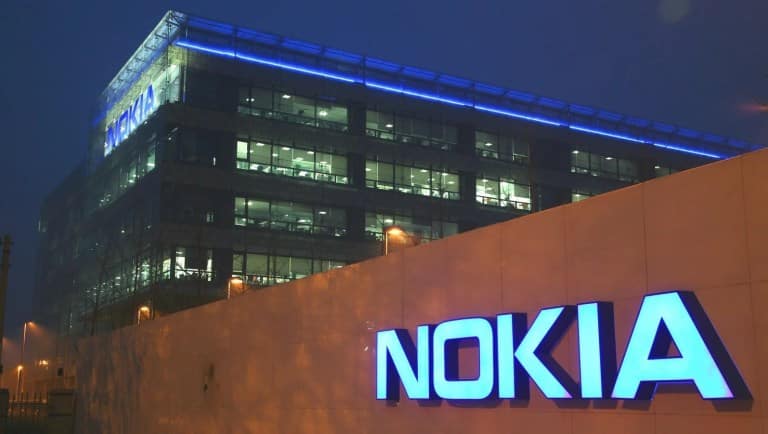
Nokia has announced that it will invest €360 million in the development of hardware, software, and chip design at its German sites in Ulm and Nuremberg. 

The investment is part of a four-year European IPCEI (Important Projects of Common European Interest) project, which is also supported by the German Federal Ministry of Economics and Climate Protection (BMWK) and the German states of Baden-Württemberg and Bavaria. 

Nokia says the investment will help strengthen the integrated development of software, hardware, and chips, all of which will be used in radio and optical products in future mobile communications systems based on 5G Advanced and 6G standards. 

It is hoped that the project will strengthen both Germany and Europe’s global positions in the fields of microelectronics, particularly in terms of emerging technologies like 6G and AI. 

“This important funding will support our efforts to advance the telecommunications industry in Germany and in Europe, helping to drive innovation and strengthen competitiveness,” said Nokia’s President of Mobile Networks, Tommi Uitto in a press release. 

“In particular, it will help our research into microelectronics that will power future technologies such as 6G, artificial intelligence and the metaverse as well as develop networks that are more energy-efficient and powerful. Germany is an important market for Nokia, and we look forward to working with the government to produce cutting-edge technology that is ‘Made in Germany’,” he continued. 

Keep up to date with the latest international telecoms news by subscribing to the Total Telecom newsletter 

Also in the news:
South Korean president backs semiconductor mega cluster investment
Malaysia to launch second 5G network alongside DNB
BT signs connectivity deal with Iraqi gas firm