Huawei pushes AI-centric networks as telecom industry enters ‘Internet of Agents’ era

Huawei has urged telecom operators to embed artificial intelligence across networks and services as the industry moves beyond the mobile internet era into what it describes as the “Internet of Agents”.

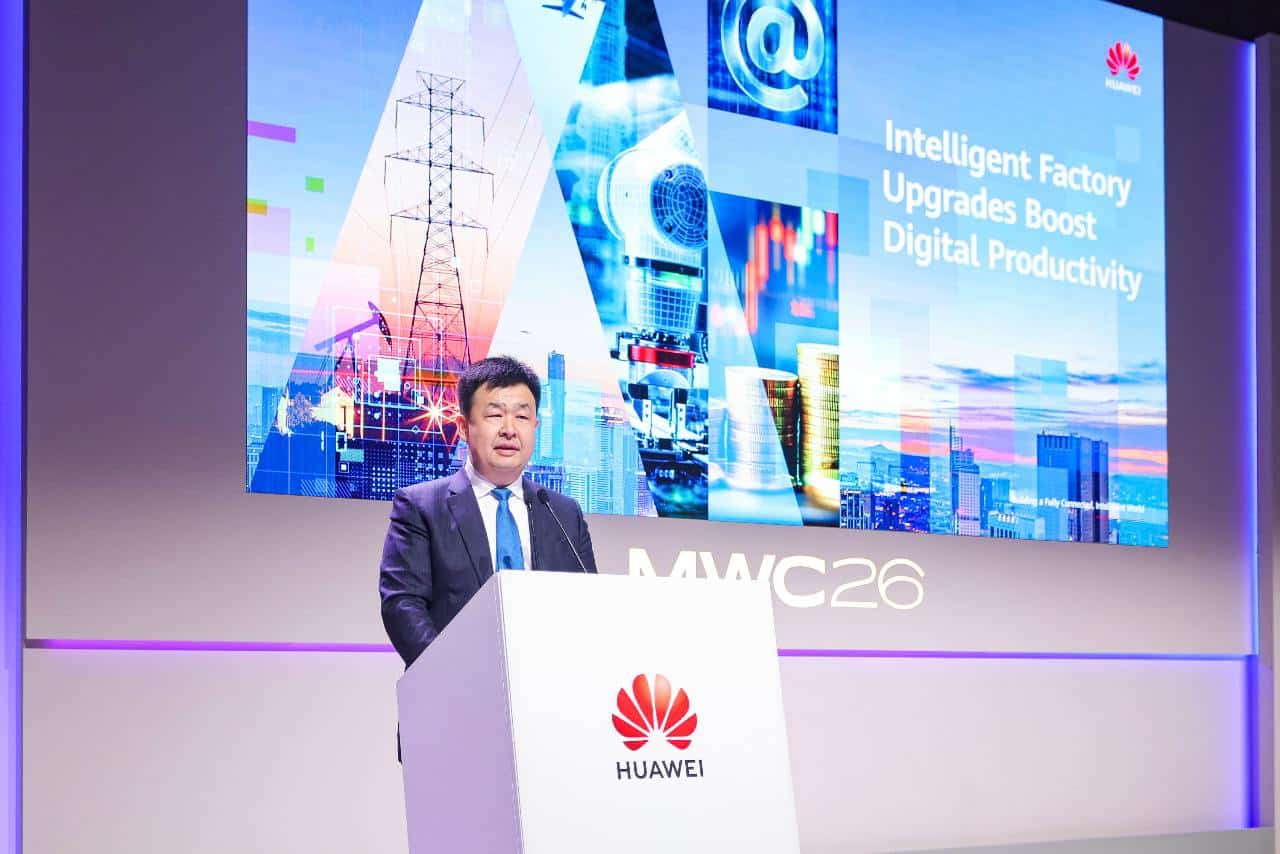
Speaking at Mobile World Congress Barcelona, Richard Liu, Huawei President of ICT Marketing & Solution Sales, said AI will fundamentally reshape telecom networks, services and operations, creating new opportunities for operators to generate revenue and improve efficiency.

While telecom networks have expanded rapidly over the past decade, operators now face growing challenges including increasingly complex architectures, high operational costs and limited differentiation between services.

As AI evolves rapidly, we are shifting from the mobile internet to the Internet of Agents, and AI will increasingly be embedded across devices and applications, with trillions of intelligent agents expected to emerge.

Telecom operators are well positioned to take advantage of this shift because communications networks are already highly digitalised. It’s suggested that carriers could both apply AI internally to improve efficiency and provide AI-enabled infrastructure to support digital transformation across industries.

Huawei is positioning AI as a core component across three layers of telecom networks: services, network operations and network infrastructure.

At the service level, AI is moving from being optional to a necessity. Operators are increasingly integrating AI capabilities into core offerings such as voice, mobile data and home broadband services in order to create what Huawei calls “AI-native services”.

Huawei is developing multi-agent collaboration platforms designed to allow operators to deploy AI-powered agents for areas such as call handling, customer experience management and home broadband networks.

At the network level, AI is also being integrated into telecom infrastructure to enable greater automation. AI-driven networks are evolving from automation in specific operational and maintenance scenarios towards more advanced forms of autonomous networking that can optimise performance and manage resources across multiple domains.

These capabilities could help operators reduce operational costs while improving energy efficiency and enabling more personalised service experiences for users.

A key theme of Huawei’s strategy is “experience monetisation”, which focuses on charging for guaranteed network performance and service quality rather than simply providing connectivity.

Technologies such as 5G-Advanced, high-capacity fibre access and fibre-to-the-room deployments are enabling operators to deliver differentiated services to both mobile and fixed broadband customers.

For consumer markets, operators could offer guaranteed performance for high-value users in scenarios such as dense urban environments or high-speed mobility. In the home broadband segment, AI can be used to optimise network performance and provide automated troubleshooting capabilities.

Huawei also highlighted opportunities to enhance traditional telecom services with AI. AI-powered voice services could improve call clarity and introduce features such as real-time translation, automated meeting summaries and intelligent call assistants.

Similarly, AI-enabled broadband services could allow users to diagnose and repair home network problems through simple voice commands, while also enabling personalised content recommendations and enhanced video communication services.

Beyond consumer services, Huawei sees strong growth potential in the enterprise market, particularly among small and medium-sized businesses.

Operators could combine connectivity with computing, storage and AI capabilities to deliver integrated digital solutions for businesses such as retail stores, manufacturing firms and schools. These solutions could include applications such as video security systems, smart retail tools and AI-assisted education platforms.

Huawei also highlighted its ongoing work on autonomous networks, an industry initiative aimed at increasing network automation. The company said its technologies are already deployed on more than 130 networks worldwide to automate tasks such as fault management, network optimisation and energy efficiency improvements.

Huawei is working with industry organisations including the TM Forum to advance standards for autonomous networks as the industry works towards Level 4 autonomy, where networks can operate with minimal human intervention.

Additionally, Huawei continues to invest in AI-driven algorithms and infrastructure technologies across areas such as radio access networks, optical transport and AI computing platforms in order to support the next generation of intelligent telecom networks.
A mandatory leap: Why AI is fast becoming part of ‘Industrial DNA’ for manufacturing

Interview

We spoke with Liu Chao, CEO of the Huawei’s Manufacturing & Key Enterprise Account business unit, about the seismic impact AI is having for the manufacturing industry

At Mobile World Congress 2026, AI finally appeared to be coming of age. From myriads of commercial AI agents to early demonstrations of physical AI, it was clear that AI was finally becoming

For Huawei’s Liu Chao, the era of treating AI as a high-tech accessory is over for the manufacturing sector.

“AI is now more than tools,” said Liu in an interview with Total Telecom. “It can be a unique distinguisher for manufacturers to set themselves apart from their competitors[…] AI is now becoming an important paradigm shift in innovation and in leadership.”

““This shift is being driven not only by the growing maturity of AI, but also by the urgent need for manufacturers to strengthen their competitiveness. Established leaders in traditional manufacturing sectors, such as automotive, are facing increasing pressure as more players actively embrace advance technologies.

Given the precision and high standards required in manufacturing, industrial players place a strong emphasis on proven reliability and predictable outcomes. This means they tend to wait for new technologies have demonstrated clear value and stability. For Liu, this urge to wait is a “trap”.

“Adoption of AI is not optional. It’s a mandatory choice you have to make. The question is not whether to do it or not, but how to do it,” he said.

Bridging the expertise gap

Perhaps the biggest hurdle to adoption, Liu explained, is the lack of cross-discipline expertise. Industrial experts are typically not AI experts, and vice versa,

“I think one of the key priorities for manufacturers adopting AI is deepening their understanding of the technology and its evolving trends,” said Liu. “This also means strengthening capabilities in data and digital infrastructure, while developing more talent with AI and IT expertise – both of which are essential to fully unlock the value of AI.”

For AI adoption to scale across industry, both manufacturers and tech companies need to cultivate multidisciplinary talent that combines both industrial and digital expertise.

“We need AI experts who have the knowledge and background in the manufacturing sector,” he said.

It is only with this shared expertise, Liu argues, that the industry will be able to develop AI models tailored to the manufacturing sector’s specific needs.

“General models like OpenAI answer questions based on public information. But when it comes to the data about a specific company, industry, or process, these models are not good at giving very specific answers,” said Liu. “In manufacturing companies, the data about operation management, production processes, and research and development is proprietary and private. So, they need specialised solutions.”

Practical first steps: Pilot projects and infrastructure foundations

With this in mind, what does early AI adoption look like for manufacturing companies?

For Liu, initial focus should be not on overall transformation, but on addressing specific challenges.

“When a manufacturing company comes to us and says they want to begin using AI, we first discuss their pain points in their business,” Liu said, noting that identifying the right use cases can generate early value.

“We have to find some typical cases where AI can be applied and give a quick win to our customers,” Liu said. These early projects often act as pilot programmes that help organisations build internal experience and refine their data strategies.

“In the first stage we identify scenarios as the first batch of AI adoption pilots,” Liu explained. “Then in the next step we review their more confidential or private data in production or R&D and help them standardise it, ready for use in AI models.”

Automotive taking a lead

One manufacturing industry leading the pack when it comes to AI adoption is the automotive industry.

“Each year in China, 50% of new cars are connected to the internet and are electric vehicles. The changes in the market are very fast. These days, auto manufacturers are launching their new car models almost as frequently as mobile phone makers are launching phones,” he said, adding that “autonomous driving and smart cockpit capabilities are all enabled by AI models.”

The most advanced carmakers are using AI across product development, factory operations, and quality inspection. This is allowing customers to enjoy a far greater level of personalisation as part of a C-to-M (Consumer-to-Manufacturer) framework.

“It is an end-to-end process that allows full customisation by the consumers,” explains Liu. “It’s how auto manufacturers in China are trying to win in such fierce competition.”

“In the assembly line, a fully assembled car is built every minute,” Liu continued. “When the customer chooses a specific configuration – say, for example, a yellow safety belt – you have to make sure that yellow belt arrives at exactly the right point in the assembly process. That needs AI-enabled scheduling with the data flowing from the order side directly to the production.”

Networks come first

Of course, a strong foundation of digital infrastructure is a critical requirement in this journey.

“The precondition is that you have very solid network connections and very good hardware,” Liu said. “Without this, putting AI into action is incredibly difficult.”

For Liu, the pace of change means manufacturers must continue learning and adapting as AI technologies evolve.

“You cannot wait for the latest technology for fear of being left behind because AI is changing so quickly,” he said. “You have to learn throughout the process of adoption.”

Keep up to date with all the latest telecoms news with the Total Telecom newsletter

Also in the news
World Communication Award Winners 2025
Ofcom clears the way for satellite-to-smartphone services
LG Uplus’s AI voice call app glitch leaks user data

TIM and Fastweb create JV to build 6,000 mobile towers

Press Release

TIM and Fastweb + Vodafone have signed a non-binding agreement for the construction and operation of new mobile towers (passive infrastructure) in Italy, with the prospect of creating up to 6,000 new sites. The joint initiative also aims to accelerate the  national rollout  of 5G.

The project will enable TIM and Fastweb + Vodafone to improve operational efficiency and align costs with the European average, while maintaining high infrastructure quality standards and the technological flexibility needed to develop next-generation networks.

The initiative will initially be implemented through a  joint venture  owned equally by TIM and Fastweb + Vodafone, with the aim of evaluating the entry of third-party investors into the company at a later stage to optimize its financial structure. The infrastructure will also be made available to third-party telecommunications operators under an open access model.

Construction activities will begin according to a multi-year development plan. TIM and Fastweb + Vodafone will act as  anchor tenants  of the new infrastructure, signing long-term agreements for the use of the towers at market conditions. The parties will also evaluate the possibility of providing additional services.

The initiative contributes to strengthening the sustainability of the telecommunications sector in Italy and will allow for greater resources to be allocated to the development of next-generation networks. The project is subject to the necessary authorizations from the relevant authorities.

Keep up to date with all the latest telecoms news with the Total Telecom newsletter

Also in the news
World Communication Award Winners 2025
Ofcom clears the way for satellite-to-smartphone services
LG Uplus’s AI voice call app glitch leaks user data

ZOI and Zong partner to boost Middle East and Pakistan interconnect

Zain Omantel International (ZOI), an international carrier that delivers a unified, AI-ready network across the Middle East and beyond, and Zong, a leading mobile network operator in Pakistan, have partnered to expand voice interconnect and roaming services between the Middle East and Pakistan.

The partnership builds on an existing interconnect relationship where ZOI carries Zain Group and Omantel retail Pakistan traffic for Zong. The two companies say they will grow their cooperation across voice and mobility services and move towards consolidating roaming under a single group framework to simplify operations and strengthen commercial alignment across the corridor.

As the partners explain, Pakistan is one of South Asia’s largest telecommunications markets, with more than 200 million mobile subscribers nationwide. 

Zong serves over 53 million subscribers and operates one of Pakistan’s most extensive 4G networks. Its parent company, China Mobile, is the world’s largest mobile operator by subscriber base, operating one of the industry’s most expansive international network infrastructures.

ZOI is an international carrier that provides unified, AI-ready digital infrastructure in MENA and across the world. It provides international voice, roaming, IP and capacity services to carriers, hyperscalers, mobile network operators, neoscalers and a range of network-centric businesses.

ZOI carries more than 10 billion international voice minutes across 200 roaming countries. It has the number one ranked ASN IP network in the Middle East and investments in more than 22 subsea cable systems globally.

As Sohail Qadir, Chief Executive Officer at ZOI points out: “Pakistan is a strategically important market for the Gulf region. By aligning with Zong and the wider China Mobile ecosystem, we are strengthening service quality, simplifying governance and creating a scalable model for voice and mobility services across one of the region’s highest-volume routes.” 

Traffic between the Middle East and Pakistan continues to grow, driven by retail demand and cross-border mobility. ZOI and Zong say they will standardise how they manage voice and roaming traffic across the Middle East–Pakistan route. They aim to simplify interconnect processes, align roaming governance, and improve service stability as volumes continue to grow.

O2 deploys Europe’s first pre-assembled mobile mast in Kent

Press Release

O2 installed Europe’s first pre-assembled mobile site in Sandwich, Kent, introducing an innovative new approach to building mobile infrastructure that significantly speeds up deployment and minimises issues on site, meaning reliable connectivity can be delivered to customers more quickly and efficiently.

Traditionally, engineers installing antennas, radios and cabling would have to connect and configure hundreds of connections on site, often working at height and exposed to the elements. Using technology developed by Vecta Labs, these components are now fully assembled and tested before they ever reach the tower, dramatically simplifying installation while improving quality control.

Each unit is pre-assembled and validated in a controlled testing environment using specialist equipment, including anechoic chambers that allow engineers to precisely measure radio performance. They are then subjected to simulated wind conditions to replicate real-world stresses before they leave the factory, ensuring every mast meets the same exacting standard on arrival.

Passive radio frequency components such as antennas, cables and connectors are also tested for Passive Intermodulation (PIM), a common source of interference that can degrade network performance. By identifying and resolving these issues before deployment, O2 can ensure consistent mobile network performance from the moment a site goes live.

The approach also dramatically simplifies installation, reducing the number of connections engineers must complete on site from around 100 cables to just six, helping save time and minimising the risk of errors. The first European deployment was completed in Sandwich, Kent, where the pre-assembled equipment was installed in four hours, reducing time on site by up to 75 per cent compared with traditional deployments.

For O2 customers, this means new and upgraded sites can be installed faster with less network downtime, helping to improve coverage and boost capacity so they can stream, browse and stay connected on the move. O2 plans to go deploy 100 of these pre-assembled sites across the UK this year as part of its £700m Mobile Transformation Plan.

Steven Verigotta, Director of Mobile Delivery at O2, said: “Moving one of the most complex parts of building a mobile mast into the factory is a real step forward for our network. It allows us to install sites faster, improve quality control and ensure customers benefit from stronger, more reliable connectivity from the moment the site goes live. This is just one of the improvements we’re making as part of our £700m Mobile Transformation Plan which is helping to create the biggest and most reliable network in the UK.”

John Bonello, Director and Founding Member at Vecta Labs, said: “We’re proud to see Europe’s first Vecta Labs deployment delivered with O2. This approach combines pre-assembly, precision RF testing and simplified installation to help operators deploy infrastructure faster while maintaining the highest standards of performance.”

O2 was recently recognised as the most improved mobile network across Europe in Umlaut Connect’s Mobile Network Test, an independent and comprehensive benchmarking report. It was also awarded Best Mobile Network Coverage at the Uswitch Telecoms Awards for the second year in a row, which recognised the scale, reach and reliability of O2’s mobile network.

Keep up to date with all the latest telecoms news with the Total Telecom newsletter

Also in the news
World Communication Award Winners 2025
Ofcom clears the way for satellite-to-smartphone services
LG Uplus’s AI voice call app glitch leaks user data

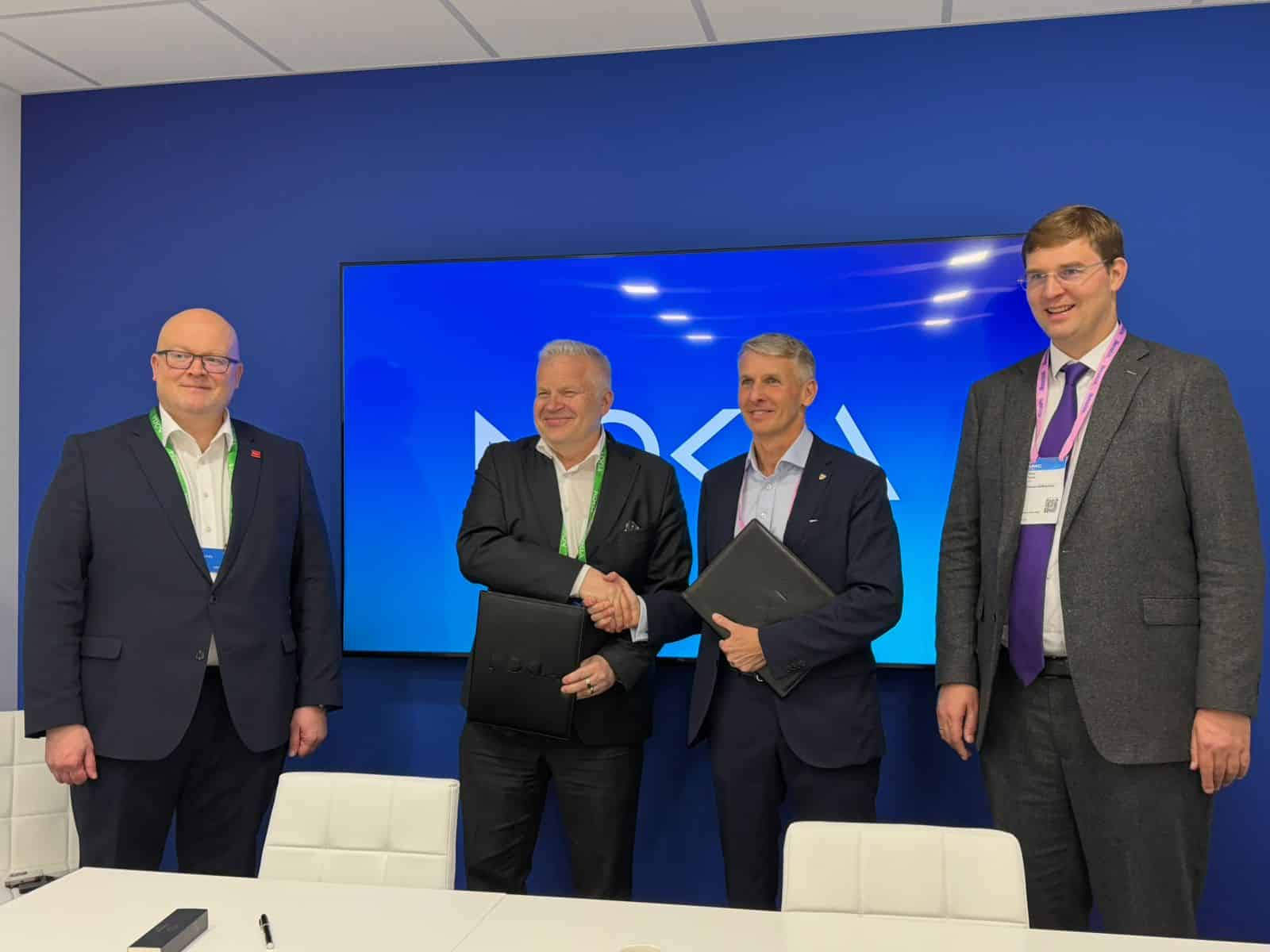
Freedom Telecom International and Nokia signs Strategic Cooperation Agreement to begin joint innovation work

Freedom Telecom International (FTI), a subsidiary of Freedom Holding Corp. (NASDAQ: FRHC), has signed a Strategic Cooperation Agreement with Nokia. As a first step, Freedom Telecom International and Freedom Lifestyle Group will inaugurate an Innovation Lab at Nokia’s Sunnyvale, California campus in the coming months.

The initial focus is on designing next-generation AI data center blueprints, conducting feasibility studies in Kazakhstan and neighboring markets, and leveraging Nokia’s global ecosystem to scale cloud and AI-driven services. FRHC, a diversified international financial services group who intends to lead the region’s digital infrastructure buildout, views this cooperation key to realize this ambition and pave the way to further joint projects globally.

The move comes as Kazakhstan intensifies efforts to establish itself as a regional hub for artificial intelligence, digital talent, and sovereign cloud capabilities – domains that are rapidly becoming global benchmarks for economic competitiveness. Central Asia, historically underpenetrated in hyperscale infrastructure, is now drawing growing attention from global technology providers and international investors seeking new growth corridors.

Timur Turlov, Founder & CEO of Freedom Holding Corp., commented: “Kazakhstan is investing heavily in the future of cloud and AI, and global partnerships play an important role in this journey. Over the past year, we began collaborations with companies like NVIDIA and OpenAI to help accelerate high performance computing, digital skills, and modern AI infrastructure. Exploring opportunities with Nokia reinforces this direction and helps us evaluate technologies and expertise that are necessary for technological progress across our global footprint.”

Johannes Hummer, CEO of Freedom Telecom International, added: “This agreement is an important milestone for Nokia and FTI as our mission includes crafting international partnerships’ for Freedom Holding Corp. with Telcos and TechCo’s. The Innovation Lab in Sunnyvale will allow both teams to test ideas and learn together. It marks the beginning of a journey focused on innovation, collaboration, and long-term impact.”

The newly established Innovation Lab will serve as the venue to test and evaluate AI architectures, cloud technologies and advanced networking solutions. Freedom Lifestyle Group will use the Innovation Lab to test AI-powered consumer services across its e-commerce and health tech businesses including chat and voice assistants, agentic AI systems, and next-generation Superapp capabilities – and organize trials to see how Nokia’s infrastructure performs and could scale in a real-world environment.

Alexey Lee, CEO at Freedom Lifestyle Group, commented: “The Innovation Lab provides an important platform to advance our already established digital services into their next generation – leveraging AI to deliver more intelligent, personalized, and seamlessly integrated experiences across the Freedom ecosystem.”

By combining Nokia’s technology with Freedom’s ecosystem play, global market access and capital markets expertise, the companies are assessing how to unlock scalable digital infrastructure opportunities and support the next phase of digital development worldwide.

Mikko Lavanti, Senior Vice President for Middle East and Africa at Nokia, said: “We look forward to working closely with the Freedom teams as they explore different approaches for cloud, AI initiatives, Lifestyle services and beyond. I am impressed by their clarity of purpose and the commitment their team brings to this work. The geographies they consider for future infrastructure expansion are highly promising. We appreciate the strong engagement and hope to reveal opportunities where Nokia truly makes a difference in advanced connectivity and brings undisputed value.”


About the Signing Parties

Nokia is a global leader in connectivity for the AI era. With expertise across fixed, mobile, and transport networks, we’re advancing connectivity to secure a brighter world. To learn more about Nokia, visit nokia.com 

Freedom Telecom International supports global partners in deploying and integrating Freedom Holding Corp’s portfolio of digital financial and lifestyle services. FTI also evaluates and executes investment opportunities in the telecom and fintech sectors, promoting financial and digital inclusion in emerging and frontier markets.

Freedom Holding Corp. is a leading international provider of investment and brokerage services across the markets of Central Asia, Americas, Europe and Middle East with more than 16 years of experience in global financial markets. The Holding’s shares are publicly traded on the NASDAQ stock exchange under the ticker FRHC with current market capitalization at USD 7.3 billion, and total assets amounting to USD 10.3 billion. The total number of clients in its digital ecosystem exceeds 11 million.

Freedom Holding Corp. employs over 11,000 professionals who are based in 231 offices in 22 countries, including Kazakhstan, the United States, the United Arab Emirates, Cyprus, Spain, France, Germany, Greece, Uzbekistan, and Armenia. The company’s principal executive office is located in New York City.

To learn more about Freedom Telecom International, visit: freedomtelecominternational.com To learn more about Freedom Holding Corp., visit: freedomholdingcorp.com
Media Contacts: Freedom Telecom International: contact@freedomtelecominternational.com

Sama X launches Starlink in Kuwait following regulatory approval

Kuwaiti conglomerate Alghanim Industries announced on Tuesday that its tech venture Sama X is officially reselling Starlink’s LEO satellite broadband services in Kuwait, a day after the country’s regulator granted Starlink an operating licence.

Sama X – which is authorized by SpaceX to resell Starlink products globally – said it will offer a range of subscription plans with download speeds exceeding 300 Mbps, along with delivery, professional installation, and local support, including a 24/7 bilingual call centre.

Alghanim Industries executive chairman Kutayba Y. Alghanim said the launch of Starlink in Kuwait is a key step in strengthening the country’s digital infrastructure.

« At a time when reliable connectivity has become essential for business continuity and the effective functioning of key sectors, this technology provides advanced connectivity that helps organizations, governments, and communities stay connected wherever they operate — from remote worksites to critical sectors such as healthcare and education,” he said in a statement.

Sama X’s Starlink launch follows an announcement on Monday by Kuwait’s Communications and Information Technology Regulatory Authority (CITRA) that it had granted Starlink a license to provide satellite internet services in the country.

CITRA said in a statement to the Kuwait News Agency that Starlink met all regulatory and technical requirements, ensuring compliance with national telecoms laws and frequency spectrum regulations.

Sama X – which is headquartered in Dubai – was established by Alghanim Industries last year as part of the group’s broader expansion into technology and advanced connectivity solutions across the region. The company offers tailored connectivity solutions for enterprises, small businesses, and professional consumers.