AI is shaking up the submarine cable ecosystem


Interview

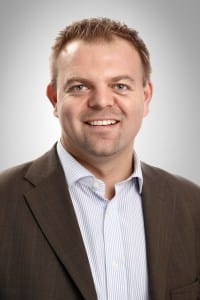
At this year’s Submarine Networks EMEA event, we caught up with Thomas Soerensen, Vice President, Global Sales at Ciena, to discuss the ever-changing submarine cable landscape and some of the key technologies driving change in 2024
The rise of AI is a major focus this year at the Submarine Networks EMEA conference. What impact do you think this is set to have on the submarine cable ecosystem?

AI is contributing to increased data and capacity requirements which, in turn, will contribute to the ongoing growth in the submarine cable market.

I believe AI will improve network performance and efficiencies for all service providers. Here are some examples I think will be really important:

  • Advanced network monitoring and fault detection: With AI, providers can analyse data from multiple sources in real-time to rapidly pinpoint faults to minimise downtime.
  • Predictive maintenance: AI analytics can help predict equipment failures and facilitate proactive maintenance planning before issues occur. This helps optimize resource allocation, reduce opex costs, and maximise the lifespan of critical infrastructure.
  • Automated network planning and optimisation: AI algorithms can optimise the design and routing of submarine cable networks, considering cost, traffic patterns, and environmental impact. This will help streamline network planning processes, enhance efficiency, and expedite the deployment of new cable systems.
  • Security/Intelligent threat protection: AI can analyse network traffic patterns, detecting anomalies and locate potential threats or unauthorized activities.

Is this shift in AI primarily being driven by hyperscalers? What do you think of their continued role in the subsea industry?

Hyperscalers are currently leading the industry by building massive amounts of AI infrastructure in and between their data centres, initially for consumer-centric applications. Hyperscalers are often at the forefront of technological innovation, driving the adoption of emerging technologies and the development of new solutions to continually advance the submarine networking industry now and into the future. This is evidenced by a handful of hyperscalers representing over 70% of all used international traffic, as per analysts from TeleGeography.

Earlier this year you upgraded the Sea-Me-We-4 cable to increase its capacity. Tell us more about this process and why it’s important?

The Europe-to-Asia route, where SEA-ME-WE 4 is situated, is experiencing a major digitalisation push, resulting in extreme capacity demands. To support growing demand for more bandwidth across this route, SEA-ME-WE 4 is leveraging Ciena’s GeoMesh Extreme submarine network solution to increase capacity from 65Tb/s to 122Tb/s.

The Ciena upgrade is helping optimise the resources of the SEA-ME-WE 4 cable, enhancing its capabilities through improvements in network capacity, flexibility, and durability. Importantly, this will allow the cable system to maintain pace with voracious global demand for bandwidth, protect terabits of traffic, and ensure optimal network availability.

We’ve seen some cable outages in recent months, caused by both environmental and man-made events. What needs to be done to make submarine network connectivity more resilient?

The seabed can be a hostile environment for power and telecom submarine cables. Although unpredictable natural disasters, like undersea earthquakes and landslides, can cause widescale damage, most submarine cable faults are due to humans, such a fishing nets or anchors snagging submarine cables in the seabed, especially in shallower waters where cables are not buried or armoured.

Protecting undersea cables takes the entire ecosystem and Ciena is committed to driving greater network resilience and reliability. And, while we cannot regulate (or educate) Mother Nature, we can regulate and educate people involved in marine activities such that they are aware of nearby submarine cables and take appropriate precautions.

Organisations like the International Cable Protection Committee (ICPC) play an important role in promoting submarine cable protection and resilience via cross-industry collaboration and liaising with entities across the industry, governments, and academia to holistically understand submarine cables and the environments where they are installed. About 98% of all submarine telecom cables are represented in the ICPC, as are power cable owners, offshore renewables developers, cable ship owners, cable operators, cable manufacturers, and other stakeholders. Together, committee member decision makers and regulators can engage with the broader industry to share technical expertise, especially around critical permitting processes.

And, as we’ve discussed already, through the use of advanced software, powered by AI, operators can also leverage new network monitoring tools to detect potential faults, analyse traffic patterns, and identify anomalies, threats, or unauthorised activities.

What’s the next big breakthrough for optical networking technology?  

There are many exciting developments in the optical space – it is part of the reason I love working at Ciena!

Ciena has a long history of leadership in optical and our WaveLogic innovations have enabled an incredible 20-times increase in data traffic over fibre and a more than 90% reduction in Watts/Gbps in our customers’ networks.

So, when you ask me what the next breakthrough is in optical, I must say it is WaveLogic 6!

WaveLogic 6 will be the first coherent optic solution to support up to 1.6Tb/s single-carrier wavelengths for metro ROADM deployments, up to 1Tb/s for transoceanic links, and energy-efficient 800G pluggables across 1,000km distances.

WaveLogic 6 also helps address operator’s sustainability goals because WL6 leverages state-of-the-art, lowest power technologies to help network providers make faster progress towards these targets.

With the increasing role of AI in various industries, how is Ciena integrating AI technologies into its digital infrastructure solutions, and what benefits does the company foresee for its customers?

Our software portfolio (Navigator Network Control suite and Blue Planet Intelligent Automation) uses sophisticated analytics which collect detailed real-time performance metrics from network devices and turn that data into actionable insights.

Now we are going even further with AI, Machine Learning (ML), and the scale of cloud resources, to deliver precise, predictive analysis based on vast quantities of data. This helps our customers better optimise the way they build and operate their networks. For example, they’re able to proactively do network maintenance before issues occur or fine-tune capacity allocations before performance degrades.

As confirmed by working with industry experts, AI network builds are expected to be complex, and data centres are going to be spread around the world due to various constraints like power, regulation, latency, and data privacy. To address this reality, Ciena has solutions specifically designed to enable global data centre networks and their management functions.

The next step is to automate operations – so called AI-driven closed-loop operations. Overall, with AI, our customers can operate their networks more cost-effectively and improve customer satisfaction, giving them a competitive edge.
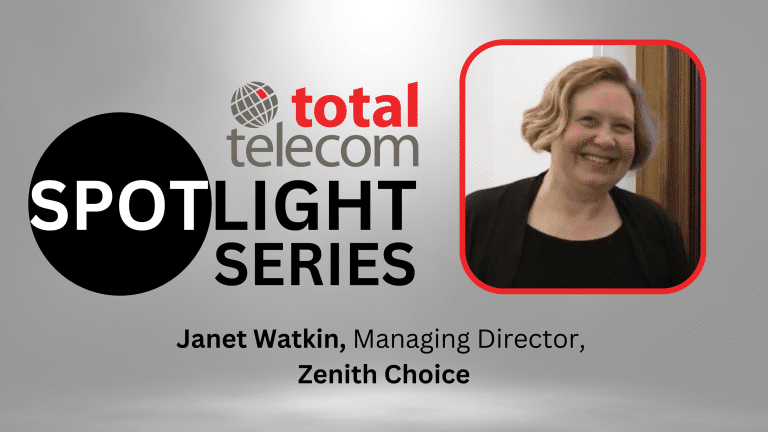

Evolution of a customer-centric culture in the era of digital transformation


Spotlight Series Article

By Janet Watkin, Managing Director, Zenith Choice

Telcos are not making enough money from their networks, and this, coupled with the continued uncertainty about the source of future revenues, has resulted in major headcount reductions. The rollout of AI-enabled process automation is already underway, aimed at replacing manual tasks and serving customers more efficiently. This has been cited as a contributing factor to the large numbers of layoffs announced during 2023.

The theme of customer-centric evolution among telecoms service providers continues as a major topic of conversation but with little, if any, causal evidence of becoming real any time soon.

Tolerated not loved

Historically, incumbent telcos dominated home markets for years, with few competitive threats and few incentives to change from a supplier-focused culture (inward looking) to a customer-focused culture (outward looking). Network access was provisioned, often in weeks rather than days, and the network proved largely reliable and available, so in that sense customers declared themselves ‘satisfied’ when asked.

Once equipment was installed on the customer premises and connected to the network, it usually worked well, its primary purpose being to connect devices over wide areas allowing communication and exchange of information.

Customers were dissatisfied, however, with high prices; slow responsiveness; slow speeds; poor integration and lack of compatibility with other services; poor internal organisational coordination; lack of agility and flexibility; hard-to-access and helpdesks; and few alternative options.

Continuous improvement

Over the last thirty years, or more, customer-centricity has been talked about in terms of listening to and acting on ‘the voice of the customer’, which is not unreasonable. Customer satisfaction indices sought to capture the effectiveness of programmes aimed at providing an outstanding customer experience, or through mapping customer journeys or by developing trusted partnerships for digital transformation.

In response programmes of continuous improvement were set-up to adjust processes or programmes to help address the incessant negative feedback in highlighted areas, with varying degrees of success.

Out of the box thinking

However, little changed until everything changed. The root cause of major change was not the declared intent of telcos to be customer-focused but the ‘disruptive competition’ such as that seen by the launch and success of the internet, Google, the iPhone, and social media, for example. Competent entrepreneurs saw the opportunity gap and filled it with truly dramatic consequences.

“The electric light did not come from the continuous improvement of the candle,” as Oren Harari famously said.

A notable consequence of this disruptive thinking is the striking emergence of an entirely new competitive landscape. The networks supporting the prolific new era of competitive offers is owned and operated by the telcos. Coupled with the dual tasks of supporting the explosion of growth in network traffic volumes and at the same time finding ways to make money to survive, the telcos are now forced to either adapt or die. Network operators have been too slow to transition to the nimbler service organisations they aspire to become.

Time to flourish not flounder

The world has changed, not just technologically, but environmentally, economically, regulatory and politically, and at these boundaries of change the telcos ought to position themselves to flourish not flounder. Adapting to a changing environment underpins evolutionary change. The closer the fit to the environment the more successful the organisation. When the environment changes so must those organisations who find themselves negatively impacted, so they can claim, reclaim, or retain an advantage over competitors.

Heedless of pending threats for too long and blindsided by the myriad of emergent newcomers, the telcos have remained largely risk averse, technology-centric, process-orientated, and hierarchical in the way they are managed.

Transformation through reinvention

Consequently, they are reinventing themselves under the banner of telecoms reimagined. If others can so successfully add value to customers from the provision of new innovative equipment and over-the-top services, why can’t the telecoms providers do the same?

Many now define themselves as systems integrators or service organisations. The term telecom, largely, has been lost completely from the company brand name.

As the competitive landscape continues to evolve so does the fate of the incumbent and challenger telecoms providers, whatever their evolving names. It is time for them to evaluate what it really means to evolve towards a customer-centric culture. It is far more than a name or logo modification, or digital transformation initiative poorly done. Further, disruptive change stemming from cloud computing, artificial intelligence, and data analytics accelerates daily, challenging the industry once more to step-up and do better to capture the hearts and minds of customers.

By working more collaboratively with customers, prospective customers, and third-party partners, as well as with its own workforce, more tailored innovative solutions are expected to emerge and, potentially, catalyse transformation.

Integration of employee experience with customer experience

Customer expectations and preferences evolve continuously. New services that offer a compelling value proposition, from a trusted name, are usually the first to be embraced, but too often the telcos are still seen as pricey and pushy rather than responsive and caring. The employee experience, as well as the customer experience, must be measured, integrated, and enhanced.

It is only employees who can deliver the customer value proposition, even if the vehicle of delivery these days is, in part, a robot. A robot has intelligent design behind it.

By giving a voice to employees’ leaders create culture change

An empowered, engaged workforce working together as a team is transformative.

Aligning employees in the direction the business expects to travel is a leadership task. People resist change, it is human nature. Yet it is essential that employees align to meet the evolving strategic objectives of the company, as set-out by top-level leaders. Leaders must point everyone in the direction of customer-centricity for sustainable profitable growth. In the telecom industry silo, maintenance gets in the way. It reduces cooperation and encourages intransigence. It is the cultural barriers that hold back an organisation from transforming to outfox competitors, rarely a technological one.

Correlation is not causation

Current customer and employee experience and satisfaction metrics are vastly inadequate to capture the evolution of an organisation towards a customer-centric culture. It is time to depart from the heavy emphasis placed on correlated measures of satisfaction as a means of identifying priorities for improvement, and from the simplistic thinking that a single metric on ‘willingness to recommend’ a supplier or an ‘overall satisfaction’ rating can capture what is needed for transformative change.

Metrics that identify the causal links between customer experiences and sustainable profitable growth are required and must be fully integrated with the employee experience.

It is only by accurately monitoring the willingness and ability of the entire workforce, to be fully engaged and empowered, on behalf of the customer, that a customer-centric culture emerges.

Outgoing BT boss takes home £3.7m as cost cutting continues


News

Ex-CEO Philip Jansen, who left BT in January, saw his remuneration increase 25.8% in the last financial year, including bonuses of £2.6 million

This week, BT has revealed that the company’s outgoing CEO, Philip Jansen, was paid £3.72 million for the financial year ending March 31.

This total comprises a fixed pay of £1.11 million and a bonus of £2.6 million, (up from £1.62 million last year). The bonus took the form of £1.45 million in cash and £1.15 million in shares.

The pay increase comes despite BT recording a 31% drop in pre-tax profits to £1.18 billion for the year to March.

Jansen was replaced as CEO by Telia’s Allison Kirkby in January this year, having held the role for five years. Despite some claims that Jansen had “got the strategy right” at the helm of the UK’s largest telco during this time, his tenure saw the company’s share price fall by around 45%.

Perhaps most notably, Jansen’s time as CEO saw the company begin implementing major cost cutting measures, seeking to reduce expenses by £3 billion by 2025. To reach this target, the company announced plans to cut around 55,000 jobs across the company – roughly 40% of BT’s workforce – by 2030.

While the scale of Jansen’s final pay packet is sure to leave a sour taste in the mouth of laid off BT employees and the Communication Workers Union, it is far from unusual. A quick look in the news, for example, shows that CEOs of major firms are routinely paid handsomely as they wave a final farewell. This week alone has seen Boeing’s outgoing CEO Dave Calhoun awarded a 45% pay rise to $32.8 million, despite the company’s ongoing crisis over quality control (don’t worry – he turned down his $2.8 million annual bonus).

For BT’s remaining staff, further cost cutting measures are to be expected. Earlier this year, newly inaugurated CEO Allison Kirkby revealed that BT had already succeeded in reducing costs by the aforementioned £3 billion, a year ahead of its 2025 schedule. Now, says Kirkby, the company will aim to cut a further £3 billion by 2029.

But while Kirkby says the company is “well positioned to generate significant growth”, investors remain far less convinced. Last month, it was revealed that investors were short-selling around £300 million-worth of BT shares, i.e., betting on a further decline in the company’s share price.

Kirkby remained unperturbed, saying “I always love to squeeze the shorts . . . and prove them wrong.”

Keep up to date with the latest international telecoms news by subscribing to the Total Telecom daily newsletter 

Also in the news:
KPN forms new JV to monetise tower assets
Swisscom’s Fastweb sells FiberCop stake for €439m
General election over, India’s 5G auction facing further delays

KPN forms new JV to monetise tower assets


News

The deal will see around 60% of KPN’s tower and rooftop assets passed over to the new joint venture with ABP

This week, incumbent Dutch telecoms operator KPN has announced the creation of a new joint venture with Dutch pension fund ABP to manage tower infrastructure across the country.

The deal will see KPN contribute around 60% of its existing tower and rooftop base station portfolio to the joint venture, with a further 800 sites being added from ABP’s tower subsidiary Open Tower Company (OTC).

The deal will also see KPN take over Novec, a passive infrastructure operator owned by energy grid operator TenneT, which also has a minority stake in OTC. Novec

Once combined, the new TowerCo will manage and operate around 3,800 mobile towers ad rooftop sites.

In total, KPN will pay €120 million to Novec and OTC shareholders to balance the scales in the deal. KPN will hold a 51% stake in the business, with the remaining 49% owed by ABP.

This is the second joint venture between KPN and ABP, the first being a €1 billion open access wholesale fibre network operator Glaspoort created back in 2021.

KPN says the deal to monetise its passive infrastructure assets is crucial to its ongoing strategic focus on flexibility, growth, and technological development.

“We have built up a very good position with our mobile network in recent years. We want to maintain and further expand this in the future, also in view of the ever-growing data traffic,” said KPN chief exec Joost Farwerck in a translated statement. “With this collaboration we gain more control and flexibility at a large number of locations of our mobile infrastructure and at the same time we realise a more sustainable cost model.”

As part of the deal, KPN has agreed to a 20-year master services agreement with the new TowerCo, as well as a 10-year build-to-suit programme that will see the TowerCo build additional towers as necessary.

The deal is subject to all typical regulatory approvals.

Keep up to date with the latest international telecoms news by subscribing to the Total Telecom daily newsletter 

Also in the news:
German government sells $2.7 billion stake in Deutsche Telekom
News in Brief: Cable updates from Submarine Networks EMEA
STC joins e& in eying up United Group 

News in Brief: Cable updates from Submarine Networks EMEA


News

Day 2 of the event saw presenters provide updates on 10 exciting subsea cable projects across the EMEA region and beyond. Here are some of the highlights…

Portugal becoming an interconnection hub

There is no denying that Portugal sits in a privileged geographical position when it comes to submarine cable infrastructure. With access to the Mediterranean and the Atlantic, the country is seeing a surge of new cable deployments connecting it to all four corners of the globe.

“Portugal has been a submarine cable hub for a long time, but now we’re really starting to see rapid growth,” said Jorge Andrade Santos, Head of International Wholesale at Altice Portugal, noting the new cables connecting the country are expected to more than double those being retired between 2021­ and 2026.

These new routes travel in seemingly every direction: West to the Americas, South down the west coast of Africa as far as South Africa, North to northern Europe, and East to the Mediterranean and through the Suez Canal to East Asia.

“It’s like a star, spread across the entire globe with Portugal at its centre,” said Santos. “In many cases, these routes are extremely low latency due to their efficient routing, being deployed almost on the same lines that air companies use for commercial flights.”

Portugal is also seeing more cloud infrastructure being deployed inside the country itself, rather than in the previously more popular location of neighbouring Spain. Altice itself recently launched a new interconnection data centre in Lisbon, which is already generating significant business.

“Our main focus is to reduce costs for customers, be open and neutral, and be an interconnection and edge data centre. Now we’re looking to grow and diversify the kind of players that are using the facility,” said Santos.

The operator is also considering a new cable landing station and interconnection project in Porto, with feasibility studies already underway.

South Africa: More than the bus stop at the end of the line

South Africa is well known as the termination point for numerous major submarine cable systems travelling up and down the continent’s East and West coasts. But while this distinction comes with a certain level of prestige, it also leaves the country incredibly vulnerable to cable cuts taking place many miles to the north. In fact, this year alone, we have seen disruptions from both east ad west, with cables damaged off the west coast of Africa and in the Red Sea.

The SAEx Project seeks to alleviate this pressure, providing a new route that will link the USA (Virginia) to Brazil (Fortaleza) all the way to Singapore via South Africa.

“The geopolitical tensions that we’ve seen rising across the route are not easing up. We need a more reliable route that avoids some of the troubling areas, like the Red Sea,” said Rosalind Thomas, Managing Director and CEO of SAEx International Management. “South Africa is often the bus stop at the end of the line but we aim to change that.”

The eastern portion of the cable (SAEx East, South Africa to Singapore) is currently in the funding stage, aiming to close by the start of 2025. Work on SAEx West (Virginia to South Africa) will take place roughly one year after SAEx East.

The project already has approval from the South African government, which has identified it as a “Strategic Mega Telecoms Infrastructure Project”.

Overcoming icebergs to connect Greenland

For the most part, Greenland’s existing submarine cable infrastructure is already over a decade old. As a result, new infrastructure is required, not only to serve growing demand but also to provide additional redundancy for existing routes.

The planned Tusass Connect 1 system will meet this need, connecting Qaqortoq in the south to Aasiaat/Disko Bay in the North, via the capital Nuuk.

Surveys for the project have already been completed. Deployment, however, will be far from easy.

“The area is famous for having some of the world’s biggest glaciers, therefore the world’s biggest icebergs, which, as you can imagine, can create some problems!” said Steen Hansen, Department Manager at Tusass A/S.

The related terrestrial infrastructure for the system will be built between 2024 and 2026, including power infrastructure. In some cases, these fibre deployments will be completed via unburied pipes due to rocky and otherwise impenetrable terrain. The stormy weather also notably makes deployment via poles – a method popular in countries like the US – largely impossible.

Tusass say the project is aiming to be RFS in late 2026 or early 2027.

Genoa growing as rival to Marseille

Marseille has long been at the heart of the Mediterranean submarine cable ecosystem, but in recent years new hubs are growing in prominence. One such hub is Genoa, which is the focus of the new Unitirreno cable system off the west coast of Italy.

The system will connect Genoa to Mazara Del Vallow (Siciliy), with branches to Rome and Sardinia. It comprises 24 fibre pairs on the main trunk, with 16 on the Rome branch and 4 on the Olbia (Sardinia) branch.

“Almost all cables coming from the Middle East and Africa have Marseille as their termination point. Uniterreno will provide an alternative route into Europe, with Genoa emerging as one of the next subsea hubs in the Mediterranean,” said Chris van Zinnicq Bergmann, CCO of Unitirreno.

Part of the motivation here is the growth of Rome as a major data centre region within Italy, beginning to steal the thunder from ever-popular Milan. The new submarine cable system, van Zinnicq, will support this growth.

The initial deployments are expected to start in December this year, with the system read for service in June 2025.

Telxius focussing on redundancy in the Americas

Digital infrastructure provider Telxius had two systems to discuss at Submarine Networks EMEA this year: Firmina and Tikal.

Firmina is a 13,500km cable system currently under construction that spans from the East Coast of US to Brazil and Argentina.

Part of the motivation here, explained Gonzalo Rodriguez, Account Manager EMEA at Telxius, is that the route will provide the company with additional landing points in the US and Brazil, helping to provide redundancy for their existing cables in the region.

Firmina is expected to be ready for service in Q4 this year.

Tikal, meanwhile, is a 2,000km cable connecting Boca Raton, Florida, to Guatemala, with a branch extending to Cancun, Mexico. An additional branch to Barranquilla, Colombia, is also being considered.

“What’s really interesting is this will have a branch to Cancun, Mexico. The region has been very active in the last few years and is now able to justify such an expansion,” said Rodriguez.

Telxius plans for Tikal to be ready for service in Q4 2024.

Cinturion making steady progress on TEAS project

Cinturion Group’s Trans Europe Asia System (TEAS) project is one of the most anticipated subsea cable systems in the world, an open-access network connecting Europe to India with an overland hop across Saudi Arabia.

This terrestrial route will not only allow data traffic to avoid the lengthy task of circumnavigating the Arabia peninsula, but will also avoid troublesome geopolitical regions such as the Red Sea.

Much progress has been made with regards to permitting for the system in the past year, with only the final details waiting to be agreed with the Saudi Arabian government before the project can begin.

Cinturion says it expects to have a contract in force in Q3 of this year, with TEAS ready for service in Q2 of 2027.

Medusa to connect to all five north African countries 

The upcoming Mediterranean’s Medusa cable will span roughly 8,700km from Portugal to Egypt, with branches to major hubs in Europe and North Africa. This notably includes branches to each of Morocco, Tunisia, Algeria, Libya, and Egypt.

“This is really significant,” said Miguel Angel Acero, CTO of the Medusa Submarine Cable System. “It’s the first submarine cable that will connect to all of these five countries in North Africa.”

He also noted the cable’s significance of the cable for the Mediterranean’s research community, with the EU having provided funds to help connected universities and research institutes across the region.

“We have a grant of €40m from the EU to use Medusa to help connect university and research networks between Europe and North Africa,” explained Acero.

The Medusa system is aiming to be ready for service in Q4 2025.

Tampnet’s Norfest celebrates completion in under a year

With a cold climate and a plentiful supply of fresh water, Norway has grown significantly as a data centre hub in recent years, bringing with it an enormous need for fibre backhaul. This was the motivation behind Tampnet’s new Norwegian Norfest cable system, which spans between Stavanger to Oslo, with branch to Stromstad, Sweden.

The fully buried, open access cable system is comprised of 48 fibre pairs and connects all of the major data centre locations along the southern coast the country.

“It was important for us to do this deployment in the most environmentally sustainable way,” said Tampnet Carriers’ Director of Infrastructure Development, Carol Browne. “The cable itself never left Norway, being domestically manufactured – that’s quite unusual for such a big cable project.”

Norfest was ready to begin commercial operations in December last year, having been completed in just 11 months.

TAM-1 set to be the most advanced cable system in the Caribbean

Phase 1 of TAM-1’s deployment, which is already taking place, will see Florida connected to Central America and the North Caribbean. Phase 2 will see this expanded to the wider Caribbean and the northern parts of South America.

Combined, the full TAM-1 system will span over 7,000 km, with 36 fibre pairs and a total capacity of 648Tb.

Work on the project is progressing steadily, with a contract in force as of September last year and initial surveys taking place this April.

The system is currently set to be ready for service Q4 2025.

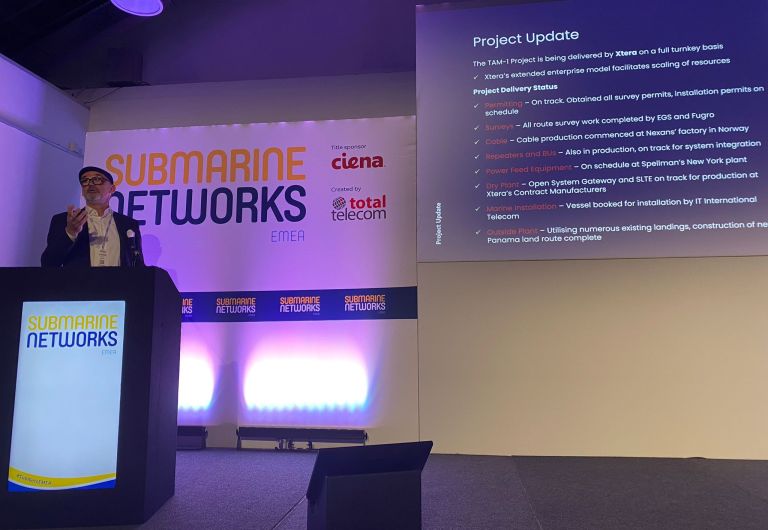
Speaking at the event, Joerg Schwartz, Chief Partners & Solutions Officer at Xtera (pictured), noted that the company’s latest repeater, branching unit, and open access technologies will be deployed in the TAM-1 system.

“We’re working to essentially allow you to make a network within each fibre pair,” explained Schwartz. “This is going to be the most innovative and flexible system in the region.”

SEA-SPINE: Connecting the Aegean’s underserved islands

The Aegean Sea includes around 1,415 islands, some of which are among the most popular tourist destinations in Europe. But while the better-known islands are generally well-connected with submarine cable infrastructure, many of the other islands remain largely unconnected.

SEA-SPINE is a submarine cable project aimed at shrinking this digital divide, using roughly 563km of submarine fibre and 232km of terrestrial fibre to connect almost a dozen islands to the global internet backbone.

“We are going to connected 11 islands with 7 submarine links. These are not the best known islands – we are trying to bring quality connectivity to some of the more underserved, geographically challenging areas of Greece,” said Ioannis Patsouras, Solutions Architect for WINGS ICT Solutions.

An international tender for procurement for the cables was launched in February, with initial deployments likely to begin later this year.

Submarine Networks EMEA is the region’s leading submarine cable infrastructure event, covering all of the biggest topics from across the industry

NTT DOCOMO and Space Compass commit $100m to HAPS specialist AALTO


News

The investment will support the planned commercial launch of AALTO’s High Altitude Platform Station, Zephyr, in 2026

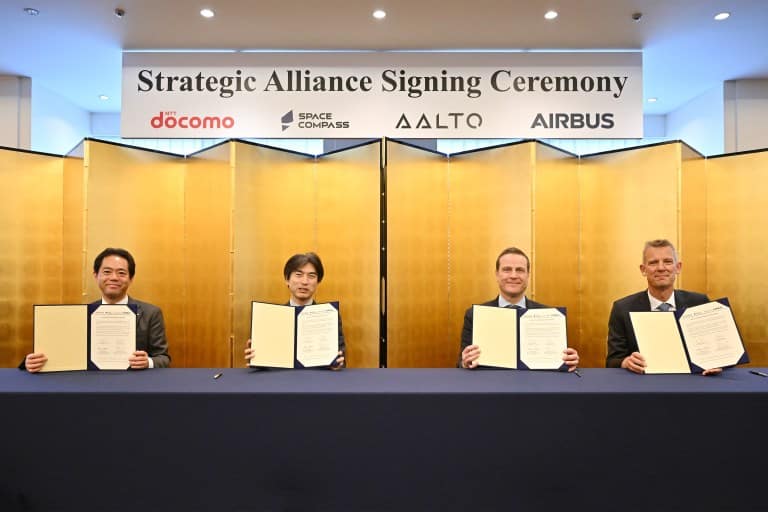
This week, a consortium including two Japanese banks, mobile operator NTT DOCOMO, and non-terrestrial network (NTN) specialist Space Compass Corporation, have announced an investment of $100 million into HAPS developer AALTO.

The investment, the companies say, will help support the industrial ad commercial roadmap for delivering AALTO’s services to customers, including a commercial launch in 2026.

AALTO, a division of aviation giant Airbus until being spun off at the start of last year, has been working on its HAPS technology, dubbed Zephyr, since 2001. The solution is essentially a large solar-powered stratospheric glider that can be equipped with mobile network technology, allowing connectivity, including 5G, to be rapidly delivered to remote locations.

In addition to telecommunications equipment, Zephyr can also carry other payloads, including imaging technology, such as Airbus’s Strat-Observer solution, allowing “a range of monitoring, tracking, sensing, and detection” capabilities.

Zephyr’s current record for continuous flight is 64 days, but the company hopes that this can be extended to over 200 days in future.

Combining all these features makes Zephyr ideal for rapid response scenarios, such as natural disasters.

“This is a landmark investment for AALTO. It is the natural next step in the roadmap of the Company’s targeted entry-into-service in 2026, as we industrialise and commercialise our technology. With world leaders in aviation and connectivity as shareholders, AALTO now has the combination of technological expertise and global reach to capitalise on the growth opportunities in substantial total addressable markets across connectivity and earth observation,” said AALTO CEO Samer Halawi.

“This investment comes as AALTO moves into its next phase of development. This includes launching several customer missions over the coming year, establishing launch and landing sites for Zephyr, and advancing our certification process. We are excited to forge a new frontier in sustainable connectivity and earth observation from the stratosphere, while generating significant value for all our stakeholders.”

The investment by the Japanese consortium will be made by their purpose-built investment vehicle, HAPS JAPAN Corporation.

The deal builds on a longstanding relationship between AALTO, NTT DOCOMO, and Space Compass, which first agreed to explore collaboration possibilities back in 2022.

Space Compass itself is a joint venture between NTT and SKY Perfect JSAT, focussing on developing a Space Integrated Computing Network. Part of this process includes the development of direct-to-device mobile services using HAPS, for which it is once again partnered with NTT DOCOMO, NTT, and SKY Perfect JSAT.

Keep up to date with the latest international telecoms news by subscribing to the Total Telecom daily newsletter  

Also in the news:
Microsoft pours $3.2 bn in Swedish cloud infrastructure
Zegona Communications completes Vodafone Spain acquisition
Verizon secures $2.7bn US navy contractv

Verizon secures $2.7bn US navy contract 


News 

The contract will help the US navy undergo a digital modernisation 

The US Department of the Navy has chosen Verizon’s government, education, and public safety arm, Verizon Public Sector, to provide wireless services, in a contract worth up to $2.67 billion over 10 years. 

The new contract will offer improved and cost-effective wireless solutions to related military and federal agencies. 

The agreement forms part of the fourth round of the wireless and telecoms services contract launched by the US Department of Defence (DOD), also known as the Spiral 4 contract. 

“Verizon’s inclusion in Spiral 4 represents our understanding of the DON’s sophisticated demands for mission critical communications, developed through our history of digital modernization partnership with federal agencies including on Spiral 3,” said David Rouse, head of Verizon’s defence portfolio in a press release. 

“We are proud to continue serving military agencies under this new contract and build on our relationship with the DOD,” he continued. 

Verizon plays a critical role in providing communication services to the US Navy to support their operations. Back in December, the company secured another contract with the US Navy to modernise data services and provide it with new voice technologies.  

The year before, it secured a deal worth almost $1 billion with the DOD to provide network modernisation services and technical support services to the Pentagon, the DOD National Capital Region (NCR), and US army base Fort Belvoir. 

 Keep up to date with the latest international telecoms news by subscribing to the Total Telecom daily newsletter  

Also in the news:
Digi set to buy OTE’s Telekom Romania
Billionaire Xavier Neil ponders Millicom acquisition
EU-funded Global Gateways projects on show at Submarine Networks EMEA 2024 

Orange Romania absorbs broadband subsidiary in convergence push


News

The move is the latest in a series of acquisitions and mergers throughout Europe aimed at combining fixed and mobile operations

This week, Orange has announced that Orange Romania will merge with Orange Romania Communications (OROC), combining their mobile and fixed broadband businesses to become a fully converged telecoms operator.

Orange Romania first acquired a 54% stake in OROC (then Telekom Romania Communications) back in 2021 and moved quickly to unify contact channels and launch a joint commercial offering.

Since then, Orange has been looking to take full control of OROC and merge the two businesses, finally getting the green light for the merger from the Romanian government last year.

Following the merger, Orange Group will hold an 80% stake in the converged business, with the remaining 20% held by Romania’s Ministry of Research, Innovation and Digitalization.

“The merger between Orange Romania S.A. and Orange Romania Communications S.A. is a major step for Orange and marks the fruition of the process with the Government of Romania,” said Mari-Noëlle Jégo-Laveissière, Executive Vice President, CEO of Orange Europe. “This merger enables Orange Romania to fully implement its strategy to deliver best-in class offers on mobile and fiber. I warmly thank the teams that have been working on this transaction and wish the new integrated teams all the best.”

The convergence of mobile and fixed broadband operations has been a key strategy for Orange for many years now. Back in 2021, when Orange announced its new strategic priorities for Europe, convergence was highlighted as a key target across the region, with Jégo-Laveissière calling it “the cornerstone of our strategy”.

Since then, the company has moved to expand its converged offerings in numerous markets; last year, for example, the company notably acquired fixed network operator Voo in Belgium last year, allowing Orange Belgium to begin offering combined fixed and mobile packages to customers.

Keep up to date with the latest international news by subscribing to the Total Telecom daily newsletter 

Also in the news:
UK government conditionally approves £15bn Vodafone–Three merger
Nokia and Vodafone trial Open RAN with Arm and HPE
T-Mobile and Verizon to buy US Cellular, reports say 

KKR TIM deal gets EU go-ahead 


News 

The Italian government has already approved the deal after agreeing with KKR to take a stake of up to 20% in the business once the transaction is complete 

The EU competition authority has given KKR the green light for its planned takeover of Telecom Italia (TIM)’s fixed network operations (known as NetCo) for €19 billion. 

The European Commission was notified of the deal on April 19 and officially approved the merger in a statement yesterday, having completed a full investigation. 

“The Commission investigated the impact of the transaction on the market for wholesale broadband access services in Italy and concluded that it would not significantly reduce the level of competition,” read the statement.  

Specifically, the commission concluded that: 

The number of networks and providers will stay the same, preventing KKR from limiting access to infrastructure services. Existing agreements with rival companies such as Fastweb and Iliad will ensure competitive conditions remain in the market. 

In addition, NetCo and Open Fibre, Italy’s second-largest fixed broadband provider, will keep competing for customers and expanding their networks, driven by competition from Fastweb. 

Approval of the deal comes just weeks after TIM reportedly presented a raft of remedies to the European Commission to get it over the line. The specifics of these remedies were not revealed, but anonymous sources speaking to Bloomberg said the measures would likely solve EU concerns over possible price hikes in the wholesale market. 

The acquisition may still face opposition from Vivendi, TIM’s largest shareholder. The company has been vocal in its disapproval of the deal and has said it will use “any legal means at its disposal” to challenge it. The company believes that TIM’s assets are worth around €30 billion and are therefore being undervalued.   

Keep up to date with the latest international telecoms news by subscribing to the Total Telecom daily newsletter 

Also in the news: 
Digi set to buy OTE’s Telekom Romania
Billionaire Xavier Neil ponders Millicom acquisition
EU-funded Global Gateways projects on show at Submarine Networks EMEA 2024 

Submarine Networks EMEA 2024: Supporting Africa’s growing ICT sector through infrastructure development 


News 

A key panel on day one of Submarine Networks EMEA in London delved into how infrastructure can assist the growth of Africa’s ICT sector

The session was moderated by Ed McCormack, Director of Mc Corporate Services, and consisted of:

Rosalind Thomas, Managing Director and CEO at SAEx International Management

Dylan Carver, Global Account Manager at Medusa Submarine Cable System

Mohammed Aliyu, Chief FiberCo Officer at Bayobab

Nikki Popoola, Director of Sales West Africa & DRC at WIOCC Group

Africa is home to 1/6 of the population and is the fastest growing population in the world. That sounds promising, but that does not mean the market is without challenges. 

An obvious big challenge are cable outages currently going on, such as in the  Red Sea or in West Africa. “This a major challenge,” said Nikki Popoola “I don’t recall a time when there have been so many cables down”. 

“But there’s so much opportunity in Africa,” she continued. “More than anything, we need to develop the terrestrial. That’s a big challenge”. 

Africa has a population 1.4 billion people, so there is a huge opportunity for expansion. “If you want to go fast you go alone, but if you want to go far, you go together,” said Mohammed Aliyu. Collaboration is vital for African growth.  

The challenges are also opportunity. “We are operating in a bipolar global economy with geopolitics impacting us. We can’t ignore that,” continued Rosalind. 

Power is a huge challenge in Africa, especially in South Africa, which has an issue with load shedding. Without power, you can’t have any of the advanced technologies such as data centres, so “Africa is paying catch up”. 

Rosalind notes that there’s also a problem with getting skilled people, which must be addressed collaboratively. Skills are a challenge everywhere, but it is more intense in Africa. In South Africa, there is 65% youth employment rate, who simply are not skilled enough to be able to work in a digital economy. In other countries on the continent, due to the problems in country, many of them leave for jobs elsewhere. 

Some answers to this could be visa free travel within Africa or driving pan African initiatives, because there’s less employment issues in Kenya, Nigeria etc. Youth employment is much lower in Kenya for example, 12.5%. In South Africa, there are 330,000 people filled by employees on critical skills visas in South Africa, and 77,000 jobs they cannot fill, but around 14 million unemployed youth. 

Because the industry is a global one, it attracts skills globally. There are not seeing enough people entering the subnets industry, and they go to the likes of meta or google related to the end user applications, not the submarine cables bit!  

Africa has built thousands of kilometres of cable in recent years. But what is different in the business plan for the development of new cables?  

There are now more players in the market with different interests. Collaboration must be seen one the ground, as people are far too protective of what they own, there need to be more of an open access model, the panel argues. In South Africa, there are more than 17 fibre providers duplicating fibre in the same areas, and its impacting on their Return on investments because they are not collaborating. “The idea of sharing is very important”, confirms Rosalind. 

The areas in need of investment 

It has been made clear that some cables will reach the end of their life in the next 10-15 years. The recent outages on the continent are shifting mentalities on how to address the next cable initiatives. 

The current problem with African cables is that they all follow the same routes, Rosalind argues. Last year, there were 9 cable cuts. Climate change will also be a factor in these cuts, because they have all been laid too close to the continent.  

“In the short term, because there have been many more data centres built in Africa. There must be a focus on domiciling content in Africa, so you don’t need to go out of Africa to get this continent,” says Mohammed. 

“We need to be able to connect the hubs in Africa: the three major ones are Kenya, Nigeria and South Africa,” he continues. Therefore, building terrestrial connectivity is equally important.  

Technology has leapfrogged the continent no end. The phone has become the way that we all work, live and play. It becomes your banking, source of information, everything. 

The panel concludes that there is ample opportunity for Africa to be better connected within the next five years. The growth potential in the market is great. Working together has been a key takeaway here – cross collaboration will be the pathway to success. 

Keep up to date with the latest international telecoms news by subscribing to the Total Telecom daily newsletter

Also in the news:
Digi set to buy OTE’s Telekom Romania
Billionaire Xavier Neil ponders Millicom acquisition
EU-funded Global Gateways projects on show at Submarine Networks EMEA 2024