
Scotland to receive £450m in Gigabit Broadband Upgrade 


News 

The UK government has revealed that Scotland will receive a £450 million share of the £5 billion Project Gigabit rollout scheme 

Project Gigabit is the UK government’s commitment to deliver fast and reliable broadband to the entire UK.  It targets homes and businesses that are not included in broadband suppliers’ plans, reaching parts of the UK that might otherwise miss out on getting the digital connectivity they need. The scheme’s primary goal is to level up the most rural areas in the country, helping to bridge the digital divide. 

More specifically, the project aims deliver download speeds of at least 1Gbps and upload speeds of at least 200Mbps to 85% or more of UK premises by the end of 2025 and aiming for nationwide (99%) coverage by 2030. 

Currently, 74% of premises in Scotland can already access a gigabit-capable broadband network, but this still leaves roughly half a million homes waiting for a broadband upgrade.  

The Scottish government is also investing £600 million in its Reaching 100% Programme (R100), which itself has been supported by £49.5 million of Project Gigabit funding.  The scheme aims to connect the most rural parts of the country. To date, the project has provided 42,000 premises with fibre-to-the-premise coverage, and aims for another 114,000 premises by 2028 

“While R100 is administered by the Scottish Government, Project Gigabit, although funded from the UK Government, is delivered through the Scottish Government,” said Sir John Whittingdale, the UK Minister for Digital Infrastructure in a parliamentary debate yesterday. 

“It has taken longer than we would have liked. However, I am in touch with my opposite number in the Scottish Government and can tell the House that, of the £5 billion that the Government are putting into Project Gigabit, an estimated £450 million is to go to the Scottish Government, and we currently have a market engagement exercise under way.” 

Scotland has been fighting to make sure it received its fair share of Project Gigabit funding for some time, with Scottish Innovation Minister Richard Lochhead calling on the UK government to deliver “sufficient levels of funding” to Scotland earlier this year.  

In related news, The Building Digital UK (BDUK) agency has released their end of year 2023 update on the progress of Project Gigabit. This year, BDUK has surpassed its target by passing 162,600 rural homes and businesses with gigabit-capable broadband. The running total of premises passed in the UK now stands at 900,000. Of this total, 146,000 (90%) of the premises passed in 2022 to 2023 were in areas classified as “rural”. There have been 16 contracts signed so far, representing around £666 million in public investment and covering over 400,000 premises this year. 

In total, 39 Project Gigabit contracts have been signed since the project’s launch. 

Want to keep up with all the action in the UK telecoms market? Join the operators in discussion at next year’s Connected North conference

Also in the news:
It’s time for action: COP28 and keeping 1.5°C alive
Mitratel snaps up 803 telecoms towers for $113m
Sateliot partners with t42 to sign 5G IoT Maritime deal

Gigaclear secures £1.5bn in fresh financing


News

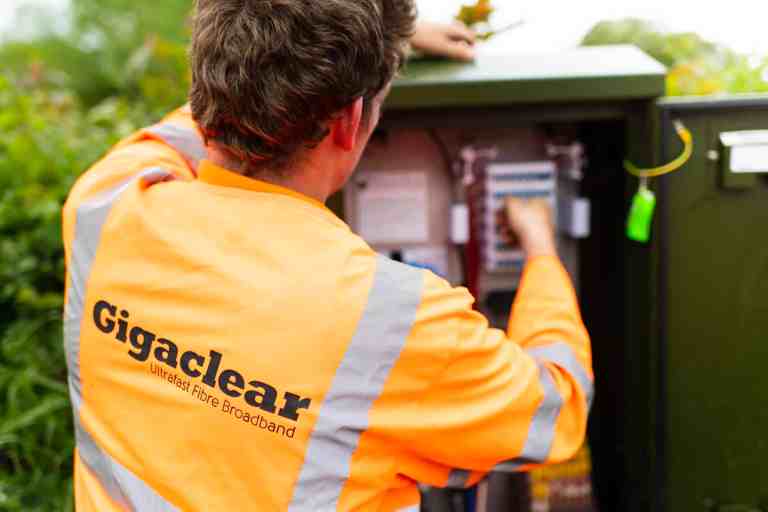
The fibre network operator says the funds will be used to help it reach its goal of passing one million homes with fibre-to-the-home (FTTH) by 2027

Today, UK altnet Gigaclear has announced it has agreed £1.5 billion in new debt financing, with the funds coming from multiple sources, including ABN Amro Bank NV, Credit Industriel et Commercial SA, HSBC Holdings Plc, Lloyds Banking Group Plc, and NatWest Group Plc.

The credit line will see Gigaclear receive an initial £1 billion, with the option to increase this loan by a further £500 million.

Gigaclear claims to be the UK’s largest rural fibre provider, having already deployed its fibre network to around half a million premises in 24 counties.

The operator is aiming to increase this total to 1 million homes by 2027, a feat that would position it as one of the largest networks in the country.

Achieving this ambitious goal, however, will be easier said than done in today’s economic climate. With interest rates soaring, altnets around the country are being forced to put the brakes on their rollout plans, while others are exploring their strategic options. The industry’s largest operator, BT, has long claimed that the UK’s bustling altnet landscape is overcrowded and will not be sustainable. Consolidation is to be expected in 2024, with the broadband industry already seeing some movement in this regard.

For Gigaclear, however, sourcing funding appears to be no issue. Earlier this summer, Gigaclear announced an equity investment of £420 million from Equitix. Combined with this week’s new funding, this brings Gigaclear’s total funds raised this year to almost £2 billion.

“By securing this debt funding, we’ve shown that despite high levels of volatility in the sector there remains an appetite among lenders to support fibre operators that can demonstrate a robust business model. Not only is it an endorsement of Gigaclear’s mission to take its full fibre broadband to underserved, rural communities across England but it is also reflection of the great things being achieved by the team at Gigaclear,” said Gigaclear CEO, Gareth Williams.

“Gigaclear’s resolve to reach more than one million premises by 2027 is supported by this announcement, which is nothing less than a vote of confidence in us successfully achieving our goal.”

What will the altnet landscape look like in 2024? Join the industry in discussion at the Connected North conference live in Manchester

Also in the news:
It’s time for action: COP28 and keeping 1.5°C alive
Mitratel snaps up 803 telecoms towers for $113m
Sateliot partners with t42 to sign 5G IoT Maritime deal
Vivendi takes legal action over TIM sale 


News 

According to three unnamed sources in a Reuters report, TIM’s largest shareholder Vivendi have filed a legal complaint to a Milan court against TIM’s decision to sell its domestic fixed-line network to US firm KKR  

After entering into negotiations in June, the TIM and KKR confirmed the deal, worth roughly €18.8 billion, last month. 

Vivendi has repeated made its opposition to this deal clear, stating in a press release that “shareholders’ rights have been trampled on” and the company will use any legal means at its disposal to challenge this decision and protect its rights and those of all shareholders. 

According to the report, Vivendi has asked the court to declare the approval of the sale by TIM’s board as invalid, as it argues that TIM’s assets are worth around €30 billion and are therefore being undervalued by KKR.   

This news comes as Vivendi is also exploring the possibility of splitting up its own business into three distinct entities, each of which would be separately listed on the stock market. The company board gave approval of this exploration this week, citing the search for improved valuation. 

“Since the distribution and listing of Universal Music Group in 2021, Vivendi has endured a significantly high conglomerate discount, substantially reducing its valuation and thereby limiting its ability to carry out external growth transactions for its subsidiaries,” explained the company in a statement. 

The split will be built around French TV firm Canal+, advertising group Havas, and a newly formed investment company.  

However, exploration of this possibility is set to take some time, with Vivendi highlighting that “this project will have to prove its added value for all stakeholders and include an analysis of the tax consequences of the various contemplated operations,”. 

The possibility of the company restructuring has excited the stock market, with company shares jumping more than 10% on today’s news. 

Want to keep up to date with all of the latest international telecoms news? Sign up for Total Telecom’s daily newsletter 

Also in the news:
It’s time for action: COP28 and keeping 1.5°C alive
Mitratel snaps up 803 telecoms towers for $113m
Sateliot partners with t42 to sign 5G IoT Maritime deal

TalkTalk to acquire Octopus Energy’s broadband customers


News

Reports suggest the ISP will take almost half a million customers under its wing, following Octopus Energy’s acquisition of them from Shell Energy UK

Today, a report from Sky News suggests that TalkTalk is set to purchase Shell Energy’s remaining telecoms customers from Octopus Energy Group.

The deal will see roughly 480,000 broadband customers change hands, though it should be noted that all of these customers are already served by TalkTalk via the latter’s wholesale platform.

The specifics of the deal are expected to be announced in the next few days.

This news follows closely on the heels of Octopus Energy’s acquisition of Shell Energy UK, which was announced back in September and completed less than two weeks ago.

For Shell’s energy customers, this sale would mean very little disruption at all. For the company’s broadband customers, however, the future was much more uncertain, since Octopus Energy is not an ISP.

As such, it makes total sense that Octopus Energy has quickly offloaded these customers to a willing buyer, with TalkTalk being a natural fit.

This is not the first time that TalkTalk has benefitted from a deal of this sort, having struck a similar agreement with Ovo Energy last year. Ovo had purchased SSE’s energy and broadband customers back in 2020.

Want to keep up with all the action in the UK telecoms market? Join the operators in discussion at next year’s Connected North conference

Also in the news:
It’s time for action: COP28 and keeping 1.5°C alive
Mitratel snaps up 803 telecoms towers for $113m
Sateliot partners with t42 to sign 5G IoT Maritime deal

Virgin Media Wi-Fi advert banned by watchdog 


News 

A Virgin Media online advertisement has been banned by the Advertising Standards Authority (ASA) for misleading customers regarding its Wi-Fi speeds 

The advert launched in September last year on Virgin Media’s website, in which the company claimed that they could provide the “UK’s Fastest Wi-Fi Guarantee” in “every room or money back”. 

The advert claimed that Virgin Media customers could get the “fastest Wi-Fi guarantee of any major provider”– a statement investigated by the ASA after a complaint was made by Virgin’s competitor Vodafone.  

The watchdog noted that the majority of customers would take the advertisement to mean that Virgin Media Wi-Fi was faster than competitors, which is not the case.  

It appears, then, that the advertisement was mostly a PR stunt;  if the advertised speeds were not available for customers, they would receive a one-off payment of £100. Although these details were provided to the customer, the ASA ruled that they were not sufficient enough to override the general customer assumption of the advertisement. There is a difference, albeit subtle, between guaranteeing the highest speed and offering a guarantee which promised action by the advertiser if a minimum speed is not met. 

Virgin Media have described the results as “baffling”, maintaining that they do provide a faster minimum speed than competitors. 

“The difference between guaranteeing the highest speed and offering a guarantee which promised action by the advertiser if a minimum speed was not met was a subtle one,” said the ASA in its decision. 

As a result of the decision, Virgin Media is not allowed to run the ad and has been told to ensure that future ads do not imply that they can guarantee the fastest Wi-Fi service of all major broadband providers if this is not the case. 

Keep up to date with the latest international telecoms news by subscribing to the Total Telecom newsletter

Also in the news:
Could Digi increase the chances of the Orange Másmóvil merger? 
Vi partners with Anritsu to provide end-to-end enhanced calling experience with superior VoLTE
STC eyes up Altice Portugal  

Could Digi increase the chances of the Orange Másmóvil merger? 


News 

Romania based Digi Communications has confirmed on Tuesday that the company has concluded a spectrum transfer agreement with Spain’s Orange and Másmóvil, to acquire their spectrum assets 

In a press release, Digi, who also have operations in Spain, Portugal, Italy and Belgium, confirmed that the acquisition relates to the following frequency blocks: 2 x 10 MHz in the 1,800 MHz band, 2 x 10 MHz in the 2,100 MHz band and 20 MHz in the 3,500 MHz band. 

It is noted in the company statement that the “transfer of the Spectrum Licenses and the grant of the Option are subject, among others, to the completion of the transaction between Orange and MasMovil, which requires the approval of the European Commission.” 

In March last year, Orange and Másmóvil decided to merger their businesses by singing a binding agreement, in a deal worth nearly €19 billion. If it passes regulatory approval, the deal will create a market leader in the mobile and fixed broadband areas, with 20.2 million and 7.2 million customers respectively. If the deal gets the green light, both companies would co-control the two entities in a 50-50 joint venture. 

The scale of the deal has drawn the attention of the European Commission, who launched an investigation into the effects on market competition in April. This has been paused by EU antitrust regulators this summer as regulators requested more information, which has sparked interest from companies such as Digi to be the beneficiary of any asset sales. 

Spain has a notably difficult telecoms market, due to laws forced upon operators that drive high levels of competition, which, in turn, had led to years of brutal price wars. 

Want to keep up to date with all of the latest international telecoms news? Sign up for Total Telecom’s daily newsletter 

Also in the news:
It’s time for action: COP28 and keeping 1.5°C alive
Mitratel snaps up 803 telecoms towers for $113m
Sateliot partners with t42 to sign 5G IoT Maritime deal
Huawei knocks on the door of Audi and Mercedes for smart automobile investment 


News 

According to a Reuters exclusive, Huawei is seeking to sell a stake in its four-year-old smart vehicle software and components to automobile manufacturers Mercedes Benz and Volkswagen’s Audi, partly to make it more resilient to US sanctions  

The news comes as the Chinese tech giant looks to expand its brand partnerships outside of China, after being the target of US sanctions over the last four years. 

The company’s Intelligent Automotive Solution (IAS) business unit is aiming to become the largest supplier of software and components for smart electric vehicles (EVs) and is worth $250 billion Yuan ($34.67 billion), according to the company. 

According to the article, Mercedes Benz were offered a 3–5% stake in the business, but preferred to retain control of its software instead of outsourcing it. 

Confidential sources also confirmed that although Audi’s interest could not be determined immediately, the two firms are planning a partnership to co-develop Audi’s autonomous driving technologies, which would be used in the Chinese market from 2025. 

In 2019, Huawei faced significant sanctions from US following an Executive Order signed by President Donald Trump. Since then, many European countries such as Germany, UK, France, and Italy, have also imposed sanctions of various degrees on the company, forcing the Chinese firm to diversify into new markets, from automotive software to AI-powered pig farming solutions. 

As such, according to at least one of Reuters sources, it is hoped that attracting investment from the German automotive players will protect the firm from being embroiled in further geopolitical tension. 

A large proportion of Huawei’s revenue comes from patents, which last year stood at $560 million through almost 200 bilateral patent licenses. Both Mercedes-Benz and Audi are currently entered into patent agreements with the company. 

Both Mercedes and Audi declined to comment. 

Keep up to date with the latest international telecoms news by subscribing to the Total Telecom daily newsletter

Also in the news:
It’s time for action: COP28 and keeping 1.5°C alive
Mitratel snaps up 803 telecoms towers for $113m
Sateliot partners with t42 to sign 5G IoT Maritime deal

Data centre development continues apace


News

In the last few days billions of dollars of data centre development have been announced adding to an already bumper year which was recently estimated by Synergy Research Group as being up around 13% estimate from the previous year.

The most recent announcement is from Microsoft, pledging its largest ever investment in the UK, £2.5 billion to expand AI data centre infrastructure.

The money, which was welcomed by the UK government, will be invested over the next three years to expand its next generation AI data centre infrastructure in London and Cardiff and will occur alongside a huge commitment from Microsoft to train one million people with the skills they need to work with AI or move into a career in AI.

Microsoft vice chair and President Brad Smith said, “Microsoft is committed as a company to ensuring that the UK as a country has world-leading AI infrastructure, easy access to the skills people need, and broad protections for safety and security,”

Also, this week, the UK has seen Kao Data announce its first data centre in the north of England with a proposal to invest £350million on a data centre on a vacant industrial site in Stockport, Cheshire, whilst outside of the UK, Frankfurt, Paris, and Northern Virginia will benefit from a Digital Realty – Blackstone joint venture.

The $7 billion project will see the construction of 10 data centres with load capacity coming online through 2025 and 2026.

Finally, in China, the proposed Hainan Undersea Data Center is touting the environmental credentials of using seawater acts as a natural coolant and saving an estimated 122 million kilowatt-hours of electricity every year.

The approach is innovative, but not without precedent – Microsoft tried something similar back in 2016.

Data centres are one of the 9 key themes tackled by Submarine Networks EMEA which takes place in London on 29th – 30th May 2024. Find out more at totaltele.com/subnets

For environmentally aware live streaming, ask for MAUD


Press Release

BT Group has unveiled a pioneering new technology, designed to be a more reliable, quality-focused and sustainable way of delivering live content over the internet. Multicast-Assisted Unicast Delivery (MAUD) technology is aimed at improving viewer experiences and increasing the efficiency of the complex journey that content takes to reach them. Major broadcasters, including the BBC, will be involved in evaluating and potentially trialling the technology to support a range of live content.

Unlike traditional ‘unicast’ delivery, where each viewer watches the action via a dedicated, personal internet stream, MAUD technology uses ‘multicast’ to group those single streams into one shared one, directing it to those that want to watch the action. MAUD has a further significant advantage over ‘ordinary’ multicast streams, as its integration is made completely transparent to the player application. This means content service providers don’t need to modify their customer apps to take advantage of this technology – saving time and money.

Removing the need to select and serve millions of individual streams to viewers substantially increases the efficiency of content delivery, but also reduces environmental impact and overall costs for broadcasters, Content Delivery Networks (CDNs) and internet providers. MAUD technology uses up to 50% less bandwidth during peak events, reducing energy usage through the use of fewer caches. By freeing up internet capacity, it will help to deliver a higher quality of experience for both live and non-live content.

Howard Watson, Chief Security and Networks Officer at BT Group said: “MAUD is a major breakthrough in how we deliver content over the internet. Developed in our world leading labs at Adastral Park in Suffolk, MAUD could be a key solution to how we manage ever increasing traffic loads. By combining individual streams, MAUD delivers a more reliable, consistent picture, no matter whether customers are watching over Wi-Fi, fibre or mobile networks.”

Paolo Pescatore, Founder at PP Foresight, said: “Whether it’s the Euros or Eurovision, gaming over Twitch or gigs from Glastonbury, data shows that audiences still value the live experience even in the on-demand era. With live sports and events driving peak network demand to new heights, it’s great to see innovation ensuring that high-quality, premium live content can reach the widest possible audiences across multiple types of device, and to be possible in an increasingly environmentally sustainable manner.”

The launch of MAUD comes as BT Group publishes new research that shows the UK public’s appetite for watching live content is undiminished, despite the growing popularity of on-demand content services. A survey into the viewing habits and priorities of the British public found 90% still consume live content – primarily news and sport – via television, with more than half doing so at least once a day.

Those watching also prioritise their viewing experience; despite new service innovations, more than 9 in 10 viewers believe picture quality and reliability are paramount, outstripping interactive features, commentary and stream syncing by nearly 3.5 to 1. When it came to sport, viewers still preferred picture quality and reliability over latency – the time it takes for the live action to reach the screen.

MAUD was developed by the Content Delivery Research team at BT’s Research Labs, based at Adastral Park in Suffolk. The goal was to create a solution for efficient live streaming that was sensitive to the needs of the various organisations in the content delivery path. The MAUD solution was presented to broadcasters at the International Broadcasting Conference in Amsterdam earlier this year with multicast described by an Analysys Mason paper from September – produced for Ofcom – to be, in principle, the most ‘technically efficient technology for IP-delivery of live content.’

Innovation in media will be a hot topic at the Total Telecom Connected North event in Manchester on the 22nd – 23rd April 2024. Find out more at totaltele.com/connectednorth

Pioneer Consulting expands in Asia


Press Release

Pioneer Consulting, the full-service submarine fiber optic telecommunications consulting and project management company, announces it has expanded its Core Team by hiring a rising industry leader in subsea telecommunications, Jonathan “Nathan” Javier, as Director of Client Solutions. As a new Core Team member, Javier will be pivotal in expanding Pioneer’s global footprint and addressing the needs of Pioneer’s growing customer base.

As the company’s first employee based in Asia and with over ten years of experience, Nathan is uniquely qualified to support Pioneer’s plans for the region. Most recently, he spent four years helping build out the Asian submarine cable portfolio for Meta, working on key projects such as SJC2 and BtoBE/CAP-1. Prior to Meta, he served at Globe Telecom in various engineering roles.

“The cable industry in Asia is expanding rapidly, and we are pleased to welcome regional industry expert Nathan Javier to the team. With boots on the ground in the Philippines, Pioneer is even better positioned to engage with current and future customers in the region,” said Gavin Tully, Managing Partner at Pioneer Consulting. “Nathan brings an impressive portfolio of experience and a fresh perspective to our organization, and the subsea telecom industry stands to benefit from adding young talent.”

“I am delighted to join the company to support the growth and development of critical infrastructure for subsea telecommunication systems,” said Nathan. “I look forward to helping continue the incredible work that the Pioneer team has already done and is positioned to accomplish over the coming months.”

Nathan will work from his office in the Philippines, where he will build and strengthen regional and global partnerships through business development and relationship management.

Submarine Networks EMEA, the leading annual subsea connectivity event will be back in London on 29th – 30th May 2024. GET INVOLVED