

Some M&A activity and some expansion work in the metro and regional arena: … [visit site to read more]
25
Avr, 2024

Airtel denies Vodafone interest in tower stake
Keep up-to-date with all the latest news, articles, event and product updates posted on Developing Telecoms.
Subscribe to our FREE weekly email newsletters for the latest telecom info in developing and emerging markets globally.
Sending occasional e-mail from 3rd parties about industry white papers, online and live events relevant to subscribers helps us fund this website and free weekly newsletter. We never sell your personal data. Click here to view our privacy policy.
PLEASE UPDATE THE RSS FEED
The RSS feed URL you’re currently using https://follow.it/telecomramblings will stop working shortly. Please add /rss at the and of the URL, so that the URL will be https://follow.it/telecomramblings/rss
Data Bytes: Quantum Loophole, Vantage, DataBank, NYI, AtlasEdge
Four bits of data center news, three in North America and one in Europe: … [visit site to read more]
24
Avr, 2024

AI to account for 30% of True’s digital service revenues by 2027
Thai telco True Corp has launched artificial intelligence (AI) solutions for local businesses as it seeks to increase the share of AI-driven revenue in its digital services business to 30% by 2027.
True says its AI solutions, which include virtual service agents, smart retail solutions and AI-powered content will enable businesses to leapfrog to AI.
“We aim to integrate digital services into consumer and business segments to bridge gaps, provide equal access to digital resources, and ensure technology is accessible, affordable and beneficial,” True’s chief digital officer Ekaraj Panjavinin said at a True event promoting its AI solutions this week.
True is also promoting its own internal adoption of AI as proof that its AI solutions deliver on their promise, with Ekaraj saying that the company aims to automate 100% of its repetitive processes using AI within the next three years.
“By leveraging the exceptional capabilities of AI, proficiency in processing, and analyzing extensive datasets, we are able to build AI-driven platforms which integrate data across various sources for deep analytics, providing actionable insights to expand businesses in various industries,” he said. “AI can thereby unlock new business models, increase competitiveness for sustainable business growth, and serve consumers’ needs in the digital era with hyper-personalized experiences, while also driving productivity enhancements and cost savings.”
Bandith Pangpong, True’s head of IT and Security, added that AI is being used by its teams to develop solutions more rapidly. “By using artificial intelligence, we can do in a few hours what used to take days or weeks.”
However, in order for its business customers to get the most out of True’s AI solutions, they’ll need serious reskilling to transform their culture to not just be digital-ready, but “AI-driven”, said True’s chief human resources officer Sarinra Wongsuppaluk.
“A lot of organizations in Thailand are potentially ‘AI-ready,’ meaning they do have some proprietary data and digital initiatives in place,” she said. “But to become ‘AI-first’ requires a change in culture from experience-based, leader-driven decision making to data-driven decision making at the front line.”
That change shouldn’t be limited to the IT department, but across the entire organizsation, she said, pointing to True’s AI-powered chatbot “Mari” as an example. Sarinra explained that the teams working on Mari are set up as agile squads across IT, analytics, customer experience, customer service and robotics.
All of this means change has to start at the top, Sarinra added. “AI-first organizations need a C-Suite that understands this new technology and is entrepreneurial enough to adopt it.”
MORE ARTICLES YOU MAY BE INTERESTED IN…
23
Avr, 2024
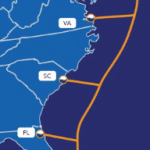
Laser Light Signs On With Confluence-1
One of the more interesting subsea cable projects currently on the drawing board got a boost this morning. Confluence Networks has lined up an anchor tenant for the Confluence-1 cable system along the east coast of the US. Laser Light Communications Inc. has signed on for a 25-year agreement totaling over $20M for a piece of the system. … [visit site to read more]
23
Avr, 2024

China Mobile, ZTE, Qualcomm milk 5.4 Gbps speeds out of 5G-A
Chinese telecoms equipment vendor ZTE said on Friday it has collaborated with China Mobile and Qualcomm to achieve a peak download rate of 5.4 Gbps on a 5G-Advanced network by combining three-carrier aggregation with 1024QAM.
Earlier this year, China Mobile’s Zhejiang Branch conducted an end-to-end field test using 3CC CA (three-carrier component carrier aggregation) technology, utilising 260 MHz of spectrum in the 2.6-GHz and 4.9-GHz bands.
The test also used 1024QAM (1024-state Quadrature Amplitude Modulation), a higher-order modulation technology defined in 3GPP’s Release 17 that can transmit 10 bits of data in a single symbol.
3CC CA and 1024QAM are both key components in 5G-Advanced, the next iteration of 5G under Release 17. When the two are combined, 1024QAM can improve the peak data rate and spectral efficiency by 25% over 256QAM in the same bandwidth, according to ZTE.
The field test results showed that combining both features can achieve a single user downlink data rate of over 5.4 Gbps, the company said in a statement.
The test utilized China Mobile’s 5G network in Jiaxing, as well as commercial 5G network equipment from ZTE and a test device powered by Qualcomm’s Snapdragon X75, billed as the first 5G-A-ready modem and RF system.
China Mobile said the test shows how it can “fully unlock the spectrum potential of 5G commercial networks”, particularly for emnerging bandwidth-intensive applications like “VR smart experiences, ultra-high-definition live broadcasting, and glasses-free 3D.”
Earlier this month, China Mobile said it has launched 5G-A in 100 cities across China, and aims to expand coverage to more than 300 cities before the end of this year.
MORE ARTICLES YOU MAY BE INTERESTED IN…
22
Avr, 2024

euNetworks Invests In Brussels Metro
The European fiber operator euNetworks announced the addition of a new metro fiber network market this morning, bringing their total across the continent to 18. The move follows last spring’s acquisition of 1,660km of fiber and duct across Belgium from a utility company, transforming those assets to better fit alongside euNetworks’ existing presence throughout the Benelux region. … [visit site to read more]
22
Avr, 2024

Industry Spotlight: Toptana Technologies’ Tyson Johnston
One of the more intriguing projects people are talking about these days is Toptana Technologies’ plans for a cable landing station on the West Coast of the United States. Toptana is a first-of-its-kind indigenous-owned internet infrastructure and technology company, owned by the Quinault Indian Nation (QIN) of the Pacific Northwest, a community of more than 3,000 tribal members located along the coast in northern Washington State. Its mission is to connect the digitally unconnected and provide internet access to rural communities, starting by bringing the first subsea cable landing station to Washington State in over 25 years. The team is currently building necessary backhaul network connectivity to Seattle and major data center clusters in Hillsboro, Oregon. Today we talked about the company’s plans and its underlying motivation and outlook with Tyson Johnston, who serves as Toptana’s chairman of the board. … [visit site to read more]
22
Avr, 2024

Philippine govt launches Phase 1 of National Fibre Backbone
The Philippine government launched the first phase of its National Fibre Backbone (NFB) project on Friday, which it says will boost the country’s economy as well as its digital ambitions.
According to a statement from the Department of Information and Communications Technology (DICT), NFB Phase 1 comprises a 1,245-km cable network from Laoag, Ilocos Norte to Roces, Quezon City. It connects 14 provinces across Northern and Central Luzon, Metro Manila, four Bases Conversion Development Authority (BCDA) eco-zones, and two national government data centres.
Phase 1 of the government-owned backbone – which was soft-launched in December 2023 – sports 28 nodes and delivers an initial capacity of 600 Gbps.
At the official launch ceremony on Friday, Philippine president Ferdinand “Bongbong” Marcos, Jr said the NFB “serves as the economic spine that props up our growth, and supports our development. More importantly, we understand that in order for Filipinos to reach their full potential, we must invest in a fast and reliable internet.”
President Marcos Jr said that the completed NFB “will open employment opportunities, improve market efficiency, attract foreign investments, and stimulate livelihood across the different sectors of our economy and our society.”
In the meantime, he said, NFB Phase 1 would help over 340 national and local government offices connected to GovNet boost their overall operational efficiency and generate more than PHP145 million (US$2.2 million) in potential annual savings.
“Additionally, it will extend a digital lifeline to more than 3,000 Filipinos and different Free Wi-Fi Sites, enabling direct internet access for approximately 750,000 beneficiaries in Regions I, III, and here in [Metro Manila],” he added.
Also at the launch event, DICT secretary Ivan John Uy said Phase 1 of the NFB represented a “monumental leap forward in our journey towards a digitally empowered society. With the activation of these nodes, we are bringing high-speed internet across to underserved communities, unlocking opportunities for education, healthcare, and economic development.”
Uy also said DICT will leverage the high-speed connectivity provided by the NFB to power last-mile initiatives like the National Government Portal (NGP) and the Broadband ng Masa Program.
The remaining five phases of the NFB are scheduled to be completed in 2026, at which point it will span 28,000 km. According to the Manila Times, Uy said that Phases 2 and 3 could be completed by the end of this year.
DICT said the completed NFB will help increase the Philippines’ internet penetration rate from 33% to 65% and reach 70 million Filipinos. It also said the initiative would also lower the price of internet connectivity to as much as US$5.00 per Mbps.
“The next phases of the National Fibre Backbone project will focus on broadening our network coverage, extending connectivity across regions, and providing broadband internet access to government institutions and public spaces,” Uy said.