Chile telecoms regulator Subtel has this week announced plans to expand competition in satellite services in Chile and to incorporate new bands to improve connectivity.
Subtel – the country’s Undersecretariat of Telecommunications – has published a modification to the technical standard that regulates the fixed satellite service, incorporating new frequency bands for its operation in the country.
This means that as well as established bands such as Ku and Ka for satellite service, the ruling has expanded to incorporate new frequency ranges that include the W band (ranging from 75 to 110GHz). In the coming days Subtel says it will publish plans to incorporate the V band (40 to 75GHz).
In practice, this will permit an expansion of the capacity of satellite networks, improve data transmission and strengthen satellite connectivity, especially in remote and rural areas or areas with less access to terrestrial infrastructure such as fibre optics or 5G.
Subtel says this change is also part of its agenda aimed at facilitating the deployment of infrastructure and accelerating the adoption of new technologies, particularly in rural and remote areas, with the aim of promoting investments that improve the quality of networks, and thus the quality of life of people.
The measure applies in general to all operators and satellite internet service companies that already operate in Chile – including Starlink and HughesNet – as well as to new companies that may join the market in the future. The hope is that the updated ruling will attract more investment and strengthen the regulatory framework by making it more modern and competitive.
The Undersecretary of Telecommunications, Romina Garrido, explains that with more radio spectrum “satellite services can operate more efficiently, support a greater volume of traffic and offer better services to people”. This will show itself, he says, “in more stable connections, higher speed and shorter network response time, in addition to more resilient connectivity against emergencies or interruptions, complementing the telecommunications infrastructure that already exists in Chile, especially for isolated and rural areas”.
Meta’s introduction of usernames for WhatsApp has hit a snag in India, as the government seeks to crack down on anonymous messaging as part of a wider campaign against fraud on global technology platforms.
India is Meta’s largest WhatsApp market and the company began rolling out usernames globally last week, allowing users to create a unique username instead of sharing their phone number. The feature also allows users to adopt their Instagram username, making it easier to connect across Meta’s platforms.
However, Reuters reported the Indian government has ordered WhatsApp to justify the feature and halt its rollout in the country while officials assess its impact. In a letter seen by Reuters, authorities gave the company three days to respond and argued that usernames could make it easier for fraudsters to carry out phishing attacks and impersonate users without revealing their phone numbers.
The move follows India’s temporary ban on Telegram last month over similar concerns that anonymous messaging was facilitating cybercrime. Telegram ultimately lost a legal challenge against the suspension.
The government’s letter warned that WhatsApp could lose legal protections under India’s IT laws if it failed to comply with due diligence requirements. Officials argued the username feature could materially increase online fraud by making it harder to identify malicious users.
WhatsApp said the feature is not yet live and will be introduced gradually later this year. The company stressed users will still need a phone number to register an account, while people will only be able to message others if they know their exact username. It added that safeguards against scams include limits on how many new users an account can contact and protections against repeated attempts to guess usernames.
The dispute marks the latest clash between India and major technology platforms as the government tightens oversight of online services. It also comes just a week after Meta appointed CRED founder Kunal Shah as WhatsApp’s global head, highlighting India’s strategic importance to the platform.
There was some interesting fiber M&A in one of the biggest infrastructure markets in the world the other day. SummitIG has announced the acquisition of Dark Fiber & Infrastructure. SummitIG is majority owned by SDC Capital Partners, while DF&I was part of the portfolio at Blue Owl Capital, and the two both have substantial assets in northern Virginia. … [visit site to read more]
Less than a year after its commercial launch, the BoGuan multimodal large language model (LLM) designed for cultural tourism in China has entered broad application in Xi’an, and is generating real revenues and value for the tourism industry.
As one of the oldest cities in China with a rich cultural heritage, Xi’an is one of the most popular international tourist destinations in China. The city has increasingly turned to digital technologies to enable visitors and scholars to access cultural relics and better engage with the region’s rich history whilst also preserving its history.
Shaanxi Culture Industry Investment Group (SCG) has been working with partners like Huawei, China Telecom Shaanxi, and China West Airport Group (CWAG) to promote digital and intelligent cultural tourism by leveraging advanced technologies like AI and 5G-A to create numerous new services for visitors.
On the AI side of that initiative, SCG and Huawei unveiled the BoGuan LLM in September 2025, billing it as the world’s first commercial multimodal LLM for cultural tourism, as well as China’s first model dedicated specifically to preserve cultural heritage.
Inside BoGuan
The BoGuan LLM is built on intelligent computing infrastructure and a high-quality dataset that includes over 1.2 PB of data – including 31 million images, 4.4 million minutes of video footage, 2.18 million minutes of audio recordings, 510 3D models, and 960 million pieces of structured text.
With that dataset, BoGuan can generate highly-accurate multimodal content, such as museum-quality content about cultural relics. This capability enables it to support creation of new digital relic presentations, digitalization and preservation of traditional craftsmanship, and creation of digital IP for intangible cultural heritage.
BoGuan has also been used to develop a range of cultural tourism apps that unlock the business value of quality cultural tourism data.
For example, BoGuan powers an AI travel companion agent that had been made available to over 4 million users as of March 2026. Visitors can directly talk with this agent on the GO-SHAANXI app to create and adjust their travel itineraries in Xi’an, and get real-time recommendations for performances at various attractions.
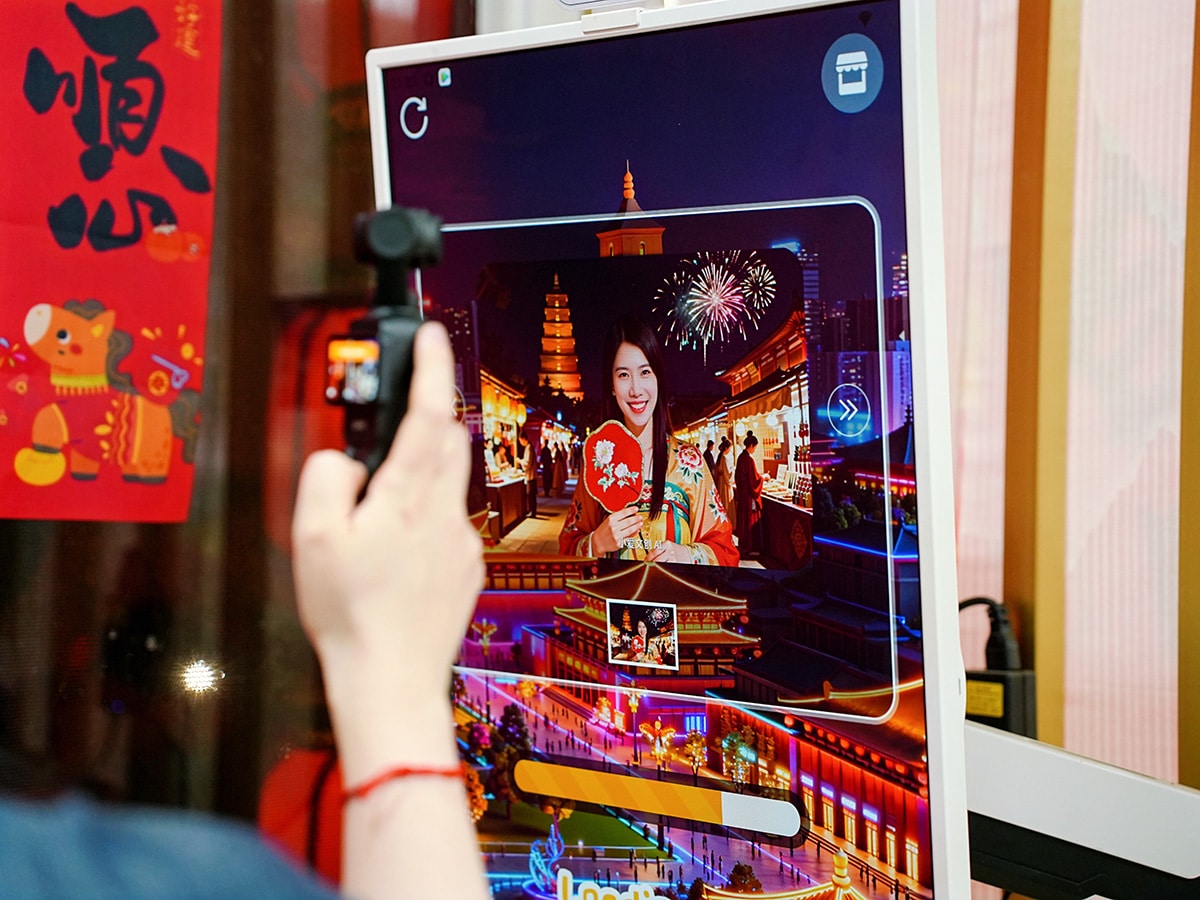
Another app created using BoGuan is the Zhiying Camera mini programme – an AI-powered photography service that instantly integrates user photos with AI-generated scenes from history, allowing visitors to « time travel” to ancient times.
The BoGuan LLM has also been used to create digital IP such as the popular cartoon character Tang Biaobiao, which was designed by integrating local cultural heritage elements with the stone carvings of the Six Steeds of Zhao Mausoleum. As a testament of Tang Biaobiao’s popularity, sales of related digital collectibles and creative products have exceeded CNY2 million (almost US$295,000).
Meanwhile, SCG is also using BoGuan to integrate short drama production with cultural tourism and improve production efficiency and quality in Xi’an, which is also arenowned short drama hub.
“Artificial intelligence is not simply a stack of technologies,” said Edric Chu, General Manager of Huawei’s Shaanxi Rep Office. “It has become a key enabler that can activate thousands of years of cultural heritage, reshape travel experiences, and inject new momentum into the industry.”
Powered by 5G-A
All of these BoGuan-powered digital tourism apps for Xi’an are backed by a 5G-A network deployed by China Telecom Shaanxi and Huawei – particularly in Xi’an’s Grand Tang Mall, a ang-style pedestrian street located at the foot of the iconic Giant Wild Goose Pagoda, and one of the most popular tourist attractions in China.
The 5G-A network is based on three component carrier (3CC) aggregation technology, delivering peak uplink and downlink rates of 600 Mbps and 3.5 Gbps, respectively – about 10 times faster than regular 5G networks.
As an example of the network’s performance capabilities, during the 2026 May Day “golden week” holiday, the network in the Grand Tang Mall supported concurrent access for 23,000 users, guaranteeing smooth video watching and social media experiences.
This is especially important given that HD live streaming at the Grand Tang Mall has become an important way for the attraction to bring in new visitors, which 5G-A is more than capable of supporting. According to public data, the average user dwell time of these live streams has nearly doubled, while the average transaction value has increased by 62%.
Edric Chu added, “Moving forward, Huawei will continue working with our partners to enhance cultural heritage preservation with digital and intelligent technologies, and stimulate development within the cultural tourism industry.”
This Industry Viewpoint was authored by Stephen Douglas, Head of Market Strategy, Spirent, a Keysight company
Most of the energy conversation in our industry right now is about consumption. How much power AI data centers will pull, where the chips go, whether the models can run cheaper. Fair questions. But there’s a quieter shift underneath them that I think matters more for telecom operators, and it has nothing to do with how much energy they use. It’s about energy they could supply. … [visit site to read more]
The GSA (Global mobile Suppliers Association) has elected a new President, Patrik Cerwall, who will take the helm from 1st January 2027.
Cerwall has been part of the GSA Executive Committee since 2012, and will take over following the retirement of Joe Barrett, who has served as President for 12 years. A 31-year veteran of Ericsson, Cerwall headed up the vendor’s strategic marketing team, notably leading on the creation of the Ericsson Mobility Report which has run since 2011.
“GSA plays a unique role in helping the industry separate signal from noise, tracking real-world progress, connecting stakeholders and playing a central role in spectrum advocacy and standards discussions,” said Cerwall.
“I’m honoured to take on this role at a time when the industry is balancing the demands of continued 5G expansion, new network, device and chipset innovation, and a growing set of enterprise and industrial use cases beyond traditional mobile service offerings. My focus will be on strengthening GSA’s value to members and the wider community through rigorous research, practical industry programmes and open collaboration.”
Outgoing President Joe Barrett added: “I’m delighted to be handing over the reins to Patrik as the mobile industry prepares for its next big evolution and the move to 6G. Defining and shaping the next generation of connectivity and communications will require leadership, and Patrik’s understanding of mobile operators’ priorities, vendors’ challenges, and long-standing commitment to the work of GSA makes him the perfect person to lead the association into the future.”
This week we have some high profile consolidation in the networking business, specifically in the international enterprise arena. BT Group and Verizon have decided to create a 50/50 joint venture, combining BT International and Verizon’s international enterprise wireline going forward. … [visit site to read more]
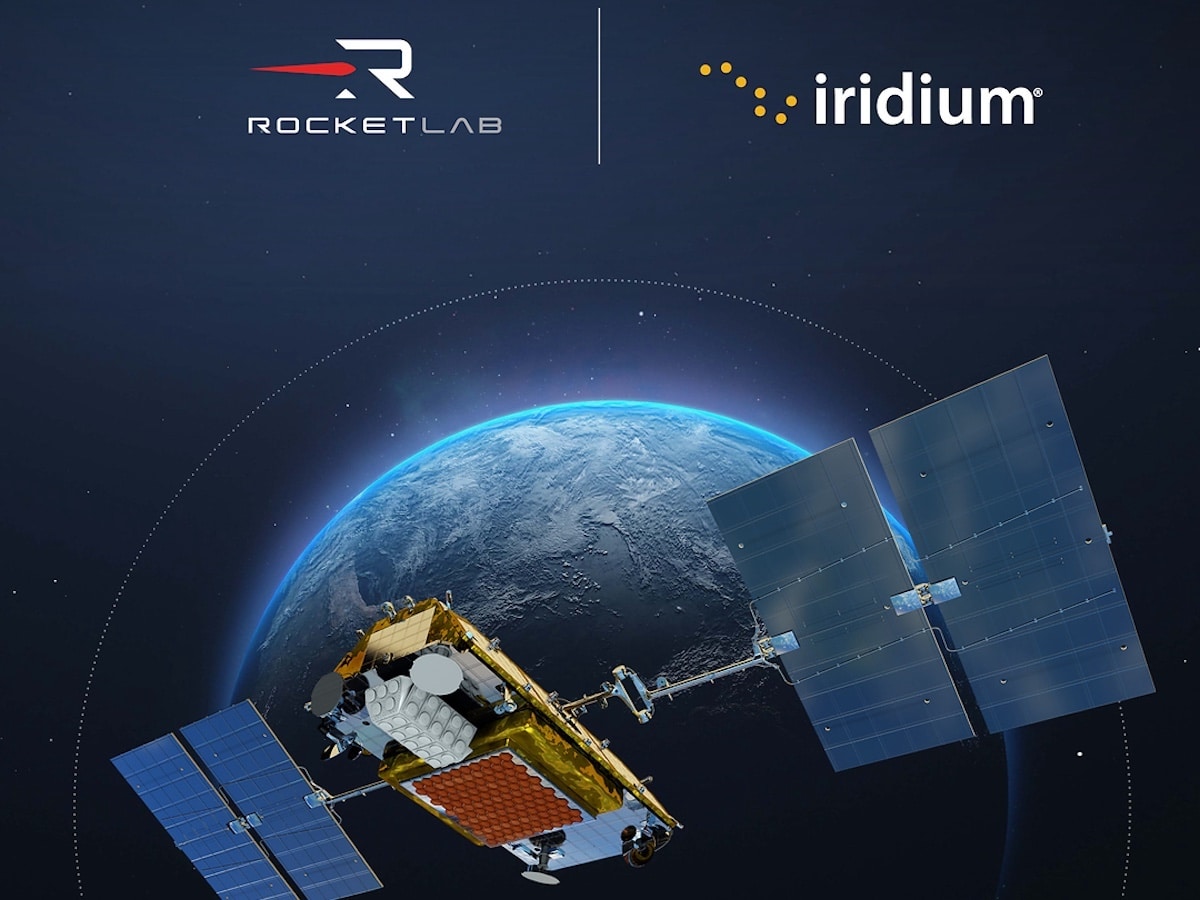
« One of the most transformative deals in the space industry. » That’s the claim of Rocket Lab Corporation, a major name in launch and space systems, and satellite services provider Iridium Communications after the announcement of a definitive agreement under which Rocket Lab will acquire Iridium.
Rocket Lab will acquire all the outstanding shares of Iridium common stock for US$54 per share in a cash and stock transaction. This represents an enterprise value for Iridium of approximately US$8.0 billion.
While the acquisition joins together two innovative American companies to play a leading role in the US space economy, there is a global relevance too.
It merges Rocket Lab’s launch capabilities and satellite manufacturing with Iridium’s global satellite communications network, spectrum, and 500-plus strong partner ecosystem to create what is described as a competitive, vertically-integrated space company that designs, builds, launches and operates its own constellations, delivering critical communications capability to millions of users worldwide.
The transaction will give Rocket Lab an immediate foothold in space-based applications, including both proprietary and standards-based satellite Internet of Things (IoT) and direct-to-device (D2D), positioning, navigation and timing (PNT), and critical safety-of-life services, creating a formidable challenger in the global telecom market.
Rather than simply continuing the Iridium network, Rocket Lab says it will build upon it to scale into untapped markets and pioneer new space-based services to the benefit of global customers.
But will this deal affect developing markets? Possibly not directly, but it may well be relevant to international companies operating in such markets and requiring reliable communications in remote areas.
The SatNews website points out that Iridium brings an active network of approximately 80 cross-linked LEO satellites utilising globally harmonised L-band radio frequency spectrum. This specialised frequency allocation, it notes, offers weather-resilient, low-latency connectivity for voice, data, and Internet of Things (IoT) applications across remote maritime, aviation, and defence sectors.
The asset base also includes a dedicated PNT layer, which serves as an alternative encryption-safe PNT reference architecture in environments where traditional Global Positioning System (GPS) or Global Navigation Satellite System (GNSS) frequencies are jammed, degraded or otherwise unavailable.
There are cost implications too. The website highlights a structural shift projected to eliminate external third-party launch procurement costs, internalise launch service profit margins, and secure long-term manifest certainty for constellation replenishment as global launch availability tightens.
Sir Peter Beck, founder and CEO of Rocket Lab explains: “By marrying Iridium’s deep heritage, trusted infrastructure, and highly sought-after spectrum with Rocket Lab’s extensive and proven launch and manufacturing capabilities, we have the capability to unlock entirely new markets. We will go far beyond maintaining a legacy; we are going to build upon it to pioneer next-generation space applications and deliver sought-after capabilities to existing and new customers.”
This announcement comes only a matter of days after satellite operators Amazon, Iridium, Telesat and Globalstar launched a new trade association representing the non-geostationary (NGSO) satellite economy: the SpaceConnect Association. It’s not clear how or whether the new grouping will be affected by this news.
We use cookies to personalise content and ads, to provide social media features and to analyse our traffic. We also share information about your use of our site with our social media, advertising and analytics partners. View more
Cookies settings
Accept
Privacy & Cookie policy
Privacy & Cookies policy
Cookies list
Cookie name
Active
Conditions légales
Introduction et qui nous sommes
118812.fr met en relation des spécialistes du monde entier par le biais d'événements, de renseignements et d'éditions savantes. Nous sommes une société du FTSE 100 et notre réseau de marques internationalement respectées aide les gens à travailler plus intelligemment, à prendre de meilleures décisions et à se développer sur des milliers de marchés spécialisés. Les données et les informations sont au cœur des activités de 118812.fr, et nous prenons au sérieux les questions de confidentialité des données. Nous respectons nos relations avec les clients, les visiteurs, les sponsors, les exposants, les fournisseurs et les collègues, ainsi que la confiance qu'ils nous accordent pour la conservation de leurs données personnelles.
Contrôleurs de données de 118812.fr
Cette politique de confidentialité explique comment les membres du groupe 118812.fr collectent, utilisent et protègent les informations personnelles à travers nos marques. Les références à "nous", "notre" ou "nos" renvoient au contrôleur 118812.fr concerné qui traite vos informations personnelles.
118812.fr est structuré en cinq divisions opérationnelles :
Au sein de ces divisions, il existe des entreprises sectorielles et des marques de produits, d'événements et de services. En général, lorsque nous interagissons avec vous, c'est par le biais de l'une de ces marques. L'entité juridique du groupe 118812.fr responsable des données personnelles (désignée comme le contrôleur des données dans l'UE et désignée comme le contrôleur 118812.fr dans la présente politique de confidentialité) sera l'entité indiquée sur les formulaires de réservation, les formulaires Web et les contrats ou les factures. Différentes entités juridiques de 118812.fr sont responsables de différents événements et produits. Pour mettre à jour vos informations personnelles ou vos préférences en matière de marketing, contactez les équipes de marketing de nos divisions énumérées ci-dessous. Pour toute question ou plainte concernant la confidentialité des données, vous pouvez vous adresser à l'équipe 118812.fr Privacy via notre formulaire en ligne.
Couverture internationale et variations
118812.fr opère dans plus de 20 pays, qui ont chacun des lois différentes sur la protection des données. La présente politique de confidentialité s'applique à toutes les activités de 118812.fr dans le monde, sauf dans la mesure où il existe une exigence spécifique à un pays qui la complète, comme indiqué dans le menu de gauche.
Ce que nous recueillons
Cette section vous indique quelles informations personnelles nous pouvons recueillir lorsque vous utilisez nos produits et services, et quelles autres informations personnelles nous pouvons recevoir d'autres sources. Dans la présente politique de confidentialité, les informations personnelles désignent les types de 118812.frtions personnelles qui peuvent être collectées et utilisées, notamment : Les coordonnées, telles que le nom, l'adresse électronique, l'adresse postale et le numéro de téléphone.Informations sur l'éducation, la nationalité et la professionles noms d'utilisateur et les mots de passeCommentaires, réactions, messages et autres contenus soumis, y compris les informations relatives aux enquêtes.Intérêts et préférences de communication, y compris les autorisations de marketing, le cas échéant.Informations de localisation, telles que celles fournies par une application mobileInformations de vérification de l'identité, telles que les détails du passeport, afin de se conformer aux obligations légales dans certains pays et de fournir des lettres d'invitation de visa, le cas échéant.Informations sur l'utilisation du site web et des communications, telles que la correspondance et les détails de votre utilisation de notre site web et de nos services obtenus par le biais de cookies ou d'autres technologies de suivi.
Ces informations personnelles concernent les catégories de personnes suivantes :
Prospects, contacts clients, abonnés et utilisateurs en ce qui concerne nos services et produits ;Visiteurs, sponsors, exposants et conférenciers lors de nos événements ;Les professionnels figurant dans les produits numériques et imprimés, tels que les détails des cadres supérieurs mis à disposition par les produits de renseignement, les recherches et les publications.les auteurs, éditeurs et réviseurs de nos publications.les contacts de nos prestataires de services et partenaires commerciaux.Informations personnelles sensibles