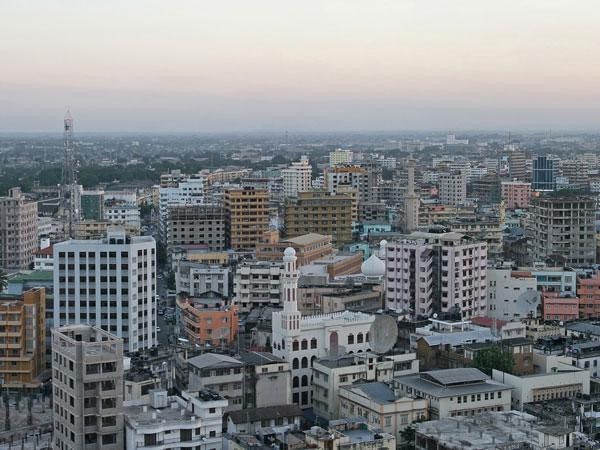
Amidst the digital wave, smart city construction has become a popular choice for megacities to address governance challenges. Wuhan, keeping pace with China’s modernization, has continuously innovated in governance, upgraded industries, and optimized the ecosystem, injecting vitality into the city. This allows residents of Wuhan to live and work with much greater convenience, and to embrace a bright future together.
[embedded content]
Project Background
Wuhan, the capital of Hubei province, is often called the « City of Rivers. » As a major metropolis in central China, Wuhan is rich in history and culture. As a megacity and an important comprehensive transportation hub in China, Wuhan is also the center for shipping, the regional economy, innovation in science and technology, commerce, and logistics in the middle reaches of the Yangtze River. Wuhan administers 16 districts, covering an area of about 8,569 square kilometres, with a permanent population of about 13.81 million.
Smart city development has become essential for megacities to address governance challenges. Wuhan, known as the « Crossroads of Nine Provinces, » has remained committed to modernizing its urban governance. This move is a crucial step to respond to residents’ aspirations for a better life. To address common challenges in traditional urban governance, such as fragmented management and delayed responses, Wuhan has partnered with Huawei along with other leading tech companies to build a unified city management platform. With the City Intelligent Twins as the core engine, this platform explores a new path of smart governance, covering perception to thinking and detection all the way to prediction. By deploying this platform, Wuhan sets an example of megacity governance and outlines a practical blueprint for AI CITY construction.
Customer Requirements
For a long time, fragmented management and data silos have been major obstacles to megacity governance. These issues often lead to situations where visible problems cannot be solved and solvable problems cannot be detected in time. To address this, Wuhan needs to build a city neural network that features all-domain perception, intelligent analysis, autonomous handling, and intelligent decision-making. The goal is to break down data silos, integrate information, and ultimately transform it into smart governance.
Based on digital twin and intelligent collaboration technologies, Wuhan has built a warning and handling platform similar to the human immune system, transitioning the focus of urban governance from reactive response to proactive prevention.
Smart city construction should go beyond cost reduction and efficiency improvement, and instead focus on enhancing city competitiveness, residents’ sense of gain, and sustainable development. In other words, technology should serve people, making cities livelier and more welcoming for everyone.
Huawei Solution
Against this backdrop, Wuhan’s smart city construction focuses on three core requirements:
- Organizing the veins of city awareness to maximize city collaboration efficiency and video transmission quality
Huawei built “One City One Network” for Wuhan, creating a 100G ultra-broadband all-optical foundation to cover the entire backbone network with two cores and four rings. This network supports multiple services, including government extranets and dedicated video networks, significantly improving the efficiency of cross-departmental collaboration and the quality of video transmission. This information highway allows thousands of residential requests, tens of thousands of video signal channels, and over 10 billion IoT data records to be aggregated in real time to the central hub of Wuhan’s city operations center, laying a solid network foundation for smart governance.
- Building an intelligent city agent to enable data to think and speak
Leveraging the powerful computing power of Wuhan Cloud, Huawei built an intelligent city agent. The system can automatically identify and analyze more than 10,000 channels of video and images backhauled from hundreds of drones patrolling across the city. In addition, it can accurately identify 11 types of typical city governance events, such as parking violations and road flooding.
With the Talk2Video technology, users can converse with the system in natural language, and the system can retrieve onsite and surrounding video resources with nearly zero latency, collecting first-hand information for decision-making. This means that data is not only visible, but also intelligible and can be quickly responded to. This helps transform city governance from passively receiving information to proactively identifying risks and intelligently assisting decision-making.
Powered by the Huawei 2012 Labs’ patented technology, Star-Hopping Engine, the intelligent agent organizes a large amount of unstructured data, including service tickets, documents, and workflows, to build a knowledge base for learning and retrieval. The intelligent agent automatically aggregates incident details and resolution records, allowing staff to interact with it through natural-language dialogues for intelligent data queries, greatly simplifying information access and retrieval. It can also autonomously generate comprehensive summary reports, perform accurate statistics and anomaly analysis on high-frequency and critical events, and produce both periodic and specialized reports.
- Building a digital twin platform to make data manageable, visible, and controllable
Based on the digital twin foundation, Wuhan has built a 3D map covering 8,569 square kilometres, including a high-precision model of 1,200 square kilometres. The map is connected to hundreds of key check points in the city, such as water accumulation, air quality, and bridges, to comprehensively sense the status of key city infrastructure.
- Building an app-free video conferencing platform to ensure timely delivery of emergency instruction
Complex incidents require collaboration across regions and departments. To help Wuhan efficiently address such incidents, Huawei built an efficient collaborative response system at the city and district levels using its converged communications technology. This system connects all 16 districts across the city, making dispatch of forces scattered across departments possible with simple clicks of a mouse. During emergency response, the video conferencing system is connected to local carriers’ networks, allowing users to join conferences without installing any apps. This greatly improves the response speed. The system also upgraded the decision mode from traditional serial reporting to parallel collaborative decision-making, truly achieving efficient handling of emergencies.
Customer Benefits
Wuhan has built a number of integrated cross-scenario applications, such as smart gas, smart drainage, and bridge and tunnel safety. The gas safety accident rate has decreased by 60%, the traffic congestion index has decreased by 15%, and the public satisfaction rate has increased to 98%.
Wuhan has integrated the latest digital and intelligent technologies into its urban development, transforming city governance from seeing to understanding and from passive response to proactive anticipation. Located along the Yangtze River and looking toward the future, Wuhan uses its digital and intelligent city plan to better meet residents’ expectations, setting a strong example for global governance of ultra-large cities.
« Managing megacities is a global challenge. The Central government of China has stated that convenient and efficient smart cities need to be built. The core of this is to use technology to serve people, making city governance more refined and residents’ lives more convenient. AI is giving governance a sense of touch, sight, and convenience, and is profoundly changing the lives of Wuhan residents. »
By Geng Feng – Deputy Director of Wuhan City Operations Management Center
For more details, please visit: https://e.huawei.com/en/case-studies/industries/government/202602-wuhan-smart-city