BW Digital lands Tonga’s second international subsea cable

Digital infrastructure operator BW Digital announced on Friday that it has successfully landed the Hawaiki Tonga subsea cable in Vava’u, giving Tonga extra international capacity as well as needed resilience.

The 383-km cable, which officially landed on March 18, connects Tonga directly to the transpacific Hawaiki Cable linking Australia, New Zealand, Hawaii and Oregon on the US West Coast, with branching units for American Samoa and New Caledonia.

The Hawaiki Tonga cable – which has been in the works since June 2024 – was jointly funded by Australia, through the Australian Infrastructure Financing Facility for the Pacific, and the Government of New Zealand. BW Digital delivered the cable in partnership with the Government of Tonga and Tonga Cable Limited.

In a LinkedIn poston Friday, BW Digital said work is now underway to prepare the system for commercial service in the coming months.

The Hawaiki Tonga cable is Tonga’s second international subsea connection, and its first direct link to a major transpacific cable system. Up to now, its only source of international subsea capacity has been the Tonga Cable – owned by Digicel Tonga, the Government of Tonga and Tonga Communications Corporation – that connects to Fiji.

The lack of redundancy has made Tonga highly vulnerable to internet disruptions. In January 2022, the eruption of the Hunga Tonga-Hunga Ha’apai volcano damaged both the Tonga Cable and the Tonga Domestic Cable Extension (TDCE), the island nation’s sole domestic subsea cable that connects the main island of Tongatapu with the northernmost island of Vava’u.

The TDCE suffered damage again in 2024 due to an earthquake.

Vodacom Lesotho invests $40 million in network upgrade and digital push

Vodacom Lesotho is investing more than US$40 million (LSL 700 million) to upgrade its network infrastructure and expand connectivity, as it looks to improve service quality and extend coverage to underserved areas.

According to TechAfrica News, the programme will focus on boosting network performance and widening access, in a move aimed at strengthening digital inclusion across the country.

CEO Mohale Ralebitso said the operator is also introducing artificial intelligence across its operations, spanning network management, customer engagement and internal processes. The use of AI is expected to drive efficiency and support more data-led decision-making.

The investment is set to deliver broader coverage and improved service quality for customers, while also enhancing operational performance through advanced analytics.

Alongside its network push, Vodacom Lesotho is expanding its financial services arm, VCL Financial Services, positioning it as a more independent unit offering savings and investment products. The move is intended to deepen financial inclusion and provide customers with more flexible financial tools.

Globe expands LTE and 5G coverage across Tarlac province

Globe Telecom has expanded its LTE and 5G footprint in the Philippine province of Tarlac, as it moves to meet rising demand for faster and more reliable connectivity.

According to the Manila Standard, the upgrade covers 18 municipalities, including Tarlac City, Capas, Concepcion, Gerona, Victoria, Paniqui, Mayantoc, San Jose, Moncada, Santa Ignacia, La Paz, Camiling, Bamban, San Clemente, Pura, San Manuel, Ramos and Anao.

Globe said the expanded network will enable improved browsing speeds, clearer voice calls and faster data services for residents across the province.

Joel Agustin, Globe’s head of service planning and engineering, said the rollout supports the region’s mix of economic activity and tourism, adding that the operator is focused on delivering more seamless connectivity for users at work, in education and on the move.

The AI Power Gold Rush: How Hybrid-Drive Cooling Will Reframe Data Center Power Economics

The AI Power Gold Rush: How Hybrid-Drive Cooling Will Reframe Data Center Power Economics

This Industry Viewpoint was authored by Stephen Lafaille, VP Business Development

The data center industry is entering a defining era – one in which power, not land or capital, determines competitive advantage. As AI compute requirements surge and the grid strains under unprecedented demand, operators face a simple but unforgiving equation: every megawatt not available for IT constrains … [visit site to read more]

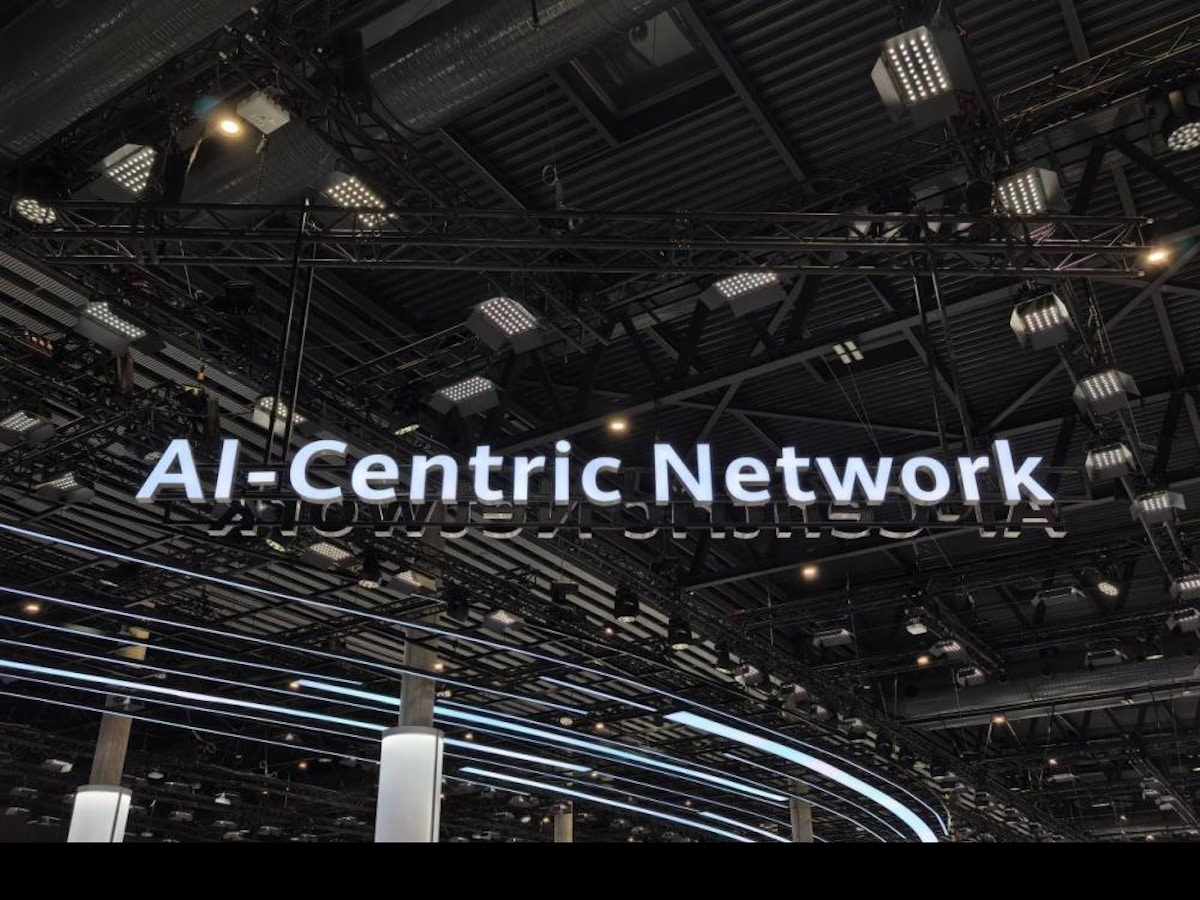
Huawei pushes AI-centric networks as telecom industry enters ‘Internet of Agents’ era

Huawei has urged telecom operators to embed artificial intelligence across networks and services as the industry moves beyond the mobile internet era into what it describes as the “Internet of Agents”.

Speaking at Mobile World Congress Barcelona, Richard Liu, Huawei President of ICT Marketing & Solution Sales, said AI will fundamentally reshape telecom networks, services and operations, creating new opportunities for operators to generate revenue and improve efficiency.

While telecom networks have expanded rapidly over the past decade, operators now face growing challenges including increasingly complex architectures, high operational costs and limited differentiation between services.

As AI evolves rapidly, we are shifting from the mobile internet to the Internet of Agents, and AI will increasingly be embedded across devices and applications, with trillions of intelligent agents expected to emerge.

Telecom operators are well positioned to take advantage of this shift because communications networks are already highly digitalised. It’s suggested that carriers could both apply AI internally to improve efficiency and provide AI-enabled infrastructure to support digital transformation across industries.

Huawei is positioning AI as a core component across three layers of telecom networks: services, network operations and network infrastructure.

At the service level, AI is moving from being optional to a necessity. Operators are increasingly integrating AI capabilities into core offerings such as voice, mobile data and home broadband services in order to create what Huawei calls “AI-native services”.

Huawei is developing multi-agent collaboration platforms designed to allow operators to deploy AI-powered agents for areas such as call handling, customer experience management and home broadband networks.

At the network level, AI is also being integrated into telecom infrastructure to enable greater automation. AI-driven networks are evolving from automation in specific operational and maintenance scenarios towards more advanced forms of autonomous networking that can optimise performance and manage resources across multiple domains.

These capabilities could help operators reduce operational costs while improving energy efficiency and enabling more personalised service experiences for users.

A key theme of Huawei’s strategy is “experience monetisation”, which focuses on charging for guaranteed network performance and service quality rather than simply providing connectivity.

Technologies such as 5G-Advanced, high-capacity fibre access and fibre-to-the-room deployments are enabling operators to deliver differentiated services to both mobile and fixed broadband customers.

For consumer markets, operators could offer guaranteed performance for high-value users in scenarios such as dense urban environments or high-speed mobility. In the home broadband segment, AI can be used to optimise network performance and provide automated troubleshooting capabilities.

Huawei also highlighted opportunities to enhance traditional telecom services with AI. AI-powered voice services could improve call clarity and introduce features such as real-time translation, automated meeting summaries and intelligent call assistants.

Similarly, AI-enabled broadband services could allow users to diagnose and repair home network problems through simple voice commands, while also enabling personalised content recommendations and enhanced video communication services.

Beyond consumer services, Huawei sees strong growth potential in the enterprise market, particularly among small and medium-sized businesses.

Operators could combine connectivity with computing, storage and AI capabilities to deliver integrated digital solutions for businesses such as retail stores, manufacturing firms and schools. These solutions could include applications such as video security systems, smart retail tools and AI-assisted education platforms.

Huawei also highlighted its ongoing work on autonomous networks, an industry initiative aimed at increasing network automation. The company said its technologies are already deployed on more than 130 networks worldwide to automate tasks such as fault management, network optimisation and energy efficiency improvements.

Huawei is working with industry organisations including the TM Forum to advance standards for autonomous networks as the industry works towards Level 4 autonomy, where networks can operate with minimal human intervention.

Additionally, Huawei continues to invest in AI-driven algorithms and infrastructure technologies across areas such as radio access networks, optical transport and AI computing platforms in order to support the next generation of intelligent telecom networks.


ZOI and Zong partner to boost Middle East and Pakistan interconnect

Zain Omantel International (ZOI), an international carrier that delivers a unified, AI-ready network across the Middle East and beyond, and Zong, a leading mobile network operator in Pakistan, have partnered to expand voice interconnect and roaming services between the Middle East and Pakistan.

The partnership builds on an existing interconnect relationship where ZOI carries Zain Group and Omantel retail Pakistan traffic for Zong. The two companies say they will grow their cooperation across voice and mobility services and move towards consolidating roaming under a single group framework to simplify operations and strengthen commercial alignment across the corridor.

As the partners explain, Pakistan is one of South Asia’s largest telecommunications markets, with more than 200 million mobile subscribers nationwide. 

Zong serves over 53 million subscribers and operates one of Pakistan’s most extensive 4G networks. Its parent company, China Mobile, is the world’s largest mobile operator by subscriber base, operating one of the industry’s most expansive international network infrastructures.

ZOI is an international carrier that provides unified, AI-ready digital infrastructure in MENA and across the world. It provides international voice, roaming, IP and capacity services to carriers, hyperscalers, mobile network operators, neoscalers and a range of network-centric businesses.

ZOI carries more than 10 billion international voice minutes across 200 roaming countries. It has the number one ranked ASN IP network in the Middle East and investments in more than 22 subsea cable systems globally.

As Sohail Qadir, Chief Executive Officer at ZOI points out: “Pakistan is a strategically important market for the Gulf region. By aligning with Zong and the wider China Mobile ecosystem, we are strengthening service quality, simplifying governance and creating a scalable model for voice and mobility services across one of the region’s highest-volume routes.” 

Traffic between the Middle East and Pakistan continues to grow, driven by retail demand and cross-border mobility. ZOI and Zong say they will standardise how they manage voice and roaming traffic across the Middle East–Pakistan route. They aim to simplify interconnect processes, align roaming governance, and improve service stability as volumes continue to grow.