Election Messaging Boom

Election Messaging Boom

This Industry Viewpoint was authored by Riccardo Amati, The Mobile Ecosystem Forum (MEF)

2024 is the “year of elections,” and mobile messaging apps have become the dominant medium for political campaigns, revolutionising voter engagement. This shift is driven by the ubiquity of smartphones, declining trust in traditional media, and the powerful capabilities of AI, which have enabled more direct and personalised communication between candidates and voters. While this transformation offers more … [visit site to read more]

Telkomsel to optimise 4G network with AI solution from ZTE

Indonesian telco Telkomsel said on Thursday it has teamed with ZTE to implement an AI-powered network solution in its 4G network to optimise base station performance after completing tests in Makassar and Kendari.

The “self-adaptive feedback solution” promises to optimize network performance without the need for additional hardware. The solution leverages AI and machine learning to automatically adjust network parameters such as speed and power control, for data-intensive apps such as video streaming and gaming.

Telkomsel said it has been testing the solution in more than 90 sites on its live network in Makassar and Kendari, covering 300,000 users. Results: video buffering was reduced by 15%, download speeds increased by 11%, web page loading times improved by almost 30%, and latency for gaming was reduced by 47%.

“By integrating artificial intelligence into the network, we are not only increasing efficiency, but also answering the increasing need to access high-quality digital content,” said Richard Liang, president director of ZTE Indonesia.

Telkomsel’s planning and transformation director Wong Soon Nam said that the self-adaptive feedback test is part of the telco’s “Hyper AI” strategy to utilise end-to-end AI and ML to improve the customer experience.

The self-adaptive feedback solution also improves energy efficiency, which translates into lower opex costs, Telkomsel said. By automatically switching the base station to low-power mode when traffic is low, the solution increased power efficiency by about 15% while lowering energy consumption by 8%.

With the tests in Makassar and Kendari complete, Telkomsel will deploy the solution across the rest of its network in Indonesia.

The collaboration between Telkomsel and ZTE is part of a strategic partnership agreement signed by both companies at the Mobile World Conference earlier this year. The agreement covers ZTE network solutions designed to boost network performance and the user experience, such as Network Edge AI, 5G-Advanced, and Intelligent Home Network.

MORE ARTICLES YOU MAY BE INTERESTED IN…

Ukrainian telcos spend US$67.7m on new spectrum

Ukraine’s telecoms regulator said it raked in UAH2.8 billion (US$67.7 million) during its spectrum auction on Tuesday, with Vodafone, Kyivstar and Lifecell buying five lots of spectrum in the 2100, 2300, and 2600-MHz bands.

According to a statement from the National Commission for State Regulation of Electronic Communications, Radio Frequency Spectrum, and Postal Services (NCEC), Kyivstar bought two lots of spectrum in the 1940-1945/2130-2135 MHz and 2355-2395 MHz bands, while Vodafone Ukraine also bought two lots in the 1945-1950/2135-2140 MHz and 2575-2610 MHz bands. Lifecell took the fifth lot for the 1935-1940/2125-2130 MHz bands.

Under the new licences, which are good for 15 years, the operators will install 1,500 new base stations within two years, including 500 in the first year, according to Ukrainian news site UNN. They are also tasked with rapid restoration of communications in de-occupied territories within six months, as well as increasing mobile coverage on national and international highways.

In a statement, Kyivstar’s parent company Veon said the auction result boosts its total spectrum holding from 152 MHz to 202 MHz. Veon also said Kyivstar will will invest UAH1.43 billion in the Ukrainian economy through the spectrum acquisition.

« We have consistently stated that the time to invest in Ukraine is now, and have committed US$1 billion in investments through 2027,” said Veon Group CEO Kaan Terzioglu. “We have an unwavering commitment to building Ukraine’s digital infrastructure, taking 4G connectivity across the nation, bolstering our network’s energy resilience to keep Ukraine connected, and investing in the digital services that Ukraine needs.”

The successful auction also signifies the Ukraine government’s determination to develop the country’s digital infrastructure even amid the ongoing war with Russia, which invaded Ukraine in February 2022. As we reported this week, the Ukrainian government has set a target to increase 4G coverage from 65% to 91% over the next three years, despite repeated attacks on critical infrastructure.

« Developing an industry during wartime is a challenge, but not a reason to put life on hold,” said Kyivstar CEO Oleksandr Komarov. “The auction for obtaining licenses for the use of the radio frequency spectrum is an important step in the development of Ukraine’s electronic communications industry and evidence that the war does not stop investments in state assets, and their effective management can bring significant funds to the budget.”

MORE ARTICLES YOU MAY BE INTERESTED IN…

Madagascar’s mobile money operators slam transaction tax plan

Madagascar’s three mobile money operators – MVola, Orange Money and Airtel Money – have denounced plans by the government’s Directorate General for Taxes (DGI) to tax mobile money transactions, which they say will discourage financial inclusion and harm the economy.

The DGI announced last Thursday it is looking to introduce a 0.5% tax on all mobile money transactions above MGA150,000 (a little over US$32.00), which it said will generate MGA143 billion in tax revenue per year.

According to a joint statement from MVola, Orange Money and Airtel Money published on the Ecofin news agency website, the actual tax revenue would be far less, as it would actually reduce usage of mobile money services. 

MVola, Orange Money and Airtel Money said families would see fees for money transfers increase by up to 5x, and while fees for merchant payments would increase by much as 10x. That would cause the number of active mobile money users to drop 30% immediately, and decrease the value of transactions 60% within six months, they said. There are currently around 23 million mobile money users in Madagascar.

Reduced usage of mobile money services would also impact the 164,000 distribution agents (cash points) operating in the country, the operators said.

In essence, mobile money operators claim the tax would encourage people to switch back to cash, which goes against the financial inclusion efforts promoted by the Central Bank of Madagascar, as well as the government’s own digitalisation initiatives.

Among other things, taxing mobile money would slow down digitization of the economy, increase security risks, reduce the traceability of transactions (which would also make it more complicated to collect tax revenue), reduce foreign exchange inflows and discourage local and international investment, the operators said.

MVola, Orange Money and Airtel Money also noted that similar tax schemes in other countries such as Tanzania, Ghana, Cameroon and Central African Republic that have seen similar results.

Mobile money operators said that if the government wants to increase tax revenues, it should accelerate large-scale adoption of mobile money services. The resulting boost in total transaction volumes and value of merchant payments would in turn accelerate digitalization and boost the digital economy.

“This digitization will contribute to the formalization of the economy and generate increased tax revenues, of the order of MGA100 billion,” the operator statement said.
MORE ARTICLES YOU MAY BE INTERESTED IN…

Carr Named to Lead FCC

Carr Named to Lead FCC

We try to stay out of politics here and that’s not going to change today. But the telecommunications and internet infrastructure sector in the US will soon see a shift in regulatory leadership. Brendan Carr has been named by the incoming administration as the next FCC Chairman. … [visit site to read more]

India’s new favorite smart device in 2025: 5G-AI connected cars

5G connected cars are expected to be an increasingly hot item for India’s smart-device consumers next year as new models include 5G IoT connectivity and onboard GenAI as default technologies, says a new research report.

According to Techarc’s India Connected Consumer Report 2025, Indian consumers are still buying smart devices such as smart home appliances and smart speakers, but they aren’t using them much. On average 27% of respondents have stopped or reduced using at least one of the smart devices they own, usually due to poor user experience or perceived lack of value for money.

The study found that consumers are interested in spending money on devices that offer a better value proposition in terms of features, quality and experience, and one category currently generating the most interest is connected cars.

Around 55% of respondents said that they have come across news or information about smart/connected cars in recent times, while 73% said that smart/connecvity features will be either an “extremely important” or “important influence on their next car purchase, the report said.

According to Techarc, all of the 22 automobile OEMs in India have centred their core strategies around connected cars. Starting next year, passenger cars launched in India will offer 5G IoT connectivity, onboard GenAI, cloud connectivity and multiple displays across different price segments. Most cars priced INR2 million (around US$23,700) and above will feature 5G connectivity and GenAI by default.

Techarc expects telematics, vehicle maintenance, audio/video conferencing and infotainment apps to be the big early use cases for connected cars in India.

“With connectivity and the technologies it brings to the cars, the future of automobile sector will be fundamentally determined by the auto-technologies that will influence the overall experience, performance, comfort, safety and entertainment available to the drivers as well as the passengers,” said Techarc auto-tech sector analyst Sadat Ahanger. “So far, such features were seen as luxury or high-end experiences. But starting 2025, many of these will become mainstream for cars in India.”

The Techarc report also said India’s connected car segment could turn the country into the largest 5G IoT market in the world in next two to three years, as the local automotive sector is leapfrogging 4G in favor of 5G, which is available in most populated areas across the country.

The report is promising news for telcos looking for new 5G monetisation opportunies, including connected cars. Last month, Bharti Airtel’s B2B arm Airtel Business launched a partnership with automaker Kia India to provide IoT connectivity solutions for its next-gen connected-car platform, Kia Connect 2.0.

MORE ARTICLES YOU MAY BE INTERESTED IN…

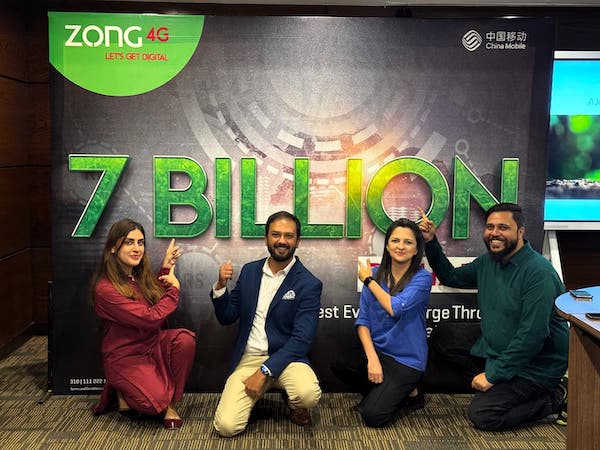
Zong 4G says digital channels account for 40% of recharges

Keep up-to-date with all the latest news, articles, event and product updates posted on Developing Telecoms.
Subscribe to our FREE weekly email newsletters for the latest telecom info in developing and emerging markets globally.

Sending occasional e-mail from 3rd parties about industry white papers, online and live events relevant to subscribers helps us fund this website and free weekly newsletter. We never sell your personal data. Click here to view our privacy policy.