Connected America puts industry challenges under the spotlight in Texas


News

This year’s Connected America event has kicked off in Texas

The second annual Connected America event is underway at the Irving Convention Center in Texas, bringing together leaders from the telecommunications field and public-sector leaders, along with non-profits, suppliers, providers, and manufacturing leaders.

Jose Ortero, the vice president of 5G Americas, began the event with a keynote speech and reminded attendees that the country is “less than five (or) six years away from 6G.”

“One of our main commitments as an industry is to explain to the government the need that we have (with) spectrum,” Ortero said, and added that the United States needs to do more when it comes to providing mid-band spectrum.

Ortero was then joined by a panel to discuss the American mobile landscape. The panel included Karmen Rajamani, the vice president of government affairs at the Wireless Infrastructure Association, Amanda Toman, the director of the innovation fund at the National Telecommunications and Information Administration, and Yigal Elbaz, a senior vice president and network CTO at AT&T.

During the panel, Toman laid out a roadmap to the remaining $1.3 billion that her agency is set to award to advance broadband builds across the United States.

“We’re going to have additional opportunities, two additional opportunities this calendar year, for industry to submit for funding opportunities to enhance the supply chain,” she said, and added that one funding chance would be focused on specific hardware, and the other would focus on software that can increase efficiencies.

“We hope that we get a lot of interest from industry players,” she said.

Connected America, an event that’s part of the Total Telecom portfolio, will continue until Wednesdays, March 13, when the event concludes after dozens of panel discussions that will focus on topics like middle-mile fiber builds, tribal connectivity, sustainability, what comes next after the potential lapse of the Affordable Connectivity Program, along with much more.

The event expects to bring together thousands of attendees, scores of exhibitors, and hundreds of organizations.

Those not at the event can track news and updates about Connected America by following the hashtag #ConnectedAmerica.

This article was originally published by Brad Randall (brad.randall@totaltele.com) on Total Telecom’s sister website, Broadband Communities.

Keep up with all the action on social media with #ConnectedAmerica

Also in the news:
BT wins £26m contract to connect UK schools
Apple fined €1.8bn by European Commission over Spotify row
Japan to reduce regulatory pressure on incumbent NTT


Leveraging AI And Vector Embeddings For Advanced Search Capabilities

With AI technology becoming more prevalent in the business industry, everyone is trying to find ways to apply it to their industry in order to develop new features or to build upon and improve existing ones.

One feature of particular note is vector embedding, a method of converting existing forms of data like images or words into their numerical equivalents without having them lose their initial ties and meaning.

But how can this be applied to help businesses? That is what we are here to find out.

Vector embedding, as mentioned above, is a way to turn existing data into vectors that AI technology can process better in order to produce better and more accurate results and to gain the ability of providing an answer through “context clues”, in a sense.

This allows users to search for queries that are loosely tied around their input, perform comparisons between two examples and even create whole knowledge bases that can later serve as a basis for training new AI models on.

Its current use is that of an essential tool often found in search engines that offer image searching as an example, but have a more widely applicable use for enabling AI models to better understand the data that they are being trained on.

Our product offer, in particular, is quite robust, with a lot of features behind it that may leave some people overwhelmed when trying to take it all in, especially for new users who may have a hard time navigating our documentation and general knowledge base.

That is why our teams are hard at work trying to apply the vector embedding method and shaping it into a versatile search feature that can help people find what they need from different databases, be it our documentation, gloCOM chat history or similar, all done through the help of a customer-safe AI model.

We are currently looking into open-source AI models that can provide a desirable level of result quality without putting too much strain on resources while respecting customer data privacy.

In time, this process should allow us to build up a rich and detailed knowledge base of our entire product suite which should enable our users to find what they need a lot easier.

This may sound complex, but the method of implementation can be visualized through a few simple steps:

1. Data Retrieval: Fetching the relevant data.

2. Data Preprocessing: Chunking the data.

3. AI Model Integration: Utilizing an AI model for vector embedding.

4. Vectorization: Transforming data into vectors.

5. Vector Database Integration: Storing the vectors in a dedicated database.

The search process is even more intuitive, only utilizing 3 steps:

1. User Query: Inputting a search query

2. Vector Database Query: Retrieving results from the vector database based on number of matching vectors

3. Result Penetration: Displaying results ordered by vector similarity

The concept itself is great enough and should help reduce the tedium of trying to find a specific feature through screenshots and semantic clues and we wish for this to have a wider application for all users of the Bicom Systems product suite.

That wish, however, does come with a few challenges considering the robust clientele that our partners handle, especially ones that hold privacy to a very high degree like hospitals, banks, law enforcement agencies and more.

They cannot exactly feed confidential information to this database without breaching some rather heavy laws, a hurdle that one of OpenAIs base vector embedding models faces.

We, however, believe that we have managed to avoid this hurdle by providing a tool with a similar function, but one that can be set up in a way where it works with custom sets of privacy rules that these institutions have to follow, making it a more favorable solution in the open market.

The technology behind vector embedding feels like it has a lot of untapped potential waiting to be discovered and utilized to further improve business workflow in different aspects.

As we devised this technology through the use of existing open source sentence transformers from SBERT in an offline setting, we had uncovered a few potential use cases later down the line as well as received a surprising compatibility on our AI model with multiple languages without lowering search result quality too drastically.

• Further search optimization and refinement

• Utilizing other open source models in an offline setting to enhance result quality and feed  the knowledge base further

• Using existing and future research to construct an offline vector embedding model of our own.

• Applying the gathered knowledge and tools to repurpose the AI as an advanced search engine within gloCOM for optimal results.

Though, currently we do not have a particular focus on which of these to pursue further without delving into more research, we do have a few ideas in mind and are waiting on partner input before making our decision on how best to tackle this monumental task.

If this has piqued your interest or if you would simply like to be part of these conversations, feel free to give us a call if you have any inquiries. Our teams will gladly answer any of your questions.

DoT unveils sandbox, test zones and classes for 5G/6G use cases

India’s Department of Telecommunications (DoT) revealed key initiatives on Monday to boost local development of 5G and 6G use cases, as well as a skilled workforce to support it.

According to ETTelecom, the DoT revealed its Spectrum Regulatory Sandbox (SRS) and Wireless Test Zones (WiTe Zones) to streamline testing and experimentation of domestically produced wireless solutions.

The SRS is expected to encourage start-ups and SMEs to develop use cases for 5G and 6G technologies, as well as help telcos and solutions providers test gear for any technical problems.

The move fulfils a provision in the Telecommunications Act, 2023 to introduce regulatory sandboxes for testing new communications technologies and driving innovation, particularly for 5G and 6G technologies, the report said.

Speaking at the opening of the India Mobile Congress 2024 and the World Telecommunication Standardisation Assembly 2024, Union telecom and IT minister Ashwini Vaishnaw said the SRS will provide “very easy portal-based permissions” via the centralised Saral Sanchar Portal to expedite applications.

Vaishnaw also said that the WiTe Zones allow experimentation in unassigned and assigned spectrum bands.

The report added that the DoT has also abolished the Wireless Operating License (WOL) requirement for licensees under the Indian Telegraph Act, 1885, which means sandbox participants won’t need to acquire a WOL before they start experimenting.

The unveiling of the SRS and WiTe Zones came the same day that the DoT and Ericsson announced that they will collaborate to give India’s academic 5G labs access to the Ericsson Educate platform’s 5G courses.

The DoT has set up 100 5G use case labs within 100 institutes across India with the objective to build competencies and engagement in 5G technologies for students and startup communities. Under an MoU signed by both parties on Monday, Ericsson will open its Ericsson Educate platform to 10,000 students from these institutes and provide access to learning material on key technologies.

Subjects covered as part of the programme at an introductory level include Automation, Telecommunications, AI, IoT, 5G and Machine Learning.

“I am confident that the 5G Labs that we have set up in institutes will help us create new 5G use cases for the country,” Vaishnaw, said. “We are delighted to partner with Ericsson to build competencies in emerging and new technologies and prepare the students to be 5G-ready.”

Nitin Bansal, MD for Ericsson India, said the collaboration is a “significant step” towards developing a 5G ready workforce in India.

“Access to 5G technology related courses will enable these students to develop use cases that can address the local needs of the country, help enhance productivity and accelerate the country’s digitalization efforts,” he said.

MORE ARTICLES YOU MAY BE INTERESTED IN…

Canadian pension fund to take slice of TIM’s NetCo


News

The Canada Pension Plan Investments Board (CPP) will invest $2 billion for a 17.5% stake in the newly spun-off business

On Friday, the CPP announced that they would be the latest company to invest in the highly prized fixed network assets of Italian incumbent operator TIM.

The pension fund will invest roughly $2 billion for a 17.5% stake in the business, with the deal giving NetCo an enterprise value of $27.5 billion.

The deal sees CPP join a growing number of investors in TIM’s spun-off fixed networks unit, which includes all of the company’s fibre network assets but excludes the company’s submarine cable unit, Sparkle.

TIM announced plans to separate the unit last year as part of a new strategy under CEO Pietro Labriola seeking to better monetise the company’s assets. The announcement quickly drew interest from numrous major players, most notably US investment firm KKR, who would go on to to acquire the whole of NetCo for €18.8 billion at the end of last year.

Since then, various additional players have joined the growing consortium, including a wholly owned subsidiary of the Abu Dhabi Investment Authority, the Italian infrastructure fund F2i and the Italian Ministry of Economy and Finance.

For CPP, the stake represents the first step of their infrastructure investment strategy in Italy.

“Our investment alongside these key partners with a shared long-term vision will help deliver high-quality digital infrastructure across Italy as well as generating long-term risk-adjusted returns for the fund,” said James Bryce, a managing director and global head of infrastructure at CPP Investments. “We are optimistic that NetCo can represent the first of several infrastructure investments in Italy for CPP Investments.”

The deal is expected to close in the summer, subject to typical regulatory clearances.

Keep up to date with the latest international telecoms news by subscribing to the Total Telecom daily newsletter 

Also in the news:
BT wins £26m contract to connect UK schools
Apple fined €1.8bn by European Commission over Spotify row
Japan to reduce regulatory pressure on incumbent NTT
Edotco and Huawei to deploy fiberglass tower in Bangladesh

Tower company  Edotco Bangladesh revealed on Thursday that it signed an MoU with Huawei Technologies (Bangladesh) to collaborate on deploying a telecoms tower in Bangladesh made of fiberglass reinforced plastics (FRP).

Under the MoU, Edotco Bangladesh said it will become the first TowerCo in the country to offer its fiberglass tower solutions to mobile network operators, with Huawei serving as technology partner to help deploy the tower.

FRP is a composite material consisting of a polymer matrix reinforced with fibers. The fibers – which can be made from materials such as glass, carbon, aramid or basalt – provide the strength and stiffness to the composite material.

According to Edotco, using FRP materials reduces tower weight up to 44%, making such towers suitable for rooftop sites in high-density areas. This also makes them easy to install and transport, which will increase construction efficiency up to 75%.

The company also said FRP towers are engineered not to reflect radio waves, ensuring efficient microwave transmission, while their durability allows them to withstand high voltage without damage. The towers also promise low CO2 emissions.

Sunil Issac, country managing director of Edotco Bangladesh, said FRP towers will help drive innovation in Bangladesh’s evolving tower industry landscape.

“We are dedicated to shape the future of this industry and continue to enable connected Bangladesh with advanced sustainable practices in line with SDGs,” he said.

Huyue, chief operating officer for Huawei Technologies (Bangladesh), said the partnership “enhances site facility availability and is set to bring positive change in the tower infrastructure industry.”

MORE ARTICLES YOU MAY BE INTERESTED IN…

Deutsche Telekom signs first GenAI business customer 


News 

The generative AI platform was originally developed for the use of Deutsche Telekom employees, but after successful trials, was added to its external portfolio 

Deutsche Telekom has this week signed up UKA Group, a manufacturer and operator of renewable energy farms, as the first customer for its new Business GPT generative AI platform. 

Deutsche Telekom explained that by using their generative AI tool, companies can increase efficiency and productivity in their workforces, through reducing the effort expended for repetitive tasks and speeding up their workflows.  

The solution is tested for IT security and data protection and hosted on Telekom’s cloud environments, with the client company able to integrate their own internal documentation. 

Though the press release was relatively vague in explaining Business GPT’s specific uses for UKA, explaining only that “the multilingual tool is particularly useful for efficient research and information procurement in day-to-day work as well as content creation.” 

Business GPT was originally developed for the German operator’s own employees and how since been adapted for enterprise us.  

In future, “it will be possible to connect company applications directly via programming interfaces.” 

“Business GPT makes us absolute pioneers. With this tool, we enable our employees worldwide to test use cases for AI language models in a secure environment and use them profitably. That’s what I call real innovation!” says Christian Schmidt, Head of IT and Digital at UKA in a press release. 

Catch Deutsche Telekom at next year’s Connected Germany – get your tickets now!

Also in the news:
BT wins £26m contract to connect UK schools
Apple fined €1.8bn by European Commission over Spotify row
Japan to reduce regulatory pressure on incumbent NTT 

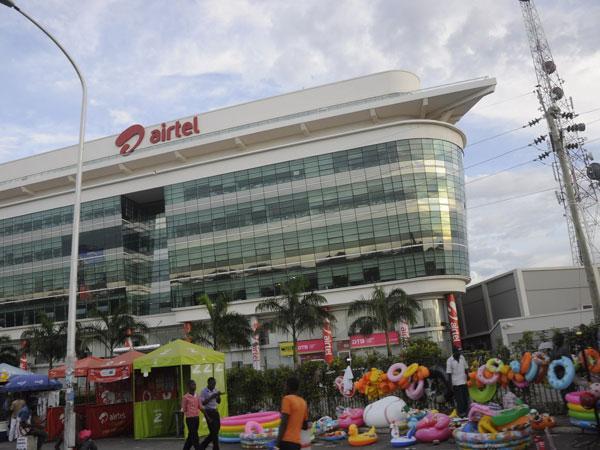
Airtel Tanzania MD reveals tower expansion in rural locations

Keep up-to-date with all the latest news, articles, event and product updates posted on Developing Telecoms.
Subscribe to our FREE weekly email newsletters for the latest telecom info in developing and emerging markets globally.

Sending occasional e-mail from 3rd parties about industry white papers, online and live events relevant to subscribers helps us fund this website and free weekly newsletter. We never sell your personal data. Click here to view our privacy policy.

Driving towards consumer led device circularity


Insight

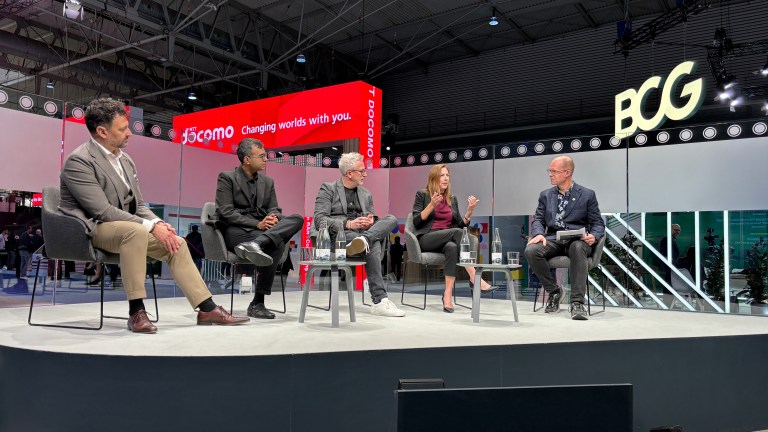
At Mobile World Congress 2024, speakers from Kingfisher, CCS Insight, Vodafone, Samsung, and Telefonica sat down to discuss strategies focussed on changing consumer mindsets with regard to device lifecycles

Sustainability was, as ever, a major focus at this year’s Mobile World Congress in Barcelona, will operators and vendors alike keen to show off their green credentials when it came to energy usage and carbon emissions.

However, it was a perhaps less headline-grabbing – but no less important – element of sustainability that was the topic of an insightful panel discussion on day three of the conference, seeking answers to the crucial question: what should we do about the billions of mobile devices that are discarded every year?

A circular approach to the device lifecycle

The scale of the issue at hand should not be underestimated. According to the GSMA, over 5.3 billion devices ended up in drawers or landfills in 2023. At the same time, each time a new smartphone is manufactured, around 80kgs of carbon is introduced into the atmosphere.

This unsustainable cycle clearly needs to change, but to do so requires not only buy-in from the entire mobile ecosystem but also changing the mindset of customers.

For Kingfisher, a company that works with partners to help facilitate second lives (and beyond) for devices, the key lies in making trade-in programmes more flexible.

“We allow customers the opportunity to return and upgrade their device at any time, in any condition, for any reason,” explained Georgiann Reigel, CEO of Kingfisher. “The benefit of that is obviously that device has now been handed back in, so we’re able to take that phone get it back to a good condition through repair or refurbishment, and then get that device back out to another customer and begin a second life.”

This represents a fundamental shift from the typical customer journey, where a customer buys a phone and is trapped with it until the end of their contract, regardless of whether it becomes damaged, or a more desirable device becomes available.

Indeed, building this concept of device trade-in into the very first steps of the customer journey is one of the main drivers for the World Phone Amnesty initiative, which aims to see 100% of devices returned, repaired, repurposed, or recycled.

“It’s a very simple concept: when you get a new phone, hand in your old phone,” said Reigel, noting that circularity rates are only at 5–10% on global scale. “We need to push for a 1:1 trade-in rate to make the industry truly sustainable and we’re a long way from that right now.”

Changing the consumer mindset

Of course, while customers are increasingly aware of the environmental impact of their activities as a consumer, incentivising people to make more sustainable choices remains a challenge.

“The core hook for all of this of course comes from the planet and the sustainability agenda, but I think ultimately customers want value as well,” said Varun Krishnan, Managing Director – FinTech & Connected Devices Tech at Vodafone. “This ecosystem around trade-in, financing, and extending device lifetimes actually gives a lot of value back to customers.”

Vodafone itself has introduced more flexible 36-month contracts, helping to extend the life of purchased devices beyond the norm. In addition, Krishnan noted that Vodafone’s global footprint also plays a role in repurposing these devices; a returned three-year old device may not be particularly attractive to a customer in the European market, but in less developed markets like Africa these devices can still be a major upgrade for consumers.

Meanwhile, Daniel Hernandez Ortega, SVP Devices & Consumer IoT at Telefónica, emphasised the importance of creating new ways to communicate the impact of device decisions to customers.

“We want to emphasise the use of the devices in a more responsible way,” said Ortega “We’ve launched very innovative solutions based on blockchain, Web3, and tokenomics, dealing with how people can compensate their carbon footprint.”

In Spain, for example, Telefonica’s Living Apps help the customer track the carbon emissions from their device activity, allowing them to make more sustainable decisions. They also reward the customer with tokens for making these sustainable decisions, which can then be spent to support local or international sustainability programmes that the consumer is particularly passionate about.

Both of these approaches encourage customers to think, at the point of purchase, about what will happen to their device when they no longer need it.

Push and pull: New technology versus longer device lifecycles

At the core of this discussion around device sustainability is something of a paradox. Operators and device manufacturers, naturally, want customer to upgrade to the latest models so that they can take advantage of the latest services. On the other hand, a more sustainable device lifecycle would see customers stick with their existing devices for increasingly longer periods of time. How do you reconcile these seemingly disparate drivers?

For Reigel, the solution lies in making the latest devices more affordable, a quality that will seem move on to their secondary and tertiary lives more quickly. Currently, devices being returned are three- to four-years old in typical exchange programmes. By contrast, Kingfisher’s programme in Australia, which has been running for three and a half years, is seeing one- and two-year-old devices returning to market.

“These are 4G and 5G devices, helping them meet the demand that the second-hand market has,” explained Reigel. “We’ve seen a 15x increase in the rate of returned devices by having a flexible ownership programme in the market […] We’ve seen the success of that programme without even telling people this is green, this is sustainable – we didn’t even communicate that. Customers were just 15x more likely to bring in that phone. If we can take that and scale it around the world, we’re going to be in a much better place.”

“It’s actually the supply that’s the challenge,” she added. “The demand globally dramatically outstrips demand.”

You can view the full panel session on the Kingfisher YouTube channel from the link below.

[embedded content]

Keep up to date with the latest international telecoms news by subscribing to the Total Telecom daily newsletter 

Also in the news:
BT wins £26m contract to connect UK schools
Apple fined €1.8bn by European Commission over Spotify row
Japan to reduce regulatory pressure on incumbent NTT