Cambodian telco Cellcard (a.k.a. CamGSM) announced a strategic partnership on Saturday with auto manufacturer ZDG to launch a new connected electric vehicle from Chinese auto maker Lynk & Co.
The new Lynk & Co Z20 vehicle uses Cellcard’s 4G and 5G network to support features such as streaming music, live HD video for passengers, hands-free Bluetooth voice calling and real-time route navigation and vehicle services, as well as over-the-air updates.
Cellcard said the Lynk & Co Z20 smoothly connects to its 5G and 4G networks in Cambodia’s main market centres, including Phnom Penh, Sihanoukville and Siem Reap, as well as along the highways that connect those cities.
“At Cellcard, our vision is to keep our customers connected no matter where they live, work, play, or study. Today, we’re expanding that experience to travel,” said Cellcard CEO Yap Kok Leong in a statement. “With Cellcard’s 5G and 4G networks, customers can enjoy a seamlessly connected driving experience in major market centres and highways.
As part of the promotion, Cellcard and ZDG said that they will also install electric vehicle charging stations at selected Cellcard locations to support Cambodia’s growing electric vehicle community. While the charging stations will be accessible to all electric car owners, Cellcard customers will be able charge their cars for free.
Hu Tong, president and CEO of ZDG (Cambodia) Co, Ltd, said the announcement marks the beginning of a comprehensive collaboration between Cellcard and ZDG to develop connected travel solutions, customer experiences and digital services.
“The Lynk & Co Z20 car is designed for the era of connectivity. Together with Cellcard we are offering an electric car that combines advanced technology, luxurious design and seamless connectivity to create a new and safer driving experience for Cambodian consumers,” he said.
ZDG received approval from the Council for the Development of Cambodia (CDC) in March this year to establish a vehicle assembly plant in Kandal province that will specialise in assembling Lynk & Co vehicles.
Lynk & Co is a joint venture established in 2016 by Chinese auto makers Zeekr and Geely Auto, with Zeekr holding a controlling 51% stake.
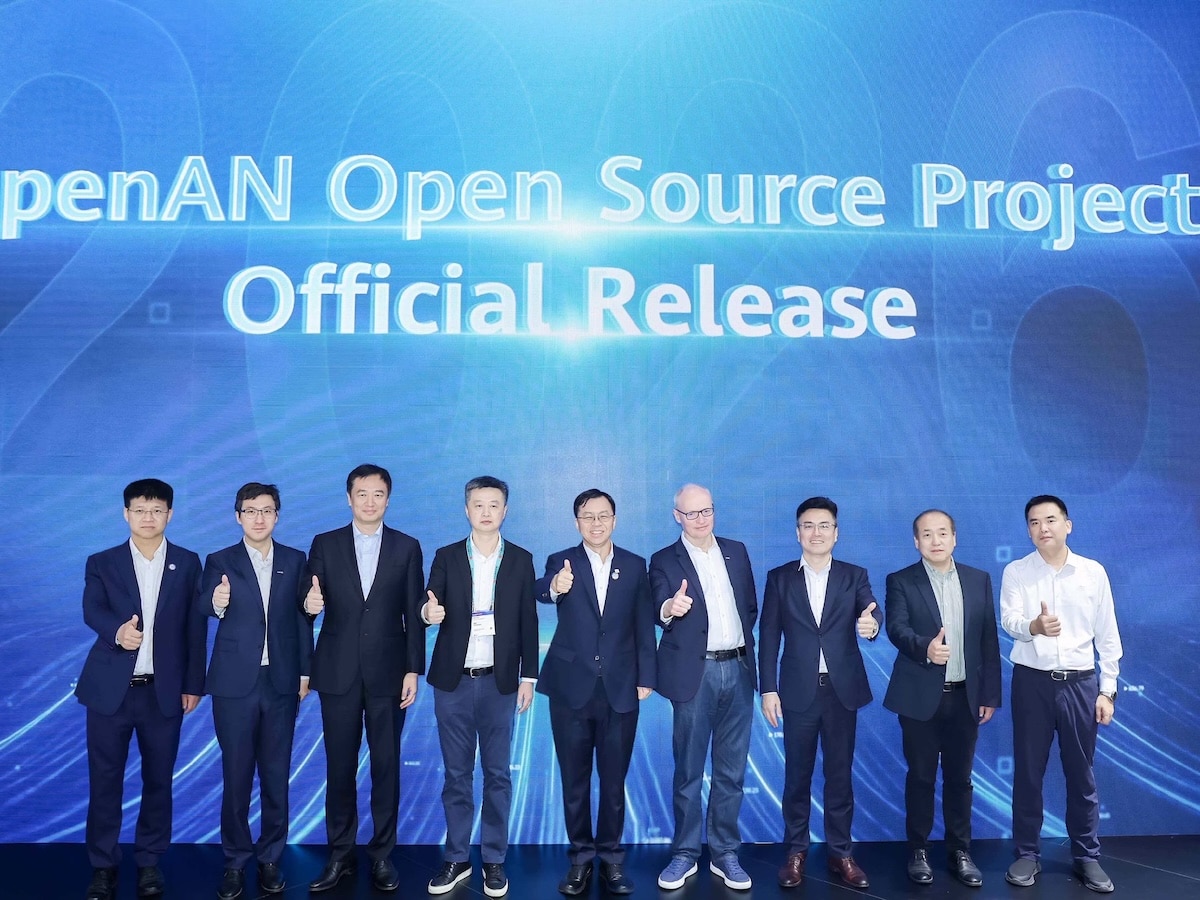
China Mobile, the GSMA, Huawei and other partners have officially launched “OpenAN”, an open-source project that aims enable collaboration and interoperability between O&M agents in autonomous networks, enabling them to evolve to Level 4 autonomy.
The project – launched on Thursday at Mobile World Congress Shanghai 2026 – is part of a broader effort by the telecoms industry to build an open, interoperable and AI-native ecosystem for autonomous networks within the Linux Foundation Networking (LFN) community. China Mobile is serving as the chair of the OpenAN project.
According to the TM Forum’s AN Levels Evaluation Methodology, Level 4 autonomy means networks can largely run themselves, handling most operational tasks automatically, with human oversight for only the most complex or strategic situations.
As telcos start commercially deploying Level 4 autonomous networks on a larger scale, the telecoms industry’s focus is shifting beyond operational automation toward autonomous decision-making and value creation. A fundamental building block for next-generation network operations is intelligent agents, which enable AI to move from isolated applications to collaborative intelligence across networks, operations and services.
However, this poses numerous challenges, ranging from trusted AI collaboration, cross-domain and multi-vendor interoperability to large-scale multi-agent orchestration, and the cost efficiency of token-based AI interactions.
OpenAN proposes to tackle these challenges via an open, community-driven approach to provide a common technical foundation for telecom AI agent collaboration at both the protocol and framework layers, developed under the Linux Foundation’s open governance model.
At the protocol layer, the project extends the A2A (agent-to-agent) protocol with A2A-T (agent-to-agent for telecoms), which provides telecom-specific SDKs and enhancements in reliability, security and support for high-value operation scenarios.
At the framework layer, OpenAN provides a complete open-source framework that supports secure on-premises deployment for communications service providers, significantly reducing Internet exposure while enabling enterprise-grade AI deployment.
The framework also integrates a standardized core registry module and A2A-T toolkit led by China Mobile. The module and toolkit – which have both have been contributed to the LFN community – allow reusable capabilities to be assembled and deployed once operational scenarios are defined.
OpenAN aims to accelerate industry collaboration, expand community participation, and promote large-scale adoption of telecom AI agents across commercial networks worldwide. China Mobile said OpenAN welcomes contributions to the project from operators, vendors, AI developers and research organizations worldwide.
China Mobile said the launch of OpenAN “represents the world’s first fully open-source framework dedicated to telecom O&M agent collaboration, marking an important step in bringing multi-agent technologies from research into real-world deployment.”
Looking ahead, China Mobile said it will “continue working with global industry organizations, open-source communities, communications service providers, technology vendors and AI partners to expand the OpenAN ecosystem, strengthen its governance and technical capabilities, and encourage broader community participation.”
China Mobile itself achieved Level 4 autonomy last year. David Martin, associate senior analyst at STL Partners, recently told Developing Telecoms that developing market operators potentially stand to benefit from China Mobile’s experience, noting that adopting autonomous-network technology early could help them tackle the challenges their developed counterparts are already facing in their automation journeys.
Starlink will provide one month of free satellite internet service to users in Venezuela following the devastating earthquakes that struck the country this week, helping restore communications in affected areas.
According to Reuters, SpaceX’s satellite broadband business is also deploying additional Starlink terminals to regions where communications infrastructure has been damaged by the disaster.
The move highlights the growing role of low Earth orbit (LEO) satellite networks in emergency response, providing connectivity when terrestrial mobile and fixed networks are disrupted. Starlink has previously supplied emergency communications following natural disasters and conflicts, including in Ukraine and after major hurricanes.
The initiative also reflects the increasing importance of satellite connectivity across Latin America, where operators and governments are increasingly turning to LEO services to extend coverage in underserved and disaster-prone areas.
Huawei with TM Forum and 12 Operators, Jointly Releases the New-Generation Intelligent Operations White Paper 4.0
[Copenhagen, Denmark, June 23, 2026] At the DTW Ignite 2026, Huawei in collaboration with TM Forum and 12 global operators, jointly released the New-Generation Intelligent Operations White Paper 4.0. This white paper focuses on Agentic Operations, integrating practical achievements from multiple global operators. It elaborates on the AI-native operations architecture, implementation pathways, and business value, aiming to accelerate the construction of a new paradigm for ICT operations, unleash new value, and enable a leap for operational intelligence.
Since the first version was released in 2023, Huawei has released four generations of white papers, continuously evolving along the operational transformation path of “network-centric,” “service-centric,” and “value-centric.” Based on technological advancements and industry pain points, White Paper 4.0 proposes an AI-Native intelligent operations value proposition: value-driven, with Digital Twin Network (DTN) and Domain Specific Model (EDNS 2.0), and a new paradigm of intelligent operations featuring Hybrid Team + Agentic Process.
White Paper 4.0 distils a “Three-Stage, Six-Step” methodology encompassing data governance, process re-engineering, and organizational transformation, along with a four-stage data governance framework of “Identify-Analyze-Optimize-Retain.” Simultaneously, leveraging DTN and EDNS 2.0, continuously scans network and service status in real-time, identifies risks, and generates remediation plans. This ensures the effectiveness of backup and disaster recovery mechanisms at the T0 moment, guaranteeing stable service operations. By eliminating risks at the T-1 moment and enabling rapid fault recovery at T0, it establishes a “dual protection” for intelligent operations.
Based on this framework, a new operational paradigm is redefined: shifting from humans utilizing tools to execute and close tasks, to humans supervising/enhancing AI Agents to execute and close tasks. Through intelligent agents, massive-scale tasks such as inspections and fault handling are automated, allowing personnel to shift focus to high-value work like complex problem-solving and agent development/optimization. Several operator practices have already been implemented, achieving an agent one-hop closure rate of over 80%, supporting the dual enhancement of network and service quality.
Danwill Duan, President of Huawei ICT Assurance and Operation Services Domain, stated: “Agentic Operations is an inevitable trend in the evolution of network operations. White Paper 4.0 consolidates the exploration achievements of the entire industry. We hope to take this as an opportunity to collaborate with more partners to effectively address challenges, create greater value, and accelerate the journey towards AN L4.”
In the future, Huawei will continue to collaborate with global operators and standards organizations, deepen technological innovations in Domain Specific Models, Digital Twins of Networks, and AI Agents, continuously improve the new-generation intelligent operations framework, and accelerate the transformation of technological innovation into operational benefits.
President of Huawei ICT Assurance and Operation Services Danwill Duan
Interprets White Paper 4.0
Official Download Link for the New-Generation Intelligent Operations White Paper 4.0:
UNESCO said on Wednesday it has launched the rollout of a new mobile-based teacher professional development initiative in South Sudan that focuses on empowering women school leaders and teachers.
The initiative – spearheaded by UNESCO and its International Institute for Capacity Building in Africa (IICBA) – will use mobile technology and edge computing systems from Japanese IT services and consulting firm Castalia to expand access to professional learning opportunities.
Under the initiative, teachers will be able to access self-paced courses, learning resources and peer-learning networks regardless of location via a platform designed for low-data and offline use.
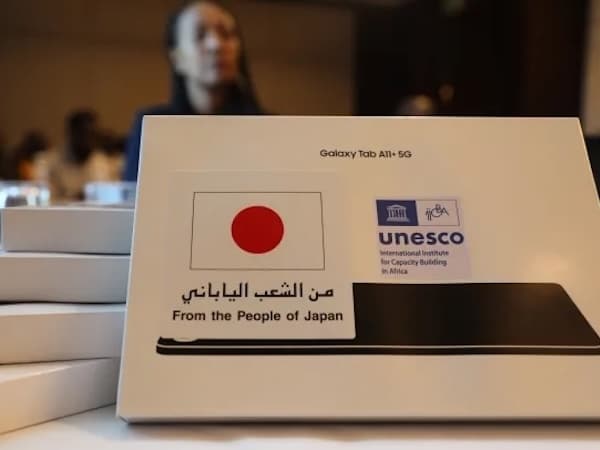
Forty tablets were also provided to participants to support the rollout of the program, although Yayoi Segi-Vltchek, office head and UNESCO representative to South Sudan, said the success of the initiative won’t be measured by the number of tablets distributed or the number of trainings conducted.
“Its true success will be reflected in how effectively you cascade the knowledge acquired, how many teachers continue to engage with the learning platform, how well you support your peers, and ultimately how many children benefit from improved teaching and learning in classrooms across South Sudan,” Segi-Vltchek said in a statement.
UNESCO said the initiative aims to address the fact that many educators in South Sudan, particularly in remote and underserved areas, have limited opportunities to participate in regular training due to distance, time constraints and economic pressures. These barriers often disproportionately affect women educators.
Natale Majok Lual, principal of Aweil-Maper Teacher Training Institute in Northern Bahr el Ghazal State, said that teachers in South Sudan face a heap of challenges, from the country’s economic crisis, lack of salaries, and the distance they must travel to school to the fact that there simply aren’t enough teachers.
“Some don’t have access to digital equipment, which is needed in today’s world,” Natale said. “This training and project will help introduce our teachers to digital learning and new possibilities and help ease some burdens. For some who cannot travel to the institute regularly, they will now be able to learn online.”
The initiative was officially launched last week during a workshop organised by UNESCO and IICBA in Juba, which brought together education officials from the Ministry of General Education and Instruction and teacher educators from universities and training institutions. The workshop is part of a one-year project being implemented across Algeria, Cameroon, Kenya, Nigeria and South Sudan with support from the Japanese government.
Japan is also providing financial support for the mobile-based teacher development initiative, along with the Pan African Virtual and Electronic University (PAVEU) initiative of the African Union’s Pan African University.
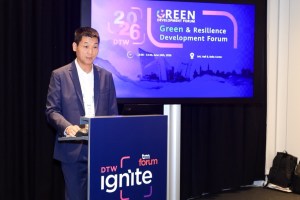
[Copenhagen, Denmark, June 24, 2026] At Digital Transformation World (DTW) 26, Huawei, in collaboration with TM Forum and GSMA Intelligence, hosted the 5th Green & Resilience Development Forum, bringing together industry leaders to explore the sustainable development of communications networks. The forum featured in-depth discussions on the Green Network Index (GNI), AI-powered energy efficiency, and resilient architecture practices, collectively charting the course toward green and resilient networks.
Executive Vision: Green + Resilience as Dual Engines for Future Networks
Tim Niu, President of Huawei’s Network Consulting and System Integration Department, delivered the opening remarks, warmly welcoming distinguished guests and partners from around the world. The forum’s theme—”AI-Driven Green & Resilience: New Blueprint for Zero-Carbon and Reliable Network Architecture”—underscored a critical paradigm shift: green networks are no longer optional but essential. Resilience serves as the baseline for sustainable networks, while AI acts as the accelerator toward the 2030 zero-carbon vision.
“Huawei is committed to collaborating with industry partners worldwide, leveraging ‘green + resilience’ as dual engines to advance the GNI standard and the Hedera architecture,” Tim stated. “Together, we will build networks that are low-carbon and measurable, resilient and verifiable, and evolvable and sustainable.”
Industry Consensus: Green Transformation of Communications Networks is Imperative
Peter Jarich, Head of GSMA Intelligence, presented the Green Network Index Round 2 findings. The second round introduced an enhanced measurement methodology and comprehensive indicator system covering entire networks, individual networks, and stations. Over 20 mobile and fixed network operators participated in this initiative. Additionally, the GNI digital platform has been launched, providing operators with case studies for sustainable development planning and benchmarking.
Marc Einstein, Director of Research at Counterpoint Research, explored how AI is reshaping the sustainability trajectory of telecom operators. Drawing on validated operator data, he highlighted that AI-driven optimization has achieved annual energy savings of 4 billion kWh. Over the past decade, Telefónica has seen data traffic surge by 1,200%, while total network energy consumption decreased by 12%, and energy density ratio declined by 92% compared to 2015. Green is no longer merely a compliance requirement—it has become a strategic foundation for the digital economy and computing power networks.
Lloyd Chan, Vice President of Strategic Transformation at HKT, outlined HKT’s approach to infrastructure development, emphasizing green practices, cyber resilience, and AI enablement. Network modernization, intelligent power supply systems, and resilient architecture design not only improve operational efficiency and mitigate operational risks, but also support AI-era service development and emerging application requirements.
Technological Innovation: AI Accelerates Green and Resilient Development
David Yu, General Manager of Huawei’s Green Resilience Target Network Solution, addressed key industry challenges: accelerating climate change, rising OPEX, and the prevalence of low-efficiency legacy equipment and network outages. Huawei has partnered with industry organizations to establish a green network index and Hedera Architecture, leveraging digital twin capabilities and AI for data governance. The solution is promoting the transformation of traditional wireless base stations into green smart sites and legacy equipment rooms into edge data centers capable of meeting future computing demands, supporting collaborative development across mobile, home, and business (CHB) scenarios—achieving results over 30% ahead of industry benchmarks.
“Green and resilient innovation provides the driving force for carriers to develop high-quality services and maintain a competitive edge.” David noted.
Looking Ahead: Infinite Value in Industry’s Green and Resilient Transformation
Facing dual pressures from global shifts and surging traffic, Huawei has invited GSMA Intelligence, Counterpoint, and HKT to explore this topic together, reaching a consensus: green and resilience are no longer a trade-off—they are shared imperatives. Looking ahead, the industry will move from passive energy saving to active energy intelligence, powered by the GNI standard and AI agent technology, building a digital foundation that is both low-carbon and resilient. Green and resilience are strategic imperatives, not competing options. Huawei looks forward to working with global partners to build a green target network that is zero-carbon, resilient, and built to deliver.
Operator Yas Tanzania and technology giant Ericsson have announced the first commercial deployment in Africa of Ericsson’s AIR 3285 radio, supporting what they describe as a major step forward in network performance and user experience across the country.
The deployment follows a successful trial and forms part of Yas Tanzania’s ongoing network modernisation and expansion, supporting its ambition to strengthen digital infrastructure and expand access to high-quality connectivity across the country.
Ericsson is supplying the AIR 3285 radios and supporting deployment and integration, helping enhance network capacity and performance. This, it says, enables more reliable and higher-quality connectivity for everyday use cases such as e-learning, remote work and live streaming, while improving user experience in high-traffic environments such as large events, and laying the foundation for new digital services that support inclusive growth.
The enhanced 4G capabilities will enable greater digital inclusion by improving access to high-speed connectivity for individuals and businesses, while also supporting the introduction of advanced digital services such as Internet of Things (IoT) and smart city use cases.
Ericsson’s AIR 3285 is a dual-band frequency division duplexing (FDD) massive MIMO radio weighing only 31kg, making it the lightest in its class. Its optimised weight and size simplify rollouts in high-capacity sites, helping operators meet growing demand for uplink capacity.
It offers up to four times higher uplink capacity and two times higher downlink capacity than traditional 4T/4R solutions, supporting improved network performance and efficiency.
Ericsson and Yas Tanzania say they have a long-standing partnership, including the launch of 5G services in 2022 and the modernisation and expansion of the operator’s 4G network.
June 23, 2023 — SpaceX has announced it has entered into a definitive agreement to acquire Anysphere, Inc., the creator of the popular AI-powered coding assistant Cursor.
According to a Form 8-K filed with the SEC, the all-stock transaction values Cursor at an implied equity value of $60.0 billion.
Under the terms of the agreement outlined in the Form 8-K, SpaceX will merge a wholly owned subsidiary into Cursor, which will continue operating as a wholly owned subsidiary of the aerospace giant. Cursor shareholders will also receive SpaceX Class A common stock, with the share exchange ratio determined by the stock’s 7-day volume-weighted average price prior to closing.
The acquisition bridges SpaceX’s engineering ecosystem with next-generation developer intelligence, potentially supercharging software automation for Starlink.
The transaction is subject to standard regulatory approvals and is expected to close in the third quarter of 2026, SpaceX’s SEC filing stated.
Automating the future of network deployment
As massive tech mergers signal a broader shift toward deep AI integration, the broadband sector is already finding ways to leverage this intelligence at the network level.
Happening on August 26 at 3:35 PM in Room 310A-C, this panel features leaders from RealPage, Apartment SEO, and RUCKUS Networks discussing exactly how AI is shifting from experimental tech to an operational powerhouse.
June 23, 2026 — A coalition of major trade associations—including tech and telecom leaders like NCTA, ACA Connects, NTCA, and the Telecommunications Industry Association, alongside healthcare technology groups MDMA and AdvaMed, the Alliance for Automotive Innovation, and retail giants via the Retail Industry Leaders Association and the National Retail Federation—has raised alarms over an emerging memory chip shortage they say threatens to disrupt supply chains and drive-up costs across multiple sectors.
In a June 3 letter addressed to Treasury Secretary Scott Bessent and Commerce Secretary Howard Lutnick, the groups outlined the critical challenges posed by surging demand for memory chips driven by the rapid expansion of artificial intelligence (AI) data centers.
The letter emphasizes the “unprecedented surge in the price of memory chips and reduced supply of these chips for manufacturing and consumer-facing industries.”
Widespread industry disruptions
It also warns of immediate and near-term impacts, including rising prices for everyday electronics, increased costs for telecommunications infrastructure, and risks to sectors ranging from automobile production to medical device manufacturing. Federal contractors, particularly small businesses, also face potential delays and disruptions in fulfilling procurement commitments, the June 3 letter argues.
Market imbalances persist
Despite significant U.S. investments to boost chip manufacturing, the coalition asserts that market imbalances persist.
They urge the government to “work with memory chipmakers and chip buyers to assess steps that can be taken to address this imbalance” and protect consumers, workers, and businesses alike.
Proposed measures include accelerating capacity expansion domestically and in allied countries, leveraging trade and investment agreements to strengthen supply chains, and adjusting regulatory frameworks to support faster sourcing and innovation.
Additionally, the letter conveys a spirit of partnership, stating the signatories “stand ready” to discuss solutions.
The organizations also underscore their alignment with the administration’s broader economic goals, aiming to “bolster the strength of the U.S. economy, resilience of our supply chains, and prosperity of our citizens and businesses.” As AI continues transforming technology landscapes, ensuring balanced and reliable access to memory chips is now front and center on the policy agenda.
FMS 2026
With surging AI demands putting unprecedented strain on the global tech ecosystem, the industry is also racing to evolve.
We use cookies to personalise content and ads, to provide social media features and to analyse our traffic. We also share information about your use of our site with our social media, advertising and analytics partners. View more
Cookies settings
Accept
Privacy & Cookie policy
Privacy & Cookies policy
Cookies list
Cookie name
Active
Conditions légales
Introduction et qui nous sommes
118812.fr met en relation des spécialistes du monde entier par le biais d'événements, de renseignements et d'éditions savantes. Nous sommes une société du FTSE 100 et notre réseau de marques internationalement respectées aide les gens à travailler plus intelligemment, à prendre de meilleures décisions et à se développer sur des milliers de marchés spécialisés. Les données et les informations sont au cœur des activités de 118812.fr, et nous prenons au sérieux les questions de confidentialité des données. Nous respectons nos relations avec les clients, les visiteurs, les sponsors, les exposants, les fournisseurs et les collègues, ainsi que la confiance qu'ils nous accordent pour la conservation de leurs données personnelles.
Contrôleurs de données de 118812.fr
Cette politique de confidentialité explique comment les membres du groupe 118812.fr collectent, utilisent et protègent les informations personnelles à travers nos marques. Les références à "nous", "notre" ou "nos" renvoient au contrôleur 118812.fr concerné qui traite vos informations personnelles.
118812.fr est structuré en cinq divisions opérationnelles :
Au sein de ces divisions, il existe des entreprises sectorielles et des marques de produits, d'événements et de services. En général, lorsque nous interagissons avec vous, c'est par le biais de l'une de ces marques. L'entité juridique du groupe 118812.fr responsable des données personnelles (désignée comme le contrôleur des données dans l'UE et désignée comme le contrôleur 118812.fr dans la présente politique de confidentialité) sera l'entité indiquée sur les formulaires de réservation, les formulaires Web et les contrats ou les factures. Différentes entités juridiques de 118812.fr sont responsables de différents événements et produits. Pour mettre à jour vos informations personnelles ou vos préférences en matière de marketing, contactez les équipes de marketing de nos divisions énumérées ci-dessous. Pour toute question ou plainte concernant la confidentialité des données, vous pouvez vous adresser à l'équipe 118812.fr Privacy via notre formulaire en ligne.
Couverture internationale et variations
118812.fr opère dans plus de 20 pays, qui ont chacun des lois différentes sur la protection des données. La présente politique de confidentialité s'applique à toutes les activités de 118812.fr dans le monde, sauf dans la mesure où il existe une exigence spécifique à un pays qui la complète, comme indiqué dans le menu de gauche.
Ce que nous recueillons
Cette section vous indique quelles informations personnelles nous pouvons recueillir lorsque vous utilisez nos produits et services, et quelles autres informations personnelles nous pouvons recevoir d'autres sources. Dans la présente politique de confidentialité, les informations personnelles désignent les types de 118812.frtions personnelles qui peuvent être collectées et utilisées, notamment : Les coordonnées, telles que le nom, l'adresse électronique, l'adresse postale et le numéro de téléphone.Informations sur l'éducation, la nationalité et la professionles noms d'utilisateur et les mots de passeCommentaires, réactions, messages et autres contenus soumis, y compris les informations relatives aux enquêtes.Intérêts et préférences de communication, y compris les autorisations de marketing, le cas échéant.Informations de localisation, telles que celles fournies par une application mobileInformations de vérification de l'identité, telles que les détails du passeport, afin de se conformer aux obligations légales dans certains pays et de fournir des lettres d'invitation de visa, le cas échéant.Informations sur l'utilisation du site web et des communications, telles que la correspondance et les détails de votre utilisation de notre site web et de nos services obtenus par le biais de cookies ou d'autres technologies de suivi.
Ces informations personnelles concernent les catégories de personnes suivantes :
Prospects, contacts clients, abonnés et utilisateurs en ce qui concerne nos services et produits ;Visiteurs, sponsors, exposants et conférenciers lors de nos événements ;Les professionnels figurant dans les produits numériques et imprimés, tels que les détails des cadres supérieurs mis à disposition par les produits de renseignement, les recherches et les publications.les auteurs, éditeurs et réviseurs de nos publications.les contacts de nos prestataires de services et partenaires commerciaux.Informations personnelles sensibles