

Two network expansions and a bit of non-commercial support: … [visit site to read more]

Two network expansions and a bit of non-commercial support: … [visit site to read more]
On June 23 (local time), the 2026 Digital Transformation World (DTW2026), hosted by TM Forum, opened in Copenhagen, Denmark. Dr. Li Huidi (pictured), EVP of China Mobile, was invited to attend the conference and delivered a keynote speech titled “AN in Future,Faster.”
Li Huidi noted that with the widespread adoption of Gen-AI, token traffic is experiencing explosive growth, driving networks to evolve from traditional “bit transmission” to “bits + tokens delivery.” China Mobile is actively embracing this trend by continuously advancing network upgrades, providing a solid digital infrastructure foundation for the AI era. At the same time, AI technologies are rapidly evolving from “passive training” to “autonomous evolution,” with large models achieving continuous breakthroughs that are reshaping industrial competition and innovation paradigms.
Focusing on the development path toward high-level Autonomous Networks (AN), Li Huidi outlined four key perspectives. First, AI must evolve from“bolt-on” to AI Native. AI will deeply integrated into network elements, operational processes, and services, thereby reshaping operational workflows and continuously improving efficiency. Second, networks must evolve from isolated intelligence to cross-domain End-to-End Collaboration, enabling wireless, core, transport, and IP networks to move beyond siloed operations, they must collaborate around the complete customer journey—from user to connection, from connection to service. Third, AN must shift from efficiency gains to value creation, delivering differentiated experiences, supporting sustainable development, and unlocking new business opportunities across the industry. Fourth, autonomy must evolve from terrestrial networks to Comprehensive Integrated networks, where 5G-A ISAC, computing-network convergence, and future 6G space–air–ground must all become part of a unified autonomous foundation.
As a key global contributor to AN development, China Mobile continues to play an industrial leadership role and accelerate the deployment of high-level autonomy. Currently, 21 high-value scenarios (HVS) have achieved L4 from China Mobile, covering key areas such as service provisioning, change monitoring, quality optimization, and power saving, leading to continuous reductions in operational costs. Over the next three years, China Mobile plans to expand L4 capabilities to 38 HVS and further scale AI-enabled scenarios, building a portfolio of iconic applications and agents that enhance both operational capabilities and business value.
In terms of technological innovation, China Mobile is accelerating the construction of a new autonomous network system featuring “AI Native networks + Digital Twin + Multi-Agent Collaboration + Computing-Network Integration.” In the AI Native networks, intelligent capabilities will be embedded into network equipment such as base stations, core networks, broadband access, and optical transport systems. In the Digital Twin domain, China Mobile will enable simulation, pre-verification, fault replay, and optimal decision-making. In Multi-Agent Collaboration, China Mobile is building a trusted AI system based on network foundation models and multi-agent collaboration frameworks. In Computing-Network Integration, it is developing high-quality infrastructure capabilities to support AI workloads and token-based traffic requirements in the AI era.
In closing, Dr. Li stated that the telecom industry is undergoing a historic transformation—from manual operations to automation, then to autonomous operations, and ultimately toward an AI-native paradigm. The networks of future will no longer merely connect people to people, or people to things. They will connect intent to outcomes.
The networks of future will no longer merely transport bits. They will understand demand, coordinate decisions, and create value.
China Mobile is committed to working hand in hand with global industry partners, upholding openness and collaboration, and advancing the deep integration of AI and information and telecom technology. Together, we will enter a new phase: driven by innovation, powered by thriving industries, built on trust and resilience, and designed to make intelligence accessible to all.
—accelerating the arrival of the future of AN.
Amidst the digital wave, smart city construction has become a popular choice for megacities to address governance challenges. Wuhan, keeping pace with China’s modernization, has continuously innovated in governance, upgraded industries, and optimized the ecosystem, injecting vitality into the city. This allows residents of Wuhan to live and work with much greater convenience, and to embrace a bright future together.
[embedded content]
Project Background
Wuhan, the capital of Hubei province, is often called the « City of Rivers. » As a major metropolis in central China, Wuhan is rich in history and culture. As a megacity and an important comprehensive transportation hub in China, Wuhan is also the center for shipping, the regional economy, innovation in science and technology, commerce, and logistics in the middle reaches of the Yangtze River. Wuhan administers 16 districts, covering an area of about 8,569 square kilometres, with a permanent population of about 13.81 million.
Smart city development has become essential for megacities to address governance challenges. Wuhan, known as the « Crossroads of Nine Provinces, » has remained committed to modernizing its urban governance. This move is a crucial step to respond to residents’ aspirations for a better life. To address common challenges in traditional urban governance, such as fragmented management and delayed responses, Wuhan has partnered with Huawei along with other leading tech companies to build a unified city management platform. With the City Intelligent Twins as the core engine, this platform explores a new path of smart governance, covering perception to thinking and detection all the way to prediction. By deploying this platform, Wuhan sets an example of megacity governance and outlines a practical blueprint for AI CITY construction.
Customer Requirements
For a long time, fragmented management and data silos have been major obstacles to megacity governance. These issues often lead to situations where visible problems cannot be solved and solvable problems cannot be detected in time. To address this, Wuhan needs to build a city neural network that features all-domain perception, intelligent analysis, autonomous handling, and intelligent decision-making. The goal is to break down data silos, integrate information, and ultimately transform it into smart governance.
Based on digital twin and intelligent collaboration technologies, Wuhan has built a warning and handling platform similar to the human immune system, transitioning the focus of urban governance from reactive response to proactive prevention.
Smart city construction should go beyond cost reduction and efficiency improvement, and instead focus on enhancing city competitiveness, residents’ sense of gain, and sustainable development. In other words, technology should serve people, making cities livelier and more welcoming for everyone.
Huawei Solution
Against this backdrop, Wuhan’s smart city construction focuses on three core requirements:
Huawei built “One City One Network” for Wuhan, creating a 100G ultra-broadband all-optical foundation to cover the entire backbone network with two cores and four rings. This network supports multiple services, including government extranets and dedicated video networks, significantly improving the efficiency of cross-departmental collaboration and the quality of video transmission. This information highway allows thousands of residential requests, tens of thousands of video signal channels, and over 10 billion IoT data records to be aggregated in real time to the central hub of Wuhan’s city operations center, laying a solid network foundation for smart governance.
Leveraging the powerful computing power of Wuhan Cloud, Huawei built an intelligent city agent. The system can automatically identify and analyze more than 10,000 channels of video and images backhauled from hundreds of drones patrolling across the city. In addition, it can accurately identify 11 types of typical city governance events, such as parking violations and road flooding.
With the Talk2Video technology, users can converse with the system in natural language, and the system can retrieve onsite and surrounding video resources with nearly zero latency, collecting first-hand information for decision-making. This means that data is not only visible, but also intelligible and can be quickly responded to. This helps transform city governance from passively receiving information to proactively identifying risks and intelligently assisting decision-making.
Powered by the Huawei 2012 Labs’ patented technology, Star-Hopping Engine, the intelligent agent organizes a large amount of unstructured data, including service tickets, documents, and workflows, to build a knowledge base for learning and retrieval. The intelligent agent automatically aggregates incident details and resolution records, allowing staff to interact with it through natural-language dialogues for intelligent data queries, greatly simplifying information access and retrieval. It can also autonomously generate comprehensive summary reports, perform accurate statistics and anomaly analysis on high-frequency and critical events, and produce both periodic and specialized reports.
Based on the digital twin foundation, Wuhan has built a 3D map covering 8,569 square kilometres, including a high-precision model of 1,200 square kilometres. The map is connected to hundreds of key check points in the city, such as water accumulation, air quality, and bridges, to comprehensively sense the status of key city infrastructure.
Complex incidents require collaboration across regions and departments. To help Wuhan efficiently address such incidents, Huawei built an efficient collaborative response system at the city and district levels using its converged communications technology. This system connects all 16 districts across the city, making dispatch of forces scattered across departments possible with simple clicks of a mouse. During emergency response, the video conferencing system is connected to local carriers’ networks, allowing users to join conferences without installing any apps. This greatly improves the response speed. The system also upgraded the decision mode from traditional serial reporting to parallel collaborative decision-making, truly achieving efficient handling of emergencies.
Customer Benefits
Wuhan has built a number of integrated cross-scenario applications, such as smart gas, smart drainage, and bridge and tunnel safety. The gas safety accident rate has decreased by 60%, the traffic congestion index has decreased by 15%, and the public satisfaction rate has increased to 98%.
Wuhan has integrated the latest digital and intelligent technologies into its urban development, transforming city governance from seeing to understanding and from passive response to proactive anticipation. Located along the Yangtze River and looking toward the future, Wuhan uses its digital and intelligent city plan to better meet residents’ expectations, setting a strong example for global governance of ultra-large cities.
« Managing megacities is a global challenge. The Central government of China has stated that convenient and efficient smart cities need to be built. The core of this is to use technology to serve people, making city governance more refined and residents’ lives more convenient. AI is giving governance a sense of touch, sight, and convenience, and is profoundly changing the lives of Wuhan residents. »
By Geng Feng – Deputy Director of Wuhan City Operations Management Center
For more details, please visit: https://e.huawei.com/en/case-studies/industries/government/202602-wuhan-smart-city

Some last mile news, an intercity optical buildout, and some possible M&A: … [visit site to read more]
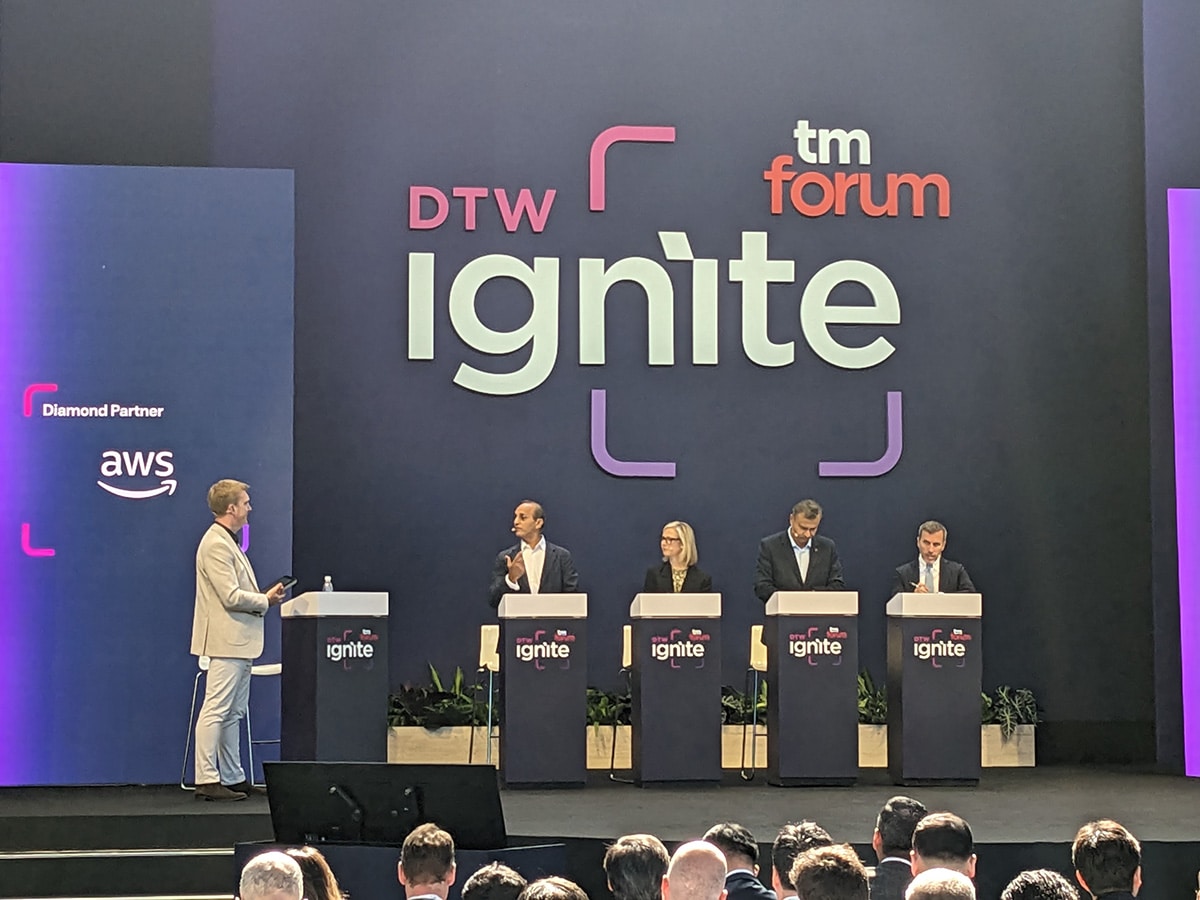
Day One of Digital Transformation World 2026 kicked off with a focus on speed – the runaway pace of AI evolution, the breakneck pace at which enterprises must work together to adapt, and the scramble to take advantage of opportunities as they evolve.
In his opening keynote, TM Forum Chairman Steffen Roehn remarked that as the pace of AI acceleration becomes increasingly overwhelming, speed of collaboration becomes a competitive advantage.
Level Four autonomous networks – in which AI assumes control over decision-making in specific scenarios – are now a reality. Against the backdrop of such rapid evolution, telcos are well-placed to become the trust layer that allows the AI economy to function.
TM Forum CEO & President Nik Willets underlined the importance of trust in what he dubbed the ‘Race to 2030’, in which operators will need to grasp their opportunity to compete in the AI economy. He noted that while 72% of enterprises claim to have high levels of trust in the functionality of their AI agents, just 18% are able to offer regulator-ready evidence to support these claims.
Willets outlined that while architecture certainly still matters, ODA (open digital architecture) must go further, evolving from composable to AI-native to facilitate network autonomy while offering regulation-defensible control layers and AI governance frameworks. Willets described AI-native ODA as effectively the blueprint for building and operating an AI-native telco.
But how can telcos translate this ‘AI hope’ into high volume growth? This was the question posed by former Axiata CEO and current advisor to the operator group’s board, Vivek Sood. In emerging markets, AI must help operators to grow sustainably and scale effectively to bring down the cost per GB – because ultimately, AI must help operators deliver value to customers. Sood outlined how traditional AI use cases can demonstrably make networks more efficient – in terms of pipeline quality, infrastructure rollout and operations, energy performance, and capital efficiency – and highlighted that the next step is to monetise this by unlocking AI impact at scale across the enterprise.
TIM Italy CEO Pietro Labiola emphasised how trust, not speed, is now the key parameter for telcos – and that they must demonstrate this by becoming the assurance layer, taking control of data as the issue of AI sovereignty becomes increasingly pressing. Sood agreed, noting that customers in emerging markets are more willing to pay for security and an improved quality of experience. Operators cannot assume that they can continue merely to sell connectivity for revenue – they have to invest in building marketplaces that provide more value to the customer. Sood highlighted that operators must view efficiencies as new growth opportunities.
However, creating differentiation through experience is of course a challenge. Keppel’s Manjot Singh Mann noted that even if AI enables telcos to offer improved customer experiences, they should not expect to charge more for this. The growth opportunities are around increasing efficiencies and reducing costs – telcos must be able to create new business models and revenue pools around AI, rather than expecting to offer more of the same.
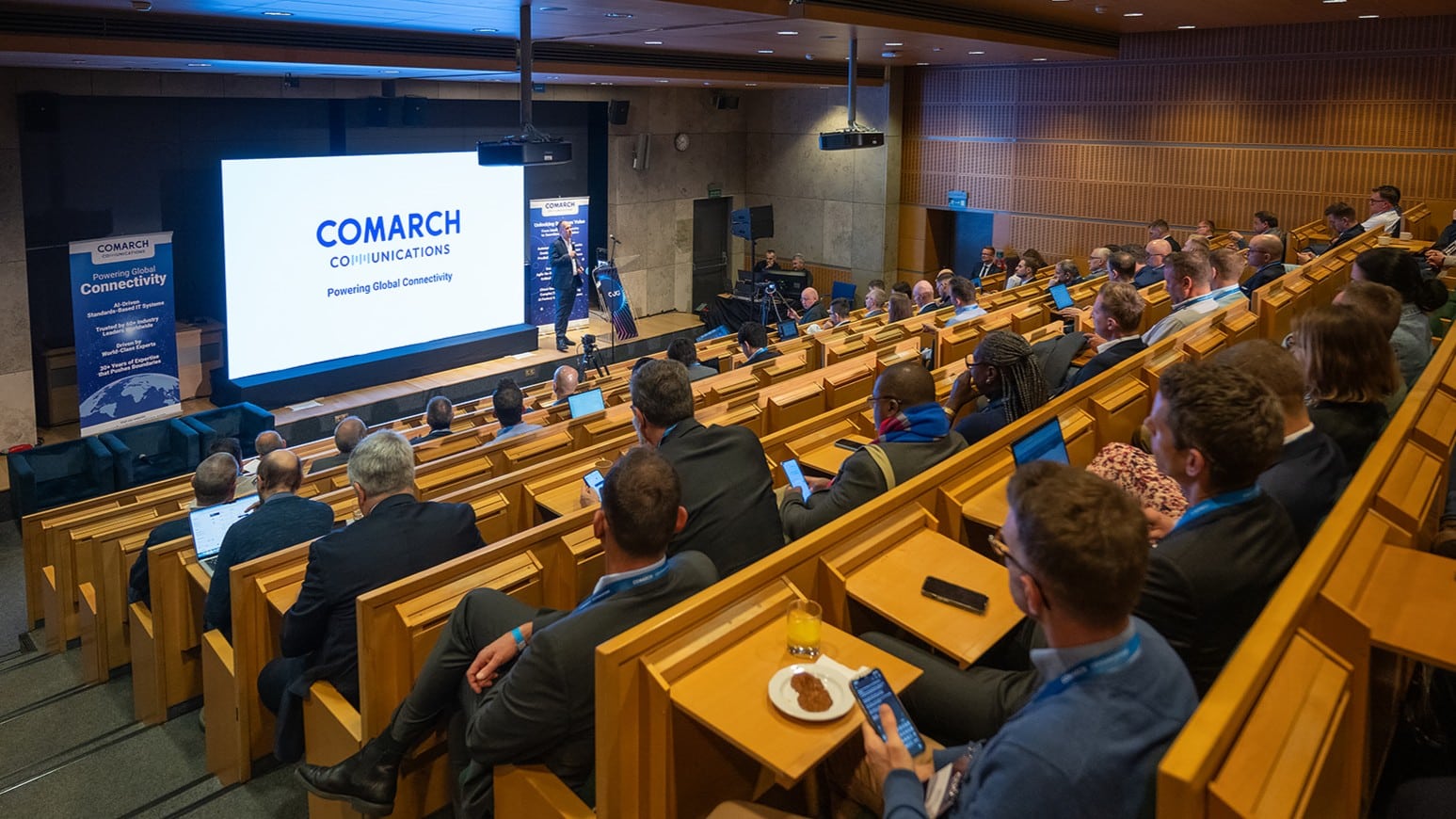
The European telecommunications market is expected to grow slowly, at just 2% to 3% by 2029. Because of this slow growth and the challenges of a complex global economy, operators are rethinking how they work. The industry is now looking beyond traditional consumer cellular services, which are only growing at 3% to 4%, and is moving toward broader communication ecosystems, including mission-critical networks, satellite infrastructure, and massive IoT deployments.
These challenges and emerging trends were extensively discussed at the recent Comarch User Group gathering, highlighting the critical paths operators must take to stay competitive. The event hosted over 700 partners from 53 countries across 8 streams, including 201 connectivity experts.
The global economy now demands high levels of investment, especially in technology. Major countries are spending heavily. China, for example, is allocating 25% of its GDP to infrastructure and technology, creating far more value than Europe’s tech investments. In this competitive environment, traditional efficiency methods are not enough. Communication Service Providers (CSPs) need to boost productivity by quickly adopting new technologies.
“Global markets are pivoting towards AI adoption, where traditional efficiency methods simply won’t be enough to keep pace with the global economy. As we emphasized alongside our partners at the recent Comarch User Group, CSPs must fundamentally rethink their operational models. We can no longer rely solely on consumer cellular services, we must pivot aggressively toward broader, more complex ecosystems and services that encompass mission-critical networks, massive IoT deployments, and autonomous multi-orbit satellite infrastructure,” commented Marcin Kaleta, CEO at Comarch Communications.
One of the main challenges for CSPs is handling the growing complexity of their networks. Right now, up to 40% of network outages are caused by human error, and 88% of digital transformations do not meet their goals. To address this, the industry is moving from basic automation, which depends on humans following rules, to Agentic AI, where systems take on more responsibility within set policies.
Client case studies presented at the Comarch User Group this year highlighted that changing systems to support intent-based actions allows for as much as 30% to 40% cut in Network Operations Center costs and a 10% to 20% faster Mean Time to Repair (MTTR). However, only 6% of CSPs have the data streaming abilities needed to fully use advanced AI models, meaning that technical readiness is still a big hurdle.
Integrating Massive IoT into 5G networks brings new physical and technical challenges. The old way of constantly checking devices drains batteries and can overload the network. During the inaugural IoT Connectivity Forum at CUG 2026, experts detailed that switching to an event-driven setup and using the 5G RedCap standard makes it easier to manage connected devices. Standardizing CAMARA interfaces and Network Exposure Functions (NEF) also helps operators move toward an “API economy.” This change enables them to monetize network Quality of Service (QoS) through targeted microservices, making CSPs more than just simple data carriers.
To take advantage of these new revenue opportunities, operators need to address their existing technology debt. Old, monolithic systems often slow down IT teams and pose significant risks when changes are made. Instead of replacing everything at once, the industry is moving to composable Business Support Systems (BSS) using the TMF Open Digital Architecture. This modular approach allows for targeted upgrades, such as adding cloud-native billing engines that can scale resources as needed.
Jacek Prokop, BSS Product Marketing Manager at Comarch Communications, highlighted this topic, referring to monolithic legacy systems as a “silent killer”. To mitigate the risks of migrating away from these monoliths, he introduced the concept of operational digital twins within a modular architecture present in Comarch Communications’ Composable BSS suite: “We are giving you a secure, isolated sandbox where you can clone and test your real production data, like orders and products, without ever touching the live system.”
Geopolitical instability has made connectivity more than just a basic service – it is now seen as a key part of national sovereignty. There is a clear gap in space infrastructure: the US has many more satellites and launches them much more often than Europe. To reduce this dependency, programs like the European Union’s IRIS² are investing €10 billion in building a secure, multi-orbit satellite network. Running this kind of infrastructure requires ground software that can manage complex data and mission control autonomously, without relying on other countries.
As the industry faces economic pressures and the need to improve productivity quickly, it is important to focus on core architecture rather than individual use cases. Building modular systems and supporting operational independence will be key for operators who want to profit from new ecosystems.
Looking ahead, CSPs need to ask themselves an important question: Is our data architecture strong enough to support autonomous agents and sovereign networks so we can stay competitive in the next decade?

Hundreds of millions of people around the world maintain family, work, and community ties across borders. The United Nations estimated the number of international migrants at 304 million in 2024. This large, dynamic population relies heavily on cross-border communications. Consequently, international calling serves as an essential infrastructure for staying connected with families and households split across borders.
Yet for decades, the pricing, reliability, and user experience of international calls from traditional operators lagged behind domestic mobile services.
Pricing was often difficult to interpret, rates varied widely by destination and plan, and call quality was inconsistent on certain routes. This gap created the conditions for a new category of providers to emerge — cross-border communication apps, including international calling apps for expats and diaspora communities.
In 2024, the World Bank estimated record remittances to low- and middle-income countries at $685 billion, larger than foreign direct investment and official development assistance combined. World Bank projections also put remittances to low- and middle-income countries at $690 billion in 2025, reinforcing the scale and persistence of the cross-border relationships behind the market.
Many traditional operators prioritized ARPU from domestic subscribers, while international calling was handled mainly as a source of margin. In practice, it was rarely developed as a service built around the needs of expat communities.
Apps built specifically for diaspora communities underserved by traditional communities took a different view. They competed on price transparency, destination breadth, and reliability to reach mobile numbers in countries where generic VoIP termination alone was not enough. The result was a better kind of international calling service, and it helped define the international calling app market around repeat cross-border communication needs.
The rise of cross-border communication apps offers more than a competitive warning. It shows how specialist providers earned repeat usage by addressing practical problems that legacy international voice services had not fully resolved. Three decisions stand out.
Cross-border calling apps displayed per-minute rates, making the cost clear before a call was placed. That reduced friction in a category where users had often been exposed to unclear usage charges and bill shock. International calling rates transparency became a trust mechanism for diaspora users making repeat calls to the same destinations.
The most durable platforms in this space combined international calling with complementary services, knowing that diaspora communities had multiple needs.
That same understanding helps explain why diaspora mobile top-up services and mobile recharge abroad became natural extensions of the calling relationship. One study published in the International Journal of Data Science and Analytics found that international airtime top-up transfers are heavily used by expats to support families in their home countries.
The call was only one part of the service. The stronger platforms added messaging, domestic calling plans, and mobile top-up around international calling. Mobile top-up lets users send credit or data to a family member’s prepaid SIM abroad.
Dependably reaching a mobile subscriber in Guatemala, Nigeria, or the Philippines requires a different termination strategy than calling a landline in Western Europe.
This is because real-time voice is sensitive to delay, congestion, and the quality of the interconnection path. A 2025 IETF RFC document on congestion control notes that workloads such as Voice over IP can face performance issues from congestion, and that network evaluation should account for added latency or increased packet loss.
For cross-border communication apps, routing quality was not a back-end detail. It was part of the user experience. Platforms that invested in direct carrier relationships and redundant routing paths for high-demand corridors were better positioned to deliver reliable call quality than generic VoIP alone.
They treated termination as a corridor-specific problem rather than defaulting to the cheapest or most convenient available route.
With diaspora communication, quality is measured less by technical architecture than by whether a call connects, stays connected, and is clear enough for a conversation.
The BOSS Revolution international calling model is a useful case study in the cross-border communication app category. IDT launched the brand in 2008 as a low-cost, PIN-less international long-distance calling service. Since then, it has grown to 6M+ active subscribers and processes 36M+ mobile top-up transactions annually (across more than 280 carriers in 95 countries). It also has a 25K+ retail distribution network.
What largely fueled the BOSS Revolution calling app growth was a combination of app-based international calling access, strong features, and complementary services. It offers international diaspora communities services that support their wider needs. Users can make international calls, send mobile airtime to relatives abroad, and use related services such as money transfer from the same ecosystem.
BOSS Revolution illustrates the bundle logic and user-experience-first approach that made a defined product category rather than a legacy add-on.
Traditional operators are not structurally excluded from the cross-border communication market. In many cases, they already have the assets that specialist apps had to build around. They have network relationships, billing infrastructure, distribution, customer trust, and experience operating regulated communications services.
The issue is not access to the market. It is whether operators treat migrant and diaspora communication as a product design challenge, not a pricing exercise. The tools to do that already exist, which makes this a practical telecom operators diaspora market opportunity rather than only a defensive response to specialist apps.
eSIM technology is lowering entry barriers for MVNOs by eliminating physical SIM distribution and enabling digital-first launches. This allows MVNOs to partner with major carriers to target specific diaspora communities without building a massive retail footprint from scratch. Consequently, an MVNO diaspora strategy provides carriers with a practical, precise route to serve niche markets. Finally, API-driven platforms seamlessly connect airtime, data, and payment flows across these international borders.
The strategic question is whether operators will use those tools to compete, partner, or continue leaving the segment to specialists. Cross-border communication apps have already shown that the demand exists. The operator opportunity is to treat migrant and diaspora communication as a designed proposition for a defined audience, not as prepaid international calling plans or a legacy international calling line managed at the edge of the core business.
The communities that international calling apps were built for were never hard to find. They were simply not treated as a priority.

Major global sporting events have always attracted opportunistic fraud. The 2026 FIFA World Cup, played across the United States, Canada, and Mexico, is no exception. Every major cybersecurity vendor, and the FBI itself, has published warnings about the surge in FIFA-branded scam domains ahead of the tournament. That coverage has focused almost entirely on fan-facing fraud such as fake ticket sites, counterfeit merchandise stores, and phishing emails targeting supporters. But what CUJO AI’s Security Research Laboratory has unearthed is a separate, targeted campaign employing fake FIFA job portals designed to harvest corporate credentials from would-be job applicants.
The targeting mechanism no one is talking about
The researchers identified 21 domains posing as FIFA recruitment pages. These sites presented as professional-looking careers portals, carrying official FIFA branding, stolen recruiter profiles with photographs and job titles, and an invitation to schedule a 30-minute phone call via Google Calendar (Figure 1). Examples included fifa-careerhub[.]com, fifa-careerportal[.]com, and fifajobs[.]com.
Figure 1: A fake FIFA recruitment portal presenting official branding, a stolen recruiter identity, and a Google Calendar booking prompt.
When attempting to sign in with a personal email address, the form returned the message “Please use your work or business email” (Figure 2). Personal email providers that triggered this response included: gmail.com, googlemail.com, yahoo.com, msn.com, icloud.com, live.com, hotmail.com, outlook.com, protonmail.com, and aol.com. This mechanism was clearly designed to coerce victims into exposing their corporate login credentials and is inline with the campaign’s objective to access corporate Google Workspace accounts.

Figure 2: The email validation error returned when a personal email address is submitted. The JavaScript filter accepts only work or business email domains.
What happens after the email check passes
Applicants who passed the email check were then sent to a page impersonating a Google Calendar booking interface, where they were prompted to sign in with their Google Workspace account. This page hosted a malicious sign-in service that then sent the victim’s login credentials to a backend server hosted on “fifa2026back”. The backend domain was accessed via an obfuscated string that replaced each letter “a” with the characters “eq”, a technique commonly used to avoid detection by automated keyword-matching systems.
Victims were likely directed to these pages via social media posts and phishing messages framed as outreach from FIFA recruiting contacts. Research published by Group-IB covering the broader 2026 FIFA fraud landscape documents similar referral mechanisms across multiple campaigns targeting the tournament.
WHOIS records for the 21 identified domains revealed that most were registered via name.com between April and May 2026. All registrant countries in the dataset were the United States.
By the time of CUJO AI’s analysis, most of the domains had been replaced by parking pages serving generic search links through a commercial domain monetisation service (Figure 3). This pattern is common to short-lived phishing campaigns where infrastructure is stood down after the active window closes, with registered domains held for future use or left to generate residual ad revenue.

Figure 3: A parked page returned by one of the identified domains, indicating the active campaign phase had concluded.
A broader pattern: the same kit, different brands
The phishing kit deployed in this operation was not specific to FIFA. The same infrastructure and approach have been used in campaigns impersonating Heineken, Hilton, Coca-Cola, Netflix, PepsiCo, Delta, and Spotify, each using a different stolen recruiter identity sourced from LinkedIn. Arctic Wolf identified at least ten FIFA-specific phishing domains active as of late May 2026.
The timing of domain registrations is shown in Figure 4, based on WHOIS creation dates across the identified domain set. The concentration in April and May 2026 aligns with a measurable increase in FIFA-related threat traffic observed across CUJO AI-protected networks during the same period.
Figure 4: FIFA-related scam domain registrations per month, based on WHOIS creation dates.
The operator’s position: visibility before the credential is submitted
DNS lookups to these fake job portals, and the subsequent traffic to credential-harvesting backends, passed through network operator infrastructure regardless of whether the operator was aware of the campaign. Every subscriber who searched for a FIFA job and clicked on one of these domains generated a DNS query on the operator’s network before any interaction with the malicious site had taken place.
This is precisely where the benefits of network-layer intelligence shine. Operators who can see DNS resolution patterns in real time, and who have access to aggregated threat signals across large network footprints, are afforded the opportunity to identify and block these domains before a single credential is entered. Operators without that visibility are dependent on endpoint security, which in a BYOD or remote-work context may not be deployed on the device the employee is using when they fall for the scam.
Regulatory pressure is moving in the same direction with NIS2 and the UK’s Online Safety Act both pushing operators toward more active roles in the detection and blocking of harmful traffic on their networks.
What this campaign reveals
For operators, the takeaway of our research is that phishing campaigns are becoming more selective, more targeted, and more focused on corporate access than ever before.
Every interaction with these domains began on the operator’s network. Long before credentials were entered, DNS requests, domain lookups, and traffic patterns provided signals that a campaign was active. Operators with visibility into those signals have an opportunity to disrupt attacks before they reached enterprise accounts.
The 2026 FIFA World Cup will be remembered for the matches played on the field. But for network operators and security teams, it may also be remembered as a case study in how modern phishing campaigns identify, qualify, and target victims long before credential thefts occur.

This Industry Viewpoint was authored by Gerry Christensen
The outbound enterprise calling landscape is standing on the precipice of its most profound structural shift since the inception of the STIR/SHAKEN framework. For years, the telecommunications industry has wrestled with a fractured trust ecosystem where bad actors thrived on malicious anonymity, and legitimate businesses were forced to pay a premium just to prove they weren’t scammers. … [visit site to read more]
PLDT’s wireless arm Smart Communications said on Friday it has switched on a new mobile site in San Vicente, Palawan, as part of the Philippine government’s Bayanihan SIM programme to connect geographically isolated and disadvantaged areas (GIDAs).
At the launch ceremony, Smart and the Department of Information and Communications Technology (DICT) distributed around 1,500 free SIM cards with prepaid load to government-identified beneficiaries, including students.
Under the partnership, beneficiaries will receive 25GB of data per month for 12 months, fully subsidized by the government.
“By bringing fast and reliable mobile connectivity to towns like San Vicente in Palawan, we enable more Filipinos in underserved communities to access opportunities in education, livelihood, and innovation,” said Menardo G. Jimenez, PLDT’s chief operating officer and network head.
As part of the launch, PLDT also gifted Old Caruray Elementary School with a “School-in-a-Bag” package. Billed as a “portable digital classroom”, the package includes a laptop for the teacher, 10 tablets pre-loaded with Department of Education curriculum-based learning materials and interactive educational applications, a Smart Bro LTE Pocket Wi-Fi device and expandable storage.
San Vicente is located around 500 km southwest of Manila, with a population of 33,768 people as of 2024.