

T-Mobile has made two inorganic moves to expand its exposure to the last fiber mile. They have enetered into definitive agreements to create two strategic fiber joint ventures to acquire three fiber-to-the-home companies. … [visit site to read more]
29
Avr, 2026

EE upgrades Scam Guard with AI Triple-Lock Protection
Press Release
EE has today unveiled an all-new and upgraded Scam Guard, its most powerful and comprehensive fraud protection service to date.
Available to EE pay monthly mobile customers for £2 a month on a 30-day rolling contract, the service builds on EE’s existing Scam Guard offering and provides AI Triple-Lock Protection, Scam Assistant, Mobile Device Security and Dark Web Monitoring to give customers complete peace of mind against today’s increasingly sophisticated scam landscape.
The launch comes as Cifas, the UK’s leading fraud prevention service, has revealed that more than 444,000 cases were recorded to the National Fraud Database in 2025, the highest number ever recorded in a single year, and a 6% increase on 2024. The surge is widely attributed to the growing use of AI by criminal networks to generate convincing phishing emails, fake websites, deepfake calls and targeted SMS scams at unprecedented scale.
As the UK’s best network, EE introduced Scam Guard to mobile customers in 2024. Since then, more than 169 million scam and spam attempts have been stopped by EE’s service – a testament to its commitment to customer protection. The new Scam Guard builds on that foundation, raising the bar not just on EE’s own capabilities but on what customers can expect from network providers more broadly. Looking ahead, EE expects the new service to prevent at least twice as many scams over the next 12 months.
With a suite of AI-driven features designed to tackle the full spectrum of modern threats, it represents a significant step forward in helping keep customers one step ahead of increasingly sophisticated scams:
AI Triple-Lock Protection: three layers of AI defence, around the clock
At the heart of the new Scam Guard is AI Triple-Lock Protection – a trio of cutting-edge digital safety features powered by Norton’s Genie AI engine, built to keep customers protected all day, every day. This includes:
- Safe Email: providing 24/7 proactive scam protection for email inboxes, scanning and flagging suspicious messages so customers know if something is a scam before they even open it.
- Safe SMS: using advanced AI to detect sophisticated scams in text messages, giving customers real-time protection and peace of mind every time they check their messages.
- Safe Web: harnessing AI to protect customers from scams while shopping or browsing online, blocking malicious sites before they cause harm.
Scam Assistant and Call Labelling: real-time analysis across every channel
New Scam Guard also introduces Scam Assistant, a tool that allows customers to upload screenshots of texts, emails, websites, social media messages or even QR codes to receive instant advice on whether they are safe. Alongside this, Call Labelling delivers automatic, network-level screening of every incoming call, giving customers the information they need before they pick up.
Monitoring, security and password management: complete digital protection
Social Media Monitoring and Dark Web Monitoring watch for suspicious activity across a customer’s online footprint, sending quick notifications so they can take action without delay. Mobile Device Security provides real-time protection against ransomware, viruses and other online threats, automatically blocking dangerous attachments before they can cause damage. Additionally, Password Manager creates, stores and auto-fills strong, secure passwords, removing one of the most common vulnerabilities in personal online security.
Malcolm Cubitt, Director of Product, Mobile, EE, said: “Fraud in the UK is at a record high, with AI making scams more convincing and harder to detect. As these threats evolve, we continue to adapt as the UK’s best network—constantly seeking new and innovative ways to protect and support our customers. This includes leading industry alliances, investing in network-level controls, and employing a dedicated team of security experts. And now with our newly enhanced Scam Guard service, we’re providing customers with an even greater level of cyber security protection.”
EE is committed to helping customers enjoy the benefits of the digital world with confidence through practical protections like Scam Guard. This is underpinned by BT Group’s purpose to connect for good and its wider work to help people with the digital skills, tools and support they need to connect, stay safe and succeed.
EE Scam Guard forms part of a number of cyber security solutions offered to BT Group, which collectively over the last 12 months (Jan-Dec 2025) saw:
-
Blocked 1.6 billion attempts to access malicious domains
-
Stopped 200 million scam SMS messages
-
Blocked 61 million scam calls
-
Flagged a further 175 million nuisance and fraud calls to keep customers protected
The new Scam Guard is now available to all EE pay monthly mobile customers and will be available to purchase as an add on.
Also in the news
Connected Britain Award winners 2025 announced!
Netomnia announces ‘powerful and ambitious’ rebrand ahead of Connected Britain
VodafoneThree drops Samsung, relies on Nokia and Ericsson for £2bn network upgrade
29
Avr, 2026

Digicel PNG gets NICTA nod to roll out rural 4G in Papua New Guinea
Digicel PNG has reportedly signed an agreement with Papua New Guinea’s National Information and Communications Technology Authority (NICTA) to deploy 4G services to rural communities around the country.
According to a report in Papua New Guinea newspaper The National on Tuesday, Digicel PNG will roll out 4G infrastructure in underserved and rural areas including parts of Oro, Gulf, Morobe, Bougainville and Southern Highlands.
The NICTA agreement was awarded via the National Procurement Commission Board as part of the government’s commitment to bridge Papua New Guinea’s digital divide and enable access to digital services, including education, healthcare and financial services, the report said.
“When people and communities are connected, they gain access to digital services needed for education, healthcare, financial services, and economic participation,” Digicel PNG acting CEO Abdallah Nassar was quoted as saying.
Nassar also said the agreement highlighted the benefits of public-private sector collaboration to advance the country’s digital transformation, the report added.
Metro Bytes: eX², Sertex, 1547, Boldyn
Four interesting items of regional interest: … [visit site to read more]
28
Avr, 2026

VMO2 taps Suffolk solar farm for 10 years of clean energy
News
The deal with Egg Power will supply roughly 5% of the company’s energy demands
Today, Virgin Media O2 (VMO2) is expanding its renewable energy usage, signing a new 10-year Power Purchase Agreement (PPA) with solar power provider Egg Power.
The deal will see VMO2 source power from Egg’s new solar farm 70MW solar farm in Suffolk, which is currently under construction and is expected to begin power generation in 2027.
In total, the agreement is expected to cover around 5% of VMO2’s total energy demand.
Egg Power is a natural energy partner for VMO2, with both companies being owned by Liberty Global.
The deal is expected to significantly contribute to VMO2’s Net Zero carbon emissions goals, with the operator currently aiming for neutrality across its entire value chain by 2040.
“This agreement with egg Power is the latest step in Virgin Media O2’s journey to achieve net zero emissions by the end of 2040,” said Mark Hardman, Director, Finance Operations at VMO2. “We’re committed to growing and operating our business in a way that’s good for people and the planet, where we’re cutting carbon, securing renewable energy on a long-term basis, and sourcing renewable energy generation from the UK.”
The deal builds on a similar 10-year agreement for wind power that VMO2 signed with The Renewables Infrastructure Group last year. Combined, the two deals mean around 20% of VMO2’s energy usage will come from renewable PPAs.
Also in the news
Connected Britain Award winners 2025 announced!
Netomnia announces ‘powerful and ambitious’ rebrand ahead of Connected Britain
VodafoneThree drops Samsung, relies on Nokia and Ericsson for £2bn network upgrade
28
Avr, 2026
Telkom Indonesia launches agentic AI platform for enterprises
Telkom Indonesia announced on Monday that it has launched a next-gen agentic AI platform that it says will accelerate digital transformation via intelligent automation, business process integration and data-based decision making.
The platform, dubbed Agentic AI by BigBox, differs from reactive, conversation-based AI in that it can execute semi-automatic and automatic actions according to the needs of the organization.
Telkom said agentic AI is designed to break down large work into more structured stages, manage execution through specialist agents, conduct self-evaluations, and connect with various external systems.
Agentic AI by BigBox supports cross-system workflow orchestration, data integration and end-to-end AI capabilities, as well as improved operational efficiency on an enterprise scale.
Telkom said it’s using agentic AI internally to consolidate and integrate IT systems across its various entities, optimise operational costs and investment, accelerate data-based decision making, and automate strategic business processes.
Its enterprise and B2B customers can use Agentic AI by BigBox to improve customer experience, automate services and operations, present advanced analytics, predictive decisions, and cross-platform integration, said Telkom’s digital IT director Faizal Rochmad Djoemadi.
“We designed Telkom Agentic AI not only as an AI tool, but as a digital platform that is able to work and execute,” Faizal said. “This is our step to encourage organizations to be faster, more integrated, and more adaptive in facing digital business dynamics.”
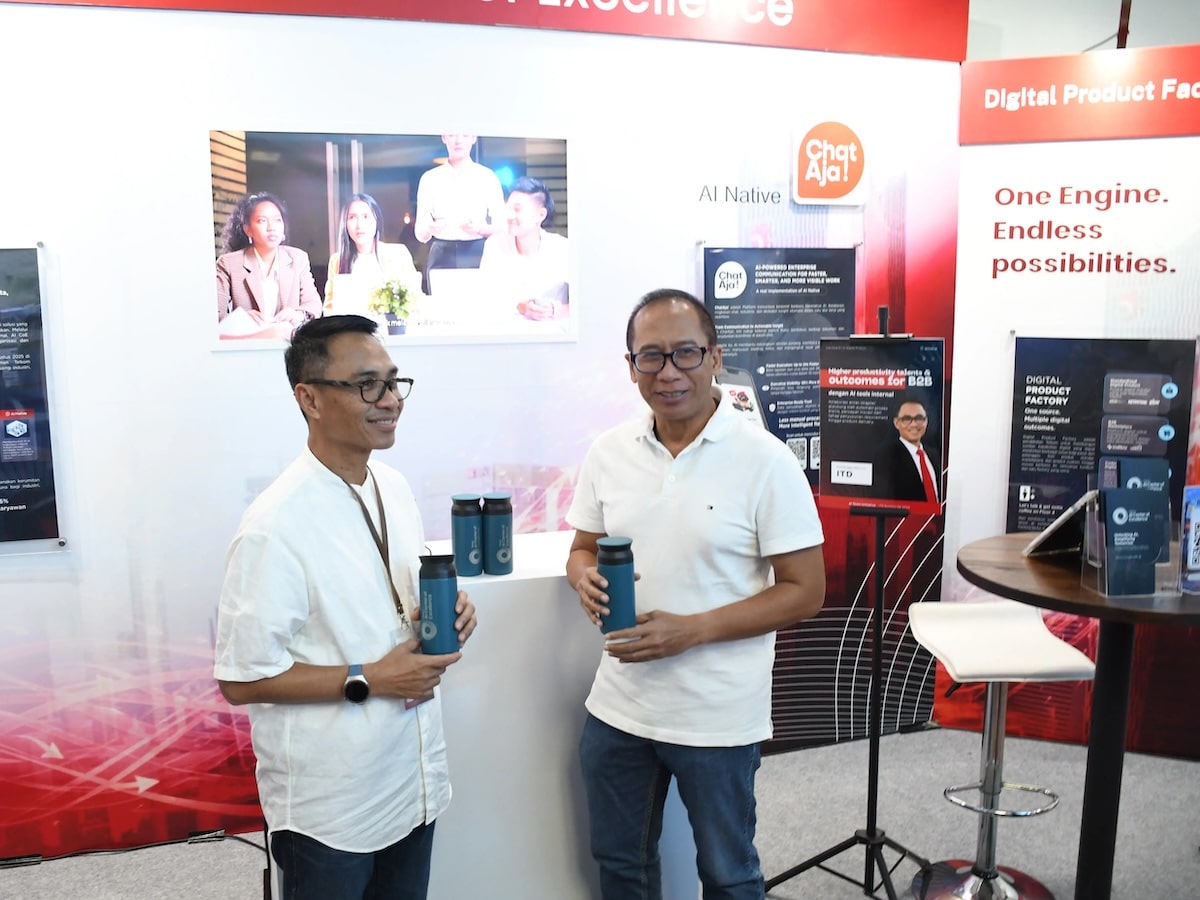
Telkom is also touting Agentic AI by BigBox as a flagship solution from its AI Center of Excellence (AI CoE) initiative, which was launched in September last year as a “national AI ecosystem enabler.”
Telkom first unveiled Agentic AI by BigBox at last week’s ITD Summit in Bandung.
27
Avr, 2026

Port of Tyne competes autonomous container transport trial
News
The project saw a self-driving vehicle successfully operate in a live commercial setting
The P-CAL (Port-Connected and Automated Logistics) project has been completed at the Port of Tyne, bringing a major UK deep-sea port one step closer to autonomous operations.
The project saw a fully autonomous terminal tractor deployed on a working quayside for the first time, as well as the handling of commercial containers.
The project was carried out by a consortium including the North East Automotive Alliance (NEAA), autonomous vehicle specialist Oxa, and various industry and academic partners, alongside the Port of Tyne itself.
The pilot builds upon the consortium’s previous connected and automated mobility (CAM) projects, as part of the UK government’s £150 million CAM Pathfinder programme. These projects include 5G CAL, which showed that a 5G network could be used to support autonomous driving and teleoperation of a heavy goods vehicle (HGV), and the V-CAL project, which saw four autonomous HGVs operating in real-word scenarios.
The completed P-CAL project represents the next logical step towards commercial operations by integrating the autonomous HGVs with existing terminal systems, real-time coordinating with live cranes, deploying a mesh communication network, and implementing security protocols to enable secure remote and autonomous operations.
“Delivering autonomous logistics in a live port environment has been a major step forward for the sector,” said Graeme Hardie, operations director at the Port of Tyne. “P-CAL has shown what’s possible when innovation is applied to real operational challenges, improving safety, efficiency and sustainability.”
“Through the project, we’ve demonstrated that existing work vehicles can be turned into a digital workforce – successfully completing autonomous container movements in a dynamic quayside environment, while providing worksite intelligence necessary for real-time industrial optimisation,” added Oxa founder and CEO Paul Newman. “P-CAL provides a blueprint for how ports and industrial hubs worldwide can deploy autonomous technology to drive productivity, efficiency and safety.”
The next phase of the project will involve multiple vehicles working simultaneously in a live environment.
Autonomous vehicle operations have long been a goal for ports and other large scale industrial operations, potentially providing improved operational efficiency and reducing staff exposure to dangerous working conditions.
In the most advanced markets, these projects are already being launched commercially. In China, for example, the world’s largest autonomous mining fleet has been operational for almost a year.
Also in the news
Connected Britain Award winners 2025 announced!
Netomnia announces ‘powerful and ambitious’ rebrand ahead of Connected Britain
VodafoneThree drops Samsung, relies on Nokia and Ericsson for £2bn network upgrade
27
Avr, 2026

Sustainable by design: The importance of building things to last
Contributed Article
By Martha Galley, Chief Sustainability Officer, Calix
In the race to show sustainability progress, companies often spotlight renewable energy, carbon offsets, or high-profile product launches. These are important, but one of the most effective and measurable ways to deliver both financial and environmental results often goes unnoticed: durability.
Durability happens when sustainability is built into the design itself. It changes how a business operates, influencing materials, maintenance, and customer trust. When products and systems are built to last, they cut waste, reduce operating costs, and show that a company is thinking for the long term.
In broadband, this principle has transformed how networks are built and maintained. For years, competition focused on speed, reliability, and upfront cost. Hardware was replaced frequently, and short product cycles were considered standard. But as broadband became essential for education, healthcare, remote work, and community connection, this short-term model began to show its limits.
Every replacement cycle adds expense to equipment, labor, and training while creating more electronic waste. Providers have begun to realize that acquisition cost, or what you pay on day one, tells only part of the story. The real measure is the total cost of ownership and what it takes to run, maintain, and replace a system over its lifetime.
Durability looks different across the broadband ecosystem. In the core and access network, systems are designed to operate for decades, but upgrades can require large infrastructure investments. At the premises level, the gateways, routers, and Wi-Fi systems inside homes and businesses turn over much faster, creating a greater environmental impact. That is where design innovation matters most. Software-enabled platforms extend product life and functionality through continuous updates instead of full hardware replacement. This is an evergreen innovation approach that keeps systems capable and efficient while reducing energy use and electronic waste.
Research supports the importance of designing for longevity. The U.S. National Institute of Standards and Technology (NIST) found that increasing a product’s lifespan by 50 percent can reduce replacement needs and environmental impact by about one third. The Fiber Broadband Association reports that retiring copper networks in favor of fiber reduces both costs and emissions because copper requires far more energy to operate and maintain.
The total cost of ownership perspective makes the value clear. When businesses account for energy use, maintenance, and replacement, durable systems often prove to be the smarter financial choice. Broadband providers discovered this when comparing copper and fiber, and the same holds true across industries, from automotive to consumer electronics.
Durability may not grab headlines, but it makes sustainability real. It connects environmental responsibility with financial performance and builds long-term confidence among customers, communities, and investors. As more industries adopt sustainable design principles, durability will remain one of the strongest measures of both performance and resilience.
27
Avr, 2026

The Terabit Leap: Charting the path from 800G to 1600G ZR+
This Industry Viewpoint was authored by Fady Masoud, Senior Director, Solutions Marketing at Nokia
The explosive growth of AI model training, inference and data movement across distributed, geographically distributed compute clusters is driving a sharp increase in east-west and data center interconnect traffic. Combined with increasing traffic from telecommunications providers expanding capacity in metro and … [visit site to read more]
27
Avr, 2026

Edotco’s Vista Bumiria to lead tower deployments in Terengganu
Edotco Malaysia announced on Friday that its subsidiary Vista Bumiria has been appointed by the provincial government of Terengganu as a state-backed company (SBC) to develop telecoms infrastructure.
The appointment is part of a mandate by Terengganu to accelerate rollout of high-quality, future-ready digital infrastructure in the state in a coordinated, efficient and sustainable manner.
Under that mandate, Vista Bumiria will lead development of telecoms infrastructure in Terengganu, including tower and fibre deployment, serving as a central platform to support mobile network operators (MNOs) and expand coverage across both urban and rural communities.
Edotco said that as part of the deal, Sultan Mizan Zainal Abidin of Terengganu has been appointed as chairman of Vista Bumiria.
As part of the project, the Terengganu government also appointed Alam Mindscape Mobile as a “One Stop Agency” (OSA) to streamline management, approvals, and coordination of telecoms structures, which Edotco said will reduce deployment bottlenecks and enhance execution efficiency across the ecosystem.
Edotco group CEO Adlan Tajudin added that the model “positions Terengganu to become a leading example of state-driven digital infrastructure development in Malaysia, enabling a more coordinated and efficient approach to connectivity rollout.”
Edotco added that it will work closely with its MNO partners in Malaysia to accelerate deployment across the state.