Russian crackdown on VPNs enters new phase

Russia has recently hardened its restrictions on the use of virtual private networks (VPNs), which are a popular way of getting round state censorship and accessing banned news sites, Western services, social media platforms and messengers.

VPNs allow users to mask the websites they visit, making it difficult for telecoms networks or security services to access data.

The Russian government had already instructed telecoms operators and major services to block VPN users by 15 April. Indeed, on Wednesday, according to the AFP news service, the TASS state news agency reported that banks, video streaming sites, online retailers and search engines were blocking access where they detected the user had an active VPN connection.

In addition, 20 Russian telecom companies owning international communication channels have signed a moratorium freezing their expansion into Europe. As VPN usage registers on telecom networks as foreign traffic, bandwidth may be unable to cope, forcing operators to filter VPN usage or to increase the cost of accessing foreign services.

According to the TechRadar website, authorities also hope this manufactured bottleneck will force foreign digital platforms to set up local servers within Russian borders to avoid severe download speed drops.

Among other moves targeting VPNs Russia’s four major operators have, since the start of this month, disabled the ability to pay for Apple IDs via mobile bills to disrupt VPN subscriptions. Additionally, over 20 of the country’s most popular websites are now required to restrict access if a user has a VPN enabled.

Despite these aggressive measures, officials maintain that no outright VPN bans are in place. 

Other moves aimed at indirectly restricting internet access include fees imposed on mobile users consuming more than 15 GB of international data per month, a measure expected to be implemented by the start of May. The authorities have also been throttling Telegram and WhatsApp in recent months in an attempt to push users to use Max, an unencrypted super-app.

Moscow introduced strict censorship soon after it launched a military offensive in Ukraine in 2022.

What Championship Games Reveal About the Future of Stadium Wireless Networks

What Championship Games Reveal About the Future of Stadium Wireless Networks

This Industry Viewpoint was authorec by Bo Larsson, CEO of MatSing

Large sporting events create one of the most demanding environments in wireless networking. Tens of thousands of users gather in a confined space, all expecting instant connectivity. They upload videos, stream replays, share photos, and interact with digital services throughout the venue. … [visit site to read more]

YTL partners with Shush to deploy network authentication APIs

Malaysian telco YTL Communications said on Wednesday it is partnering with US-based identity and fraud prevention platform Shush to deploy network authentication APIs, starting with Number Verification and SIM Swap.

The CAMARA-standardised APIs enable businesses to verify user identities and prevent fraud through seamless, secure network checks, enabling enterprises to verify mobile numbers, detect SIM swap fraud, and authenticate users through secure, privacy-compliant network verification.

Shush says its Sherlock platfom enables telcos to expose secure APIs that deliver real-time signals for SIM swap detection, device validation, and other critical fraud indicators, while generating new revenue streams.

« Our partnership with Shush ensures that we can quickly and securely deploy the Network Authentication APIs, providing a trusted foundation for digital identity services that benefit the entire ecosystem, helping stamp out fraud and protect our customers,” said YTL CEO Wing K. Lee in a statement.

YTL said its collaboration with Shush aligns with an MoU signed by CelcomDigi, Maxis, U Mobile, Telekom Malaysia and YTL in September last year to launch a federated network service under the GSMA Open Gateway initiative with standardized APIs to protect online businesses and consumers from fraud and digital identity theft.

Shush co-founder and CEO Eddie DeCurtis added that CAMARA’s Silent Authentication API will be included in the next phase of the rollout.

“Starting with CAMARA Number Verification, we’re enabling secure, programmable network capabilities that enterprises can integrate quickly and confidently,” said DeCurtis. “As additional APIs come online, YTL will be well-positioned to expand monetization opportunities and support Malaysia’s broader digital transformation.”

Nokia and Orange team up for AI RAN

Press Release

Nokia and Orange today announced a new collaboration focused on developing and evaluating artificial intelligence radio access network (AI-RAN) technologies powered by Nokia’s anyRAN 5G software and NVIDIA AI infrastructure. The initiative aims to explore how emerging AI-RAN capabilities can enhance network performance, energy efficiency and enable new services for Orange customers.

Through a structured co‑innovation framework, Nokia and Orange will jointly identify, design and evaluate new AI‑RAN capabilities. The collaboration aims to explore how a GPU-based radio processor can boost radio performance with more advanced receivers, and how AI can be tightly integrated into the RAN to further improve performance, support new services such as sensing, and bring greater automation and intelligence to both cloud-based and purpose‑built RAN environments.

“Orange is committed to building more efficient, adaptable and sustainable networks. By collaborating with Nokia and NVIDIA on AI‑RAN, we can better understand how the AI-native architecture enabled by AI-RAN can improve the efficiency of key radio algorithms — such as scheduling, beamforming and power optimization — enhancing both spectral efficiency and energy performance, while also enabling advanced capabilities like predictive optimization and radio sensing. This collaboration is an important step in our long‑term network strategy,” said Laurent Leboucher, Group CTO, Orange.

As mobile networks evolve towards 6G, Nokia and Orange will co‑develop approaches to maximize the spectral efficiency of existing and future bands, including the upper 6 GHz band. The 6G-ready platform will enable a smooth, software-defined migration to 6G and support smarter use of compute resources across Orange’s operational footprint.

By working with Nokia and NVIDIA, Orange aims to deepen its understanding of how AI-enabled RAN functions can be integrated seamlessly into operational networks while ensuring sustainability and efficient resource utilization across Europe, the Middle East and Africa.

“AI is reshaping how networks are designed, introducing new levels of intelligence and flexibility across the radio layer. Through this collaboration with Orange, we are exploring how Nokia’s AI-RAN solution brings advanced AI and RAN functions together in a unified architecture. This will be instrumental in enabling the industry’s transition toward cognitive, AI‑native networks,” said Pallavi Mahajan, Chief Technology and AI Officer, Nokia.

Also in the news
Connected Britain Award winners 2025 announced!
Netomnia announces ‘powerful and ambitious’ rebrand ahead of Connected Britain
VodafoneThree drops Samsung, relies on Nokia and Ericsson for £2bn network upgrade

Transtelecom and QazPost team to connect Kyzylorda’s rural residents

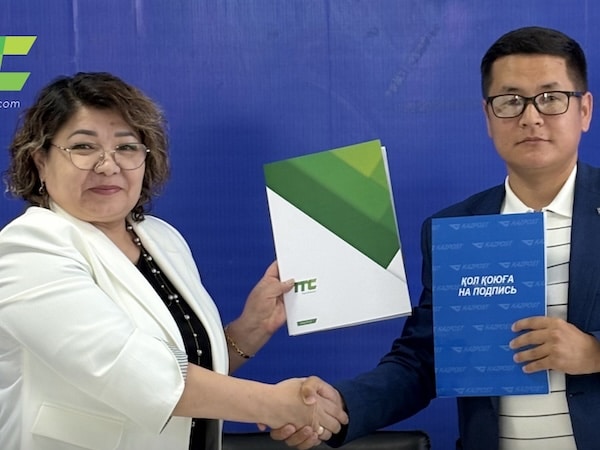
Kazakh telco Transtelecom JSC says it has signed a partnership agreement with national postal operator QazPost to expand telecoms services to rural areas in Kazakhstan’s Kyzylorda region.

Under the framework agreement announced on Tuesday, Transtelecom and QazPost aim to connect rural settlements and develop digital infrastructure of Kyzylorda, which sits in the southwest on the Kazakhstan-Uzbekistan border.

The agreement calls for QazPost employees to help residents in Kyzylorda connect to Transtelecom services.

Kanat Syrlybayev, MD of Transtelecom’s Kyzylorda branch, said the partnership will get people connected faster and make the Internet more accessible in remote areas, reducing the gap in telecoms services acces access between cities and the countryside.

« It is important for us that residents of rural settlements have the same access to communication as in cities,” Syrlybayev said in a statement. “Partnership with QazPost allows us to bring our services faster to people where it is really needed.”

Vodafone’s scam call tech gets an AI upgrade

News

Vodafone has added an AI-driven scam call filter to its Secure Net Mobile security package as the operator intensifies efforts to cut fraud and nuisance traffic on its network.

The new Scam Call Protection feature is built into the network rather than installed as a separate app, allowing it to scan incoming calls in real time and warn customers when a number looks suspicious.

The service is designed to spot fraudulent, spam and other unwanted calls around the clock, including numbers already linked to scam activity. If the system judges a call to be high risk, an alert appears on screen so the user can decline it or pick up with more information. Vodafone says the feature is switched on automatically for existing Secure Net Mobile users, with no extra setup required.

“Scam calls are becoming increasingly harder to spot, and it’s easy to feel caught off guard. Scam Call Protection on Vodafone Secure Net Mobile gives customers an extra layer of reassurance – constantly working in the background to monitor calls, and flagging known and suspected scam calls. The introduction of Scam Call Protection strengthens our commitment to provide comprehensive built‑in digital security, helping people feel safer, more informed and more in control of their digital world,” said Rob Winterschladen, Consumer Director at VodafoneThree.

In recent years all of the UK’s mobile operators have been doubling down on their attempts to quash scam callers. In 2025, under the new Telecommunications Charter, BT (EE), Virgin Media (O2), VodafoneThree, Tesco Mobile, TalkTalk, Sky (Sky Broadband) and the Comms Council UK all pledged to crack down on scammers, including enhancing their existing scam detection systems. AI, naturally, has played a significant role in these upgrades, with O2’s AI-powered scam detection software, for example, having blocked over 1 billion scam and spam calls to customers.

Also in the news
Connected Britain Award winners 2025 announced!
Netomnia announces ‘powerful and ambitious’ rebrand ahead of Connected Britain
VodafoneThree drops Samsung, relies on Nokia and Ericsson for £2bn network upgrade

Standardizing excellence: How the shift to ‘All-Bands-5G-A’ is powering the AI revolution 

Contributed Article

The global telecom networks are under tremendous pressure to build networks capable of sustaining the explosive, bandwidth-hungry requirements of mobile Artificial Intelligence (AI). With the growing popularity of AI applications and tools among enterprises and individual users, the industry is realizing that the existing networks do not have the capacity to meet the demands of emerging AI-driven traffic.

According to GSMA, AI-driven traffic is likely to lead to a three-fold increase in cellular data traffic by 2030 compared to 2024 base. AI applications and devices have already started to record a massive growth over the past year, with global monthly active users surpassing one billion and token consumption surging by hundreds of times.

While this is a massive opportunity for the service provider, AI-generated traffic places new demands on the network. To begin with, traditional mobile networks were designed for more downlink consumer traffic. The data suggests that uplink speeds continue to be far lower than peak downlink performance, making it difficult to ensure performance for AI inference-based applications. AI inference traffic is also prone to unexpected surges and demands millisecond-level response times. To put it simply, networks are emerging as bottlenecks and may prevent enterprises and individuals from leveraging the full potential of AI.

In addition, the service providers face business challenges of diminishing returns even as traffic volumes continue to rise. Emerging use cases, including intelligent connected vehicles and industrial digitalization, are creating new demands that existing infrastructure is not designed to address. To capture the Mobile AI opportunity, the service providers need to build a network architecture capable of delivering differentiated services and experiences that can be monetized. Furthermore, service providers must evolve their offerings from vanilla connectivity solutions to new innovative use cases that are based on differentiated experiences.

With commercial 6G deployments likely only by 2030, present-day networks can’t address the demands of AI-driven traffic. In this scenario, 5G-Advanced (5G-A) networks, the next evolutionary step between 5G and 6G, is helping service providers address the explosive growth in AI-driven traffic without impacting performance. It has already been deployed in more than 300 cities around the world.

In this context, Huawei’s All Bands to 5G-A strategy is designed to address these challenges faced by the service providers. It helps service providers maximize network performance, energy efficiency, and user experience while minimizing capital outlay. This approach not only addresses the present-day challenge of surging AI workloads but also lays the groundwork for 6G.

It focuses on using a range of solutions to evolve the entire spectrum, including low, medium and high frequency bands, towards 5G-A. These solutions are designed to help service providers maximize the performance of 5G-A while ensuring energy efficiency and user experience. On one hand, it focuses on unlocking the untapped potential of the existing sub-3 GHz and sub-6 GHz allocations through spectrum refarming and targeted technology upgrades. On the other hand, it leverages the Upper 6 GHz (U6 GHz) band as the foundation of next-generation network architecture.

Significantly, it helps service providers align network capabilities with the evolving needs of the customers, thus unlocking new revenue streams beyond basic connectivity. Huawei’s All-Band Path to 5G-A strategy is designed to help service providers accelerate the transition of networks to build a more sustainable and scalable model. Through coordinated use of spectrum across bands, the strategy helps operators tap into both high-end consumer and enterprise markets, creating a broader and more resilient growth engine in the AI-driven telecom landscape. It allows service providers to move from selling commoditized connectivity solutions to delivering differentiated, experience-led services, helping them to boost monetization of their investments while providing new experiences to their customers.

The U6 GHz opportunity

The U6 GHz band has emerged as a key band for 5G-A evolution since it provides a large bandwidth and superior coverage. It is a critical enabler of next-generation services, going beyond improved capacity and coverage to support uplink-intensive use cases such as immersive XR, industrial digital twins and real-time AI applications at scale. Its inclusion within evolving 5G-A standards further reinforces its role in future network architectures.

Several markets, including China, the United Arab Emirates (UAE) and Brazil, have already moved ahead with spectrum allocation, while a growing availability of compatible chips and devices indicates that U6 GHz ecosystem is maturing rapidly.

Significantly, U6 GHz is not just a 5G-A band. It is engineered as a smooth on-ramp to 6G, protecting long-term spectrum investments of service providers. It stands as the most vital resource for the Mobile AI Era, favored by leading operators in many countries for its ability to drive digital economic growth. By offering a potent mix of high-uplink performance and broad-bandwidth capabilities, it ensures that 5G-A networks can seamlessly evolve into 6G while supporting complex needs like FWA and high-density hotspots. To ensure this power reaches every corner of the digital landscape, an ecosystem of diverse base station form factors will emerge, providing the architectural flexibility to meet the specific deployment needs of every scenario—from dense urban centres to specialized industrial environments.

U6 GHz enables continuous urban coverage, supports massive terminal access in high-density scenarios, and provides the bandwidth headroom that mobile AI applications require. To put it simply, it gives 5G-A networks the ability to deliver extensive coverage, high capacity, and high speed. In addition to mobile AI, services also include low-altitude economy, local and wide area networks to business (ToB) field, and internet of vehicles (IoV). As a large-bandwidth spectrum, the U6 GHz band transforms bandwidth into an engine for diverse digital services.

To address this opportunity, Huawei has developed a comprehensive U6 GHz product portfolio, covering the entire chain from base station hardware to end-user device support, thus enabling service providers to quickly move once they deploy the spectrum.

Huawei has introduced a portfolio of U6 GHz Active Antenna Units (AAUs) to address growing outdoor coverage and capacity demands. Its flagship 256 TRx AAU uses Extremely Large Antenna Array (ELAA) design and hybrid beamforming to deliver C-band-like coverage. With advanced MU-MIMO and 400 MHz bandwidth, it supports up to 100 Gbps downlink and over 10 Gbps uplink, enabling a consistent high-speed user experience.

For indoor environments, where high concurrency and capacity are critical for AI-driven applications, Huawei has launched U6 GHz small cell solutions, which support up to 400 MHz bandwidth. On the transport side, the company has introduced new microwave solutions to support the increased bandwidth requirements of U6 GHz deployments.

As AI-driven applications continue to scale, U6 GHz is emerging as a key enabler of next-generation connectivity built from 5G-A networks. Huawei’s All Bands to 5G-A strategy and end-to-end U6 GHz portfolio offers service providers a pathway to address immediate capacity challenges while supporting long-term network evolution to 6G.

A strategy built for what comes next

As AI applications move from the edge to the mainstream, networks will need to deliver not just higher speeds but consistent performance, higher uplink capacity, and deterministic service levels. In this context, spectrum strategy is emerging as a defining factor. Service providers that transition to 5G-A and can effectively combine existing spectrum assets with new bands such as U6 GHz will be better positioned to gain from the AI opportunity.

Also in the news
Connected Britain Award winners 2025 announced!
Netomnia announces ‘powerful and ambitious’ rebrand ahead of Connected Britain
VodafoneThree drops Samsung, relies on Nokia and Ericsson for £2bn network upgrade

Amazon buys Globalstar to get earlier start on D2D satellite

Amazon announced on Tuesday it will officially acquire LEO satellite operator Globalstar in a deal valued at up to US$11.5 billion as part of its strategy to enter the direct-to-device (D2D) satellite sector.

As part of the agreement – rumours of which have been circulating since the beginning of this month – Amazon will acquire Globalstar’s existing satellite operations, infrastructure and assets, including its mobile satellite services (MSS) spectrum licenses with global authorizations.

Globalstar currently operates 31 LEO satellites, including seven HIBLEO-4 satellites licensed by the US and 24 HIBLEO-X satellites licensed by France. Globalstar is currently in the process of replacing its HIBLEO-4 fleet with 17 new satellites supplied by MDA Space.

Amazon said Globalstar’s existing satellite fleet and its new satellites with expanded MSS capabilities will operate alongside its LEO satellite constellation, enabling its Amazon Leo unit to add D2D to its service portfolio ahead of its own planned next-gen D2D satellite system, which is scheduled to start deploying in 2028.

Amazon said its D2D LEO system will offer substantially higher spectrum use and efficiency than existing D2D systems, which translates into faster speeds and better performance for customers. It will also integrate seamlessly with Amazon’s first- and second-generation LEO systems, combining fixed and mobile satellite services to support a wide range of customers and use cases.

Financial breakdown

The financial terms of the deal give Globalstar stockholders a choice between US$90.00 in cash per share of Globalstar common stock they own, or 0.3210 shares of Amazon common stock with a value capped at $90.00 per share. Amazon said Globalstar stockholders holding around 58% of the combined voting power of the outstanding shares of Globalstar common stock have approved the transaction in writing.

The transaction is expected to close in 2027, pending the usual regulatory approvals. The deal also hinges on Globalstar staying on track with its HIBLEO-4 replacement plan.

“By combining Globalstar’s proven expertise and strong foundation with Amazon’s customer-obsession and innovation, customers can expect faster, more reliable service in more places,” said Panos Panay, Amazon’s SVP of devices and services, in a statement.

“The combination [of Globalstar] with Amazon Leo will advance innovations in digital connectivity that will benefit our customers and advance us toward a more intelligent, continuously connected world,” added Globalstar CEO Paul Jacobs.

D2D satellite race

The acquisition essentially enables Amazon Leo to get into the D2D satellite game earlier, as rivals like Starlink have already launched commercial services in a handful of markets.

It also gives Amazon Leo access to MSS spectrum that is already allocated and licenced, which MSS satellite players argue gives them an edge in the D2D race over operators such as Starlink, Lynk Global and AST Spacemobile that use existing terrestrial mobile network spectrum.

D2D satellite has been pitched in the past couple of years as a way to bring mobile voice and data services to underserved and unserved areas, particularly in emerging markets.

However, mobile operators from emerging markets warned at this year’s Mobile World Congress that the regulatory environment has not kept pace with the rise of D2D, which creates risks for terrestrial mobile operators.

Satellite operators themselves have expressed similar concerns over regulatory readiness for D2D services.

Apple iPhones to stay connected

On a side note, Amazon also announced on Tuesday that it has signed an agreement with Apple to continue to provide satellite connectivity via the Globalstar network for current and future iPhone and Apple Watch features.

That agreement is an extension of a current partnership established in 2022 between Globalstar and Apple to power satellite service on iPhone 14 or later, as well as Apple Watch Ultra 3, allowing users to text emergency services, message friends and family, request roadside assistance and share their location.

Apple currently owns a 20% equity stake in Globalstar, which it bought in November 2024 as part of a deal to invest US$1.5 billion in Globalstar to fund its new satellites.