U Mobile to deploy GenAI-powered contact centre solutions from AWS

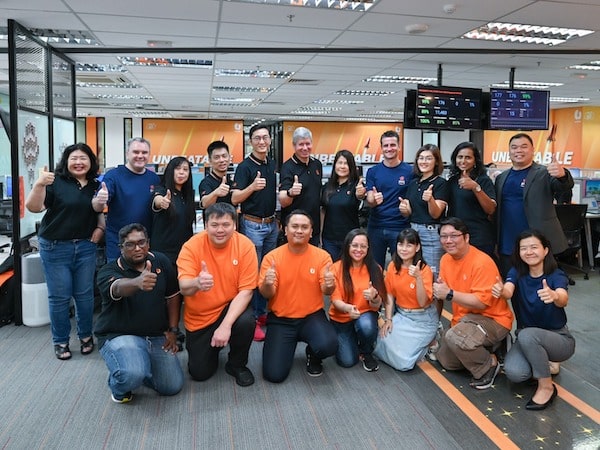
Malaysian telco U Mobile said on Monday it will deploy contact centre solutions from Amazon Web Services (AWS) based on generative AI in its contact centre after running a successful proof-of-concept (PoC) for the past six months.

The PoC – which commenced in July 2024 – integrates AWS’ generative AI Contact Centre Intelligence Post Call Analytics and Live Call Agent Assist into U Mobile’s contact centre operations. U Mobile has been using the solutions – which leverage Amazon SageMaker and Amazon Bedrock – to improve contact centre agent productivity, as well as the quality of their customer interactions.

U Mobile said the PoC has shown significant operational improvements in its contact centre, with agents achieving faster resolution times through AI-powered information retrieval, resulting in greater operational efficiency.

Agents have also been able to use AI-generated responses curated from U Mobile’s comprehensive knowledge bases to make customer interactions more precise and reliable, U Mobile said.

Other benefits demonstrated in the PoC include agents being able to use the time gains to prioritise high-value customers and target them with strategic promotions. Meanwhile, the solutions’ automated post-call analytics have not only provided U Mobile with deeper, actionable insights into customer behaviour and preferences, but also expedited quality management by delivering real-time, supervisor-grade feedback to agents.

The two companies plan to deploy the Contact Centre Intelligence solutions across U Mobile’s contact centre infrastructure starting in the first quarter of 2025.

U Mobile CIO Neil Tomkinson said in a statement that the end-to-end PoC is the first of its kind in the ASEAN region, and that “the positive results achieved only highlights the immense potential that AI solutions have in transforming the way we work.”

U Mobile said the successful PoC also marks the start of a long-term strategic collaboration with AWS to explore other opportunities in areas such as “talent upskilling and reskilling, operational efficiency enhancements across functions, as well as multi-stakeholder digital transformation collaborations.”

“At AWS, we’re constantly evolving and innovating in the field of generative AI, and collaborations like this help us better understand how our solutions can enhance customer experience,” said Peter Murray, Malaysia country manager for AWS.


MORE ARTICLES YOU MAY BE INTERESTED IN…

IBM and Samsung poised to win £900m Emergency Services Network contract over BT 


News 

The news comes after BT signed a separate ESN contract last week 

IBM and Samsung are set to secure a £895m contract to deliver user services for the UK’s new Emergency Services Network (ESN), leaving BT and its Italian partner Leonardo out of the deal, according to a recent Telegraph report. 

The Home Office’s decision marks a key step in the long-delayed and over-budget ESN project to modernise communication systems for police, fire, and ambulance services in the UK. 

BT had been considered a frontrunner for the contract, which includes managing emergency responder accounts, supplying devices, and developing “push-to-talk” functionality. However, industry sources suggest concerns over awarding multiple contracts to BT may have influenced the decision.  

Just last week, the UK incumbent won a £1.29 billion contract to provide the ESN’s network infrastructure. 

The ESN project has faced significant challenges, including Motorola’s controversial departure in 2022 after a clash with regulators over alleged overcharging. Since then, the Home Office has struggled to replace the user services provider, which has led to delays and escalating costs. 

IBM’s selection brings fresh momentum to the ESN but raises questions about whether it can navigate the programme’s long-standing technical and operational challenges. These include integrating commercial mobile networks with the bespoke ‘push-to-talk’ functionality critical for first responders. With delays and cost overruns already eroding confidence in the programme, the spotlight is on IBM to deliver where others have struggled. The company’s ability to manage these hurdles effectively will be critical to restoring faith in the ESN’s vision of a modern, cost-efficient emergency services network John Black, the ESN’s programme director, is notably a former IBM executive, and will be in charge of overseeing the transition to the new providers. 

“All commercial contracts are procured in line with government rules which are designed to ensure the best value for taxpayers and fair competition, said a Home Office spokesperson.  

Both BT and IBM have declined to comment. 

Keep up to date with the latest international telecoms news by subscribing to the Total Telecom daily newsletter 

Also in the news:
New European Commissioners set sights on bloc’s international competitiveness
Namibia halts Starlink operations amid licensing dispute  
Deutsche Telekom replaces Huawei kit in new Nokia deal

Nokia and UAE’s du claim regional first with 5G Cloud RAN deployment

Keep up-to-date with all the latest news, articles, event and product updates posted on Developing Telecoms.
Subscribe to our FREE weekly email newsletters for the latest telecom info in developing and emerging markets globally.

Sending occasional e-mail from 3rd parties about industry white papers, online and live events relevant to subscribers helps us fund this website and free weekly newsletter. We never sell your personal data. Click here to view our privacy policy.

FCC moves to tighten cybersecurity for telecoms after major hack 


News  

The ongoing cyber-attack was first reported in October

The US Federal Communications Commission (FCC) is pushing for stricter cybersecurity rules for telecom providers after what experts are calling the worst hack in US telecommunications history.  

FCC Chairwoman Jessica Rosenworcel unveiled plans to require carriers to bolster their defenses against cyberattacks, responding to an incident allegedly tied to Chinese state-tied hackers last month 

The attack, linked to a group known as “Salt Typhoon,” exploited vulnerabilities in systems used for lawful surveillance, potentially exposing sensitive communications.  

Senate Intelligence Committee Chairman Mark Warner called it “the worst telecom hack in our nation’s history – by far.” 

Rosenworcel has proposed a new framework that would make it mandatory changes to for telecom providers to secure their networks from unauthorised access. If adopted, the FCC would immediately enforce these requirements under the Communications Assistance for Law Enforcement Act (CALEA). 

To ensure their compliance, telecom providers would need to submit annual certifications confirming they have up to date cybersecurity risk management plans in place. These measures are designed to address weaknesses exposed by the recent breach and prevent future incidents. 

“The cybersecurity of our nation’s communications critical infrastructure is essential to promoting national security, public safety, and economic security,” said Rosenworcel. “As adversaries grow more sophisticated, we need to modernise our defenses.” 

The FCC will also seek feedback on additional cybersecurity requirements for a broader range of communications providers, aiming to strengthen protections across the industry. 

The proposed rules come as the US grapples with the fallout of the recent Salt Typhoon cyberattack. Hackers reportedly gained access to confidential data by exploiting wiretap requests sent to telecom companies by federal agencies. The breach has raised questions about the adequacy of current security standards and whether telecom providers are prepared to fend off sophisticated cyber threats. 

Last month, senators met with telecom executives and federal officials to discuss the attack, emphasising the need for better collaboration between the government and private sector. 

A government statement described the meeting as a chance to “share intelligence and discuss the People’s Republic of China’s significant cyber espionage campaign targeting the sector.”  

While the names of the companies involved were not disclosed, it’s believed that major players like AT&T, Verizon, and Lumen were affected. 

China has strongly denied the allegations, with embassy spokesperson Liu Pengyu calling them a “distortion of fact” and accusing the US of spreading disinformation for geopolitical purposes. 

Join us at next year’s Connected America, 11-12 March in Texas. Get discounted tickets here! 

Also in the news:
Cubic Telecom and Skylo partner for satellite capabilities for vehicles
TFL announces full 4G coverage on London’s Elizabeth Line
CMA finally approves Vodafone–Three merger  

Sudan telecoms regulator partners with Sudatel and NGOs to Aid relief efforts

Keep up-to-date with all the latest news, articles, event and product updates posted on Developing Telecoms.
Subscribe to our FREE weekly email newsletters for the latest telecom info in developing and emerging markets globally.

Sending occasional e-mail from 3rd parties about industry white papers, online and live events relevant to subscribers helps us fund this website and free weekly newsletter. We never sell your personal data. Click here to view our privacy policy.

IoH and Nokia team up for Indonesian 4G and 5G expansion 


News 

The new equipment deal will support Indosat’s ongoing rollout of mobile technology across the nation 

Indosat Ooredoo Hutchison (IOH) has announced a new partnership with Nokia to expand its 4G and 5G networks across Indonesia. The collaboration will see IOH deploy Nokia’s advanced multiband radio technology and baseband solutions to improve network coverage and service quality in key regions. 

IOH and Nokia will work together on several key objectives, including boosting revenue growth, improving customer retention, and optimising the network. By incorporating AI and machine learning tech, the partnership will also look to streamline network investments and enhance efficiency, particularly in high-demand areas. 

While this deal primarily focusses on 4G and 5G mobile services, it will also explore various Fixed Wireless Access (FWA) solutions, aimed at bringing broadband to underserved regions. The introduction of FWA is expected to improve internet access in rural and remote areas, supporting digital inclusion and driving economic development across the country. 

“By leveraging our state-of-the-art Radio Access Network solutions and AI-driven capabilities, we are empowering IOH to build a robust, future-ready network. This deal not only reinforces our leadership in the 4G and 5G space but also deepens our commitment to supporting Indonesia’s digital transformation and growing mobile ecosystem,” said Tommi Uitto, President of Mobile Networks at Nokia in a press release. 

Keep up to date with the latest international telecoms news by subscribing to the Total Telecom daily newsletter

Also in the news:
Cubic Telecom and Skylo partner for satellite capabilities for vehicles
TFL announces full 4G coverage on London’s Elizabeth Line
CMA finally approves Vodafone–Three merger  

Apple to open $1Bn factory in Indonesia to lift iPhone ban

Keep up-to-date with all the latest news, articles, event and product updates posted on Developing Telecoms.
Subscribe to our FREE weekly email newsletters for the latest telecom info in developing and emerging markets globally.

Sending occasional e-mail from 3rd parties about industry white papers, online and live events relevant to subscribers helps us fund this website and free weekly newsletter. We never sell your personal data. Click here to view our privacy policy.

Cubic Telecom and Skylo partner for satellite capabilities for vehicles


Press Release

Cubic Telecom, a leading global provider of software-defined vehicle (SDV) solutions, and Skylo Technologies, the pioneer in non-terrestrial network (NTN) communications, have unveiled a commercial partnership that will see Cubic’s connectivity solution extended to include access to Skylo’s global network. As part of this partnership, Skylo’s NTN solutions will be offered as a network connectivity option on Cubic’s industry leading solutions.

With Cubic connecting more than 21 million vehicles in over 190 countries, this new partnership enables global network coverage using standards-based NB-NTN chipsets and an efficient messaging protocol that maximizes the benefits of satellite connectivity. Skylo’s satellite network allows seamless switching between cellular and satellite, ensuring reliable communication for critical vehicle use cases, including location tracking, remote diagnostics, vehicle unlock, and emergency communications.

The new partnership aims to enhance NTN use cases, particularly in emergency communications. Satellite communication offers superior reliability and coverage, ensuring real-time communication in critical situations. This capability is essential for supporting emergency response teams, making a significant impact during disaster missions and helping to save lives.

“By integrating Skylo’s NTN capabilities with our software-defined vehicle solutions, we are elevating critical vehicle communications to new heights of energy efficiency, smart technology integration and robust security. This collaboration allows us to optimise energy usage through intelligent network management, harness cutting-edge smart technologies for seamless connectivity and reinforce security measures to protect data and communications. This will underscore our commitment to innovation, safety and sustainability, ensuring our customers can rely on secure connectivity whether on the road or in remote areas—especially during emergency situations,” said Barry Napier, CEO of Cubic Telecom.

“Skylo’s partnership with Cubic is a key enabler for OEMs to seamlessly bridge satellite and cellular networks for remote vehicle monitoring and control, emergency messaging, and roadside assistance in a cost-efficient way, with service that’s live and available today,” said Parthsarathi Trivedi, Co-Founder and CEO of Skylo. “Operating with a standards-based solution provides automotive OEMs the predictability and reliability they need as they integrate satellite connectivity in their multi-year product roadmap.”

To bring satellite connectivity to new markets around the world, Skylo utilises dedicated, licensed mobile satellite service (MSS) spectrum in existing, globally allocated satellite frequency bands. This allows ubiquitous and continuous coverage in rural and remote areas without requiring mobile network operators to share their valuable spectrum assets.  It also avoids potential network interference that can occur when satellite and cellular networks attempt to share the same frequency bands. The overlay of MSS spectrum does not require exclusion zones and allows for the infill of those micro-holes that often exist in cellular coverage.

Keep up to date with the latest international telecoms news by subscribing to the Total Telecom daily newsletter

Also in the news:
Vodafone to sell off last remnant of Indus Towers stake
China Mobile makes $1bn offer for HKBN
EE airdrops mobile tower into Isle of Skye

Eight Best Practices to Follow for Efficient Telecom Infrastructure Management

This Industry Viewpoint was authored by Daria Batrakova, Director Business Line Telecom Solutions at FNT Software

In today’s dynamic telecommunications landscape, operators face increasing demands for better connectivity, faster service delivery, and higher network reliability. Managing telecom infrastructure effectively is critical to meeting these requirements while also ensuring scalability for future growth. Let’s explore … [visit site to read more]