
Safaricom-Vodacom deal suspended by Kenyan High Court panel

Safaricom’s US$2.1 billion deal to sell a 15% stake to South Africa-based Vodacom Group has reportedly been put on hold after the Kenyan High Court allowed petitions challenging the sale’s constitutionality to go ahead.

On Monday, according to media reports, a panel of three judges appointed by Kenya’s Chief Justice issued a conservatory order blocking Safaricom and Vodacom from proceeding with the sale until a ruling is given on the petitions.

The panel agreed with petitioners that the deal raises significant constitutional questions around national security, data sovereignty, public participation and prudent use of public resources.

“Court process is not a mere inconvenience, and the proposed sale isn’t immune from judicial review and supremacy of the Constitution,” the judges wrote, according to a report from MyBroadband.

TechAfrica News reports that the panel also rejected an application by Vodafone (which owns Vodacom) for both of them to be removed as respondents in the case.

The High Court had previously ruled that the challenge itself was constitutional, and rejected the argument that dispute over the deal is purely a commercial issue, the report added.

Vodacom struck a deal in December 2025 to boost its stake in Kenya-based Safaricom from 35% to 55% by acquiring a 15% stake from the Kenyan government as well as a further 5% stake from Vodafone.

However, although the Kenyan Parliament approved the transaction in March, Kenyan opposition leader Kalonzo Musyoka petitioned the High Court last month to block the sale. Two other petitions opposing the sale have also been filed by private citizens, according to media reports.

Collectively, the petitions argue that the government failed to adequately involve parliament and the public in the decision, citing provisions of Kenya’s constitution, as well as laws governing the selloff of public assets. The petitions also argue that the deal is seriously undervalued.

The deal was saddled with strict conditions imposed by the Kenyan government when it was first announced, to include that Safaricom’s chairman and CEO must always be Kenyan citizens.

The government also said that Vodacom can’t change Safaricom’s corporate brand in any way without its consent, and that any restructuring of the business won’t result in employee layoffs “other than in the ordinary course of business”, the report said.

Vodacom would also be prohibited from making any changes to Safaricom’s existing supplier ecosystem for at least three years, and must consult the government regarding any plans to extend Safaricom’s footprint outside of Kenya, although it wouldn’t need the government’s approval to do so.

Sparkle and Entel Bolivia partner for Bio-Oceanic Digital Corridor

Press Release

The two operators join forces to launch a novel low-latency terrestrial route linking Peru and Brazil via Bolivia

Sparkle, one of the world’s leading global operators, and Entel Bolivia, Bolivia’s largest telecommunications company, have signed a Memorandum of Understanding (MoU) to jointly commercialize the terrestrial route connecting the Pacific and Atlantic coasts through Bolivia. The agreement, signed today on the sidelines of the ITW 26 global telecommunications event, focuses on bringing to market a high-performance alternative to existing submarine routes, meeting growing demand for scalable and resilient connectivity across regional digital ecosystems.

Latin America’s digital entertainment sector continues to expand rapidly, with Brazil acting as a central hub for game development, content distribution, and hosting services. However, several areas in western South America still rely on long-distance submarine or indirect international routes to reach the Atlantic, resulting in suboptimal performance for cloud gaming, real-time streaming, financial services, IoT and AI-driven applications.

The Bio-Oceanic Digital Corridor leverages Bolivia’s geographic position to establish a direct terrestrial pathway spanning approximately 4,370 kilometers across Peru, Bolivia, and Brazil. The route enables connectivity between Lima and São Paulo with latency reduced to below 60 milliseconds, compared to more than 120 ms on traditional submarine routes exceeding 12,000 kms. Rather than relying on fragmented routing architectures, the initiative introduces a unified terrestrial backbone designed to improve performance, route diversity and service resilience for regional and international traffic flows.

Under the MoU, Sparkle and Entel Bolivia will jointly commercialize the corridor, offering high-performance connectivity to gaming companies, ISPs, OTT platforms, digital service providers, and data centers across the region. A flexible commercial model will allow customers to access capacity through either partner, with revenue-sharing mechanisms to be defined in a subsequent agreement.

Entel Bolivia will contribute its terrestrial backbone infrastructure spanning national and cross-border segments, underpinned by a high-availability network comprising over 44,000 kilometers of fiber, advanced transmission technology, and a redundant architecture, connecting Lurín (Peru) with Puerto Quijarro (Bolivia) and multiple international interconnection points. Sparkle will manage the Brazilian segment from Puerto Quijarro to São Paulo. Together, the partners establish a high-capacity digital corridor designed to scale up to 60 Tbps, enabling diversified traffic flows between the continent’s two oceanic gateways.

The two companies will coordinate sales, operations, and maintenance activities, to ensure high levels of availability, security, quality of service, and route diversity at continental scale, thereby strengthening network resilience across South America.

“We are proud to collaborate with Entel Bolivia on this ambitious project, which reflects our shared vision to accelerate the region’s digital integration and support the growth of gaming, OTT services and cloud-based solution across Latin America” said Enrico Bagnasco, CEO of Sparkle.

“This initiative consolidates Bolivia’s position as a digital corridor in South America, enabling the efficient interconnection of the Pacific and Atlantic digital ecosystems, and unlocking new opportunities for the development of high-capacity digital services across the region,” added Jorge del Solar, General Manager of Entel Bolivia.

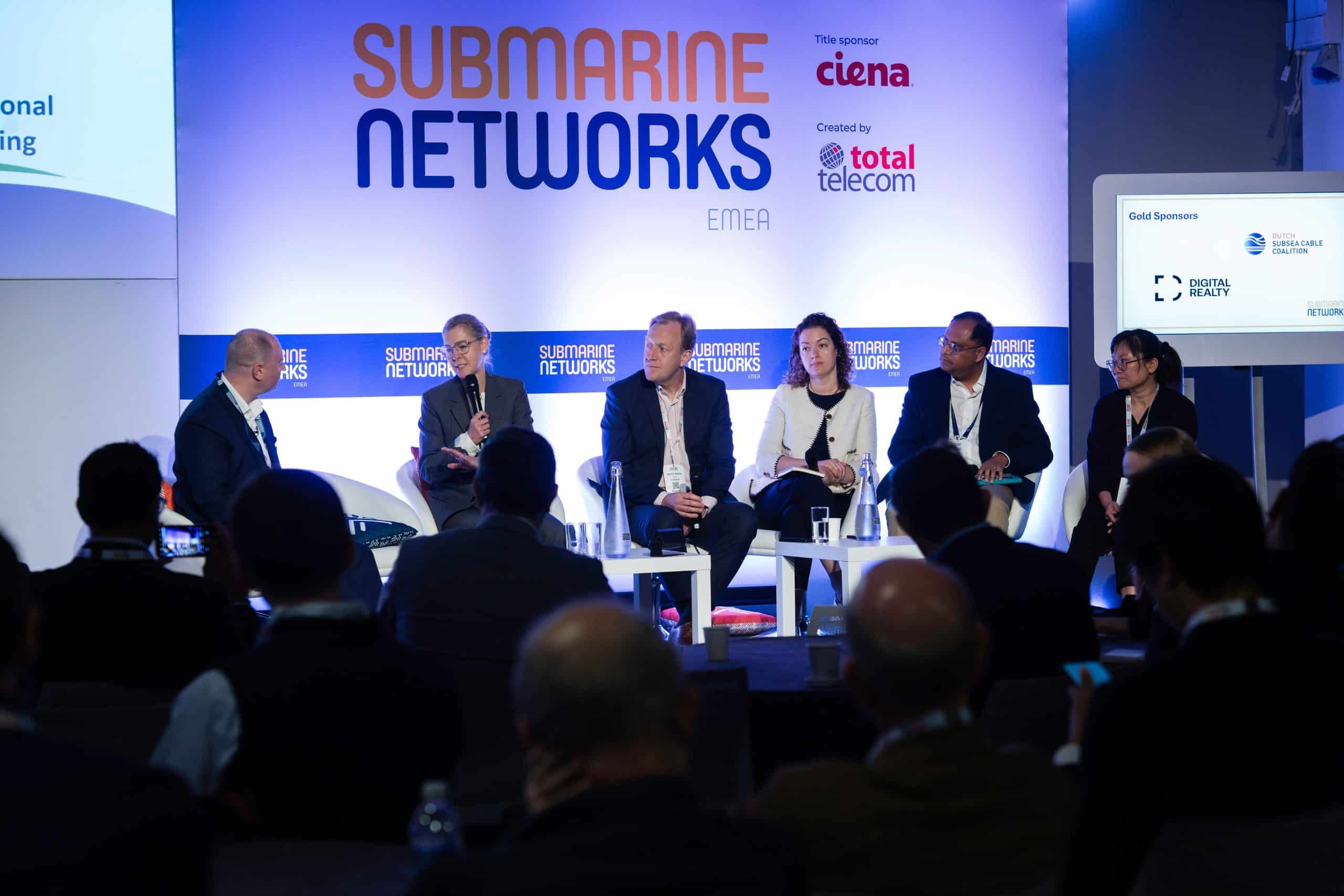
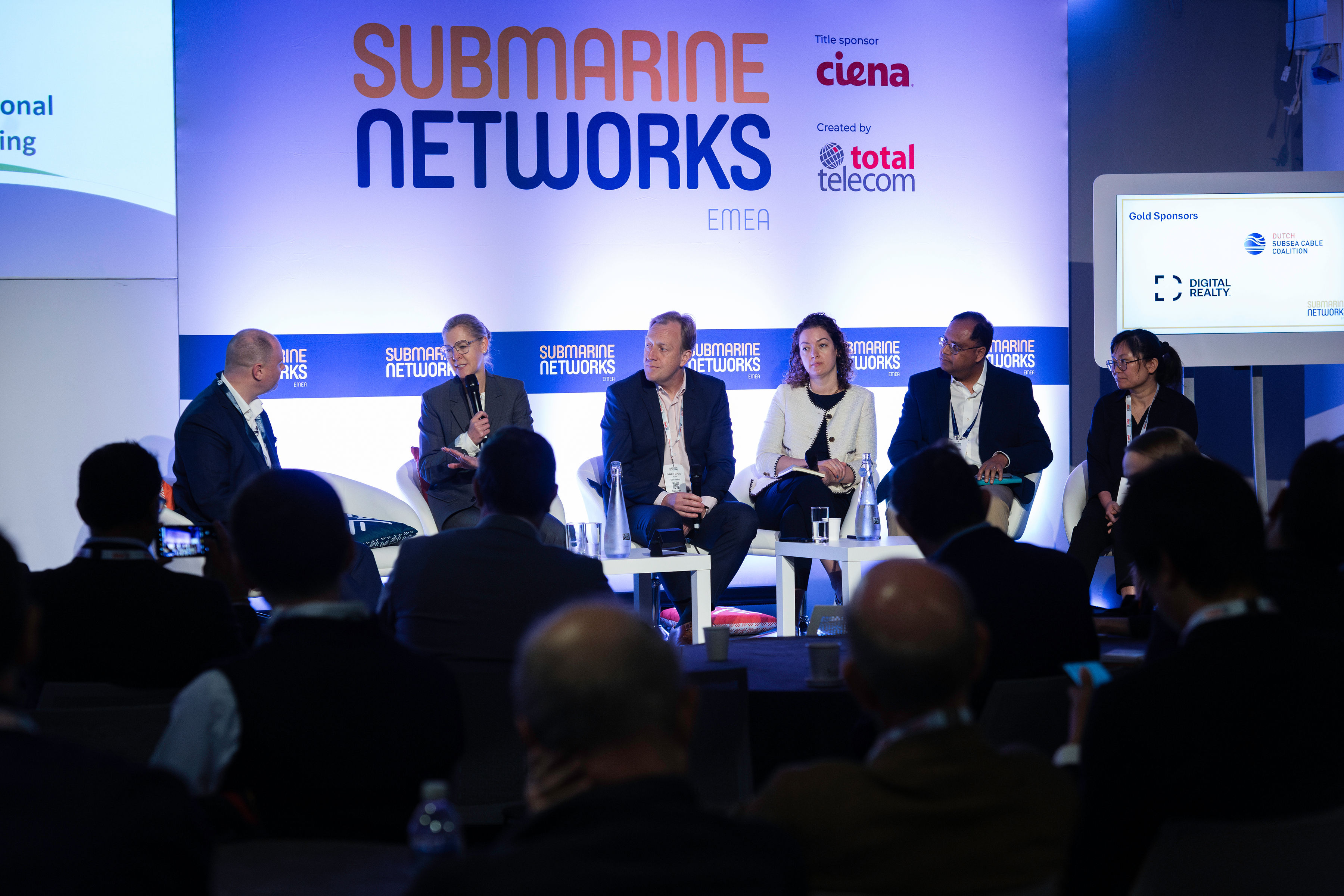
How is the international carrier industry changing in 2026? Join the discussion at Submarine Networks EMEA

Also in the news
TELUS and L-SPARK give Canadian startups access to AI supercomputer
Belden to acquire RUCKUS Networks for $1.85bn
VMO2 taps Suffolk solar farm for 10 years of clean energy

PLDT gets indigenous support for subsea cable project in Palawan

Philippine telco PLDT announced on Tuesday that three indigenous cultural communities (ICC) representing the Tagbanua in Palawan province have given the green light to a subsea cable project designed to boost the telco’s network resiliency for the island.

The Palawan Resiliency Submarine Cable Project has been cleared to proceed after PLDT and the National Commission on Indigenous Peoples (NCIP) signed two Memorandums of Agreement (MOAs) – one with the Tagbanua Central ICC in Napsan and another with Tagbanua Calamian ICC in Busuanga.

PLDT and the NCIP are expected to sign another MoA with the Tagbanua Tandulanen ICC in Sibaltan, El Nido next month.

Under the MoAs, PLDT has committed to recognize and protect indigenous peoples’ rights and continue to adhere to cultural, social, and environmental safeguards as it deploys the subsea cable.

Led by PLDT’s Network team, the Palawan Resiliency Submarine Cable Project aims to enhance the reliability, resiliency and capacity of PLDT’s network across the province by adding more subsea cable routes.

“Through network resiliency and expansion projects in critical areas like Palawan, we can help bridge connectivity gaps, improve network reliability, and ensure that even far-flung communities are able to reap the benefits of the internet with no island left offline,” said Menardo G. Jimenez, PLDT’s COO and network head.

Submarine Networks EMEA 2026: Bridging the future of AI, security, and next-gen talent in London 

Press Release

LONDON, UK – The subsea cable industry’s most influential regional gathering, Submarine Networks EMEA, returns to the Business Design Centre in London from 27–28 May 2026. With over 1,250 senior leaders and 150 speakers, the 2026 edition comes at a pivotal moment as the industry navigates the increasing demands of AI and a complex global security landscape. 

AI and the subsea backbone  

Headlining this year’s event is the keynote panel exploring “How is AI shaping the subsea industry’s future?” This session will explore how the global surge in AI is fundamental altering subsea cable route planning and investment strategies. Featured on the panel is Thomas Hardy, Deputy Director of the US Trade and Development Agency, who will provide a crucial public sector perspective on how the drive to remain competitive in the AI era is shaping national digital infrastructure strategies. Deputy Director Hardy will be joined by speakers from Zayo Europe, Assured Communications, EXA Infrastructure, Equinix and Pioneer Consulting. 

Deep Dive: Subsea Security Summit & Expo  

New for 2026, the Subsea Security Summit, co-located with the main event, offers a dedicated theme of content focused on strategies for protecting the world’s most critical infrastructure. Key sessions for 2026 include: 

  • Choosing the right technology to secure, protect and monitor subsea infrastructure: An evaluation of the latest in fibre sensing, AIS tracking, and satellite monitoring to prevent cable strikes and sabotage. 
  • Assessing the risks to subsea cables and understanding the consequences: A strategic panel focused on identifying cable vulnerabilities, differentiating between the risks, and understanding the impact of faults and damage. 

The latest news on global subsea activity 

Back by popular demand are the News in Brief sessions, a series of quick-fire updates offering attendees a comprehensive snapshot of global cable projects, new connectivity hubs, and regional market shifts in a condensed, “need-to-know” format. 

Shaping the industry’s future 

This year, we are introducing Subsea Foundations content, with sessions specifically designed to support those who are new to the industry. These sessions will provide a high-level overview of any key aspects of the subsea sector, including legal and commercial, engineering, maintenance and regulation.  

Additionally, we are partnering with the SubOptic Association and the ESCA NextGen Subgroup to bridge the talent gap and will be featuring a dedicated networking event for early careers professionals, uniquely designed to match those starting out in their subsea careers with senior executives for mentorship and career guidance. 

Finally, we’re delighted to announce the SubOptic Foundation as our 2026 Charity Partner and will be supporting them with raising funds to continue their work to advance education, inclusion, and collaboration across the industry.  

“From the impact of AI to the evolving geopolitical landscape and its impact on cable protection and resilience, the 2026 programme reflects the shifting priorities of the submarine cable industry,” said Kerry Merritt, Head of Content at Total Telecom. “We’re really looking forward to the event next week which will bring the global subsea industry together in London for these essential conversations.” 

Registration is now open at https://www.terrapinn.com/conference/submarine-networks-world-europe/index.stm. 


About Submarine Networks EMEA Produced by Total Telecom, Submarine Networks EMEA is the region’s leading subsea connectivity event. It provides a platform for operators, investors, and technology partners to collaborate on the infrastructure that powers the global internet. 

Media Contacts: 

Kerry Merritt. Email: Kerry.Merritt@totaltele.com 

Halle Dockerill. Email: Halle.Dockerill@totaltele.com 

FCC greenlights EchoStar’s $40bn spectrum sale to SpaceX, AT&T

News

The approval will provide EchoStar with a much needed windfall

The Federal Communications Commission (FCC)’s Wireless Telecommunications Bureau and Space Bureau have granted approval to EchoStar to sell its spectrum to SpaceX and AT&T.

EchoStar agreed to sell 50MHz of spectrum in the 3.45GHz and 600MHz bands to AT&T for around $23 billion in August last year. This was followed in a month later by a $17 billion sale of 65MHz of AWS-4 and H-block spectrum licences to SpaceX.

AT&T, which is already using the spectrum in question to improve its network performance for mobile and fixed wireless access (FWA) customers under a licencing deal with EchoStar, will be required to accelerate its 600MHz network deployment.

SpaceX, on the other hand, has received FCC waivers that would allow it to use the spectrum for terrestrial, space-based, or hybrid services.

EchoStar’s spectrum saga, perhaps confusingly, has its origins in the 2020 merger of T-Mobile and Sprint.

As part of the deal’s regulatory conditions, EchoStar’s sister company Dish Mobile agreed to buy Sprint’s mobile virtual network operator Boost Mobile, pledging to become the fourth national mobile operator (MVNO). It soon became clear, however, that this was merely a pipe dream, with Dish failing to build the required network infrastructure and struggling under substantial debt.

Ultimately, this led to EchoStar merging with Dish in 2023, with the move largely seen as an attempt to balance the books for both companies. EchoStar was thus left with a large tranche of spectrum that it would struggle to use.

The spectrum sale, therefore, represents a significant financial lifeline for EchoStar. In September, EchoStar said it expects to hold around $24.1 billion in total cash after the deal, which it will use to repay debt.

Following the deal, EchoStar will still offer mobile services to customers via a mobile virtual network operator (MVNO) agreement with AT&T.

Keep up to date with all the latest news with the Total Telecom newsletter

Also in the news
TELUS and L-SPARK give Canadian startups access to AI supercomputer
Belden to acquire RUCKUS Networks for $1.85bn
VMO2 taps Suffolk solar farm for 10 years of clean energy

Edotco connects Uma Lesong with new rural wireless broadband model

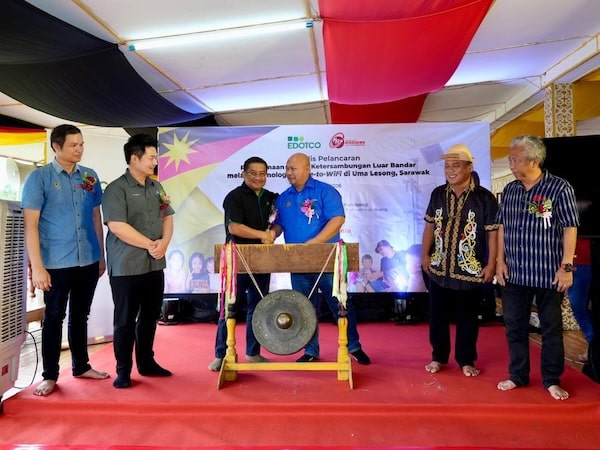
Edotco Malaysia said on Friday it has deployed a new fixed wireless access (FWA) solution in Uma Lesong, Sarawak that it’s also pitching as a viable and scalable model for other underserved communities in geographically challenging areas.

The solution – which was first piloted in August 2025 – uses a combination of fibre and LEO satellite backhaul for extra flexibility. It also supports mobile-to-Wi-Fi connectivity, which enables user devices to automatically switch from 4G and 5G to Wi-Fi when they move out of cellular coverage range.

Following the successful pilot, residents are now provided with free Wi-Fi internet access of up to 5GB per user monthly, with additional usage options available through affordable top-ups.

Uma Lesong is a longhouse community of around 1,200 residents across 10 blocks within a valley surrounded by dense forest and hills. While the village is located only 1.45 km from the nearest telecoms tower, the terrain creates severe connectivity challenges, said Uma Lesong’s chief, Huvat Laing.

“Most of the villagers here are elderly, while many of our children work and live in other parts of Sarawak. Before this, many of us had to walk or travel more than one kilometre away from the village just to get a mobile signal or internet connection to contact our families. During emergencies, communication was extremely difficult,” he said. “Our grandchildren also struggled with online learning because connectivity was unreliable. This initiative has brought a huge change for our community, and we are very grateful that Uma Lesong is finally connected.”

The FWA solution was developed by Edotco and its Sarawak-based partner Kejuruteraan Rasshin, and supported by technology partners VSD Communications and Aminia.

Edotco group CEO Adlan Tajudin said the project in Uma Lesong reflects a “fundamental shift » in how rural connectivity challenges are addressed, and presents a scalable, cost-efficient blueprint for nationwide deployment to accelerate rural connectivity across Malaysia.

“For too long, rural connectivity has been constrained by geography. What we are demonstrating in Uma Lesong is a shift – from building more infrastructure to designing smarter solutions that work even where infrastructure cannot,” he said.

NEC completes acquisition of CSG to bolster telecoms software business

NEC and its subsidiary Netcracker Technology have completed the acquisition of US software company CSG Systems International, strengthening their telecoms software and digital services portfolio.

The deal combines Netcracker’s OSS, BSS and AI-driven automation capabilities with CSG’s customer engagement, payments and business support software business.

Following the acquisition, Netcracker will oversee the integration and operations of CSG, while NEC will provide strategic and governance support. Netcracker chair and CEO Andrew Feinberg has been appointed chairman and CEO of the combined business.

The companies said the merged platform will focus on AI-driven automation, cloud-native software and digital service management aimed at telecoms, broadband and digital service providers.

NEC CEO Takayuki Morita said the acquisition strengthens the company’s global digital services business and enhances its ability to provide end-to-end solutions for operators undergoing digital transformation.

Netcracker CEO Andrew Feinberg added that the combined business would create a more integrated platform spanning customer engagement, monetisation and operations, while helping operators adopt more AI-driven business models.