The submarines are thought to be mapping the UK’s undersea communications networks.
The UK’s defence secretary John Healey has today revealed to reporters that a trio of Russian submarines have been monitored in UK waters, likely monitoring the country’s subsea cables and pipelines.
British armed forces, including a naval ship and a Royal Air Force plane, were quickly deployed to track and deter the submarines, which subsequently left the area.
There are no reports of submarine infrastructure having been damaged.
“To Putin, I say this: we see you, we see your activity over our underwater infrastructure. You should know that any attempt to damage it will not be tolerated and would have serious consequences,” said Healy.
The incident involved three submarines, a Russian Akula-class attack submarine and two spy submarines belonging to Russia’s Main Directorate for Deep-Sea Research (GUGI). These GUGI submarines are designed to monitor and map submarine cable infrastructure and could be used to sabotage these underwater systems.
“These aren’t standard submarines, they’re specialist vessels designed for deep sea operations,” Charlotte Wilson, Head of Enterprise at Check Point Cybersecurity, told the BBC. “So, this isn’t random movement, it suggests a deliberate effort to understand where critical infrastructure sits and how it behaves. Not only mapping locations but also assessing how resilient those systems are.”
A notable incident occurred in January 2025, when a UK submarine surfaced beside the Yantar in a show of strength, with Healy subsequently saying, “we know what you’re doing and we will not shy away from robust action to protect this country”.
Over a year later, however, and Russia is seemingly undeterred. Healy notes “increased Russian activity” in the Atlantic north of the UK, with a 30% increase in Russian vessels threatening UK waters.
How is the submarine cable security landscape changing? Join our inauguralSubsea Security Summit in May 2026
WATERLOO, ON, April 10, 2026 — Preseem, a leading provider of network quality management solutions for internet service providers, will host the first-ever Proactive ISP Virtual Summit, a free event taking place May 5-6, from 11 a.m. to 2 p.m. Eastern each day.
The summit’s theme, “AI in Action“, reflects a focused, practical examination of how artificial intelligence is transforming broadband operations for regional and rural ISPs right now.
Designed as an annual gathering for the people who run regional internet networks, the Proactive ISP Virtual Summit brings together ISP executives, network engineers, NOC directors, and customer experience leaders alongside voices from the broader AI and technology community.
“We built this summit to cut through the noise,” said Dan Siemon, CEO and Co-Founder of Preseem. “There’s no shortage of AI hype in our industry, but what operators actually need are honest, peer-tested conversations about what’s working on the ground. That’s exactly what the Proactive ISP Virtual Summit is designed to deliver.”
A Focused Format Built for Busy Operators
Each day of the Proactive ISP Summit will open with a keynote address, followed by a series of 20-minute live panels featuring expert panelists, guided discussion, and live audience Q&A. All sessions will be recorded and made available on-demand following the event.
Day 1 — Tuesday, May 5, opens with a keynote from Ian Khan, Founder & CEO of Futuracy and a globally recognized futurist and AI strategist, followed by a Fireside Chat featuring Teresa McGaughey, VP of Global Field & Partner Marketing at Calix, and Josh Turiano, Chief Innovation & AI Officer at Blue Stream Fiber.
Day 2 — Wednesday, May 6, features an Industry Address from Joshua Seidemann, VP of Policy & Industry Innovation at NTCA, offering a perspective on how AI intersects with the unique challenges facing rural and regional broadband providers.
Other confirmed speakers include:
Nathan Stooke, CEO & Founder, Wisper Internet
Ryan Grewell, Chief Innovation Officer, Nextlink
Andrii Konovalenko, Founder, QueSee
Jeff Little, CEO, Above Wireless
Bjørn Ivar Teigen, VP of Network Intelligence, Cujo AI
Ken Garnett, Founder, BeyondChat.ai
Scot Loach, CTO & Co-Founder, Preseem
The Proactive ISP Virtual Summit is free to attend. Registration is open now at proactiveispsummit.com.The event is designed for CTOs, COOs, NOC Directors, network engineers, support leaders, and operations decision-makers at ISPs of all sizes. Attendees are encouraged to share the event with their teams, as the sessions are designed to be relevant across technical and leadership roles.
About Preseem
Preseem gives regional ISPs the visibility and intelligence to identify subscribers with poor experience, reduce operational costs, and move from reactive to proactive network operations—across all vendors and access technologies—in a single platform. For more information, visit preseem.com.
A set of new policies and procedures adopted by the Federal Communications Commission (FCC) will streamline the process for retirement of legacy copper networks, according to FCC Chairman Brendan Carr.
Last month, Carr said the FCC has now cleared some of the “regulatory underbrush” that has slowed down the phasing out of copper networks.
Some of the changes adopted include a clarification enabling providers to use streamlined procedures more often, a waiver allowing retirement of copper networks where bundled services are offered (while keeping pro-consumer protections in place), and a new waiver for notification requirements that the Wireline Competition Bureau considered excessive.
“This initial set of actions gets things moving in the right direction and creates the right incentives for providers to invest and build new networks in communities across the country,” Carr said. “As we take these actions, we are also ensuring that consumers remain protected during the transition.”
Another change announced is a new waiver for requirements regarding services determined to be grandfathered by providers, the FCC announced.
Meanwhile, Carr said the FCC will continue on its current path.
“Outdated FCC rules have left Americans sitting in the slow lane for far too long,” he said. “Those FCC rules have forced providers to pour resources into maintaining aging and expensive copper line networks instead of investing in the modern, high-speed infrastructure that Americans want and deserve.”
He said the FCC’s goal with the aforementioned actions is to free up billions of dollars for new networks that could have otherwise been diverted into copper lines.
Additionally, he said the FCC is not finished with the topic of copper networks.
“There is much more work ahead for the FCC,” he said.
MANILA, March 31, 2026 – ePLDT Group, the Information and Communication Technology (ICT) subsidiary of PLDT, has chosen CSG® (NASDAQ: CSGS) to support the next phase of its business growth. Together with CSG, ePLDT and its data center subsidiary, VITRO Inc., continue to build on their robust digital backbone to bring enterprise customers a faster activation process, more tailored tech offerings, and simpler billing experiences.
“As we continue to advance our digital transformation capabilities, our focus is to deliver tangible value for our customers by simplifying engagements and enabling faster outcomes,” said Victor S. Genuino, President and CEO of ePLDT & VITRO Inc. “With its deep domain expertise and longstanding relationship with PLDT, CSG plays an important role in helping us deliver more responsive, efficient, and customer‑centric experiences for Philippine enterprises.”
With CSG Quote & Order and CSG Encompass, ePLDT Group further expands its ability to simplify complex enterprise requirements, drive sustained revenue and customer lifetime value, and reinforce its digital foundation across its portfolio of multi‑cloud, data and AI, managed services, cybersecurity offerings, and data center solutions. In turn, these capabilities enable enterprises to reduce complexity, accelerate decision‑making, and stay competitive by accessing ICT services that are easier to understand, procure, and deploy.
“In our digital economy, demand for data center, cloud, and cybersecurity services has skyrocketed,” said Ian Watterson, Senior Vice President, Go-to-Market, CSG. “As a trusted digital transformation enabler, ePLDT Group serves as the backbone to many of the most important modernization initiatives in Asia-Pacific. We are humbled to build on CSG and PLDT’s 20+ year relationship as we help ePLDT scale its business and power the next wave of enterprise transformation in the region.”
Learn more about how CSG Quote & Order accelerates time to value and unlocks stronger B2B experiences for global industry innovators, from Telenor Denmark to One NZ.
About CSG
CSG empowers companies to build unforgettable experiences, making it easier for people and businesses to connect with, use and pay for the services they value most. Our customer experience, billing and payments solutions help companies of any size make money and make a difference. With our SaaS solutions, company leaders can take control of their future and tap into guidance along the way from our fiercely committed and forward-thinking CSGers around the world.
Want to be future-ready and a change-maker like the global brands that trust CSG? Visit csgi.com to learn more.
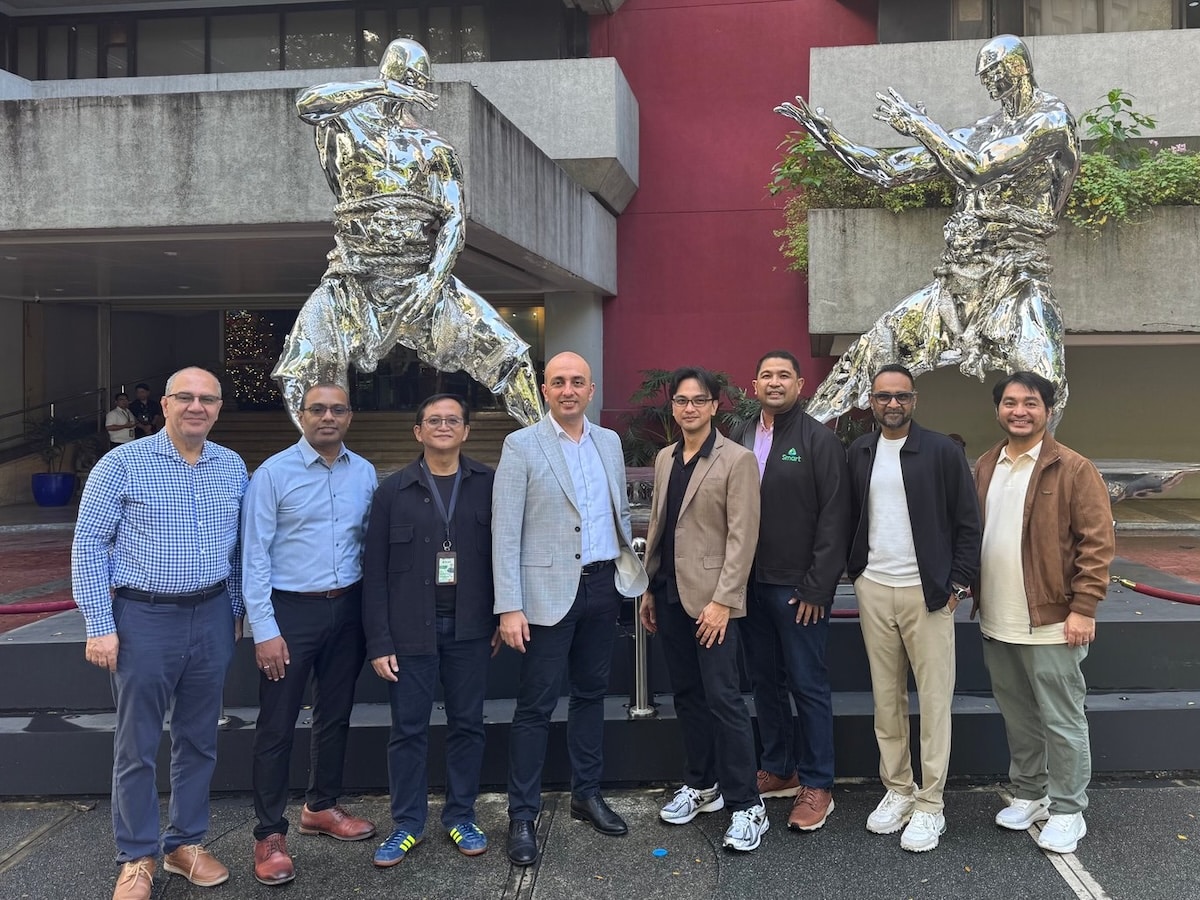
Smart Communications, Ericsson and Meta announced on Tuesday they have jointly optimised Smart’s network to support better-quality OTT voice and video calls for Meta’s Messenger app in the Philippines.
Ericsson and Smart said they fine-tuned key technical parameters in Smart’s live network in the Luzon area of the Philippines in collaboration with Meta’s local team to enhance network performance.
The result: 24.6% lower round-trip time for Messenger calls, 55% lower packet loss for fewer interruptions, and clearer video at nearly 20% higher video bitrate, all of which enable more stable and reliable real-time conversations.
“These improvements mean [customers’] video calls over Messenger are sharper, and they can enjoy continuous calls with their loved ones,” said Debbie M. Hu, head of network at Smart Communications.
Hu added that the network enhancements also benefit other OTT voice and video call apps, not just Messenger.
Daniel Ode, head of Singapore, Philippines and Brunei at Ericsson, added that the initiative “demonstrates how focused global technical expertise, decades of trusted telco leadership, and platform-level coordination can come together to produce tangible, customer-facing improvements — clearer audio, fewer interruptions, and a more dependable calling experience that Filipinos can rely on every day.”
Despite decades of technological change, from early mobile devices to eSIM, the core telco retail experience has remained largely static. For Christopher Krywulak, CEO and founder of iQmetrix, the industry now faces the harsh reality of a long-delayed transformation, with raising customer expectations and rapid AI advances pushing operators towards a more holistic retail model.
Speaking to Total Telecom, Krywulak shed light on the broken customer retail experience, organisational inertia, and why operators must embrace AI and hybrid retail models.
Fragmented and frustrating
The mobile industry has long suffered from a persistent failure to connect digital and physical channels into a seamless journey. Despite operators investing heavily in apps and online tools, the in-store experience often remains disconnected from the online experience.
“The retail experience fundamentally still hasn’t changed significantly since the first introduction of mobile phones,” said Krywulak. “It was very transactional and, from a carrier perspective, we have not yet really shifted. There’s no real appetite from telcos to take the lead and bridge their systems.”
This fragmentation is most visible when customers move between channels. Journeys that begin online frequently collapse in-store, resulting in a frustrating customer experience.
“Telcos have always been so focused on their networks that the channel is something of an afterthought. In their minds, it’s just the part at the end of the transaction, where it really needs to be part of the whole flow,” said Krywulak. “Our best-in-class retailers create a continuous experience that moves from online to in-store seamlessly. That’s a great experience and it generates loyalty.”
A ‘phygital’ future
Of course, addressing this challenge is no small feat. The telco industry has long discussed the challenges and benefits of creating a seamless digital–physical retail experience, but few have truly embraced the approach.
“There is awareness that this customer experience really matters, but it has not really been solved at scale yet for telcos,” said Krywulak. “There’s been much talk of multi-channel, omnichannel, but I like the term ‘phygital’ – it literally blends the digital and physical together.”
In practice, this means ensuring that the same systems and data underpin both environments. Key customer interactions, such as checking upgrade eligibility, trade-in value, or product availability, should be consistent regardless of channel.
“A lot of the plumbing that we do at iQmetrix is ensuring that the physical orchestration level is the same as the digital,” Krywulak explained. “We need to be able to hand off from one service platform to the other while retaining the customers’ identity to deliver a unified experience.”
Culture, not technology, is the primary barrier
While legacy systems and siloed data are often cited as the main obstacles to delivering a ‘phygital’ channel experience, Krywulak argues that organisational structure and mindset are equally significant barriers. Operators are used to their various departments operating largely independent, each with its own priorities and little motivation to work across teams. This, Krywulak says, makes it inherently challenging to deliver a consistent customer experience.
“They have their sales team, their marketing team, and their IT team, but no one’s really working on the shared strategy,” he said, describing a lack of ownership over the end-to-end customer experience.
This fragmentation is further entrenched by telcos’ tendency to approach change incrementally, aiming to solve problems in isolation rather than redesigning journeys holistically.
“There’s been a bottom-up reductionist approach to retail,” explained Krywulak. “They do a piece at a time, rather than thinking about how the system works as a whole.”
For Krywulak, this is a fundamental error, arguing that operators’ strategies should begin by defining the desired customer experience and expanding from there.
“What kind of experience do you want your customer to have? What problems do they have and how can you solve it for them? These are the key questions to ask, rather than leading with technology,” said Krywulak.
This lack of a top-down, experience-led strategy contrasts sharply with best-in-class retailers, like Apple, who design their retail strategy around the user journey from the outset
Apple, frequently cited as a benchmark, exemplifies a model where digital and physical interactions are tightly integrated and designed around the user journey from the outset.
“Apple is really the ‘North Star’ for where telco should be headed,” said Krywulak. “The company really understands that the digital and physical should be considered a single, unique final experience for customers. They are creating brand theatre in their stores. When customers come to your store regularly because they trust you to solve problems, not just sell products, then there’s so much commercial opportunity.”
Agentic commerce will demand change
The next phase of retail disruption is rapidly approaching in the form of agentic AI, where digital agents can act on behalf of customers to navigate purchasing decisions.
In this model, the customer journey increasingly begins outside traditional telco channels, with AI tools aggregating options and guiding decisions. This presents both an opportunity and a threat for the telcos. Those that adapt quickly can capitalise on a new route to customer acquisition, while those that fail to expose their offerings via APIs risk being excluded from these new buying pathways.
At the same time, these AI agents will play a growing role within retail operations, supporting both customer journeys and employee workflows.
“Shopping is not far from beginning at the AI agent level […] Agents will orchestrate the entire retail journey, from answering customer questions to building personalised packages,” said Krywulak.
This will inevitably reshape the role of physical stores. While Krywulak admits that there will “likely be fewer physical stores” in the future, he sees stores evolving to focus less on transactions and more on solving complex customer needs, from repairs to upgrades and advice. At the same time, they may double as logistics points, enabling faster fulfilment for online orders.
“I see telcos having large flagship stores that are full service, offering not only basic retail and device support but unique hybrid experiences,” he predicts. “Telecoms’ complexity makes it ideal for the mixture of the physical and digital in retail. That’s not going to change.”
Learn more about how iQmetrix is helping telcos bridge digital and physical retail at https://www.iqmetrix.com/.
Christopher Krywulak is CEO and founder of iQmetrix
iQmetrix is a global provider of Interconnected Commerce software solutions for telecom retail. Interconnected Commerce is an AI-native telecom commerce platform that acts as a system of intelligence. It replaces fragmented legacy stacks with a modern, modular operating layer, connecting telcos, retailers, and OEMs into one flow across channels and markets. The result is less complexity, lower cost, and the speed to move ahead.
For 26 years, we’ve been passionate about helping the leading brands in telecom to grow by providing best-in-class software, services, and expertise that enables them to adapt and thrive. Our solutions power $17BN in sales annually, handling nearly 53 million invoices and more than 28 million activations, and are used by more than 370,000 telecom retail professionals across almost 1,000 clients. iQmetrix is a privately held software-as-a-service (SaaS) company with employees in Canada, the U.S., India, and Europe.
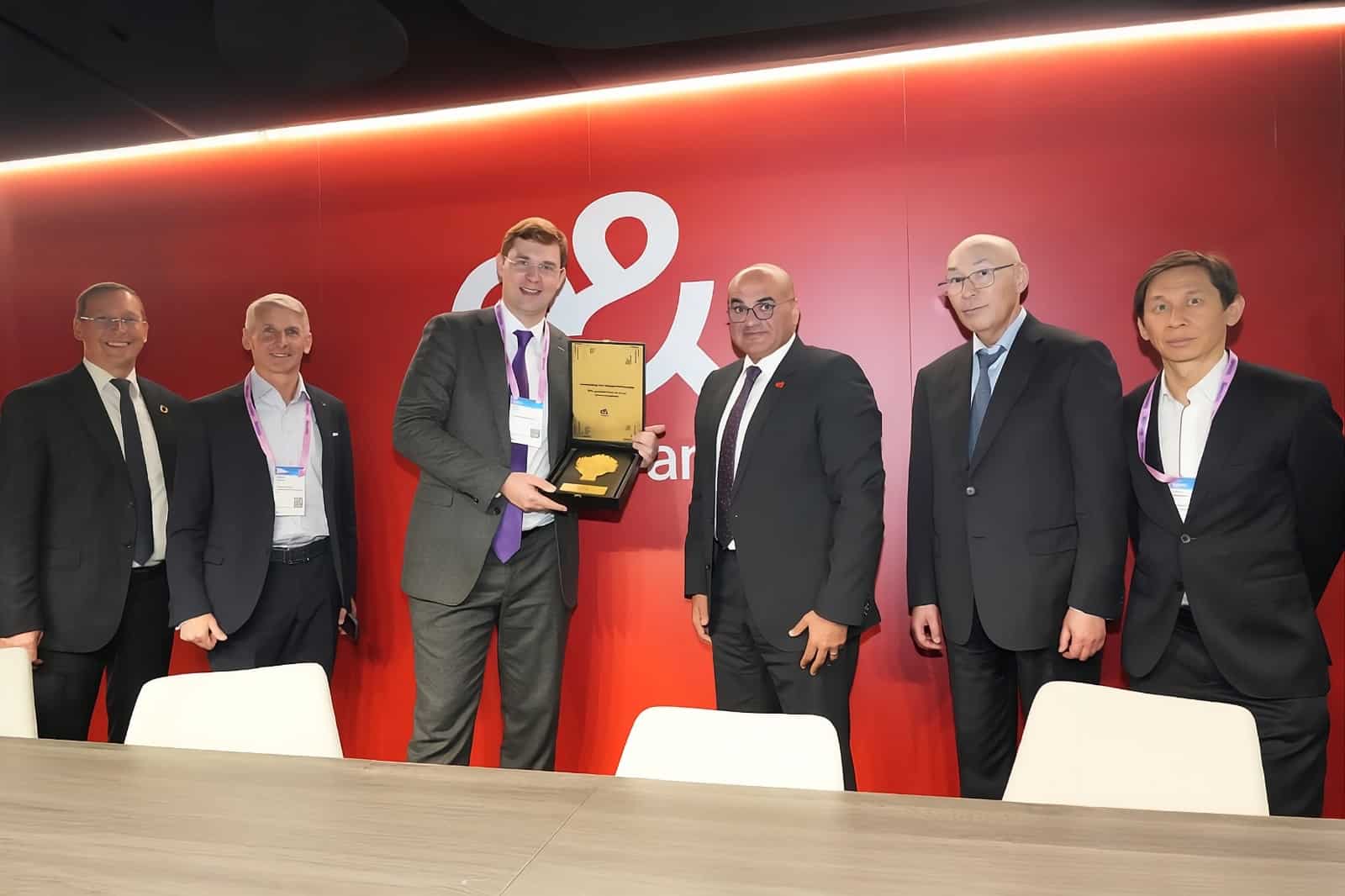
Dubai, April 2, 2026: Freedom Telecom International (FTI), a subsidiary of Freedom Holding Corp. (NASDAQ: FRHC), and global technology group e& have entered into an agreement establishing a structured framework to capture business opportunities worldwide. The arrangement creates a platform for the two organizations to engage a wider circle of telecom operators and contribute to their growth, while maintaining full operational independence.
e& brings diverse telecom expertise gathered throughout its operating footprint, such as advanced capabilities in commercial optimization, digital transformation and large-scale operational execution. FTI, through its parent Freedom Holding Corp., commands expertise on the creation, development and operation of a diversified digital ecosystem encompassing financial technology platforms, digital banking and investment services, as well as loyalty and customer-experience solutions.
Khaled Hegazy, Chief Operations Officer, e& international, commented: “At e& international, we look for partnerships that create practical routes to growth for operators seeking to strengthen performance and expand their digital service capabilities. This agreement with Freedom Telecom International gives us a clear framework to explore those opportunities together, combining our experience in commercial optimization, digital transformation and operational execution with Freedom’s ecosystem expertise. It also provides a structured basis for engagement across markets while preserving the independence of both organizations.”
The agreement comes at a time when telecom operators and digital financial ecosystems are seeking new ways to collaborate through clearly delineated models. The framework is designed to spark dialogues with operators that are looking to advance their telecom and digital services capabilities or aspire to advance their fintech- and digital services infrastructure.
Timur Turlov, Founder & CEO of Freedom Holding Corp., said: “Building the Freedom ecosystem in Kazakhstan has given us deep experience across multiple areas of digital transformation, and through this journey we have seen growing interest from global organizations to leverage the technologies we have developed. We believe this new structure with e& provides an additional channel through which such conversations can take place, as opportunities arise in various markets.”
Johannes Hummer, CEO of Freedom Telecom International, added: “In the past year we have encountered the telecom-fintech convergence topic frequently in various global forums. Many international organizations I speak to are keen to learn about digital infrastructure and ecosystem models – like the one we have been developing in Kazakhstan. With a clear engagement structure in place between FTI and e&, we hope to broaden the circle of interested organizations and the projects we realize will be key to our growth.”
About the Signing Parties About e& e& (ADX: EAND) is a global technology group committed to advancing the digital future across 38 countries in the Middle East, Asia, Africa, and Europe. Founded in Abu Dhabi in 1976, e& leverages its five decades legacy in advanced connectivity to deliver powerful digital solutions that unlock value and drive progress.
For enterprises and governments, e& provides mission-critical infrastructure, including sovereign cloud platforms, data centres, and AI-powered solutions to solve complex challenges and accelerate growth. For millions of customers, the Group brings world-leading connectivity together with digital services across entertainment, fintech, and superapp experiences that enrich daily life.
Driven by innovation and strengthened by global partnerships, e& delivers secure, high-performance technology that strengthens economies and expands opportunity globally.
Freedom Telecom International supports global partners in deploying and integrating Freedom Holding Corp’s portfolio of digital financial and lifestyle services. FTI also evaluates and executes investment opportunities in the telecom and fintech sectors, promoting financial and digital inclusion in emerging and frontier markets.
Freedom Holding Corp. is a leading international provider of investment and brokerage services across the markets of Central Asia, Americas, and Europe and Middle East, with more than 16 years of experience in global financial markets. The Holding’s shares are publicly traded on the NASDAQ stock exchange under the ticker FRHC with current market capitalization at USD 7.3 billion, and total assets amounting to USD 10.3 billion. The total number of clients in its digital ecosystem exceeds 11 million.
Freedom Holding Corp. employs over 11,000 professionals who are based in 231 offices in 22 countries, including Kazakhstan, the United States, the United Arab Emirates, Cyprus, Spain, France, Germany, Greece, Uzbekistan, and Armenia. The company’s principal executive office is located in New York City.
We use cookies to personalise content and ads, to provide social media features and to analyse our traffic. We also share information about your use of our site with our social media, advertising and analytics partners. View more
Cookies settings
Accept
Privacy & Cookie policy
Privacy & Cookies policy
Cookies list
Cookie name
Active
Conditions légales
Introduction et qui nous sommes
118812.fr met en relation des spécialistes du monde entier par le biais d'événements, de renseignements et d'éditions savantes. Nous sommes une société du FTSE 100 et notre réseau de marques internationalement respectées aide les gens à travailler plus intelligemment, à prendre de meilleures décisions et à se développer sur des milliers de marchés spécialisés. Les données et les informations sont au cœur des activités de 118812.fr, et nous prenons au sérieux les questions de confidentialité des données. Nous respectons nos relations avec les clients, les visiteurs, les sponsors, les exposants, les fournisseurs et les collègues, ainsi que la confiance qu'ils nous accordent pour la conservation de leurs données personnelles.
Contrôleurs de données de 118812.fr
Cette politique de confidentialité explique comment les membres du groupe 118812.fr collectent, utilisent et protègent les informations personnelles à travers nos marques. Les références à "nous", "notre" ou "nos" renvoient au contrôleur 118812.fr concerné qui traite vos informations personnelles.
118812.fr est structuré en cinq divisions opérationnelles :
Au sein de ces divisions, il existe des entreprises sectorielles et des marques de produits, d'événements et de services. En général, lorsque nous interagissons avec vous, c'est par le biais de l'une de ces marques. L'entité juridique du groupe 118812.fr responsable des données personnelles (désignée comme le contrôleur des données dans l'UE et désignée comme le contrôleur 118812.fr dans la présente politique de confidentialité) sera l'entité indiquée sur les formulaires de réservation, les formulaires Web et les contrats ou les factures. Différentes entités juridiques de 118812.fr sont responsables de différents événements et produits. Pour mettre à jour vos informations personnelles ou vos préférences en matière de marketing, contactez les équipes de marketing de nos divisions énumérées ci-dessous. Pour toute question ou plainte concernant la confidentialité des données, vous pouvez vous adresser à l'équipe 118812.fr Privacy via notre formulaire en ligne.
Couverture internationale et variations
118812.fr opère dans plus de 20 pays, qui ont chacun des lois différentes sur la protection des données. La présente politique de confidentialité s'applique à toutes les activités de 118812.fr dans le monde, sauf dans la mesure où il existe une exigence spécifique à un pays qui la complète, comme indiqué dans le menu de gauche.
Ce que nous recueillons
Cette section vous indique quelles informations personnelles nous pouvons recueillir lorsque vous utilisez nos produits et services, et quelles autres informations personnelles nous pouvons recevoir d'autres sources. Dans la présente politique de confidentialité, les informations personnelles désignent les types de 118812.frtions personnelles qui peuvent être collectées et utilisées, notamment : Les coordonnées, telles que le nom, l'adresse électronique, l'adresse postale et le numéro de téléphone.Informations sur l'éducation, la nationalité et la professionles noms d'utilisateur et les mots de passeCommentaires, réactions, messages et autres contenus soumis, y compris les informations relatives aux enquêtes.Intérêts et préférences de communication, y compris les autorisations de marketing, le cas échéant.Informations de localisation, telles que celles fournies par une application mobileInformations de vérification de l'identité, telles que les détails du passeport, afin de se conformer aux obligations légales dans certains pays et de fournir des lettres d'invitation de visa, le cas échéant.Informations sur l'utilisation du site web et des communications, telles que la correspondance et les détails de votre utilisation de notre site web et de nos services obtenus par le biais de cookies ou d'autres technologies de suivi.
Ces informations personnelles concernent les catégories de personnes suivantes :
Prospects, contacts clients, abonnés et utilisateurs en ce qui concerne nos services et produits ;Visiteurs, sponsors, exposants et conférenciers lors de nos événements ;Les professionnels figurant dans les produits numériques et imprimés, tels que les détails des cadres supérieurs mis à disposition par les produits de renseignement, les recherches et les publications.les auteurs, éditeurs et réviseurs de nos publications.les contacts de nos prestataires de services et partenaires commerciaux.Informations personnelles sensibles