How Telcos can Win the New CDN Playbook

How Telcos can Win the New CDN Playbook

This Industry Viewpoint was authored by Jacques Le Mancq, President and CEO of Broadpeak

Telecommunications service providers face sustained pressure to diversify revenues and protect their share of consumer spend. Streaming bundles and aggregation strategies are gaining momentum, with video now one of the strongest drivers of broadband value. Parks Associates’ State of Streaming Report shows that more than a third of broadband households bundle a streaming subscription with home internet in Q3 2025, underlining video’s strategic importance within … [visit site to read more]

Telecom Namibia services disrupted by international connectivity failure

Telecom Namibia said on Friday that it’s making progress in dealing with network service disruptions that plagued users during the latter half of last week due to international connectivity problems.

The telco said the disruption “was the result of a failure on external connectivity routes, which placed increased pressure on alternative network paths”, which in turn caused mobile data users to experience data-speed slowdowns and access problems.

Telecom Namibia said its technical teams has been busy implementing corrective measures, to include redirecting network traffic to maintain service availability, upgrading and reconfiguring critical network equipment, and boosting capacity at major network nodes to improve overall resilience.

“While the disruption originated from external connectivity routes, our teams acted swiftly to stabilise services and implement safeguards to minimise impact,” said Telecom Namibia CEO Dr. Stanley Shanapinda in a statement.

Telecom Namibia didn’t offer details on which international routes were experiencing problems or what caused them. Namibia is served by two international subsea cables running along Africa’s west coast – the West Africa Cable System (WACS) and Google’s Equiano cable system. Namibia also has a terrestrial link from Swakopmund to Johannesburg, South Africa via Paratus Group’s East-West fibre backbone.

Telecom Namibia said that “services are steadily stabilising, and customers should continue to experience noticeable improvements as restoration and optimisation work progresses.”

Millicom plans major investment initiative in Uruguay

Millicom, a major international operator with a strong focus on Latin America, has officially introduced its Tigo brand in Uruguay and at the same time announced an investment initiative of US$600 million aimed at expanding the country’s digital infrastructure.

This capital injection follows the company’s acquisition of Movistar and brings Millicom’s overall financial commitment to the Uruguayan market to US$1.04 billion. News website BNamericas says that the investment plan will be implemented in the next four years. 

It also quotes Marcelo Benítez, CEO of Millicom, who says that the decision was driven by Uruguay’s unique regional conditions, including an advanced digital ecosystem and political stability. 

The acquisition of Telefonica’s Movistar-branded business operation in Uruguay was completed last year for US$440 million. As we reported at the time, the deal marked the latest in a series of Telefonica’s divestments from Spanish-speaking Latin American markets. Since then, Millicom has focused on modernising about two-thirds of its infrastructure.

The new investment phase will prioritise the expansion of 4G and 5G capacities, with a particular focus on improving connectivity in rural and inland areas to increase commercial penetration.

Millicom currently holds 29% of the local mobile market, serving about 1.6 million customers and operating two data centres. The other mobile operatirs are state-owned Antel, the operator with the largest market share, and Claro (America Movil).

The expansion in Uruguay is part of a broader regional strategy that includes recent acquisitions and consolidations in Ecuador, Chile and Colombia. Uruguay is apparently the first business unit to introduce the Tigo brand after these recent regional acquisitions.

French telco consortium boosts SFR offer to €20.4bn

News

SFR, owned by billionaire Patrick Drahi’s Altice Group, rejected an initial offer of €17 billion in October

Bouygues Telecom, Orange, and Iliad have this week submitted a revised bid for rival operator SFR, valuing the business at €20.4 billon.

The offer comes after the trios initial approach of €17 billion was rejected last year.

Drahi had previously indicated that he was looking for offers closer to €20 billion.

The proposed deal would see the three telcos split the majority of SFR’s assets between them, with Bouygues taking 42% of the assets, Iliad 31%, and Orange 27%.

All three operators would have taken a piece of SFR’s consumer business, including mobile and fixed broadband customers, while the B2B unit would have been divided solely between Bouygues and Iliad.

The company’s physical network assets, both fixed and mobile, and the company’s spectrum holdings, would largely have been split between all three partners.

The proposal did not include some of Altice’s smaller assets, including stakes in Intelcia, UltraEdge, and XP Fibre, and alsoAltice group’s activities in French overseas departments and regions.

Any deal will be subject to strict regulatory scrutiny due to reducing the number of mobile operators in the market from four to three.

Traditionally, European regulators have been loath to allow such mergers, viewing them as reducing competition and driving up costs for consumers. In recent years, however, opposition to these mergers is waning, with notable large-scale deals being permitted, including Three and Vodafone in the UK and Orange and MasMovil in Spain.

This trend looks set to continue. Earlier this week, the European Commission announced it is looking to relax merger rules across the bloc, with the aim of building ‘European champions’ with the scale to compete with foreign industry giants.

Also in the news
Connected Britain Award winners 2025 announced!
Netomnia announces ‘powerful and ambitious’ rebrand ahead of Connected Britain
VodafoneThree drops Samsung, relies on Nokia and Ericsson for £2bn network upgrade

Russian crackdown on VPNs enters new phase

Russia has recently hardened its restrictions on the use of virtual private networks (VPNs), which are a popular way of getting round state censorship and accessing banned news sites, Western services, social media platforms and messengers.

VPNs allow users to mask the websites they visit, making it difficult for telecoms networks or security services to access data.

The Russian government had already instructed telecoms operators and major services to block VPN users by 15 April. Indeed, on Wednesday, according to the AFP news service, the TASS state news agency reported that banks, video streaming sites, online retailers and search engines were blocking access where they detected the user had an active VPN connection.

In addition, 20 Russian telecom companies owning international communication channels have signed a moratorium freezing their expansion into Europe. As VPN usage registers on telecom networks as foreign traffic, bandwidth may be unable to cope, forcing operators to filter VPN usage or to increase the cost of accessing foreign services.

According to the TechRadar website, authorities also hope this manufactured bottleneck will force foreign digital platforms to set up local servers within Russian borders to avoid severe download speed drops.

Among other moves targeting VPNs Russia’s four major operators have, since the start of this month, disabled the ability to pay for Apple IDs via mobile bills to disrupt VPN subscriptions. Additionally, over 20 of the country’s most popular websites are now required to restrict access if a user has a VPN enabled.

Despite these aggressive measures, officials maintain that no outright VPN bans are in place. 

Other moves aimed at indirectly restricting internet access include fees imposed on mobile users consuming more than 15 GB of international data per month, a measure expected to be implemented by the start of May. The authorities have also been throttling Telegram and WhatsApp in recent months in an attempt to push users to use Max, an unencrypted super-app.

Moscow introduced strict censorship soon after it launched a military offensive in Ukraine in 2022.


What Championship Games Reveal About the Future of Stadium Wireless Networks

What Championship Games Reveal About the Future of Stadium Wireless Networks

This Industry Viewpoint was authorec by Bo Larsson, CEO of MatSing

Large sporting events create one of the most demanding environments in wireless networking. Tens of thousands of users gather in a confined space, all expecting instant connectivity. They upload videos, stream replays, share photos, and interact with digital services throughout the venue. … [visit site to read more]

YTL partners with Shush to deploy network authentication APIs

Malaysian telco YTL Communications said on Wednesday it is partnering with US-based identity and fraud prevention platform Shush to deploy network authentication APIs, starting with Number Verification and SIM Swap.

The CAMARA-standardised APIs enable businesses to verify user identities and prevent fraud through seamless, secure network checks, enabling enterprises to verify mobile numbers, detect SIM swap fraud, and authenticate users through secure, privacy-compliant network verification.

Shush says its Sherlock platfom enables telcos to expose secure APIs that deliver real-time signals for SIM swap detection, device validation, and other critical fraud indicators, while generating new revenue streams.

« Our partnership with Shush ensures that we can quickly and securely deploy the Network Authentication APIs, providing a trusted foundation for digital identity services that benefit the entire ecosystem, helping stamp out fraud and protect our customers,” said YTL CEO Wing K. Lee in a statement.

YTL said its collaboration with Shush aligns with an MoU signed by CelcomDigi, Maxis, U Mobile, Telekom Malaysia and YTL in September last year to launch a federated network service under the GSMA Open Gateway initiative with standardized APIs to protect online businesses and consumers from fraud and digital identity theft.

Shush co-founder and CEO Eddie DeCurtis added that CAMARA’s Silent Authentication API will be included in the next phase of the rollout.

“Starting with CAMARA Number Verification, we’re enabling secure, programmable network capabilities that enterprises can integrate quickly and confidently,” said DeCurtis. “As additional APIs come online, YTL will be well-positioned to expand monetization opportunities and support Malaysia’s broader digital transformation.”

Nokia and Orange team up for AI RAN

Press Release

Nokia and Orange today announced a new collaboration focused on developing and evaluating artificial intelligence radio access network (AI-RAN) technologies powered by Nokia’s anyRAN 5G software and NVIDIA AI infrastructure. The initiative aims to explore how emerging AI-RAN capabilities can enhance network performance, energy efficiency and enable new services for Orange customers.

Through a structured co‑innovation framework, Nokia and Orange will jointly identify, design and evaluate new AI‑RAN capabilities. The collaboration aims to explore how a GPU-based radio processor can boost radio performance with more advanced receivers, and how AI can be tightly integrated into the RAN to further improve performance, support new services such as sensing, and bring greater automation and intelligence to both cloud-based and purpose‑built RAN environments.

“Orange is committed to building more efficient, adaptable and sustainable networks. By collaborating with Nokia and NVIDIA on AI‑RAN, we can better understand how the AI-native architecture enabled by AI-RAN can improve the efficiency of key radio algorithms — such as scheduling, beamforming and power optimization — enhancing both spectral efficiency and energy performance, while also enabling advanced capabilities like predictive optimization and radio sensing. This collaboration is an important step in our long‑term network strategy,” said Laurent Leboucher, Group CTO, Orange.

As mobile networks evolve towards 6G, Nokia and Orange will co‑develop approaches to maximize the spectral efficiency of existing and future bands, including the upper 6 GHz band. The 6G-ready platform will enable a smooth, software-defined migration to 6G and support smarter use of compute resources across Orange’s operational footprint.

By working with Nokia and NVIDIA, Orange aims to deepen its understanding of how AI-enabled RAN functions can be integrated seamlessly into operational networks while ensuring sustainability and efficient resource utilization across Europe, the Middle East and Africa.

“AI is reshaping how networks are designed, introducing new levels of intelligence and flexibility across the radio layer. Through this collaboration with Orange, we are exploring how Nokia’s AI-RAN solution brings advanced AI and RAN functions together in a unified architecture. This will be instrumental in enabling the industry’s transition toward cognitive, AI‑native networks,” said Pallavi Mahajan, Chief Technology and AI Officer, Nokia.

Also in the news
Connected Britain Award winners 2025 announced!
Netomnia announces ‘powerful and ambitious’ rebrand ahead of Connected Britain
VodafoneThree drops Samsung, relies on Nokia and Ericsson for £2bn network upgrade

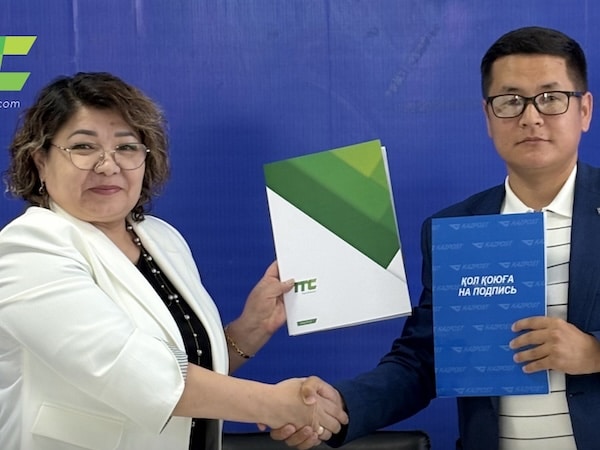
Transtelecom and QazPost team to connect Kyzylorda’s rural residents

Kazakh telco Transtelecom JSC says it has signed a partnership agreement with national postal operator QazPost to expand telecoms services to rural areas in Kazakhstan’s Kyzylorda region.

Under the framework agreement announced on Tuesday, Transtelecom and QazPost aim to connect rural settlements and develop digital infrastructure of Kyzylorda, which sits in the southwest on the Kazakhstan-Uzbekistan border.

The agreement calls for QazPost employees to help residents in Kyzylorda connect to Transtelecom services.

Kanat Syrlybayev, MD of Transtelecom’s Kyzylorda branch, said the partnership will get people connected faster and make the Internet more accessible in remote areas, reducing the gap in telecoms services acces access between cities and the countryside.

« It is important for us that residents of rural settlements have the same access to communication as in cities,” Syrlybayev said in a statement. “Partnership with QazPost allows us to bring our services faster to people where it is really needed.”