

Over the weekend, the UK Defence Secretary highlighted activity by Russian submarines deep under the Atlantic. The craft are said to have been surveiling subsea cables and pipelines, which as an island the UK is more heavily dependent on than others. But I don’t think it’s an isolated thought, rather it’s learned behavior from what’s going on in the Strait of Hormuz. … [visit site to read more]
Infrastructure Vulnerability May Be the Next Big Danger, Globally
Over the weekend, the UK Defence Secretary highlighted activity by Russian submarines deep under the Atlantic. The craft are said to have been surveiling subsea cables and pipelines, which as an island the UK is more heavily dependent on than others. But I don’t think it’s an isolated thought, rather it’s learned behavior from what’s going on in the Strait of Hormuz. … [visit site to read more]
10
Avr, 2026
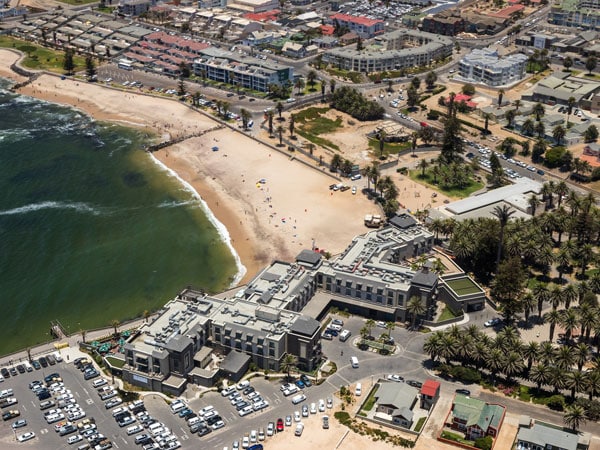
Telecom Namibia and CRAN work together to support remote coverage
Operator Telecom Namibia and regulator the Communications Regulatory Authority of Namibia (CRAN) have officially entered into a strategic partnership.
Described as a milestone event, the partnership marks the commencement of Phase 2 of the Universal Service Fund (USF) project, a critical initiative designed to bridge the digital divide in Namibia’s underserved rural areas.
The agreement followed a successful bidding process in which Telecom Namibia was awarded a subsidy of N$9,796,650 (just under US$600,000). These funds are dedicated to the deployment of vital telecommunications infrastructure across key sites, ensuring that remote communities gain access to reliable and high-quality communication services.
Under the terms of the signed agreement, Telecom Namibia will facilitate the construction of new radio access network (RAN) sites, engineered to significantly improve mobile broadband and voice services.
A central component of this partnership is a commitment to provide free connectivity to all educational and health facilities within the coverage of these RAN sites for a period of seven years, directly supporting socioeconomic development. The infrastructure deployment will target underserved areas in at least eight regions.
Mrs Emilia Nghikembua, CEO of CRAN, says: “The Universal Service Fund is a cornerstone of our strategy to ensure inclusive communication services. Through a transparent and rigorous selection process, we have partnered with Telecom Namibia to accelerate our 2024–2027 digital infrastructure goals. We are confident that this phase will have a lasting, positive impact on the lives of those in the most remote regions of our country.”
10
Avr, 2026

TikTok and ICC partner to boost digital commerce opportunities
Social media platform TikTok and the International Chamber of Commerce (ICC), the institutional representative of more than 45 million companies in over 170 countries, have announced the launch of the Digital Commerce Labs programme.
This is described as a global programme designed to unlock digital commerce opportunities for small businesses in select markets across Latin America, Africa and Southeast Asia.
As TikTok points out, businesses of all sizes use the platform to reach new customers and build their brands. The initiative will leverage TikTok’s suite of digital commerce tools and reach with ICC’s expertise on international trade, powerful network of national committees and chambers of commerce to expand access to training, mentorship and digital resources.
Through this partnership, TikTok and ICC say they will equip small businesses with digital skills and tools to increase revenue opportunities, expand market access and build long-term resilience.
They add that by connecting global expertise with local business communities, the Digital Commerce Labs will create a scalable education model that can be replicated across markets to help entrepreneurs translate digital knowledge into real-world growth opportunities.
The programme is designed to build long-term digital commerce ecosystems by working in close collaboration with national chambers and local organisations. The programme will deliver learning and economic impact through three integrated components: community building – bringing small businesses together through virtual and in-person sessions with relevant local ecosystem partners; self-led online training modules hosted on a dedicated learning platform; and virtual classrooms providing instructor-led learning opportunities where entrepreneurs can engage directly with industry experts.
The Digital Commerce Labs programme is expected to launch across ten countries, supporting entrepreneurs through community programming, digital learning resources and virtual training sessions.
The programme will launch in select markets across Latin America and Africa this spring, followed by a broader expansion across Africa and to Thailand later this year.
10
Avr, 2026

Redundancy, Diversity and Route Strategy: What Enterprises and Carriers Actually Need
 This Industry Viewpoint was authored by Tony Thakur, Chief Technology Officer (CTO), Great Plains Communications (GPC)
Across the Midwest, in emerging growth corridors and across the nation, we’ve seen a recurring pattern: organizations believe they are protected because they have redundant connectivity until an outage proves otherwise. The issue is rarely bandwidth. It is about overall network resiliency and a strategy to mitigate during an outage. … [visit site to read more]
10
Avr, 2026

SEA-ME-WE-5 repairs disrupt Bangladesh internet services (again)
State-owned Bangladesh Submarine Cables (BSCPLC) has warned that internet services will experience slowdowns or disruptions from now until Monday due to repairs being carried out on the SEA-ME-WE-5 subsea cable.
In a statement released on Wednesday, BSCPLC said that the SEA-ME-WE-5 consortium would conduct fault repair maintenance on the cable’s S1.5.1 shunt from Thursday evening (April 9) local time to the morning of April 13.
During that time, the repair work will impact circuits routed between Singapore and SEA-ME-WE 5’s landing station in Kuakata, which may result in slower internet speeds or partial service interruptions, BSCPLC said.
BSCPLC added that service on Bangladesh’s other international subsea cable route, SEA-ME-WE-4, will continue as normal.
However, SEA-ME-WE-4 provides only a third of Bangladesh’s international subsea cable capacity at around 800 Gbps, compared to roughly 1.7 Tbps on SEA-ME-WE 5. A break on the same route in 2024 heavily impacted internet services in the country, highlighting the need for Bangladesh to install more international capacity.
BSCPLC – which is a stakeholder in both subsea cables – is also a member of the SEA-ME-WE 6 cable consortium, but that system’s ready-for-service date has been pushed back to 2027.
The Bangladesh Private Cable System (BPCS) consortium announced plans in September 2024 to construct a privately-owned 1,300-km subsea cable connecting Cox’s Bazar to the Campana-owned UMO subsea cable that runs from Myanmar to Singapore, giving the country another 45 Tbps of capacity.
In December last year, BPCS contracted Nokia to supply submarine line terminal equipment for the project, which is tentatively slated to be ready for service in the second half of this year.
9
Avr, 2026

UK drives off Russian submarines lurking near subsea cables
News
The submarines are thought to be mapping the UK’s undersea communications networks.
The UK’s defence secretary John Healey has today revealed to reporters that a trio of Russian submarines have been monitored in UK waters, likely monitoring the country’s subsea cables and pipelines.
British armed forces, including a naval ship and a Royal Air Force plane, were quickly deployed to track and deter the submarines, which subsequently left the area.
There are no reports of submarine infrastructure having been damaged.
“To Putin, I say this: we see you, we see your activity over our underwater infrastructure. You should know that any attempt to damage it will not be tolerated and would have serious consequences,” said Healy.
The incident involved three submarines, a Russian Akula-class attack submarine and two spy submarines belonging to Russia’s Main Directorate for Deep-Sea Research (GUGI). These GUGI submarines are designed to monitor and map submarine cable infrastructure and could be used to sabotage these underwater systems.
“These aren’t standard submarines, they’re specialist vessels designed for deep sea operations,” Charlotte Wilson, Head of Enterprise at Check Point Cybersecurity, told the BBC. “So, this isn’t random movement, it suggests a deliberate effort to understand where critical infrastructure sits and how it behaves. Not only mapping locations but also assessing how resilient those systems are.”
GUGI has often been linked to covert submarine cable surveillance in UK waters, most recently in 2025 when its ‘spy ship’, Yantar, was accused of entering British waters to map subsea infrastructure.
A notable incident occurred in January 2025, when a UK submarine surfaced beside the Yantar in a show of strength, with Healy subsequently saying, “we know what you’re doing and we will not shy away from robust action to protect this country”.
Over a year later, however, and Russia is seemingly undeterred. Healy notes “increased Russian activity” in the Atlantic north of the UK, with a 30% increase in Russian vessels threatening UK waters.
How is the submarine cable security landscape changing? Join our inaugural Subsea Security Summit in May 2026
Also in the news
Connected Britain Award winners 2025 announced!
Netomnia announces ‘powerful and ambitious’ rebrand ahead of Connected Britain
VodafoneThree drops Samsung, relies on Nokia and Ericsson for £2bn network upgrade
9
Avr, 2026

Preseem Launches Its First Proactive ISP Virtual Summit
WATERLOO, ON, April 10, 2026 — Preseem, a leading provider of network quality management solutions for internet service providers, will host the first-ever Proactive ISP Virtual Summit, a free event taking place May 5-6, from 11 a.m. to 2 p.m. Eastern each day.
The summit’s theme, “AI in Action“, reflects a focused, practical examination of how artificial intelligence is transforming broadband operations for regional and rural ISPs right now.
Designed as an annual gathering for the people who run regional internet networks, the Proactive ISP Virtual Summit brings together ISP executives, network engineers, NOC directors, and customer experience leaders alongside voices from the broader AI and technology community.
“We built this summit to cut through the noise,” said Dan Siemon, CEO and Co-Founder of Preseem. “There’s no shortage of AI hype in our industry, but what operators actually need are honest, peer-tested conversations about what’s working on the ground. That’s exactly what the Proactive ISP Virtual Summit is designed to deliver.”
A Focused Format Built for Busy Operators
Each day of the Proactive ISP Summit will open with a keynote address, followed by a series of 20-minute live panels featuring expert panelists, guided discussion, and live audience Q&A. All sessions will be recorded and made available on-demand following the event.
Day 1 — Tuesday, May 5, opens with a keynote from Ian Khan, Founder & CEO of Futuracy and a globally recognized futurist and AI strategist, followed by a Fireside Chat featuring Teresa McGaughey, VP of Global Field & Partner Marketing at Calix, and Josh Turiano, Chief Innovation & AI Officer at Blue Stream Fiber.
Day 2 — Wednesday, May 6, features an Industry Address from Joshua Seidemann, VP of Policy & Industry Innovation at NTCA, offering a perspective on how AI intersects with the unique challenges facing rural and regional broadband providers.
Other confirmed speakers include:
- Nathan Stooke, CEO & Founder, Wisper Internet
- Ryan Grewell, Chief Innovation Officer, Nextlink
- Andrii Konovalenko, Founder, QueSee
- Jeff Little, CEO, Above Wireless
- Bjørn Ivar Teigen, VP of Network Intelligence, Cujo AI
- Ken Garnett, Founder, BeyondChat.ai
- Scot Loach, CTO & Co-Founder, Preseem
The Proactive ISP Virtual Summit is free to attend. Registration is open now at proactiveispsummit.com.The event is designed for CTOs, COOs, NOC Directors, network engineers, support leaders, and operations decision-makers at ISPs of all sizes. Attendees are encouraged to share the event with their teams, as the sessions are designed to be relevant across technical and leadership roles.
About Preseem
Preseem gives regional ISPs the visibility and intelligence to identify subscribers with poor experience, reduce operational costs, and move from reactive to proactive network operations—across all vendors and access technologies—in a single platform. For more information, visit preseem.com.
9
Avr, 2026

Infra Bytes: MCG, Maysteel, C Spire
Two bits of inorganic activity, and some fiber in the deep south: … [visit site to read more]
9
Avr, 2026

FCC actions will streamline retirement of US copper networks
News
The Federal Communications Commission has adopted new procedures to streamline transitions from aging copper cables in the US.
By Brad Randall, Broadband Communities
A set of new policies and procedures adopted by the Federal Communications Commission (FCC) will streamline the process for retirement of legacy copper networks, according to FCC Chairman Brendan Carr.
Last month, Carr said the FCC has now cleared some of the “regulatory underbrush” that has slowed down the phasing out of copper networks.
Some of the changes adopted include a clarification enabling providers to use streamlined procedures more often, a waiver allowing retirement of copper networks where bundled services are offered (while keeping pro-consumer protections in place), and a new waiver for notification requirements that the Wireline Competition Bureau considered excessive.
“This initial set of actions gets things moving in the right direction and creates the right incentives for providers to invest and build new networks in communities across the country,” Carr said. “As we take these actions, we are also ensuring that consumers remain protected during the transition.”
Another change announced is a new waiver for requirements regarding services determined to be grandfathered by providers, the FCC announced.
Meanwhile, Carr said the FCC will continue on its current path.
“Outdated FCC rules have left Americans sitting in the slow lane for far too long,” he said. “Those FCC rules have forced providers to pour resources into maintaining aging and expensive copper line networks instead of investing in the modern, high-speed infrastructure that Americans want and deserve.”
He said the FCC’s goal with the aforementioned actions is to free up billions of dollars for new networks that could have otherwise been diverted into copper lines.
Additionally, he said the FCC is not finished with the topic of copper networks.
“There is much more work ahead for the FCC,” he said.
Get this news in your inbox. Subscribe to the Broadband Communities newsletter!